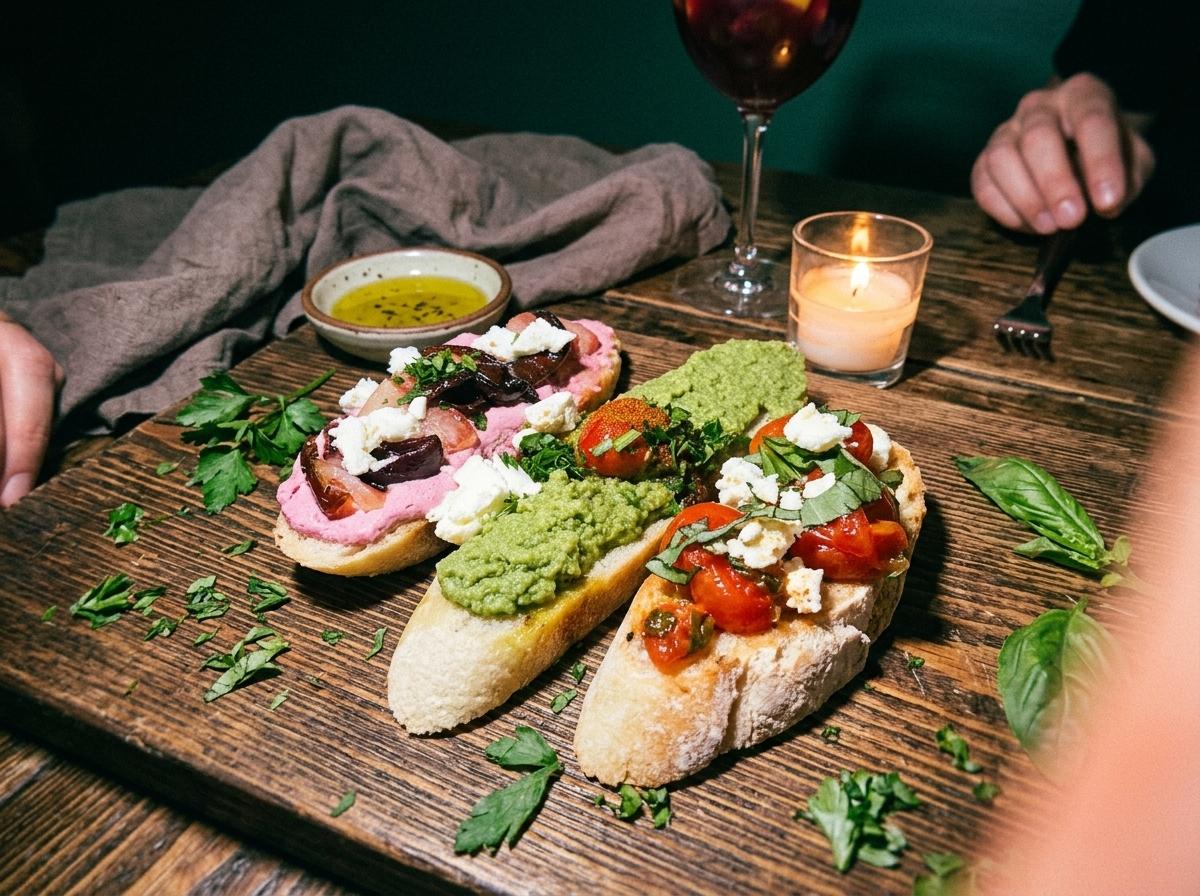
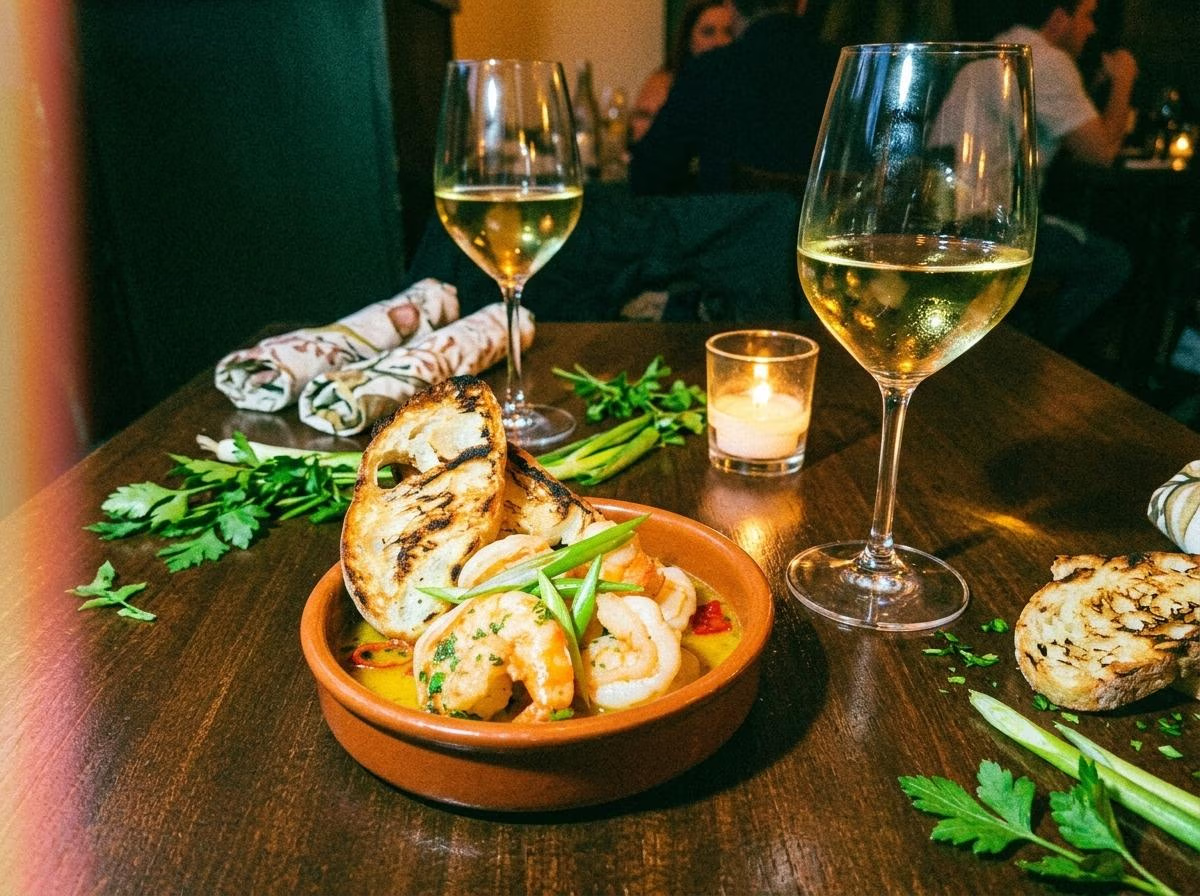
Water is the main everyday beverage in a Mediterranean-style diet. Unsweetened coffee or tea can also fit, while wine is optional rather than required. Current health guidance does not recommend starting to drink alcohol for health benefits, and the 2025–2030 U.S. Dietary Guidelines advise consuming less alcohol for better health. At a restaurant, zero-proof drinks can provide an alcohol-free alternative, but “alcohol-free” does not automatically mean low-sugar or low-calorie.
Mediterranean diet drinks are part of the broader question of how beverages fit within a Mediterranean-style eating pattern. Mediterranean Wine Pairing belongs on the dedicated pairing page, while Mediterranean Diet Recipes, the Nia Way provides inspiration on dishes like paella and branzino. Assyrtiko is one Greek wine style a diner may encounter; see the varietal guide for details.
Mediterranean Diet Drinks: What Can You Actually Drink?
When people hear Mediterranean diet, they usually think first about:
- olive oil;
- vegetables;
- fish;
- whole grains;
- beans;
- nuts;
- and shared meals.
Drinks receive much less attention.
The simplest answer is also the most important:
Water is the everyday beverage foundation of a Mediterranean-style eating pattern.
Harvard’s Mediterranean diet overview identifies water as the main daily beverage, while the American Heart Association describes a Mediterranean-style pattern primarily through plant foods, whole grains, olive oil and moderate amounts of fish, poultry and dairy. Wine may appear in some traditional versions, but alcohol is not required.
That distinction matters because restaurant articles often turn:
“wine has historically been consumed with meals in some Mediterranean cultures”
into:
“wine is healthy and you should drink it.”
Those statements are not equivalent.
Current U.S. dietary guidance says consuming less alcohol is better for health, while the American Heart Association says people who do not drink should not start drinking for health benefits.
So a useful Mediterranean beverage guide should separate three questions:
- What beverages fit the dietary pattern?
- What drinks are available at a restaurant such as Nia?
- What can legitimately be described as health-supportive?
Those answers are not always the same.
Quick Answer: What Do You Drink on a Mediterranean Diet?
A practical hierarchy is:
- Water — Everyday default
- Sparkling water — Useful unsweetened alternative
- Unsweetened coffee or tea — Can fit a balanced dietary pattern
- Zero-proof restaurant drinks — Can fit socially, but ingredients and added sugar vary
- Wine — Optional; not required for Mediterranean eating
- Cocktails — Enjoyment beverage, not a health food
- Sangria — Alcoholic mixed drink; ingredients and sugar vary
- Sweetened sodas/fruit drinks — Better treated as occasional rather than everyday beverages
Harvard’s healthy beverage guidance prioritizes water and identifies unsweetened tea and coffee as reasonable options, while recommending limiting sugar-sweetened beverages.
Water Comes First
If the question is:
“What is the most Mediterranean-diet-aligned drink?”
the answer does not need to be exotic.
It is:
water.
Water:
- has no alcohol;
- contains no added sugar;
- works with every meal;
- and does not require a health claim to justify its place at the table.
Harvard’s Mediterranean diet framework explicitly identifies water as the principal daily beverage.
This is the correct starting point for the article.
Not:
sangria.
Not:
red wine.
Not:
a “detox” drink.
Not:
a low-sugar cocktail.
Sparkling Water Can Make the Meal Feel More Intentional Without Alcohol
Someone may want something more distinctive than still water without choosing:
- wine;
- beer;
- or a cocktail.
Sparkling water is a simple option.
It can work especially well with:
- salty foods;
- fried small plates;
- citrus;
- seafood;
- and spicy dishes
because carbonation can feel refreshing between bites.
This is a culinary observation—not a medical claim.
Whether a restaurant currently serves a particular sparkling-water brand should remain menu-specific rather than being hard-coded into this evergreen article.
What About Coffee and Tea?
Unsweetened coffee and tea can fit within a balanced dietary pattern.
Harvard’s beverage guidance places plain tea and coffee behind water among beverage choices, while distinguishing them from heavily sweetened coffee and tea drinks.
But there is an important SEO/content distinction here:
general Mediterranean-diet guidance does not automatically mean Nia currently serves every beverage discussed.
Unless the live Nia menu confirms:
- Greek mountain tea;
- espresso;
- herbal infusions;
- or another specific tea/coffee beverage,
do not write:
“At Nia, order our Greek mountain tea.”
Is Wine Part of the Mediterranean Diet?
Historically, wine has appeared with meals in some Mediterranean dietary traditions.
But it is important not to transform cultural history into medical advice.
The American Heart Association says people who do not drink alcohol should not start drinking for potential health benefits, and notes that research has not established a cause-and-effect relationship between drinking red wine and better heart health.
The current 2025–2030 U.S. Dietary Guidelines have also shifted away from the older fixed daily limits and instead advise people to consume less alcohol for better health.
Therefore this article should use:
Wine can be part of some Mediterranean-style meals for adults who already choose to drink.
You Do Not Need Alcohol to Follow a Mediterranean Diet
This deserves a direct answer because many older Mediterranean-diet articles imply otherwise.
Alcohol is not required.
Someone can eat a Mediterranean-style dietary pattern while drinking:
- water;
- sparkling water;
- unsweetened tea;
- coffee;
- or other alcohol-free beverages.
The core dietary pattern is defined much more by:
- vegetables;
- fruit;
- whole grains;
- legumes;
- nuts;
- olive oil;
- fish;
- and less reliance on highly processed foods
than by whether wine appears at dinner.
Is Red Wine Healthier Than Other Alcohol?
Do not make that claim.
The American Heart Association specifically says it does not recommend wine or another form of alcohol to obtain potential heart benefits. Compounds often highlighted in red wine can also be found in non-alcoholic foods such as grapes and berries.
Therefore this page should discuss wine because:
- Nia is a restaurant and wine bar;
- wine is relevant to Mediterranean food;
- and some diners enjoy it.
Not because:
red wine is medicine.
Who Should Avoid Alcohol?
Restaurant editorial content should not attempt individualized medical screening.
But it is appropriate to state clearly that alcohol is not suitable for everyone.
Current public-health guidance identifies circumstances in which people should avoid alcohol, including pregnancy and situations involving certain medical conditions or medications that interact with alcohol. People recovering from alcohol use disorder or unable to control their drinking should also avoid it.
A restaurant article does not need to provide a complete medical list.
If alcohol is not appropriate for you because of health, medication, pregnancy, recovery, driving or personal preference, choose a non-alcoholic beverage instead.
Mediterranean Diet Does Not Mean “Low-Sugar Cocktail”
Because Nia’s current cocktail menu does not publish standardized sugar grams, calories, carbohydrates or nutrition analysis, do not describe a cocktail as:
- low-sugar
- healthy
- guilt-free
- better for you
- designed for well-being.
A cocktail is an alcoholic beverage.
It can be:
- balanced;
- citrusy;
- refreshing;
- bitter;
- fruity;
- spirit-forward;
- or light-tasting.
Those are legitimate flavor descriptions.
Nia’s Current Cocktail Menu
Nia currently publishes cocktails including:
- French Kiss;
- Mediterranean Coconut;
- NIA Margarita;
- Aperol Spritz;
- Espresso Old Fashioned;
- Whiskey Crush;
- Paper Plane;
- Negroni;
- French 75;
- El Diablo;
- Sidecar;
- Local’s Choice Manhattan;
- and Espresso Martini.
This article should not duplicate the entire cocktail menu.
Use the current Craft Cocktails page as the transactional source of truth.
Which Cocktails Fit a Mediterranean-Style Meal?
This is a different question from:
Which cocktails are healthy?
You can answer the first.
Do not answer the second without nutritional evidence.
Aperol Spritz
A spritz can work as a lighter-tasting aperitif-style choice alongside small plates.
That describes:
- flavor;
- format;
- and dining role.
It does not claim nutritional superiority.
NIA Margarita
Its tequila, lime and agave format can complement:
- citrus;
- spice;
- and savory food.
Again:
culinary compatibility, not health benefit.
Mediterranean Coconut
Nia currently makes this with dark and coconut rums, falernum, fresh ginger and lime.
Describe it as:
- tropical;
- ginger-forward;
- or citrus-accented.
Do not describe it as a health drink because it contains ginger and lime.
Individual ingredients do not convert an alcoholic cocktail into a health product.
What About Sangria?
Sangria can have a cultural connection to Spain and fits naturally within a Spanish-influenced restaurant beverage program.
Nia currently advertises sangria through its Happy Hour and Chef’s Tasting Menu pages.
But sangria should be categorized accurately:
it is an alcoholic mixed beverage.
Its sugar and alcohol content can vary depending on:
- wine;
- fruit;
- liqueur or brandy;
- sweeteners;
- recipe;
- and serving size.
Does Fruit Make a Cocktail Healthy?
No automatic conclusion can be made from the presence of:
- berries;
- lime;
- lemon;
- orange;
- or fruit purée.
A cocktail may contain fresh fruit while still containing:
- alcohol;
- added sugar;
- liqueurs;
- syrups;
- or calorie-dense ingredients.
The same applies to non-alcoholic mixed drinks.
The correct editorial rule is:
describe ingredients, not invented nutrition benefits.
What Are Nia’s Current Non-Alcoholic Drinks?
Nia currently publishes four alcohol-free beverages:
- Strawberry Lime Refresca — fresh strawberry purée and lime;
- Black Cherry Lemon Elixir — black cherry and lemon;
- Blueberry Lemon Spritz — blueberries, lemon and sparkle;
- Zero-Proof Margarita — lime and citrus flavors without alcohol.
These are useful current examples because they give diners a non-alcoholic alternative without pretending alcohol is required for the meal.
Are Nia’s Zero-Proof Drinks “Healthy”?
Do not automatically call them healthy.
The current menu describes flavor and ingredients but does not provide complete nutrition information such as:
- added sugar;
- total sugar;
- calories;
- or serving size.
Therefore use:
- alcohol-free
- zero-proof
- fruit-forward
- citrus-forward
- refreshing
- sparkling where accurate.
Do not use:
- healthy mocktail
- low-calorie
- low-sugar
- diet-friendly
without verified nutritional data.
Alcohol-Free Does Not Automatically Mean Sugar-Free
This distinction is important.
A zero-proof drink can eliminate alcohol while still containing:
- fruit purée;
- juice;
- syrup;
- sweeteners;
- or other calorie-containing ingredients.
Conversely, an alcoholic drink can sometimes contain relatively little added sugar while still carrying alcohol-related health considerations.
Therefore:
“zero-proof” and “low sugar” are two different attributes.
What About Added Sugar?
Current dietary guidance emphasizes reducing added sugars and highly processed foods, while Harvard beverage guidance recommends limiting routinely consumed sugar-sweetened beverages.
For a restaurant guest who specifically wants less sweetness:
Which current non-alcoholic drink is least sweet?
or:
Can this be prepared less sweet?
Do not publish exact sugar claims unless recipes have been standardized and analyzed.
Does Lemon Water “Detox” the Body?
Citrus can:
- add flavor;
- make water more appealing;
- and complement food.
That is sufficient.
Are Herbal Drinks Automatically Healthy?
No.
Herbs can contribute:
- aroma;
- flavor;
- bitterness;
- or freshness.
Nia should describe the culinary role of the ingredient unless it has high-quality evidence and a genuine reason to enter health-advice territory.
For a restaurant blog, it usually does not.
The Difference Between “Mediterranean Drink” and “Mediterranean Diet Drink”
This is useful for search intent.
A Mediterranean drink can mean:
- sangria;
- spritz;
- wine;
- coffee;
- tea;
- liqueur;
- or any beverage associated culturally with Mediterranean countries.
A Mediterranean diet drink implies:
how beverages fit within a broader eating pattern.
Those are not identical searches.
This page should focus on the second.
Nia’s menu pages should own the first when users simply want:
- cocktails;
- wine;
- sangria;
- or zero-proof drinks.
A Better Beverage Framework for a Restaurant Meal
A guest could approach the table this way:
Everyday / Hydration Choice
Water or sparkling water
Alcohol-Free Flavor Choice
One of Nia’s current zero-proof beverages.
Wine Choice
A glass selected according to:
- your preference;
- the dishes ordered;
- and whether alcohol is appropriate for you.
Cocktail Choice
Choose primarily for:
- taste;
- ingredients;
- and the dining experience.
Not because the cocktail is marketed as a wellness product.
Choosing a Drink With Seafood
This page should stay general.
Seafood often works with:
- water;
- sparkling water;
- citrusy zero-proof drinks;
- or crisp white wine
depending on the dish and the guest’s preference.
If the reader wants to know:
Which wine specifically goes with shrimp, salmon or small plates?
that belongs on the Mediterranean Wine Pairing Hub.
Choosing a Drink With Spicy Food
A drink with:
- refreshing acidity;
- some sweetness;
- or carbonation
can appeal to some diners with spicy food.
But preference matters.
For example:
- a zero-proof fruit/citrus drink;
- sparkling water;
- Riesling;
- rosé;
- or another current menu choice
might work depending on the dish.
Choosing a Drink With Shared Plates
Shared plates often include several different:
- textures;
- proteins;
- sauces;
- and spice levels.
That can make a flexible beverage useful.
Instead of chasing a technically “perfect” match for every plate, some guests may choose:
- one versatile white;
- rosé;
- sparkling wine;
- water;
- or a zero-proof drink
for the whole meal.
For detailed wine pairing:
use the dedicated Wine Pairing Hub.
What Wines Does Nia Currently Offer?
Nia’s current by-the-glass program includes sparkling wine, rosé, Moscato, Albariño, Chardonnay, Riesling, Sauvignon Blanc, Agiorgitiko, Cabernet Sauvignon, Merlot, Pinot Noir, Tempranillo and Sangiovese.
This page does not need to reproduce:
- every producer;
- price;
- vintage;
- or tasting note.
Those belong to the live Wine By Glass page.
Greek Wines Can Be Educational Without Health Claims
Nia’s current wine list includes several Greek selections, such as:
- Greek rosé;
- Greek Chardonnay;
- Greek Sauvignon Blanc;
- and Agiorgitiko.
That creates a natural internal-link opportunity to:
- the Agiorgitiko guide;
- Assyrtiko guide where relevant to bottle inventory;
- and Best Wine for Greek Food.
But those wines should be discussed through:
- grape;
- place;
- taste;
- and pairing.
Alcohol and the Mediterranean Diet: The Responsible Answer
Some traditional Mediterranean dietary patterns have included wine with meals, but alcohol is not required to follow a Mediterranean-style diet. Current health guidance does not recommend starting to drink for health benefits, and less alcohol is generally the lower-risk choice.
Nia’s Signature Sips
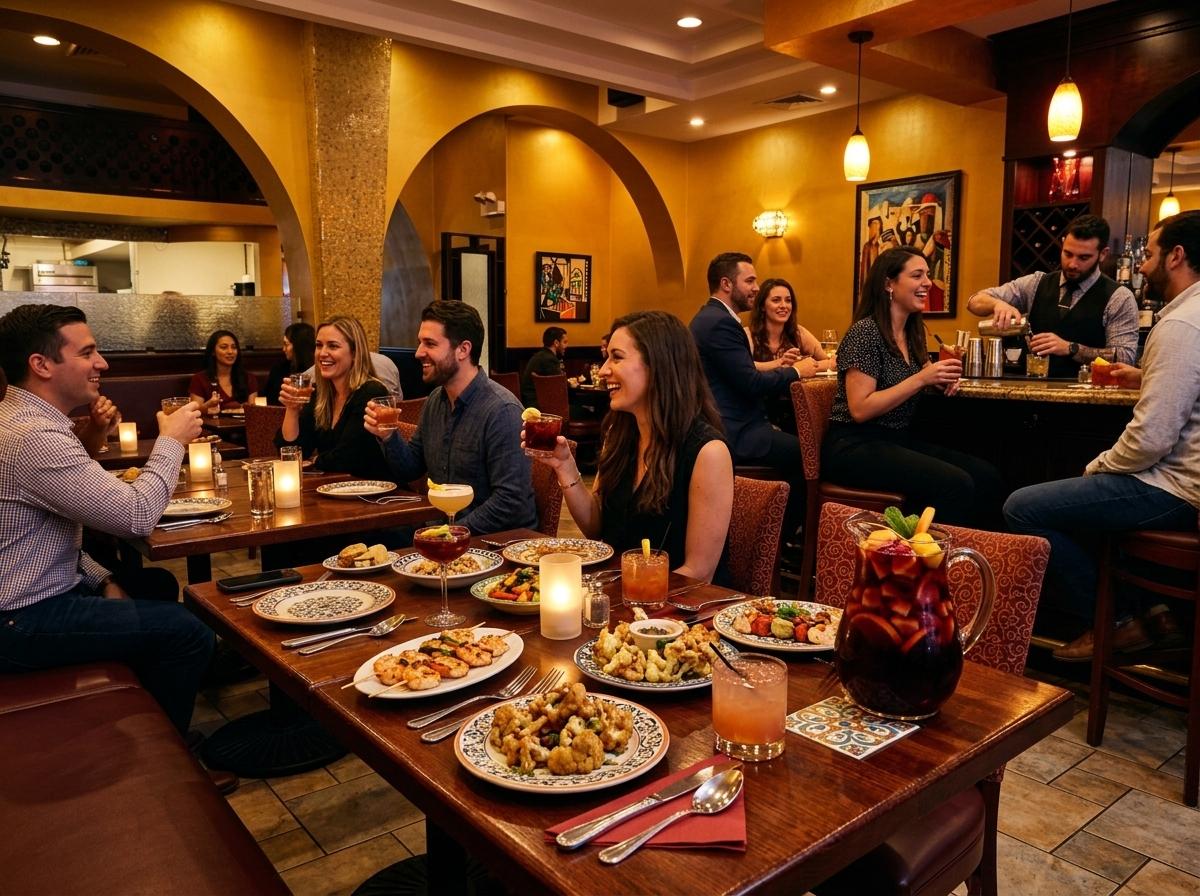
Nia currently publishes four alcohol-free beverages:
- Strawberry Lime Refresca — fresh strawberry purée and lime;
- Black Cherry Lemon Elixir — black cherry and lemon;
- Blueberry Lemon Spritz — blueberries, lemon and sparkle;
- Zero-Proof Margarita — lime and citrus flavors without alcohol.
Current cocktails include options such as the Aperol Spritz, NIA Margarita, French 75, Mediterranean Coconut, Paper Plane, El Diablo and Espresso Martini.
Current wine-by-the-glass choices span Greek, Spanish, Italian, French, German and California selections.
Frequently Asked Questions
What is the best drink on the Mediterranean diet?
For everyday hydration:
water.
Harvard’s Mediterranean diet framework identifies water as the primary daily beverage.
Is wine required on the Mediterranean diet?
No.
Wine appears in some traditional Mediterranean dietary patterns, but alcohol is optional and is not required to follow the eating pattern.
Should I start drinking red wine for the health benefits?
No.
The American Heart Association says people who do not drink should not start drinking for health benefits and does not recommend wine as a way to improve heart health.
Is red wine heart-healthy?
Avoid that simplified claim.
Studies have found associations between some patterns of alcohol consumption and cardiovascular outcomes, but a direct causal heart benefit from red wine has not been established. The AHA does not recommend alcohol for heart-health benefits.
What do the current U.S. Dietary Guidelines say about alcohol?
The 2025–2030 Dietary Guidelines were released in January 2026 and advise consuming less alcohol for better health rather than using the older fixed daily-limit language.
Can I follow a Mediterranean diet without alcohol?
Yes.
Alcohol is not required.
Water and other unsweetened or alcohol-free beverages can accompany Mediterranean-style meals.
Are mocktails part of the Mediterranean diet?
A mocktail can fit into a meal socially, but whether it aligns with a particular nutrition goal depends on its ingredients.
Alcohol-free does not necessarily mean:
- low-sugar;
- low-calorie;
- or nutritionally superior.
Does Nia have non-alcoholic drinks?
Yes.
Nia currently lists Strawberry Lime Refresca, Black Cherry Lemon Elixir, Blueberry Lemon Spritz and a Zero-Proof Margarita.
Are Nia’s mocktails low in sugar?
Nia’s current non-alcoholic menu does not publish complete sugar or nutrition data.
Therefore this article should not make a low-sugar claim.
Does Nia have low-sugar cocktails?
The current cocktail menu does not provide nutrition analysis establishing which drinks qualify as low-sugar.
The old article’s broad “low-sugar cocktail” claims should therefore be removed.
Does Nia serve sangria?
Nia currently promotes sangria through its Happy Hour and tasting-menu content.
Is sangria healthy because it contains fruit?
Do not make that claim.
Sangria is an alcoholic mixed beverage, and its alcohol, sugar and calorie content depend on the recipe.
Does Nia serve wine by the glass?
Yes.
Nia currently publishes sparkling, rosé, white and red selections by the glass.
Which Nia wine should I pair with dinner?
That depends on the dishes and your preferences.
Use the Mediterranean Wine Pairing Hub for detailed dish-first recommendations.
Is Assyrtiko a healthy wine?
Assyrtiko is a Greek grape variety, not a health product.
The Assyrtiko guide should explain:
- origin;
- taste;
- structure;
- and pairing
without positioning it as medically beneficial.
Is Agiorgitiko healthier than other red wines?
Do not make that claim.
Agiorgitiko should be compared through:
- flavor;
- body;
- tannin;
- origin;
- and pairing.
What if I do not drink alcohol?
Choose:
- water;
- sparkling water;
- or one of the current zero-proof options.
A Mediterranean-style meal does not require alcohol.
Beverage Options at Nia
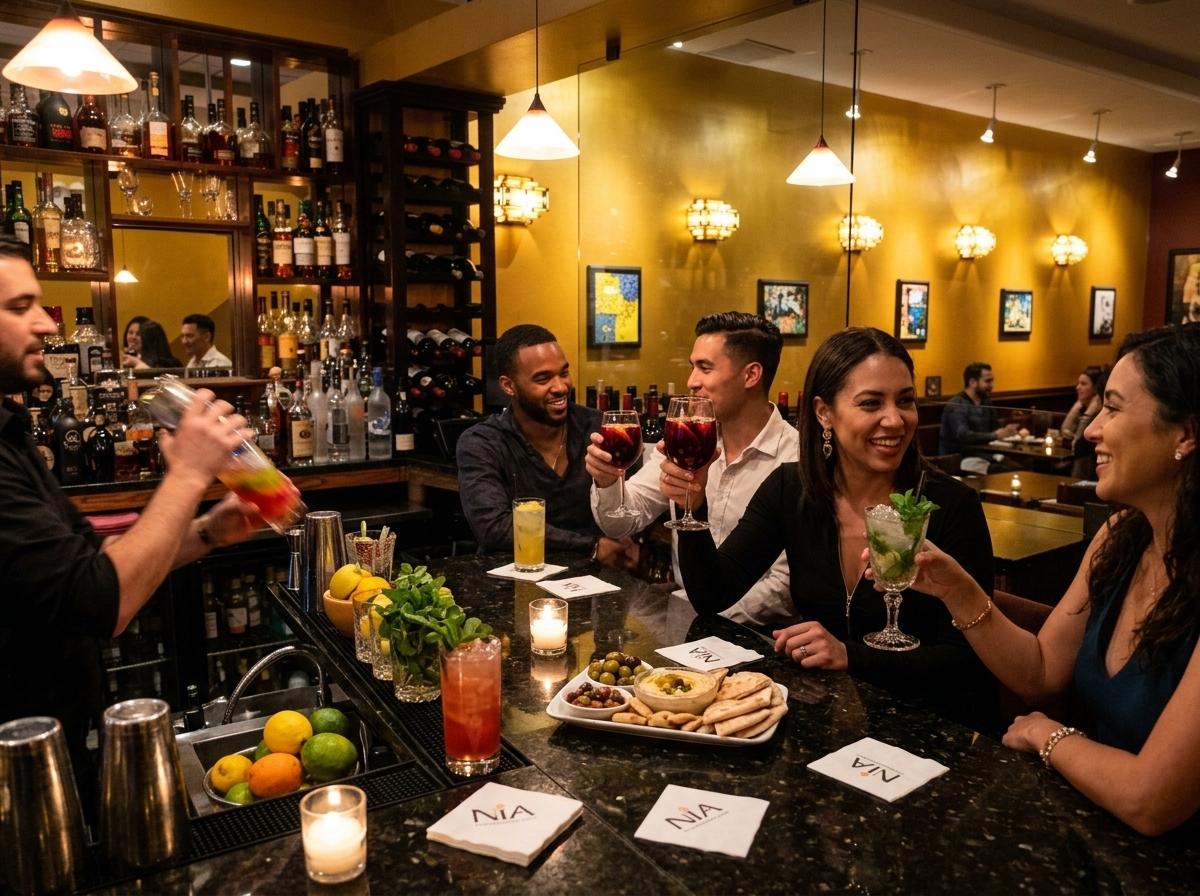
Nia currently maintains separate beverage menus for:
- Wine By Glass
- Wine Bottles
- Craft Cocktails
- Non-Alcoholic Beverages
- Happy Hour
and other specialty drink categories.
Current zero-proof choices include fruit- and citrus-based drinks such as Strawberry Lime Refresca, Black Cherry Lemon Elixir, Blueberry Lemon Spritz and a Zero-Proof Margarita.
Current cocktails include options such as the Aperol Spritz, NIA Margarita, French 75, Mediterranean Coconut, Paper Plane, El Diablo and Espresso Martini.
Current wine-by-the-glass choices span Greek, Spanish, Italian, French, German and California selections.
Choose according to:
- taste;
- the food you ordered;
- whether you want alcohol;
- and your own dietary or health considerations.
For current prices and availability, use the live beverage menus.