What Is Assyrtiko?
Assyrtiko is an indigenous Greek white grape that originated on Santorini and has since spread across Greece.
It is particularly notable because it can retain strong acidity even in hot, dry growing conditions. Wines of Greece describes Assyrtiko as a variety defined more by texture, structure and intensity than by overt aromatic character, with Santorini examples often showing concentrated character, pronounced acidity and a mineral profile.
A typical dry Assyrtiko instead may emphasize:
- citrus;
- stone or mineral impressions;
- saline character;
- firm acidity;
- and substantial texture.
Assyrtiko is not the same thing as Santorini wine.
Santorini is the grape’s historic home. Assyrtiko is now grown in several Greek regions, and those wines can taste materially different from the classic volcanic-island expression.
Quick Answer
Assyrtiko is a Greek white grape known for high acidity, citrus, minerality and strong structure.
Its historic reference point is Santorini, where volcanic soils, old vines, dry conditions and strong winds help produce particularly concentrated wines. However, Assyrtiko is also grown throughout mainland Greece and other islands.
At Nia, the current bottle list includes Domaine Skouras Assyrtiko from Nemea, Greece. This is important: Nia’s current wine is not a Santorini Assyrtiko. Domaine Skouras identifies its current Assyrtiko as 100% Assyrtiko from Nemea vineyards in the Peloponnese.
Where Does Assyrtiko Come From?
Assyrtiko’s historic birthplace is Santorini, one of Greece’s Cycladic islands in the southern Aegean.
Santorini has an unusually dry, windy and volcanic vineyard environment. Its soils include volcanic ash, pumice, basalt and other volcanic material, while vines are traditionally trained very low to the ground in basket-like forms to protect grapes from powerful winds.
The island’s vineyards are also famous for old, self-rooted vines.
Because Santorini’s sandy volcanic soils were not affected in the same way by phylloxera as many European vineyard regions, the island retains exceptionally old vine material.
This is why Santorini remains the benchmark when wine professionals discuss Assyrtiko.
But the grape is no longer limited to Santorini.
Is All Assyrtiko From Santorini?
No.
Assyrtiko is now planted across Greek regions including other Aegean islands, mainland areas and the Peloponnese. Outside Santorini, Assyrtiko typically keeps its acidity and mineral character but may show more primary fruit and somewhat less density.
Santorini Assyrtiko is one expression of the grape—not the definition of every Assyrtiko.
Why This Matters for Nia
Nia’s current Wine Bottles page lists: Domaine Skouras Assyrtiko — Nemea, Greece.
Domaine Skouras identifies that wine as:
- 100% Assyrtiko
- from vineyards in: Nemea
- at approximately: 620 meters elevation
- with: red-clay soil.
The wine is fermented in stainless steel, spends time on fine lees and does not undergo malolactic fermentation. The producer describes citrus, apple, mineral and saline notes with crisp acidity and a long finish.
That is fundamentally different from saying: Nia is currently pouring Santorini Assyrtiko.

Santorini Assyrtiko vs Mainland Assyrtiko
Santorini Assyrtiko
Classic Santorini examples often emphasize:
- high acidity;
- strong structure;
- citrus;
- mineral or stony character;
- salinity;
- and considerable concentration.
Mainland Assyrtiko
Outside Santorini, Assyrtiko can still retain:
- high acidity;
- freshness;
- and mineral character,
but may offer:
- more overt fruit;
- less density;
- and a different expression of site.
Nia’s current Domaine Skouras bottle is a good example of why that distinction matters. It allows diners to experience: the Assyrtiko grape without pretending the bottle came from Santorini.
What Does Assyrtiko Taste Like?
Assyrtiko is not primarily known as a highly aromatic grape. Its identity is more about:
- structure;
- acidity;
- texture;
- and mineral expression.
Common characteristics may include:
- lemon;
- citrus peel;
- green or orchard fruit;
- stone;
- saline impressions;
- and a long, dry finish.
Santorini versions may be particularly austere, intense, concentrated and mineral-driven when young. Mainland examples can be somewhat more openly fruity.
Does Assyrtiko Taste Salty?
Many people use words such as saline, briny, or sea-salt when describing Assyrtiko, especially from Santorini.
Those are tasting impressions. They do not mean literal seawater or salt is added to the wine.
Is Assyrtiko Always Light?
No.
Even unoaked Assyrtiko can have considerable:
- body;
- extract;
- texture;
- and structural intensity.
fresh and high-acid rather than automatically light-bodied.
Unoaked Assyrtiko
Stainless-steel or otherwise unoaked examples often place greater emphasis on:
- citrus;
- mineral character;
- freshness;
- acidity;
- and the grape itself.
Nia’s current Domaine Skouras Assyrtiko is fermented in stainless steel and aged on fine lees rather than in oak. That makes it a useful example of a fresh, structured non-oaked style.
Oak-Aged Assyrtiko
Some producers use:
- barrel fermentation;
- oak aging;
- or extended lees maturation
to create richer styles.
Oak can add:
- texture;
- roundness;
- spice;
- toast;
- or other maturation characteristics.
But a good oak-aged Assyrtiko should still retain enough acidity and structure for the variety to remain recognizable.
What Is PDO Santorini?
PDO means: Protected Designation of Origin.
For dry PDO Santorini wines, current Wines of Greece guidance states that the blend must contain at least 85% Assyrtiko, with Athiri and Aidani permitted for the remainder. Many producers make their PDO Santorini wines entirely from Assyrtiko.
A label saying Assyrtiko does not automatically mean PDO Santorini.
And a wine from Nemea made from Assyrtiko should not be marketed as a Santorini wine.
What Are Nykteri and Vinsanto?
These terms are associated with Santorini wine traditions but should not be confused with ordinary dry Assyrtiko.
Nykteri
Nykteri is a dry PDO Santorini style with defined production requirements, including minimum alcohol and oak maturation.
Vinsanto
Vinsanto is Santorini’s historic sweet-wine style made from sun-dried grapes and requiring extended oxidative aging. It can include Assyrtiko along with permitted local varieties.
Can Assyrtiko Age?
Yes.
Wines of Greece describes Assyrtiko as having strong aging potential, with both stainless-steel and barrel-aged examples capable of developing for years. With age, wines can develop characteristics such as:
- riper fruit;
- honey;
- nuts;
- herbs;
- and deeper mineral complexity.
This does not mean every inexpensive Assyrtiko should be cellared. Producer, vineyard, vintage and winemaking style matter.
Why Santorini Vines Grow in Baskets
Santorini’s vineyard landscape is one of the most distinctive aspects of the grape’s history.
Strong winds make normal upright trellising difficult. Growers traditionally train vines into low basket-like forms, often called kouloura, protecting the fruit inside the woven vine structure.
This technique is important because it explains:
- how grapes survive the island environment;
- why Santorini vineyards look unusual;
- and why the grape’s island identity became so distinctive.
Is Assyrtiko Very Aromatic?
Usually not in the way that:
- Moschofilero;
- Moscato;
- or some Sauvignon Blancs
can be.
Assyrtiko is often described as:
- less aromatic;
- more structural;
- more textural;
- and more mineral-driven.
That makes it useful for wine drinkers who prefer:
- dry;
- firm;
- food-friendly white wines
rather than highly perfumed styles.
Assyrtiko vs Sauvignon Blanc
Both can show:
- high acidity;
- citrus;
- and freshness.
But Sauvignon Blanc is often strongly associated with:
- herbal;
- green;
- grassy;
- or highly aromatic notes.
Assyrtiko often feels:
- more mineral;
- more textural;
- less overtly aromatic;
- and sometimes more structurally powerful.
A guest might ask: Do I want an aromatic Sauvignon Blanc or a more mineral, structured Greek white?
Assyrtiko vs Albariño
Both Albariño and Assyrtiko can appeal to diners who enjoy:
- crisp acidity;
- seafood;
- and mineral character.
But Assyrtiko can be:
- more austere;
- more structural;
- and less overtly fruity,
particularly in classic Santorini expressions.
Albariño may lean more toward:
- stone fruit;
- citrus;
- and aromatic freshness.
Assyrtiko vs Chardonnay
Chardonnay can vary dramatically with oak and winemaking but often provides broader fruit and softer texture.
Assyrtiko often emphasizes acidity, tension, minerality and dryness.
Someone who finds Chardonnay:
- too creamy;
- too soft;
- or too oak-driven
may find Assyrtiko worth exploring.
What Foods Pair With Assyrtiko?
Assyrtiko is particularly well known for food pairing because its acidity and structure can work with:
- fish;
- shellfish;
- salty foods;
- briny ingredients;
- lemon;
- herbs;
- and some richer preparations.
The important thing is to teach: why rather than declare every pairing “perfect.”
Assyrtiko With Nia’s Current Menu

Nia’s current menu includes:
- pan-seared salmon with pipérade;
- shrimp paella;
- gambas al ajillo;
- chicken pintxos;
- crisp cauliflower;
- Nia salad;
- patatas bravas;
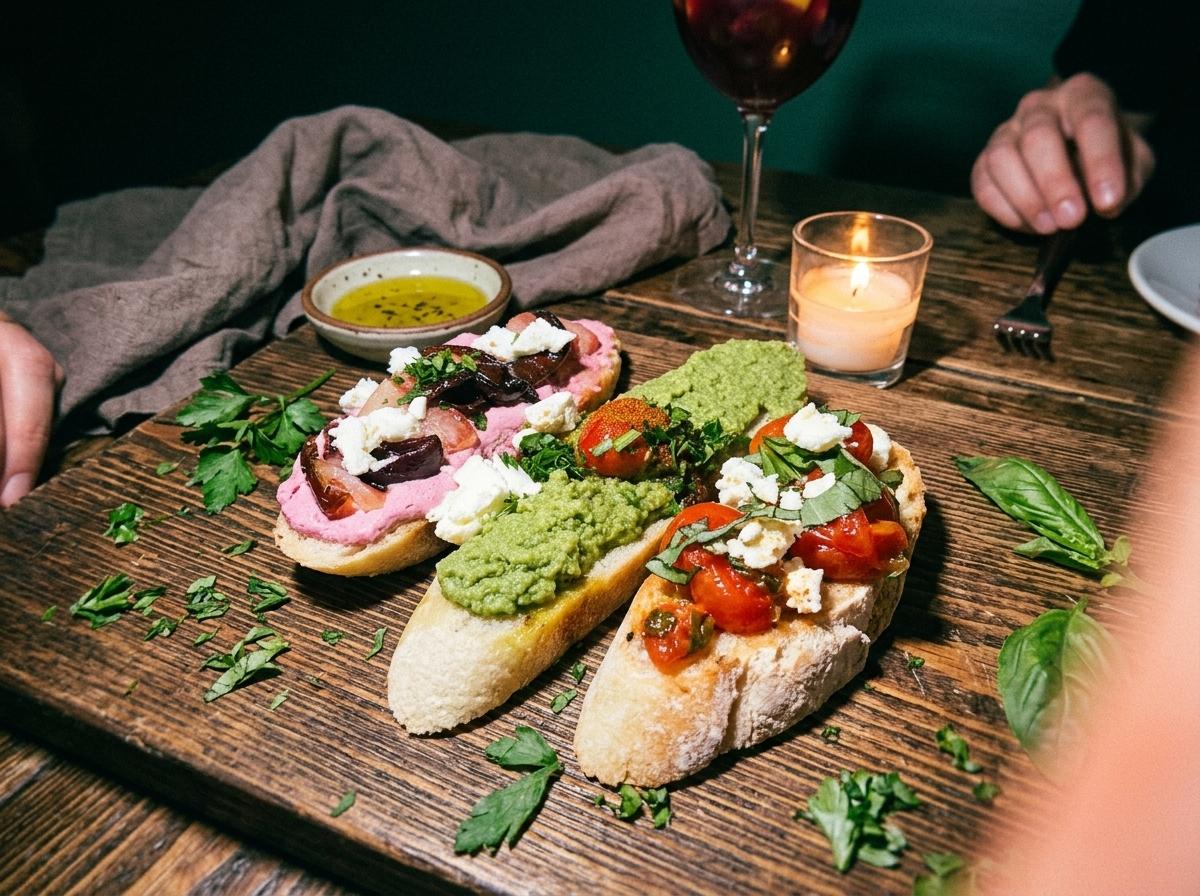
- crostini;
- and artisan pizzas.
The pairing examples should be rebuilt around those dishes.
For the current menu, Dinner Menu provides the current dish list, while the Wine Bottles page provides current Assyrtiko availability.
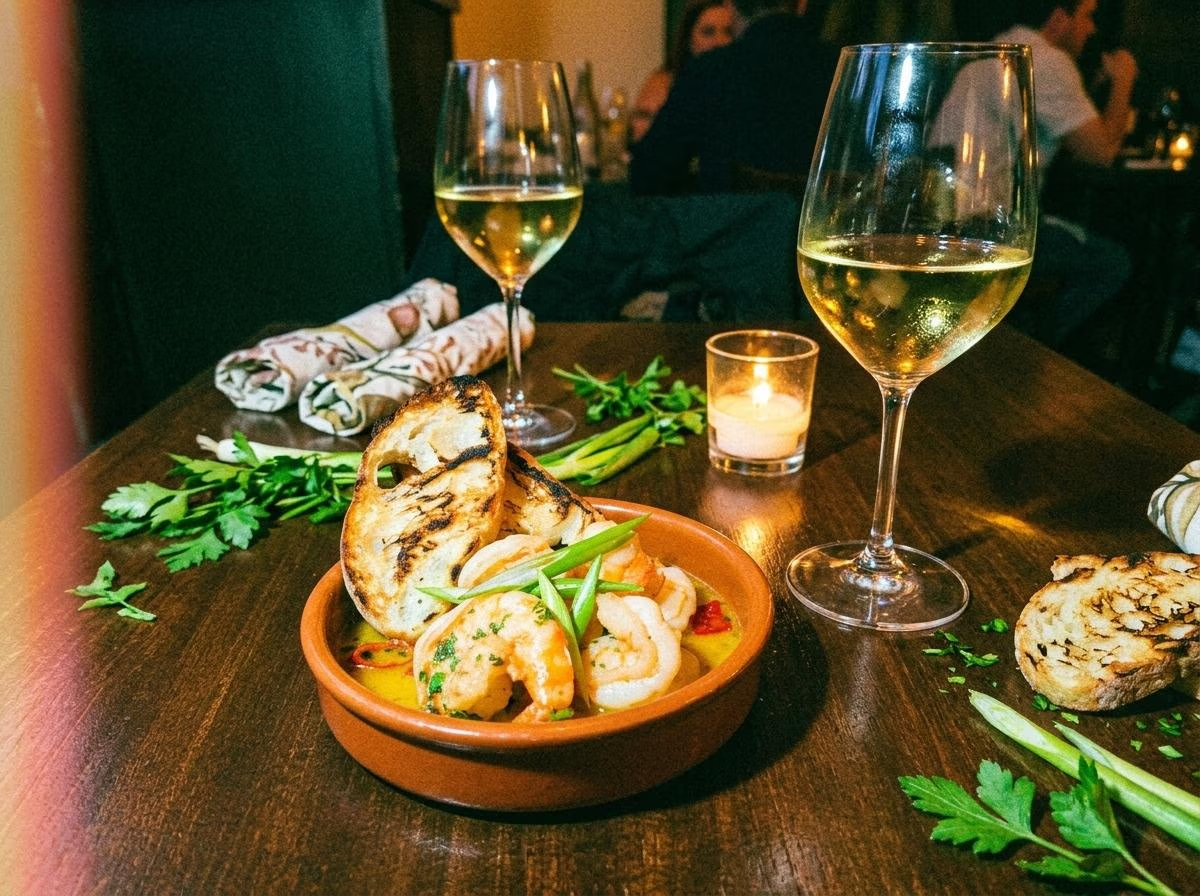
Assyrtiko With Gambas al Ajillo
Gambas al ajillo combines:
- shrimp;
- garlic;
- olive oil;
- chili;
- white wine;
- and crusty bread.
Assyrtiko’s acidity can provide freshness against:
- olive oil;
- garlic;
- and the richness of the shrimp.
Its mineral, dry character also makes it a logical wine to consider with seafood.
Use: a strong option worth considering.
Assyrtiko With Shrimp Paella
Nia’s current shrimp paella includes:
- saffron rice;
- shrimp;
- peas;
- peppers;
- parsley;
- olive oil;
- and lemon.
That gives Assyrtiko several useful points of contact:
- seafood;
- lemon;
- herbs;
- and savory rice.
Its acidity can help keep the pairing fresh beside a richer rice dish.
Again: pairing is subjective. Tempranillo, rosé or another white may appeal more to another diner.
Assyrtiko With Salmon
Salmon is richer than many white fish. That makes a structured white useful.
Assyrtiko’s acidity and density can make it a stronger candidate than an extremely delicate white, depending on the preparation.
Nia currently serves salmon with pipérade—peppers, onions and tomato.
Because tomato changes the flavor profile, this is not as automatic a pairing as: shrimp + citrus.
Use: worth considering rather than: ideal.
Assyrtiko With Crisp Cauliflower
Assyrtiko does not need seafood to work.
Nia’s current crisp cauliflower includes:
- rosemary hummus;
- chili oil;
- and pita.
Acidity can help with:
- fried or crisp texture;
- hummus richness;
- and chili oil.
A mineral white can also be useful when the diner wants something less aromatic.
Assyrtiko With Patatas Bravas
Patatas bravas combine:
- fried potato;
- spicy tomato sauce;
- and saffron aioli.
Assyrtiko’s acidity can refresh the palate against:
- potato;
- fried texture;
- and aioli.
However, tomato and spice can alter the pairing. A rosé or another white might appeal more to some guests.
This is why wine pairing should be explained as a choice rather than a rule.
Assyrtiko With Chicken Pintxos
Nia currently serves chicken pintxos with spicy remoulade.
A structured white can work with poultry, particularly when the dish includes:
- spice;
- fat;
- or sauce.
Assyrtiko’s acidity may provide contrast against the remoulade.
Again: ask about the current wine and dish rather than assuming every vintage behaves identically.
Assyrtiko With Pizza
Nia currently offers:
- meatball;
- trufa/funghi;
- Basque;
- and margarita pizzas.
Assyrtiko may work particularly well when a pizza emphasizes:
- cheese;
- mushrooms;
- garlic;
- herbs;
- or bright acidity.
A meat-heavy pizza may push some diners toward red wine.
Does Assyrtiko Pair With Seafood?
Yes, seafood is one of the grape’s strongest and most established pairing categories.
Assyrtiko combines:
- acidity;
- structure;
- and mineral character.
The broader Mediterranean Wine Pairing Hub should still own which wine should I choose for seafood generally.
Is Assyrtiko Only for Greek Food?
No.
Assyrtiko can work with cuisines beyond Greek food, especially preparations involving:
- seafood;
- salinity;
- acid;
- and savory complexity.
It is better to match:
- structure to structure;
- acid to richness;
- and wine style to the whole dish
than assume Greek wine must only accompany Greek food.
Best Wine for Greek Food covers category-level Greek wine selection.
Is Assyrtiko Dry?
Most familiar modern Assyrtiko table wines are dry. However, the grape is also used in sweet wines including Santorini Vinsanto.
Assyrtiko is a grape, not one guaranteed sweetness level.
Nia’s current Domaine Skouras Assyrtiko is a dry white.
Is Assyrtiko High in Acidity?
Yes.
High acidity is one of the grape’s defining characteristics.
What makes Assyrtiko particularly noteworthy is its ability to retain freshness even in warm Greek growing conditions.
This acidity contributes to:
- food friendliness;
- aging ability;
- and the firm shape of the wine.
Is Assyrtiko “Mineral”?
Minerality is widely used as tasting language for Assyrtiko, particularly Santorini examples.
But it should be treated as: sensory terminology rather than a simplistic claim that volcanic minerals literally move from soil directly into the flavor of the wine.
Santorini’s volcanic terroir is strongly associated with the distinctive mineral character perceived in its Assyrtiko wines.
Does Sea Breeze Make Assyrtiko Taste Salty?
Not in a simple direct-cause sense.
Santorini’s maritime environment, dry climate, winds and volcanic soils are all part of the island’s terroir.
Santorini Assyrtiko is often described as saline or sea-salt-like.
That is a tasting observation, not a literal ingredient claim.
How Do You Pronounce Assyrtiko?
A practical English approximation is: ah-SEER-tee-ko
Pronunciation varies slightly by speaker. Restaurant guests do not need perfect pronunciation to order it.
You can simply ask for:
- the Skouras Assyrtiko
- or:
- the Greek Assyrtiko bottle.
Is Assyrtiko Good for Beginners?
It can be, especially for someone who already likes:
- dry Sauvignon Blanc;
- Albariño;
- Chablis-style Chardonnay;
- or other high-acid whites.
But Assyrtiko is not necessarily:
- soft;
- fruity;
- or easy in the same way as a lightly sweet white.
Some Santorini examples can feel:
- firm;
- austere;
- and highly structured.
If you enjoy dry, high-acid, mineral-driven white wine, Assyrtiko is worth trying.
Can You Try Assyrtiko by the Glass at Nia?
Based on Nia’s current live Wine By Glass page, Assyrtiko is not currently listed by the glass.
The current by-the-glass whites are:
- Albariño;
- Chardonnay;
- Riesling;
- and Sauvignon Blanc.
Assyrtiko appears instead on Nia’s current Wine Bottles list as Domaine Skouras Assyrtiko from Nemea.
Is There Currently an Assyrtiko Wine Flight at Nia?
Nia’s current Wine Tasting page does not show such an Assyrtiko flight.
Its current premium wine pairing instead lists:
- Skouras St. George Agiorgitiko;
- Voelos Crianza Tempranillo;
- and La Sala Chianti Classico.
The Assyrtiko Currently Available at Nia
Nia’s live bottle list currently identifies: Domaine Skouras Assyrtiko — Nemea, Greece.
The producer identifies the current wine as:
- 100% Assyrtiko;
- PGI Peloponnese;
- Nemea vineyards;
- 620 meters elevation;
- red-clay soil;
- stainless-steel fermentation;
- four months on fine lees;
- and no malolactic fermentation.
The producer’s tasting notes emphasize:
- citrus;
- apple;
- mineral and saline character;
- structure;
- crisp acidity;
- and a long finish.
That should be the page’s real-world Nia example.
Why This Is Better Than Pretending Nia Currently Serves Santorini Wine
Nia’s Assyrtiko is from: Nemea.
Assyrtiko began in Santorini, but the grape now succeeds across Greece—and Nia’s current bottle demonstrates a mainland Peloponnese expression.
If You Want to Try Assyrtiko at Nia
You do not need to know technical wine vocabulary.
A useful question is: I like dry, crisp white wines with high acidity. Would the current Assyrtiko suit me?
Or: We’re ordering shrimp paella and gambas al ajillo. Would you choose the Assyrtiko or one of the current by-the-glass whites?
That lets the restaurant team compare:
- Assyrtiko;
- Albariño;
- Sauvignon Blanc;
- or another current wine
based on the actual dishes and your preferences.
Frequently Asked Questions
What is Assyrtiko?
Assyrtiko is an indigenous Greek white grape that originated on Santorini and is now planted throughout Greece.
It is known for:
- high acidity;
- structure;
- citrus;
- mineral character;
- and strong aging potential.
Is Assyrtiko always from Santorini?
No. Santorini is the grape’s historic home, but Assyrtiko is now grown in many Greek regions.
Is Nia’s Assyrtiko from Santorini?
Not currently. Nia’s live Wine Bottles page lists Domaine Skouras Assyrtiko from Nemea, Greece.
What does Assyrtiko taste like?
Common characteristics can include:
- citrus;
- mineral or stony impressions;
- salinity;
- high acidity;
- and a structured dry finish.
Mainland versions may show somewhat more fruit than classic Santorini examples.
Is Assyrtiko a light wine?
Not necessarily. It can be fresh and high-acid while still having considerable body and texture. Santorini versions can be particularly concentrated.
Is Assyrtiko dry?
Most familiar table-wine expressions are dry, although Assyrtiko can also be used in sweet styles such as Vinsanto.
Does Assyrtiko pair with seafood?
Yes. Fish and seafood are among the grape’s most established pairing categories.
Does Assyrtiko pair with shrimp?
It can. Nia’s gambas al ajillo and shrimp paella are both current dishes worth considering with a high-acid Greek white.
Does Assyrtiko pair with salmon?
Potentially. Its structure can work with richer fish, although the full preparation matters.
Is Assyrtiko similar to Sauvignon Blanc?
Both can have high acidity, but Sauvignon Blanc is often more aromatic and herbaceous while Assyrtiko tends to emphasize structure and minerality.
Is Assyrtiko similar to Albariño?
Both can appeal to people who enjoy crisp, mineral whites, but Albariño is often fruitier while Assyrtiko can be firmer and more austere.
Can Assyrtiko age?
Yes. High-quality examples can develop for years, with some gaining honeyed, nutty and more complex mineral characteristics over time.
What is PDO Santorini?
PDO Santorini is a protected wine designation.
Current dry PDO Santorini wines must contain at least 85% Assyrtiko, with Athiri and Aidani permitted in the blend. Many are 100% Assyrtiko.
What is Nykteri?
Nykteri is a traditional dry PDO Santorini style with specific production and aging requirements.
What is Vinsanto?
Vinsanto is Santorini’s historic sweet wine made from sun-dried grapes and extended aging.
Can I order Assyrtiko by the glass at Nia?
Not according to Nia’s current Wine By Glass page. Assyrtiko is currently listed on the Wine Bottles page instead.
Does Nia currently offer an Assyrtiko wine flight?
Not according to the current Wine Tasting page. The live tasting currently features other wines, so the old Assyrtiko-flight claim should be removed.