Seasonal Mediterranean Cooking: A Year-Round Guide to Spring, Summer, Fall & Winter
Mediterranean cooking is often associated with tomatoes, olive oil, seafood, herbs, peppers, citrus, and vegetables glowing under warm summer sun. That picture is only part of the story. The Mediterranean region has seasons too. Cooks have long worked with ingredients according to climate, harvest, preservation, availability, and local tradition. Fresh tomatoes and peppers naturally lend themselves to warm-weather dishes. Cooler months invite different vegetables, soups, braises, legumes, preserved foods, grains, citrus, roasted ingredients, and slower cooking techniques.
When Mediterranean cooking is interpreted in Chicago, the seasonal picture changes again. A restaurant in the West Loop does not have the same agricultural calendar as Valencia, Crete, Sicily, or coastal Turkey. Local Illinois produce has its own growing seasons, while restaurants also rely on regional, national, imported, frozen, canned, dried, and preserved ingredients throughout the year.
That makes seasonal Mediterranean cooking more interesting than simply saying: “Use fresh ingredients.” A better question is: How do Mediterranean ingredients and cooking techniques adapt as the seasons change? That is the purpose of this guide.
Nia Restaurant & Wine Bar currently describes its food as Mediterranean-inspired with Spanish roots. Its present dinner menu includes seasonal-looking ingredients such as tomatoes, peppers, peas, cauliflower, mushrooms, onions, beetroot, herbs, citrus, potatoes, olives, seafood, and other ingredients that can illustrate seasonal cooking ideas. But the current public menu does not establish that every dish changes every season or that every ingredient comes from a local farm.
That distinction matters. This article should explain seasonality honestly without inventing a farm-to-table program Nia has not publicly documented.
What Does Seasonal Mediterranean Cooking Mean?
Seasonal cooking means allowing ingredient availability and seasonal character to influence what and how you cook.
That can affect:
- the vegetables you choose;
- the fruit available for desserts or salads;
- whether a dish is raw, grilled, roasted, or braised;
- how heavy or light the meal feels;
- which herbs and aromatics dominate;
- and whether fresh produce, preserved ingredients, legumes, grains, seafood, or slow-cooked foods take the lead.
Seasonality does not mean every ingredient must come from five miles away. It does not mean frozen vegetables are inferior. It does not mean canned tomatoes, dried beans, preserved olives, grains, spices, or imported citrus somehow violate Mediterranean cooking. Preservation itself is deeply important to many food traditions.
The USDA’s seasonal-produce guidance explicitly notes that seasonal availability varies by location and weather and that fresh, frozen, canned, and dried fruits and vegetables can all play useful roles throughout the year.
That is a much stronger framework than treating “fresh” as a synonym for “good” and everything else as inferior.
Seasonal Does Not Automatically Mean Local
This is one of the biggest corrections needed on Nia’s current article.
The live page says Nia’s chefs work with nearby farms and use local produce as a central part of the menu. It also says each menu changes throughout the year according to local seasonal availability.
Those are specific operational claims.
They should remain only if Nia can verify:
- which farms it works with;
- which ingredients are locally sourced;
- how often the menu changes;
- and whether the relationships remain current.
Without that evidence, the article should not say:
Nia partners with nearby farms.
Nia uses only local produce.
Nia’s menu changes every season.
Every dish reflects what is currently harvested in Illinois.
Instead, the evergreen article can use current menu ingredients as real examples while explaining seasonal Mediterranean cooking more broadly. That is factual and durable.
Seasonality in Chicago Is Different From Seasonality Around the Mediterranean
This distinction gives the article a much more useful angle.
A tomato may have a different local season in Chicago than it does in southern Spain. Illinois asparagus has a relatively short spring period. Tomatoes, peppers, eggplant, sweet corn, berries, cucumbers, and zucchini are especially associated with warmer Illinois months. Fall brings squash, apples, pears, cauliflower, root vegetables, potatoes, and greens. Winter relies more heavily on storage crops, hardy vegetables, preserved food, citrus coming from warmer regions, grains, beans, and other ingredients that do not require a local summer harvest.
Illinois Extension identifies spring produce such as asparagus, peas, lettuce, spinach, radishes, rhubarb, strawberries, and onions; summer produce such as tomatoes, cucumbers, peppers, eggplant, green beans, berries, peaches, and corn; fall produce such as squash, apples, pears, cauliflower, potatoes, and root vegetables; and winter availability that includes squash, cabbage, greens, potatoes, and beets.
This makes seasonal Mediterranean cooking in Chicago an adaptation. Mediterranean cooking principles meet Midwestern availability. That is a stronger and more accurate story than pretending Chicago has the same growing calendar as Greece or Spain.
Spring Mediterranean Cooking: Freshness, Greens, Peas, and Herbs
Spring cooking often feels transitional. Winter’s heavier cooking techniques begin giving way to:
- greens;
- peas;
- asparagus;
- radishes;
- fresh herbs;
- young onions;
- lighter soups;
- vegetable-forward plates;
- and brighter acidic flavors.
Illinois Extension identifies asparagus, peas, lettuce, spinach, radishes, rhubarb, strawberries, onions, cabbage, and other greens among typical spring produce.
Mediterranean-style cooking can use those ingredients without forcing them into one “traditional Mediterranean” recipe.
The useful principles are:
- keep tender vegetables recognizable;
- use lemon or vinegar for brightness;
- add herbs near the end when their fresh aroma matters;
- and avoid burying delicate spring produce under unnecessarily heavy sauces.
Spring Technique: Blanching
Brief blanching can work well for:
- peas;
- asparagus;
- green beans;
- or tender greens.
The goal is to preserve texture rather than cooking vegetables until they lose their identity.
After blanching, vegetables can be dressed with:
- olive oil;
- lemon;
- herbs;
- garlic;
- or a small amount of cheese.
Spring Technique: Quick Sautéing
Tender greens and young vegetables can often be cooked quickly.
A little olive oil, garlic, and acidity may be enough.
The cooking method should reflect the ingredient’s delicacy.
Spring asparagus does not necessarily need the same treatment as winter squash.
Spring Technique: Grilling
As weather improves, grilling becomes useful again.
Asparagus, spring onions, seafood, and even bread can pick up smoke and char without requiring long cooking.
Lemon, herbs, and olive oil can then provide contrast.
A Current Nia Spring Connection: Peas and Greens
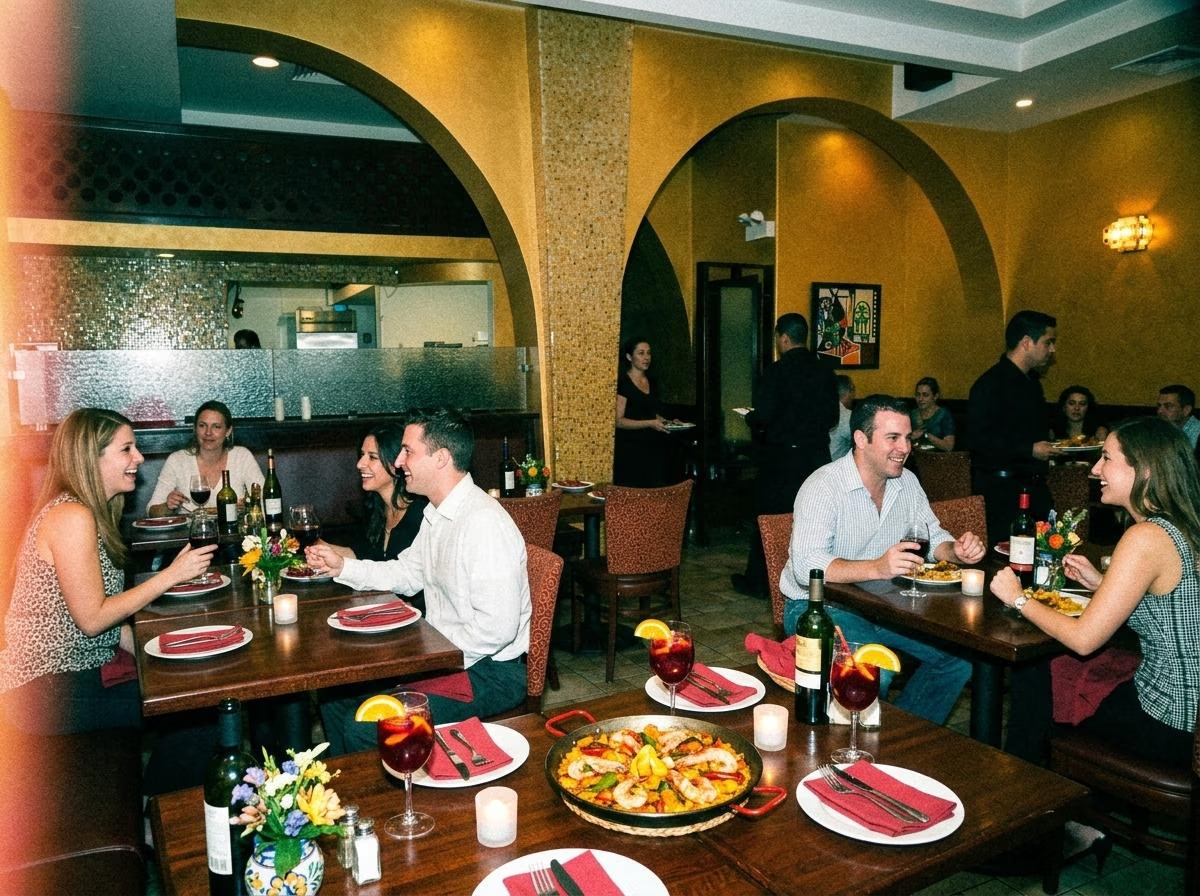
Nia’s current shrimp paella includes peas, peppers, parsley, olive oil, and lemon, while the Nia salad currently uses mixed greens with goat cheese, avocado, dates, piquillo peppers, almonds, and vinaigrette.
Those dishes are not proof that Nia publishes a dedicated spring menu.
They simply provide useful current examples of how:
- peas can contribute sweetness and color;
- greens can provide freshness;
- herbs can brighten cooked food;
- and acidic dressings or lemon can balance richer ingredients.
What a Spring Mediterranean-Inspired Plate Might Look Like
A home cook could build a spring plate around:
- grilled asparagus;
- peas;
- white beans;
- leafy greens;
- lemon;
- fresh herbs;
- and olive oil.
Seafood or chicken could be added if desired.
The goal is not to create one “correct” Mediterranean recipe.
It is to use seasonal produce within flavor patterns common to Mediterranean cooking.
Summer Mediterranean Cooking: Tomatoes, Peppers, Eggplant, Herbs, and the Grill
Summer is probably the season most people associate with Mediterranean food. For good reason.
Illinois summer produce includes tomatoes, peppers, cucumbers, eggplant, zucchini, berries, green beans, corn, garlic, peaches, and other warm-weather ingredients.
This is the season when Mediterranean-style cooking can rely heavily on:
- raw vegetables;
- quick grilling;
- olive oil;
- herbs;
- tomatoes;
- peppers;
- fruit;
- seafood;
- and strong contrasts between char and acidity.
The ingredients often need less manipulation because they already bring substantial flavor.
Summer Tomatoes Need Less Help
A ripe tomato can carry a dish with surprisingly few additional ingredients.
Tomato can be combined with:
- bread;
- olive oil;
- garlic;
- basil;
- cheese;
- cucumber;
- onion;
- peppers;
- or seafood.
The current Nia menu demonstrates tomato in several distinct ways:
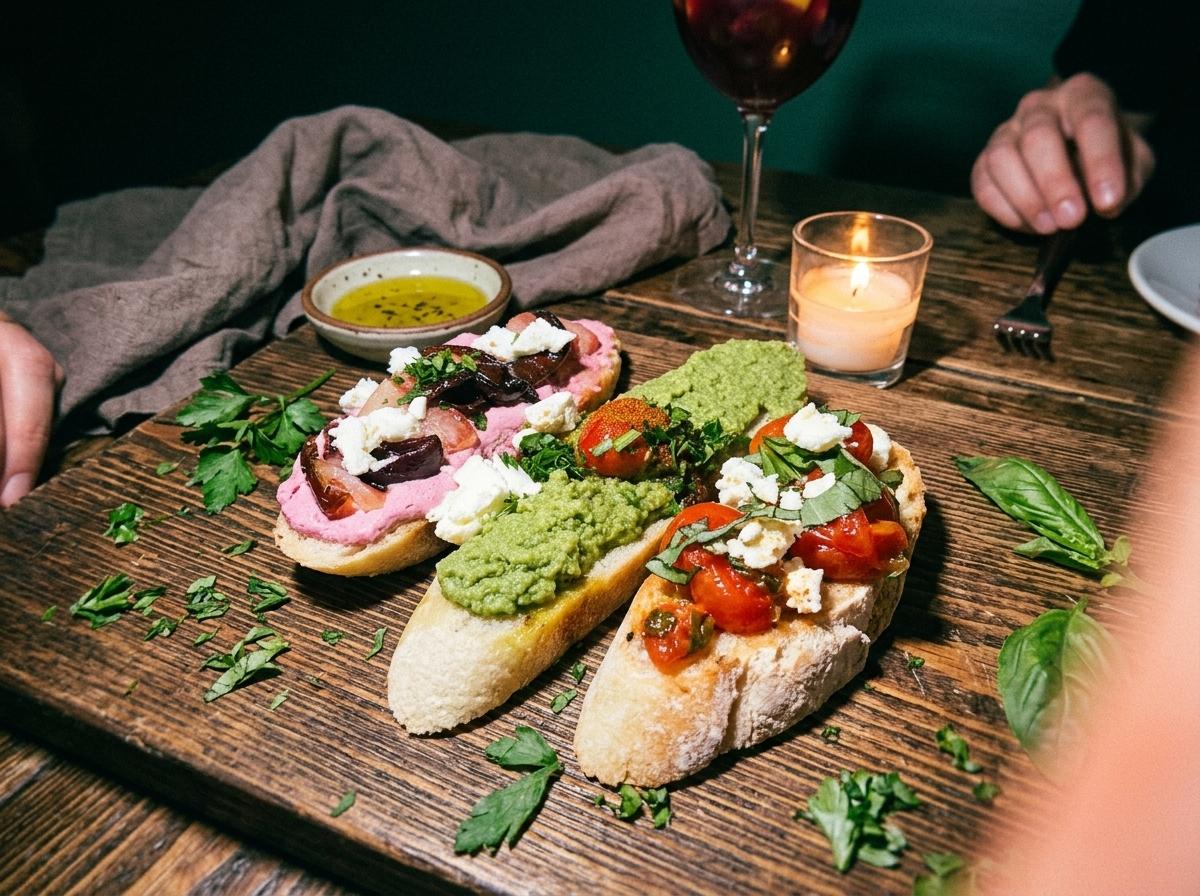
- the pan-con-tomate-inspired crostini uses tomato jam with basil and feta;
- the salmon is served with pipérade containing peppers, onions, and tomato;
- patatas bravas uses a spicy tomato sauce;
- and multiple pizzas use tomato-based sauce.
This is a useful lesson in seasonal cooking.
One ingredient can behave differently according to technique.
Raw or lightly prepared tomato emphasizes freshness.
Cooked tomato becomes sweeter and more concentrated.
Reduced tomato becomes sauce or jam.
Summer Peppers Can Be Fresh, Roasted, or Cooked Down
Bell peppers are strongly associated with Illinois summer availability.
Mediterranean cooking offers several useful approaches:
- grill them;
- roast them;
- slow-cook them with onion and tomato;
- slice them into salads;
- or incorporate them into rice and vegetable dishes.
Nia’s current menu uses peppers in:
- salmon pipérade;
- shrimp paella;
- Nia salad through piquillo peppers;
- veggie croquettes;
- and Basque pizza.
Again, this does not prove the peppers are locally sourced or exclusively seasonal. It shows how one ingredient can move through different cooking styles.
Summer Eggplant and Zucchini
Eggplant and zucchini are natural warm-season ingredients in Illinois.
They work well with:
- grilling;
- roasting;
- tomato;
- garlic;
- olive oil;
- yogurt;
- herbs;
- or grains.
Eggplant can become smoky and soft.
Zucchini benefits from quick cooking because prolonged cooking can make it watery.
These are useful Mediterranean cooking principles even if neither vegetable happens to appear on Nia’s current menu.
The article should educate beyond the restaurant while keeping Nia examples factual.
Summer Seafood
Warm weather often invites lighter seafood preparations.
Grilling, pan-searing, lemon, herbs, tomato, and peppers can all work well.
But the article should avoid saying that seafood is inherently a summer food.
Fish and shellfish are eaten throughout the year.
Seasonality depends on species, fishery, region, and sourcing.
Nia’s seafood guide already owns the deeper questions about seafood sourcing and cooking.
This page only needs to explain how lighter cooking techniques often fit summer menus.
Current Nia Summer-Style Examples
Several current Nia dishes naturally illustrate warm-weather cooking:
- Pan con tomate-inspired crostini — tomato, basil, feta.
- Pan-seared salmon with pipérade — peppers, onions, tomato.
- Shrimp paella — peas, peppers, parsley, olive oil, lemon.
- Nia Salad — mixed greens, piquillo peppers, almonds, vinaigrette.
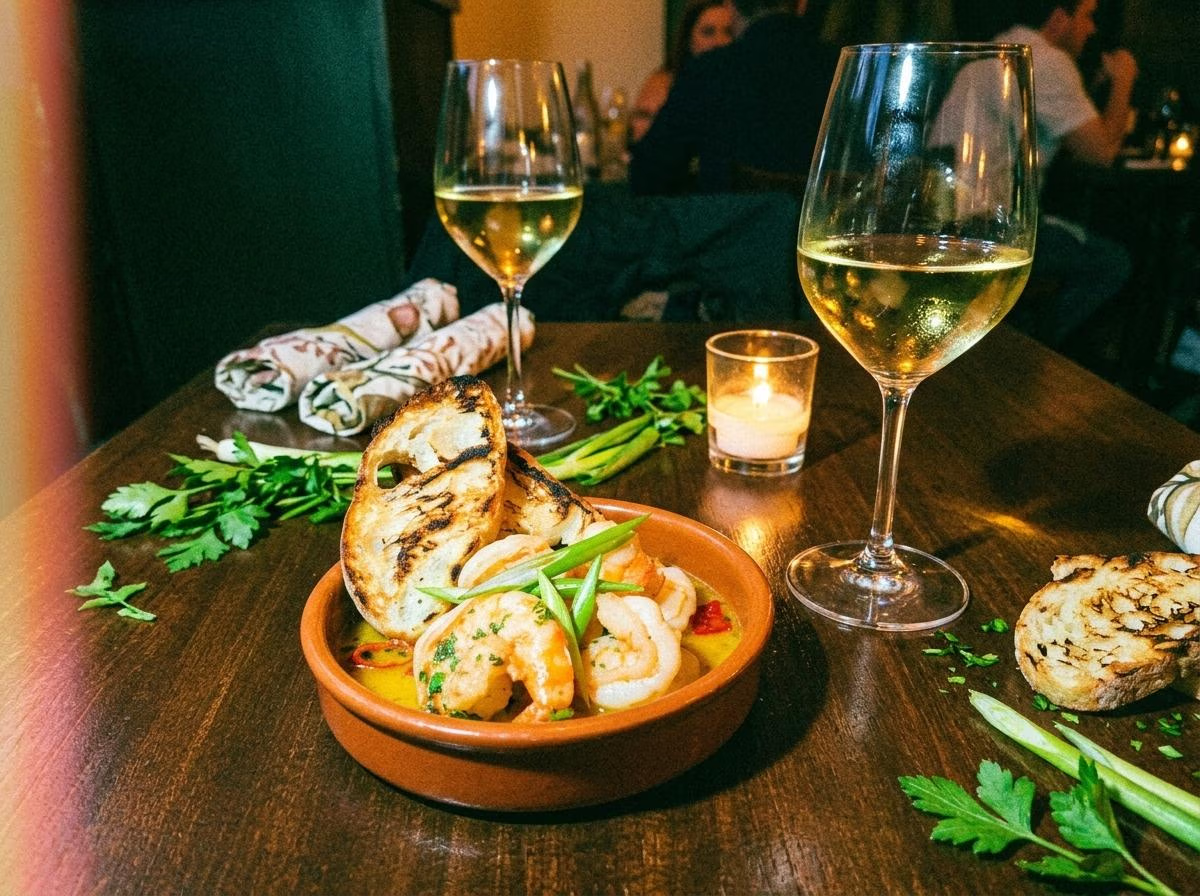
- Gambas al ajillo — shrimp, garlic-infused olive oil, chili, white wine.
These are current menu examples, not promises that they are exclusive summer dishes.
Summer Technique: Use Acidity Aggressively
Richness can feel heavier in hot weather.
Lemon, vinegar, tomato, and other acidic ingredients help create contrast.
This is why summer dishes often work well with:
- lemon-dressed vegetables;
- tomato salads;
- vinegar-based dressings;
- or seafood finished with citrus.
Acidity makes food taste brighter without requiring additional weight.
Summer Technique: Grill Instead of Braise
Long braises certainly can be eaten in summer, but grilling often makes practical sense in warm weather.
- Vegetables cook quickly.
- Seafood develops char.
- Bread becomes crisp.
- Meat can be cooked without heavy sauces.
Then herbs, vegetables, or lemon can provide finishing flavor.
Summer Technique: Let Some Ingredients Stay Raw
Seasonal cooking does not require cooking every vegetable.
- Tomatoes.
- Cucumbers.
- Herbs.
- Leafy greens.
- Some peppers.
- Fruit.
These may be at their most interesting when served raw or only lightly dressed.
A seasonal guide should therefore discuss less cooking as a legitimate technique.
Fall Mediterranean Cooking: Roasting, Mushrooms, Cauliflower, Squash, and Deeper Flavors
Fall changes both ingredients and cooking methods.
Illinois Extension lists produce such as:
- winter squash;
- cauliflower;
- mushrooms;
- potatoes;
- apples;
- pears;
- beets;
- root vegetables;
- greens;
- and pumpkins
among foods associated with fall availability.
As temperatures drop, roasting becomes especially useful.
Vegetables can caramelize. Mushrooms become more savory. Squash becomes sweeter. Root vegetables develop deeper flavor.
The food does not need to become extremely heavy.
Seasonal Mediterranean cooking can create warmth through technique rather than simply adding cream and butter.
Fall Technique: Roasting
Roasting works particularly well with:
- cauliflower;
- squash;
- mushrooms;
- carrots;
- beets;
- onions;
- and potatoes.
Olive oil helps with surface browning.
Herbs and spices can be added before or after roasting depending on their sensitivity to heat.
Acidity at the end can keep roasted vegetables from feeling flat.
Fall Technique: Browning
Fall ingredients often respond well to deeper browning.
- Mushrooms gain intensity.
- Onions become sweeter.
- Cauliflower develops nutty flavors.
- Potatoes become crisp.
Browning provides flavor without necessarily needing a complicated sauce.
Current Nia Fall-Style Example: Cauliflower
Nia’s current crisp cauliflower is served with rosemary hummus, chili oil, and pita.
Illinois Extension includes cauliflower among fall seasonal produce.
That makes the dish a useful example of how a cooler-season vegetable can be paired with:
- legume-based hummus;
- an aromatic herb;
- chili;
- and bread.
However, the current menu describes the cauliflower as crisp rather than identifying the produce as locally harvested or fall-only.
Do not add those claims.
Current Nia Fall-Style Example: Mushrooms
Nia currently uses mushrooms in both a mushroom-and-olive tapenade crostini and its trufa pizza, which combines mushroom with béchamel, garlic, pecorino, mozzarella, and truffle-honey elements.
Mushrooms also appear in USDA and Illinois seasonal guidance across cooler portions of the year.
This illustrates another fall principle:
earthy ingredients can work with briny olives in one dish and richer dairy-based flavors in another.
Current Nia Fall-Style Example: Potatoes
Patatas bravas is not a fall-only dish.
It is served year-round in many Spanish restaurants.
But potatoes are strongly compatible with cooler-season cooking because they support:
- roasting;
- frying;
- braising;
- and rich sauces.
Nia currently serves patatas bravas with crisp potatoes, spicy tomato sauce, and saffron aioli.
That should be discussed as a technique example, not a claim of seasonal sourcing.
Fall Squash and Pumpkin
Nia’s current live menu does not list pumpkin or winter squash.
The article should not invent a pumpkin dish simply to make the season look complete.
Instead, explain how Mediterranean-style home cooking can use fall squash.
Roasted squash can work with:
- olive oil;
- herbs;
- yogurt;
- tahini;
- nuts;
- lentils;
- grains;
- or spices.
That gives the guide genuine seasonal depth while keeping restaurant references accurate.
Fall Fruits Can Work in Savory Food
Apples, pears, grapes, pomegranates, and other fall fruits can provide:
- sweetness;
- acidity;
- texture;
- or garnish.
Fruit does not need to appear only in dessert.
A salad with bitter greens, nuts, cheese, and fruit is one simple example.
Nia’s current salad uses dates rather than local fall fruit, illustrating the broader Mediterranean use of fruit inside savory dishes.
Dates are not being presented here as an Illinois fall crop.
The lesson is simply that sweet fruit can create contrast inside a savory plate.
Winter Mediterranean Cooking: Soups, Onions, Roots, Citrus, Legumes, and Slow Heat
Winter is where the stereotype of Mediterranean cooking becomes least useful.
The region is often imagined as permanently warm.
It is not.
Cold-weather Mediterranean cuisines contain soups, stews, baked dishes, braises, legumes, preserved foods, grains, roasted vegetables, and richer preparations.
Chicago winter makes those techniques even more relevant.
Illinois winter produce includes foods such as:
- winter squash;
- cabbage;
- greens;
- potatoes;
- beets;
- onions;
- and other storage vegetables.
Citrus from warmer climates also becomes particularly useful during winter because it adds brightness when local summer fruit is unavailable.
Winter Technique: Slow Cooking
Slow cooking transforms:
- onions;
- beans;
- lentils;
- root vegetables;
- meat;
- and tomato-based sauces.
Time becomes an ingredient.
Onions become sweeter.
Legumes soften.
Meat becomes tender.
Sauces become concentrated.
This does not make winter Mediterranean cooking less vibrant.
It simply produces flavor through time rather than freshness alone.
Winter Technique: Soup
Soup is an obvious cold-weather format because it can combine:
- vegetables;
- beans;
- grains;
- broth;
- herbs;
- meat;
- or cheese
without requiring expensive ingredients.
Nia currently lists French onion soup with caramelized onions, crostini, and Gruyère.
French onion soup is not being presented as a representative dish of the entire Mediterranean.
It is useful here because it demonstrates what long cooking can do to a simple winter-compatible ingredient: onion.
Winter Technique: Roast and Braise
Root vegetables and winter squash tolerate longer cooking.
A braise can combine tomato, wine or stock, herbs, vegetables, and protein.
Roasting concentrates sweetness.
Finishing with lemon, parsley, vinegar, or another acidic component can prevent slow-cooked food from becoming too heavy.
A Current Nia Winter Connection: Beetroot
Nia currently offers a crostini with whipped beetroot goat cheese, pickled onion, and crispy pancetta.
Beets are listed among winter-available Illinois produce.
This dish demonstrates a useful cold-season combination:
- earthy beet;
- tangy goat cheese;
- acidic pickled onion;
- and salty pancetta.
Again, do not claim the beets are Illinois-grown or harvested that week unless the restaurant verifies it.
A Current Nia Winter Connection: Clementine
Nia’s current burnt Basque cheesecake is served with honey, clementine, and nuts.
Citrus is particularly useful in winter cooking because it brings brightness and acidity when local Midwestern summer fruit is unavailable.
This is a good example of seasonal logic without claiming that every clementine on the plate is locally grown—which would make little sense in Chicago winter.
Seasonal cooking can involve using an ingredient when it is naturally abundant somewhere appropriate, not pretending every product is local.
Does Seasonal Produce Always Taste Better?
Often, produce harvested at a favorable point in its local growing cycle can be more flavorful.
Illinois Extension notes that fresh produce is often most flavorful and affordable when purchased in season.
But this should not become an absolute rule.
A high-quality frozen pea may be more useful than an old “fresh” pea.
Canned tomatoes can be much better for a winter sauce than pale off-season fresh tomatoes.
Frozen vegetables can make weeknight cooking realistic.
Dried beans are foundational ingredients precisely because they can be stored.
Seasonal cooking is about making intelligent ingredient choices, not enforcing a purity test.
Is Seasonal Produce More Nutritious?
Avoid oversimplifying this.
The current Nia article says seasonal produce is packed with more nutrients and directly links eating seasonally with better health. That claim is too broad for this restaurant page.
Nutrient levels depend on:
- the specific food;
- variety;
- ripeness;
- storage;
- transportation;
- processing;
- cooking;
- and time after harvest.
Illinois Extension specifically notes that frozen and canned fruits and vegetables can retain useful nutrition and that getting a variety of produce matters more than insisting on only one form.
The page therefore should focus primarily on:
- flavor;
- availability;
- cooking technique;
- variety;
- and menu inspiration.
Detailed nutrition evidence belongs on the Mediterranean Diet Health Guide.
Does Seasonal Cooking Mean Fresh Food Only?
No.
This is one of the most important ideas for a credible Mediterranean guide.
Mediterranean cuisines rely heavily on preserved ingredients.
- Olives are cured.
- Cheese is aged.
- Beans are dried.
- Grains are stored.
- Fish can be salted or preserved.
- Vegetables may be pickled.
- Tomatoes can be canned or concentrated.
- Herbs can be dried.
- Fruit can be dried.
Seasonal abundance historically makes preservation more important, not less.
A cook may preserve what is abundant during one part of the year and use it later.
That is seasonality too.
Canned Tomatoes Have a Place in Winter Mediterranean Cooking
When good fresh tomatoes are unavailable locally, canned tomatoes can be an excellent choice for:
- soups;
- stews;
- braises;
- sauces;
- beans;
- and grain dishes.
This is more useful advice than telling readers they must find “sun-ripened fresh tomatoes” twelve months of the year.
The Mediterranean pantry is built partly on ingredients that last.
Frozen Peas Have a Place Too
Fresh spring peas can be wonderful.
Frozen peas are also practical because they are processed quickly after harvest and can remain useful throughout the year.
The USDA’s seasonal guide explicitly includes fresh, frozen, canned, and dried produce within practical healthy eating.
A seasonal cooking guide should therefore teach flexibility.
Dried Legumes Connect All Four Seasons
Beans, lentils, and chickpeas are useful in every season.
- In spring, they can go into salads with herbs and greens.
- In summer, chickpeas can join tomato, cucumber, and peppers.
- In fall, lentils can sit beside roasted vegetables.
- In winter, beans can become soups and stews.
Their long shelf life is part of their usefulness.
This deeper ingredient education belongs primarily on Nia’s Mediterranean Ingredient Guide, but seasonal use is relevant here.
How Olive Oil Changes Across the Seasons
Olive oil itself does not need a new identity every three months.
What changes is what surrounds it.
Spring
Use it lightly with herbs, greens, asparagus, or peas.
Summer
Combine it with tomato, cucumber, peppers, grilled vegetables, seafood, and citrus.
Fall
Use it for roasting cauliflower, mushrooms, squash, and root vegetables.
Winter
Use it in soups, beans, braises, roasted vegetables, and finishing sauces.
The Ingredient Guide should own olive oil’s detailed nutritional and culinary profile.
This page should explain its seasonal applications.
How Herbs Change Across the Seasons
Fresh herbs can be abundant in warm weather.
Dried herbs become particularly useful when fresh choices are limited.
But dried does not mean inferior.
Fresh basil and dried oregano, for example, have different culinary functions.
A spring or summer salad may benefit from fresh herbs.
A winter tomato sauce may work extremely well with dried oregano or thyme.
Seasonal cooking means choosing the form that fits the dish.
How Cooking Methods Can Follow the Calendar
The most distinctive value this page can offer is linking season to technique.
Spring
Favor:
- quick sautéing;
- blanching;
- light roasting;
- grilling;
- fresh herbs;
- bright dressings.
Summer
Favor:
- raw preparation;
- grilling;
- char;
- quick pan-searing;
- fresh tomato;
- citrus;
- herbs.
Fall
Favor:
- roasting;
- browning;
- toasting;
- grain-based dishes;
- mushrooms;
- squash;
- root vegetables.
Winter
Favor:
- soups;
- braises;
- slow cooking;
- stews;
- roasting;
- beans;
- storage vegetables;
- preserved ingredients.
These are patterns, not laws.
A grilled fish can be delicious in January.
A soup can be enjoyable in July.
Seasonality guides cooking.
It does not police it.
How to Build a Seasonal Mediterranean Plate
A useful formula is: seasonal vegetable + protein or legume + grain or bread if needed + fat + acidity + aromatic ingredient.
Spring
Asparagus + white beans + farro + olive oil + lemon + parsley.
Summer
Tomato + grilled shrimp + bread + olive oil + vinegar + basil.
Fall
Roasted cauliflower + chickpeas + bulgur + tahini or olive oil + lemon + rosemary.
Winter
Lentils + roasted beet + barley + olive oil + vinegar + thyme.
These are modern Mediterranean-inspired combinations, not claims to traditional regional recipes.
That distinction should remain clear.
Seasonal Cooking at a Restaurant Is Different From Seasonal Cooking at Home
A home cook can decide at 5 PM that a farmers-market ingredient will become dinner.
A restaurant has to consider:
- supplier consistency;
- volume;
- menu pricing;
- staff training;
- prep procedures;
- recipe consistency;
- allergen documentation;
- and customer expectations.
That means a restaurant does not necessarily rewrite the entire menu every time a new vegetable comes into season.
Seasonality may instead appear through:
- specials;
- garnishes;
- soups;
- vegetable sides;
- desserts;
- limited dishes;
- or ingredient substitutions.
This is why the article should avoid promising that Nia’s entire menu rotates quarterly unless operations confirms it.
Current Nia Menu Examples Across the Seasonal Spectrum
Nia’s September 2026 dinner menu contains ingredients that illustrate multiple seasonal directions.
Current examples include:
- Tomato and basil in the pan-con-tomate-inspired crostini.
- Peppers, onions, and tomato in the salmon pipérade.
- Peas, peppers, parsley, olive oil, and lemon in shrimp paella.
- Mixed greens and piquillo peppers in Nia salad.
- Cauliflower and rosemary hummus in the crisp cauliflower.
- Mushrooms in crostini and trufa pizza.
- Potatoes and tomato in patatas bravas.
- Roasted red peppers and onions in Basque pizza.
- Beetroot and pickled onion in the pancetta crostini.
- Clementine and nuts with burnt Basque cheesecake.
These are good examples because they are on the live menu now.
Do not call them spring, summer, fall, or winter exclusives unless Nia actually changes availability seasonally.
Want to see how Mediterranean ingredients are being used at Nia right now? Review the current dinner menu for today’s seafood, vegetables, shared plates, pizza, and desserts.
Seasonal Cooking vs Mediterranean Ingredients
Nia’s Mediterranean Ingredient Guide should own:
- what olive oil does;
- what legumes contribute;
- how herbs function;
- why citrus matters;
- how tomatoes and peppers work;
- what seafood contributes;
- and the role of nuts, grains, garlic, olives, and other ingredients.
This page should own:
when those ingredients make sense and how cooking technique changes across the year.
The difference is:
Ingredient Guide: What is this ingredient and what does it do?
Seasonal Cooking Guide: How might I use this ingredient differently in spring, summer, fall, or winter?
That is a strong cannibalization boundary.
For deeper individual ingredient education, see the guide to Mediterranean ingredients.
Seasonal Cooking vs Mediterranean Diet Recipes
The Recipes page should own:
- ingredient quantities;
- servings;
- step-by-step cooking instructions;
- meal formulas;
- and actual home recipes.
This seasonal page can provide combinations and cooking ideas but should not become another ten-recipe collection.
The distinction is:
Seasonal Guide: What changes with the season?
Recipe Guide: Exactly how do I cook the dish?
Seasonal Cooking vs Mediterranean Cuisine Explained
The Cuisine Explainer owns:
- what Mediterranean cuisine means;
- regional differences;
- Spain;
- Greece;
- Italy;
- Levant;
- North Africa;
- tapas;
- mezze;
- pintxos;
- paella;
- and first-time dining orientation.
This page should not repeat that entire cultural map.
Its narrow role is seasonality and cooking technique.
For broader context, see Mediterranean cuisine explained.
Seasonal Cooking vs Mediterranean Seafood
The Seafood Guide owns:
- fish quality;
- fresh vs frozen;
- wild vs farmed;
- sustainable sourcing;
- cold handling;
- species;
- pan-searing;
- grilling;
- and texture.
This seasonal page can mention seafood as part of spring/summer cooking.
Then link deeper.
Seasonal Cooking vs Mediterranean Diet Health Content
Do not turn seasonal cooking into medical advice.
Avoid claims such as:
- seasonal eating prevents disease;
- seasonal produce contains dramatically more nutrients;
- winter vegetables boost immunity;
- or summer produce detoxes the body.
Those claims are either too broad or belong in properly reviewed nutrition content.
Nia’s Health Guide should own health evidence.
This page should primarily discuss:
- taste;
- availability;
- variety;
- cooking technique;
- and culinary adaptation.
Relationship With Wine Content
Do not provide wine pairings after every season.
The Mediterranean Wine Pairing Hub already owns detailed beverage logic.
At most, one short contextual link can say:
Seasonal food changes can also change the most useful wine pairing; see the Mediterranean Wine Pairing Guide for deeper recommendations.
See the Mediterranean wine pairing guide for deeper recommendations.
Seasonal Cooking vs Seasonal Events
Do not confuse ingredient seasonality with seasonal restaurant events.
Chicago Restaurant Week deserves its own page because it is a named annual event with dates, menus, and reservations.
New Year’s Eve deserves its own seasonal page for the same reason.
A spring vegetable does not need its own event URL.
Keep event intent and cooking intent separate.
Frequently Asked Questions About Seasonal Mediterranean Cooking
What is seasonal Mediterranean cooking?
Seasonal Mediterranean cooking means adapting Mediterranean ingredients and techniques to the foods available and appropriate during different times of year.
Spring may emphasize greens, peas, asparagus, and herbs; summer may feature tomato, peppers, eggplant, cucumber, and grilling; fall may bring cauliflower, mushrooms, squash, potatoes, and roasting; winter may rely more on soups, legumes, root vegetables, storage crops, citrus, and slow cooking.
Exact seasons vary by location.
Does Mediterranean cuisine change by season?
Yes, but not according to one universal calendar.
Mediterranean countries have different climates and regional traditions, while a Mediterranean-inspired restaurant in Chicago works with a very different growing season.
What Mediterranean foods are good for spring?
Spring can work well with asparagus, peas, leafy greens, radishes, herbs, beans, lemon, seafood, and lighter cooking techniques.
Illinois Extension identifies many of these as spring produce in the Midwest.
What Mediterranean foods are good for summer?
Tomatoes, peppers, cucumber, eggplant, zucchini, herbs, beans, seafood, fruit, olive oil, and grilled foods work particularly well during summer.
Tomatoes, peppers, cucumbers, eggplant, and zucchini are among typical summer Illinois produce.
What Mediterranean foods are good for fall?
Fall works well with cauliflower, mushrooms, squash, potatoes, root vegetables, apples, pears, legumes, grains, and roasted preparations.
What Mediterranean foods are good for winter?
Winter cooking can rely on beans, lentils, storage vegetables, potatoes, beets, cabbage, squash, onions, citrus, grains, soups, stews, braises, and preserved ingredients.
Is Mediterranean food only light summer food?
No.
Mediterranean cuisines include cold-weather soups, braises, grains, legumes, baked dishes, roasted vegetables, preserved foods, and richer preparations.
The idea that Mediterranean food is always a tomato-and-seafood summer meal is incomplete.
Does seasonal food have to be local?
No.
Seasonal and local overlap, but they are not identical.
A Chicago restaurant may use seasonal produce from Illinois, ingredients grown elsewhere in the United States, imported Mediterranean products, frozen vegetables, canned tomatoes, dried legumes, preserved olives, and other pantry ingredients.
Does Nia use only local ingredients?
The current public website does not provide enough verified sourcing detail to support an “only local” claim.
The existing article says Nia partners with nearby farms, but that operational claim should be confirmed before being retained.
Does Nia change its entire menu every season?
The current public site does not clearly establish a fixed quarterly menu-change schedule.
Current dishes should therefore be treated as current menu examples rather than labeled seasonal rotations unless Nia’s culinary team confirms otherwise.
What seasonal ingredients are on Nia’s menu now?
Current September 2026 examples include tomato, peppers, onions, peas, parsley, greens, cauliflower, mushrooms, potatoes, beetroot, basil, clementine, and other produce across several dishes.
Availability may change.
Is seasonal produce always healthier?
Not necessarily.
Fresh produce can be excellent, but frozen, canned, and dried fruits and vegetables can also be useful and nutritious.
The USDA and Illinois Extension both recognize these forms as practical ways to eat a variety of produce throughout the year.
Are canned tomatoes Mediterranean?
Canned tomatoes can absolutely be used in Mediterranean cooking.
Preserved ingredients are important parts of many Mediterranean culinary traditions and are especially useful when good fresh tomatoes are not available.
Are frozen vegetables okay for Mediterranean cooking?
Yes.
Frozen vegetables can be practical for peas, spinach, green beans, and other foods.
Mediterranean cooking does not require every ingredient to be freshly harvested that day.
Is olive oil seasonal?
Olive oil itself is stored and used throughout the year.
Its culinary role changes according to the ingredients and techniques around it.
It may dress spring greens, accompany summer tomatoes, roast fall vegetables, or enrich winter legumes and soups.
Does Nia serve seasonal Mediterranean food?
Nia currently serves Mediterranean-inspired dishes containing ingredients that fit different seasonal cooking patterns, but the public menu should not be described as a formal seasonal program unless Nia verifies that its sourcing and menu rotation operate that way.
If Nia’s current Mediterranean-inspired menu matches the kind of seasonal dinner you want to explore, review the live menu before reserving a table in Chicago’s West Loop.
Does seasonal Mediterranean cooking mean following the Mediterranean diet?
No.
Seasonal Mediterranean cooking is a culinary concept.
The Mediterranean diet is a nutrition-research framework.
They overlap in some foods, but they are not the same topic.
For health evidence, use Nia’s dedicated Mediterranean Diet guide.