Mediterranean cooking is often described through a handful of familiar ingredients: olive oil, fresh herbs, tomatoes, lemon, fish, olives, and perhaps a bowl of hummus.
But reducing Mediterranean cuisine to three ingredients misses what makes the food so varied.
The Mediterranean region includes many countries, climates, culinary histories, and food traditions. Cooking in Spain is not identical to cooking in Greece. Southern Italian food differs from food in Turkey, Lebanon, coastal North Africa, southern France, and the islands scattered throughout the Mediterranean.
There is no single official list of ingredients that defines every Mediterranean kitchen.
What these food traditions often share is a way of building flavor through combinations of vegetables, olive oil, legumes, grains, seafood, herbs, spices, nuts, fruits, cheeses, fermented foods, citrus, garlic, onions, and other locally available ingredients.
That combination matters more than any supposed “superfood.”
From a culinary perspective, the same ingredients also explain why Mediterranean food can move so easily between bright, fresh, salty, smoky, savory, creamy, spicy, and rich flavors.
Here are some of the ingredients that do the most work.
1. Olive Oil: More Than a Finishing Drizzle
Olive oil is one of the ingredients most closely associated with Mediterranean cooking.
It can appear in salad dressings, marinades, sauces, vegetable preparations, seafood dishes, breads, dips, roasted foods, and cooked dishes.
Its role is not simply to add fat.
Olive oil carries flavor.
It can help herbs, garlic, chili, citrus, and spices coat other ingredients more evenly. It adds richness to vegetables without requiring cream or butter. It can soften the sharpness of acidic ingredients and provide body to sauces and dressings.
Extra-virgin olive oil can also contribute its own flavor, ranging from mild and fruity to peppery, grassy, or more assertive depending on the olives, region, harvest, and production method.
Why Olive Oil Is Important in Mediterranean Eating
From a nutrition perspective, olive oil is primarily a source of unsaturated fat.
The nutritional value of olive oil depends partly on what it replaces and how the overall diet is structured.
Using olive oil as part of a diet rich in vegetables, legumes, whole grains, nuts, and seafood is different from simply adding large amounts of oil to an otherwise poorly balanced diet.
Olive Oil at Nia
Nia’s current dinner menu uses extra-virgin olive oil and olive-oil-based preparations in several ways.
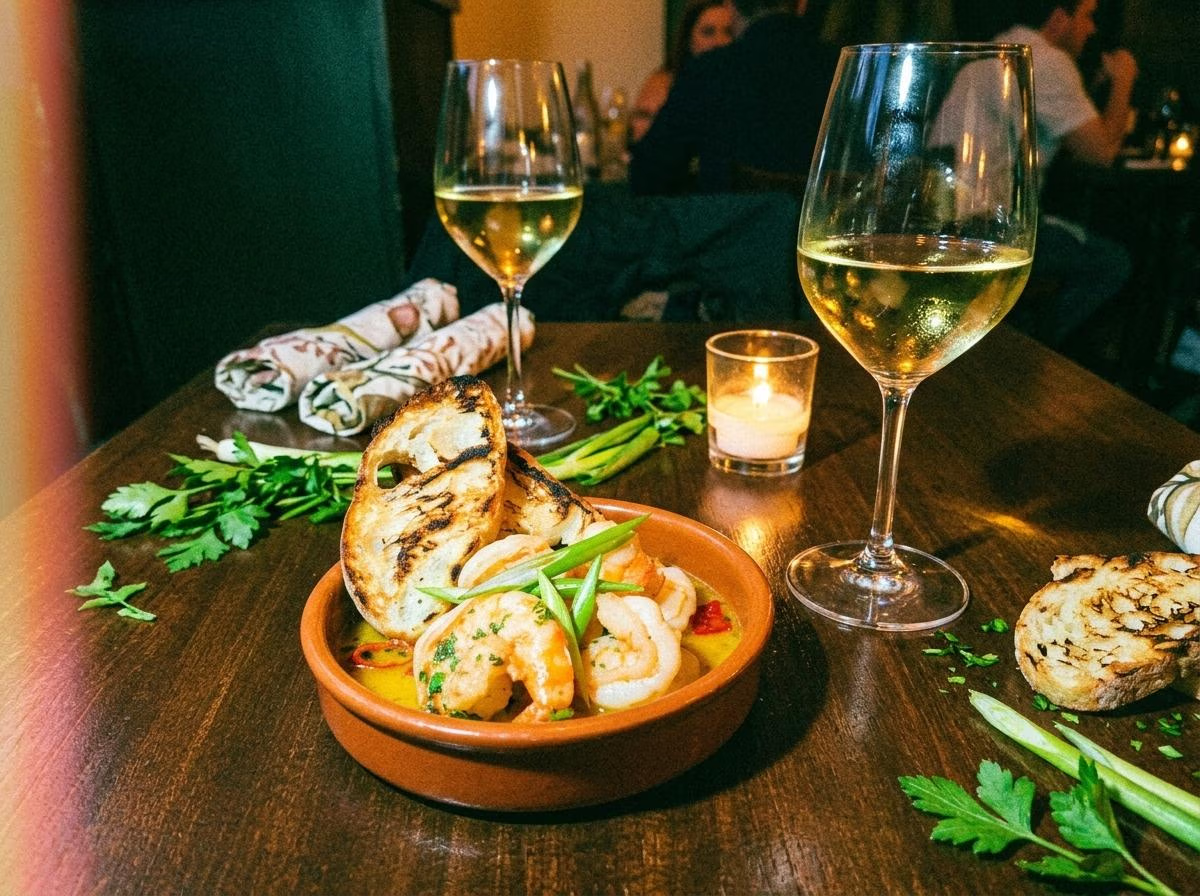
The shrimp paella is currently finished with extra-virgin olive oil and lemon, while gambas al ajillo uses garlic-infused olive oil with shrimp, Spanish chili, and white wine.
Those dishes demonstrate olive oil’s culinary role particularly well.
It can carry garlic and chili.
It can add richness to seafood.
And it can work with citrus to create contrast between fat and acidity.
The important point is flavor—not a promise that ordering one olive-oil-based dish produces a medical benefit.
2. Tomatoes: Acidity, Sweetness, and Savory Depth
Tomatoes appear throughout Mediterranean cooking in fresh, roasted, stewed, crushed, concentrated, and sauce-based forms.
Their usefulness comes from balance.
Fresh tomatoes can bring acidity and juiciness.
Slow-cooked tomatoes become sweeter and more concentrated.
Tomato sauces can provide enough acidity to cut through cheese, meat, olive oil, or other rich ingredients.
Roasted tomatoes introduce caramelized flavor.
Tomato paste can add concentrated savory depth to stews and sauces.
That versatility helps explain why tomato works equally well in salads, breads, seafood dishes, vegetable preparations, sauces, soups, pizzas, rice dishes, and meat dishes.
Tomatoes Are Part of the Pattern, Not a Cure
Vegetables are central to both Mediterranean-style dietary guidance and broader evidence-based healthy eating patterns.
There is no need to turn tomatoes into a miracle ingredient.
Tomatoes contribute nutrients and plant compounds as part of a varied diet.
They also happen to be extraordinarily useful ingredients.
Tomatoes at Nia
Nia’s current menu uses tomato in several different formats.
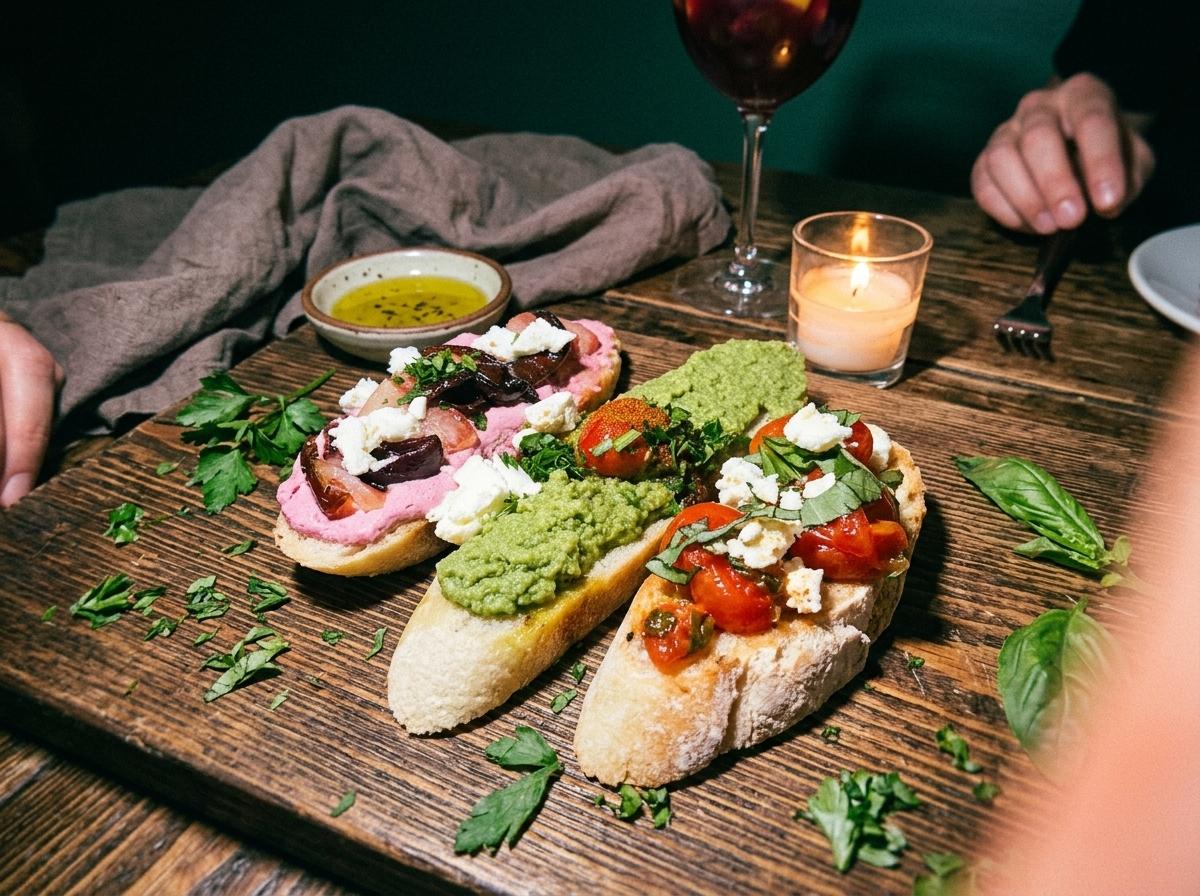
Pan con tomate includes tomato with basil and feta.
The salmon is served with pipérade containing peppers, onions, and tomato.
Patatas bravas uses a spicy tomato sauce.
Several pizzas use tomato or pomodoro sauce.
These examples show why a good ingredient guide should discuss culinary function rather than simply label tomato “healthy.”
The same ingredient produces very different experiences depending on preparation.
3. Peppers: Sweetness, Heat, Color, and Smoke
Peppers give Mediterranean cooks an unusually broad flavor range.
Sweet peppers can add freshness and natural sweetness.
Roasted peppers become softer, deeper, and slightly smoky.
Hot peppers and chili introduce heat.
Dried peppers and paprika can add color, earthiness, and concentrated flavor.
Piquillo peppers contribute their own distinctive roasted sweetness.
Because peppers can move between fresh, roasted, dried, sweet, and spicy forms, they work in salads, stews, sauces, rice dishes, grilled preparations, dips, meat dishes, seafood, and pizzas.
A Better Way to Talk About Vegetables
Instead of saying individual vegetables “boost health,” this article should emphasize variety.
Eating patterns that include a wide range of vegetables are consistent with the dietary guidance underlying Mediterranean-style eating.
Different vegetables bring different combinations of nutrients and plant compounds.
From a culinary perspective, they also provide different textures, colors, aromas, and levels of sweetness or bitterness.
That diversity is more useful than searching for one supposedly superior vegetable.
Peppers at Nia
Nia’s current menu uses peppers throughout several dishes.
The salmon’s pipérade combines peppers with onions and tomato.
Shrimp paella includes peppers.
The salad includes piquillo peppers.
Veggie croquettes feature roasted red pepper.
The Basque pizza uses roasted red peppers, onions, garlic, and chili.
That range demonstrates how one ingredient family can appear across very different preparations.
4. Chickpeas, Lentils, Beans, and Other Legumes
Legumes are among the most useful ingredients in Mediterranean and Middle Eastern food traditions because they can provide substance without requiring meat.
Chickpeas can become hummus, soups, salads, stews, fritters, or roasted snacks.
Lentils can form the base of soups, salads, grain dishes, and slow-cooked meals.
Beans can be served with vegetables, tomatoes, herbs, seafood, grains, or olive oil.
They also absorb surrounding flavors particularly well.
Garlic, lemon, herbs, cumin, paprika, tomato, olive oil, and other seasonings can completely change the personality of the same basic legume.
What Legumes Contribute Nutritionally
Legumes are sources of plant protein, complex carbohydrates, vitamins, minerals, and fiber.
This is one reason legumes are emphasized within Mediterranean-style dietary patterns.
They provide another way to build meals without making red or processed meat the default centerpiece.
Again, the responsible wording is:
Legumes can contribute protein and fiber as part of a balanced diet.
Hummus as an Ingredient Platform
Hummus demonstrates what makes legumes so adaptable.
Chickpeas provide the basic body.
Tahini contributes sesame richness.
Lemon provides acidity.
Garlic provides aroma and intensity.
Olive oil can contribute additional richness and flavor.
Herbs, roasted vegetables, spices, chili, or other ingredients can then shift the profile further.
At Nia, the current menu pairs crisp cauliflower with rosemary hummus and chili oil.
That combination shows how legumes can become part of a more complex small plate rather than appearing only as a traditional dip.
5. Whole Grains and Grain-Based Foods
Mediterranean cuisine includes grains in many forms.
Bread may accompany dips, seafood, vegetables, soups, cheese, or olive oil.
Rice appears in dishes such as paella and pilaf.
Other traditions use barley, bulgur, farro, couscous, pasta, or other grains depending on region.
It is important to distinguish Mediterranean cuisine from the Mediterranean dietary pattern studied in nutrition research.
Restaurant breads, pizza crusts, white rice, pastries, and refined pasta can all belong to Mediterranean culinary traditions.
That does not mean every grain-based restaurant food is a whole grain.
Why Whole Grains Matter in the Dietary Pattern
For this ingredient guide, that distinction is enough.
There is no need to suggest that every bread or rice dish at a Mediterranean restaurant has the same nutritional profile as a whole-grain food.
A culinary tradition can include both everyday staple foods and more refined restaurant preparations.
6. Nuts and Seeds: Texture in a Small Package
Nuts and seeds can completely change the texture of a dish.
They add crunch to salads.
They can thicken sauces.
They work in pastries and desserts.
They can be toasted to develop deeper flavor.
Ground nuts can become pastes or coatings.
Sesame becomes tahini, an ingredient with enormous importance across eastern Mediterranean cuisines.
Almonds, walnuts, pistachios, pine nuts, sesame seeds, and other nuts and seeds appear in different combinations throughout the region.
Nutritionally Dense, but Still Energy-Dense
Nuts provide unsaturated fats, plant protein, fiber, vitamins, minerals, and other plant compounds.
Nuts are also energy-dense.
That does not make them unhealthy.
It simply means portion and context still matter.
Calling nuts healthy should never become permission to imply that unlimited amounts of any nut-based restaurant dish automatically improve health.
7. Fish and Seafood: Protein With Enormous Culinary Range
The Mediterranean coastline has helped make fish and seafood important components of many regional cuisines.
Fish can be grilled, roasted, pan-seared, poached, cured, or incorporated into stews.
Shrimp and other shellfish work with garlic, olive oil, herbs, tomato, wine, saffron, citrus, or chili.
Octopus and squid can be grilled, braised, fried, or dressed with oil and herbs.
The flavor range is enormous.
The Nutrition Context
Mediterranean-style eating commonly emphasizes fish and seafood more than red and processed meats.
Some fish also provide long-chain omega-3 fatty acids alongside protein and other nutrients.
Preparation also matters.
Grilled fish with vegetables is nutritionally different from heavily battered fish served with rich sauces.
The ingredient should always be understood as part of the complete meal.
Seafood at Nia
Nia’s current dinner menu includes pan-seared salmon, shrimp paella, and gambas al ajillo.
These dishes demonstrate how seafood can move between several flavor profiles.
The salmon is paired with peppers, onions, and tomato.
Paella combines shrimp with saffron rice, vegetables, olive oil, and lemon.
Gambas combines shrimp with garlic-infused olive oil, chili, white wine, and bread.
One ingredient category creates three very different meals.
8. Fresh Herbs: Flavor Without Needing a Heavy Sauce
Herbs are some of the most efficient flavor ingredients in Mediterranean cooking.
Basil can make tomato feel sweeter and more aromatic.
Parsley adds freshness to seafood, grains, salads, and sauces.
Rosemary works with roasted vegetables, bread, legumes, and meats.
Mint can bring freshness to yogurt, vegetables, lamb, salads, and grains.
Oregano works particularly well with tomato, cheese, grilled foods, and olive oil.
Thyme, dill, cilantro, sage, and other herbs appear across different Mediterranean regions.
Herbs Should Be Discussed Primarily as Flavor Ingredients
People generally eat herbs in relatively small amounts, and their greatest culinary contribution is aroma and flavor.
A stronger nutrition-related point is that herbs and spices can help make food flavorful without relying entirely on salt, sugar, or heavy sauces.
That is useful, practical, and much less likely to overstate what a garnish can accomplish.
Herbs at Nia
Nia’s menu currently uses basil, parsley, rosemary, pesto, fresh herbs, and herb-driven preparations in several dishes.
Pan con tomate includes basil.
Shrimp paella contains parsley.
The cauliflower is paired with rosemary hummus.
Beef pintxos use basil pesto.
The meatball pizza currently includes fresh herbs.
This is exactly the kind of practical example the ingredient page should emphasize.
Herbs can make food more aromatic and layered without needing to claim that a spoonful of parsley materially changes someone’s long-term health.
9. Garlic and Onions: The Aromatic Foundation
Many Mediterranean dishes begin before the main ingredient ever enters the pan.
Garlic and onions form an aromatic foundation across numerous regional cuisines.
Raw onion can bring sharpness.
Pickled onion adds acidity.
Slow-cooked onion develops sweetness.
Roasted garlic becomes mellow.
Fresh garlic can be assertive and spicy.
Garlic infused into olive oil can flavor an entire seafood dish.
These ingredients demonstrate how technique changes flavor just as much as the ingredient itself.
Why Aromatics Matter
Good cooking does not always require heavy sauces.
Aromatic ingredients can build complexity early in the cooking process.
Onion, garlic, herbs, citrus, spices, tomato, and olive oil can create several layers of flavor before meat, fish, legumes, or grains become the focus.
That is one reason Mediterranean food can taste rich and complex while relying heavily on relatively simple ingredients.
10. Citrus: Acidity That Changes the Whole Dish
Lemon and other citrus fruits provide one of the most useful tools in cooking: acidity.
Acid can make food taste brighter.
It can balance fat.
It can make seafood feel fresher.
It can sharpen herbs.
It can reduce the perception of heaviness in rich sauces.
Zest provides aromatic citrus oils without adding much liquid.
Juice changes both flavor and acidity.
This makes citrus useful in dressings, marinades, seafood dishes, sauces, desserts, drinks, and finishing preparations.
Citrus Is More Than a Vitamin-C Talking Point
Citrus fruit can certainly contribute vitamin C and other nutrients.
But the more useful ingredient-guide explanation is that citrus contributes acidity and aroma while also being part of the fruit category emphasized within balanced Mediterranean-style eating patterns.
That keeps the article focused on food rather than turning lemon into a supplement.
Citrus at Nia
Nia’s shrimp paella is currently finished with lemon, while the Basque cheesecake is served with clementine.
Those examples show both sides of citrus.
Lemon brightens a savory seafood-and-rice dish.
Clementine contributes fruit and aroma to dessert.
11. Olives: Salt, Bitterness, Fruit, and Fermentation
Olives can provide several sensations at once.
They may be salty.
They can have bitterness.
Some are fruitier.
Others are more intensely briny.
Their flavor changes with variety, curing method, seasoning, and preparation.
Olives may appear on their own, in salads, breads, sauces, spreads, pizzas, meat dishes, and vegetable preparations.
Olive tapenade concentrates their savory character even further by combining olives with other aromatic ingredients.
Olives and Olive Oil Are Related but Not Interchangeable
Olives and olive oil come from the same fruit, but they play very different culinary roles.
Whole olives bring texture, salinity, and brininess.
Olive oil contributes fat, body, aroma, and a different style of richness.
They should therefore receive separate treatment in an ingredient guide rather than being treated as one interchangeable “healthy fat.”
12. Yogurt and Cheese: Tanginess, Creaminess, and Salt
Dairy has a place in many Mediterranean food traditions, although the type and frequency vary considerably across countries.
Yogurt can provide creaminess while retaining acidity.
Cheeses such as feta, goat cheese, pecorino, mozzarella, and others contribute salt, richness, texture, and fermentation-derived flavor.
A small amount of intensely flavored cheese can change an entire dish.
That makes dairy useful as more than a main ingredient.
It can function as seasoning.
Dairy Is Not One Nutritional Category
It is important not to treat every Mediterranean cheese or yogurt as nutritionally identical.
Cheeses vary significantly in sodium, saturated fat, moisture, protein, and serving size.
Sweetened yogurt is different from plain yogurt.
A small amount of cheese in a vegetable-heavy meal is different from a dish dominated by cheese.
Again, the overall meal matters more than the cuisine label.
13. Mushrooms: Savory Flavor Without Meat
Mushrooms deserve more attention in Mediterranean ingredient discussions because of their ability to provide deep savory flavor.
Roasting intensifies them.
Sautéing develops browning.
Slow cooking can make them softer and more concentrated.
Mushroom-based spreads and tapenades can add savory depth to bread.
They also combine naturally with garlic, olive oil, herbs, cheese, wine, and grains.
For diners reducing meat rather than eliminating it completely, mushrooms can provide a substantial savory element without trying to imitate meat exactly.
14. Saffron and Spices: Small Quantities, Large Impact
Mediterranean food is sometimes described too simply as olive oil, lemon, and herbs.
Spices also matter.
Saffron contributes color, aroma, and distinctive flavor to rice and seafood preparations.
Paprika can bring sweetness, smokiness, or heat depending on type.
Cumin contributes warmth and earthiness.
Coriander, cinnamon, fennel, chili, black pepper, and many other spices appear across different Mediterranean traditions.
The exact spice cabinet changes from region to region.
Spices Build Identity
A dish can contain rice, seafood, vegetables, and olive oil yet taste completely different depending on the seasoning.
That is why ingredient guides should not stop at visible produce.
Spices often provide the aromatic identity that turns basic ingredients into a recognizable regional dish.
How Mediterranean Ingredients Work Together
The most important lesson in Mediterranean cooking is that the ingredients rarely operate alone.
Olive oil becomes more interesting with garlic.
Garlic becomes brighter with lemon.
Tomato becomes more aromatic with basil.
Chickpeas become creamier with tahini.
Fish becomes livelier with citrus and herbs.
Cheese becomes more balanced beside vegetables.
Rice becomes more distinctive with saffron.
Olives become more complex when combined with mushrooms and herbs.
This is why discussing ingredients in isolation can only go so far.
The cuisine becomes interesting through combinations.
Acid + Fat
One of the most useful combinations in Mediterranean cooking is acid and fat.
Olive oil provides richness.
Lemon or vinegar provides acidity.
Together, they create balance.
This principle appears in salad dressings, marinades, seafood, vegetable dishes, sauces, and finishing preparations.
The same logic explains why tomato can work effectively alongside cheese or meat.
Its acidity counterbalances richer ingredients.
Salt + Freshness
Olives, cheese, cured meats, and other salty ingredients can become intense on their own.
Fresh vegetables, herbs, and citrus can provide contrast.
A salty cheese beside tomato, cucumber, herbs, or lemon often feels more balanced than the cheese alone.
That contrast helps explain the popularity of mezze and shared-plate formats where several different elements interact.
Smoke + Acidity
Grilling adds char and deeper flavor.
Acidity can keep grilled food from feeling heavy.
Lemon with grilled seafood is a familiar example.
Tomato with grilled meat is another.
Wine or vinegar-based sauces can create similar effects.
Mediterranean cooking often becomes most compelling when techniques and ingredients create these kinds of opposing sensations.
Creaminess + Herbs
Yogurt, cheese, hummus, tahini, and other creamy components can become much more interesting when paired with herbs.
Mint can make yogurt feel fresher.
Rosemary can change hummus.
Basil can cut through cheese.
Parsley can brighten seafood-based sauces.
Flavor works through contrast as much as reinforcement.
Why Mediterranean Food Is Not Built Around One “Superfood”
Modern wellness marketing often tries to identify one ingredient responsible for the reputation of Mediterranean-style eating.
Olive oil gets this treatment frequently.
So do tomatoes.
Fish.
Garlic.
Lemon.
Herbs.
Nuts.
The evidence supporting Mediterranean-style eating does not depend on discovering one miracle ingredient.
It concerns the overall pattern.
The individual foods matter.
But they matter most as parts of a repeated eating pattern.
Mediterranean Cuisine and the Mediterranean Diet Are Not Exactly the Same
Mediterranean cuisine refers broadly to food traditions from countries and cultures around the Mediterranean.
The Mediterranean dietary pattern is a nutrition-research concept emphasizing particular food categories and eating habits.
There is substantial overlap.
But they are not interchangeable.
A Mediterranean restaurant may serve fried foods, refined bread, cheese-heavy dishes, dessert, cured meat, alcohol, and other foods that can still be culturally Mediterranean without matching the day-to-day pattern emphasized in nutrition research.
That is normal.
Restaurants are places for both nourishment and enjoyment.
The mistake happens when the health reputation of the researched Mediterranean diet is automatically transferred to every restaurant dish carrying a Mediterranean label.
Are All Mediterranean Ingredients Healthy?
“Healthy ingredient” is usually too simple a category.
Olive oil contains unsaturated fat, but it is still calorie-dense.
Nuts provide nutrients and unsaturated fats, but portions still matter.
Cheese can provide protein and other nutrients while also containing substantial sodium and saturated fat depending on the variety.
Seafood can be prepared simply or fried.
Vegetables can be grilled lightly or covered with large amounts of sauce.
Whole grains differ from refined grains.
The final dish matters.
The portion matters.
What else someone eats matters.
One meal does not define an entire diet.
Fresh Does Not Automatically Mean Healthy
Fresh food can be excellent.
Fresh herbs can be aromatic.
Fresh vegetables can contribute useful nutrients.
But “fresh” is not a complete nutritional category.
Frozen vegetables can be nutritious.
Canned beans can be useful.
Dried lentils are highly practical.
Canned tomatoes are central to many good sauces.
Dried herbs and spices can provide enormous flavor.
The more useful distinction is often between food quality, preparation, overall dietary pattern, and excessive reliance on highly processed products—not simply whether something was picked or prepared that morning.
Does Cooking Destroy the Nutrition in Mediterranean Ingredients?
Cooking changes food.
Some heat-sensitive nutrients may decrease during certain cooking processes.
Other compounds can become more available or the food may simply become easier and more enjoyable to eat.
Roasting can make vegetables sweeter.
Cooking onions develops flavor.
Simmering tomatoes concentrates them.
Cooking legumes is necessary.
Toasting nuts and spices changes aroma.
The best cooking method depends on the ingredient and dish.
Food is allowed to be cooked because it tastes better.
Are Herbs Better Fresh Than Dried?
Not always.
Fresh and dried herbs behave differently.
Fresh basil provides a soft, aromatic character that dried basil cannot duplicate exactly.
Dried oregano can be particularly useful because drying concentrates and changes its aroma.
Fresh rosemary and dried rosemary can both work depending on the preparation.
Fresh parsley often works well as a finishing herb.
The answer therefore depends on the dish.
Rather than instructing readers that fresh herbs are always nutritionally or culinarily superior, explain how form affects flavor.
That is more useful cooking guidance.
Are Canned Chickpeas and Beans Still Useful?
Yes.
Dried beans and chickpeas provide control over texture and seasoning but require soaking or longer cooking.
Canned versions offer convenience.
Rinsing canned legumes can also remove some of the packing liquid and some surface sodium.
The important dietary contribution—plant protein, complex carbohydrates, and fiber—does not disappear simply because the legume was canned.
This makes legumes one of the easiest Mediterranean-inspired ingredients to use at home.
Is Mediterranean Cooking Expensive?
It does not have to be.
Some ingredients associated with Mediterranean restaurant dining—premium seafood, specialty cheese, imported olive oil, or particular wines—can be expensive.
Others are among the most economical foods available.
Beans.
Lentils.
Chickpeas.
Rice.
Whole grains.
Onions.
Garlic.
Seasonal vegetables.
Canned tomatoes.
Dried herbs.
These ingredients can create highly flavorful meals without relying on expensive meat at every sitting.
That accessibility is one reason ingredient-based cooking is more useful than trying to reproduce restaurant dishes exactly.
How Can Someone Start Cooking With Mediterranean Ingredients at Home?
A Mediterranean-inspired pantry does not need dozens of specialty products.
Start with ingredients that work across many dishes.
Keep an olive oil you enjoy cooking with.
Keep canned or dried chickpeas, lentils, or beans.
Stock canned tomatoes.
Use onions and garlic.
Keep lemons available.
Choose a few herbs or spices you genuinely like.
Add nuts or seeds if they fit your meals.
Keep a whole grain or grain product that is practical for your household.
Then build around seasonal vegetables, fish, poultry, eggs, or other proteins according to preference.
The goal is not to reproduce one country’s cuisine perfectly.
It is to understand how a few versatile ingredients can combine in many ways.
Mediterranean Ingredient Combinations to Try
A few simple combinations demonstrate the logic particularly well.
Tomato + olive oil + basil creates a balance of acidity, fat, sweetness, and aroma.
Chickpea + tahini + lemon + garlic creates creaminess, nuttiness, acidity, and savory flavor.
Fish + olive oil + lemon + herbs provides richness, freshness, and aroma.
Roasted pepper + garlic + olive oil combines sweetness, smoke, richness, and savory depth.
Lentils + tomato + herbs creates an inexpensive but substantial plant-forward base.
Yogurt + cucumber + herbs + garlic creates cooling creaminess with aromatic freshness.
Whole grain + vegetables + legumes + herbs can become a complete bowl or salad without needing one ingredient to dominate.
These combinations are more useful than memorizing a list of “superfoods.”
They demonstrate how Mediterranean cooking actually works.
Mediterranean Ingredients on Nia’s Current Menu
Nia Restaurant & Wine Bar is a Mediterranean-inspired restaurant with Spanish roots rather than a clinical example of the Mediterranean dietary pattern.
That distinction should remain explicit.
The current menu nevertheless contains many ingredients associated with Mediterranean cooking.
It includes extra-virgin olive oil, Mediterranean olives, tomatoes, peppers, onions, salmon, shrimp, hummus, cauliflower, mushrooms, basil, parsley, rosemary, garlic, lemon, almonds, clementine, rice, cheeses, and other ingredients.
These ingredients appear across dishes such as pan con tomate, salmon with pipérade, shrimp paella, cauliflower with rosemary hummus, gambas al ajillo, vegetable croquettes, pizzas, salads, and desserts.
The purpose of mentioning them here is to show how Mediterranean ingredients function in actual restaurant cooking.
It is not to imply that every dish containing one of these ingredients is nutritionally equivalent to the Mediterranean dietary pattern studied in health research.
How to Read a Mediterranean Menu Through Its Ingredients
Instead of asking whether a dish is “healthy” based on its cuisine label, look at how the meal is constructed.
Does it contain vegetables?
Are legumes part of the table?
Is seafood available?
How much of the meal is fried?
How much cheese or cured meat is involved?
Are several vegetable and plant-based dishes available?
Are grains whole or refined?
How large are the portions?
What sauces accompany the dish?
A meal can contain Mediterranean ingredients while still being rich, celebratory, or indulgent.
That is not a contradiction.
Mediterranean cuisine is a food culture.
The Mediterranean dietary pattern is a framework used in nutrition research.
Understanding the difference makes the ingredient discussion much more honest.
Frequently Asked Questions About Mediterranean Ingredients
What are the most common Mediterranean ingredients?
There is no single list used across every Mediterranean culture, but frequently encountered ingredients include olive oil, vegetables, tomatoes, peppers, onions, garlic, beans, chickpeas, lentils, grains, fish, seafood, herbs, spices, nuts, seeds, olives, citrus, yogurt, and cheese.
Regional cooking traditions determine which ingredients appear most frequently.
What ingredients define the Mediterranean diet?
Mediterranean-style dietary patterns generally emphasize vegetables, fruits, whole grains, beans and other legumes, nuts and seeds, olive oil, herbs and spices, with fish and seafood regularly included and other animal foods generally playing smaller roles.
Is olive oil the most important Mediterranean ingredient?
Olive oil is one of the most recognizable ingredients and an important source of unsaturated fat in Mediterranean-style eating.
However, it should not be treated as the one ingredient responsible for the dietary pattern’s health reputation.
Vegetables, legumes, whole grains, nuts, seafood, fruits, herbs, and other foods all contribute.
Is extra-virgin olive oil healthy?
Extra-virgin olive oil is rich in unsaturated fat and can fit within healthy dietary patterns, especially when used in place of foods high in saturated fat.
That does not mean unlimited olive oil improves health or that one ingredient can compensate for an otherwise poor diet.
Are chickpeas Mediterranean?
Chickpeas have a very long culinary history across the Mediterranean, Middle East, North Africa, and other regions.
They are one type of legume and can provide plant protein, fiber, complex carbohydrates, vitamins, and minerals.
They appear in hummus as well as soups, stews, salads, and many other preparations.
Are lentils part of Mediterranean cooking?
Yes.
Lentils appear in several Mediterranean and nearby culinary traditions and can be used in soups, salads, stews, grain dishes, and vegetable preparations.
They are legumes and provide plant protein and fiber along with several micronutrients.
What herbs are common in Mediterranean cooking?
Common herbs can include basil, parsley, oregano, rosemary, thyme, mint, dill, sage, and others.
The exact herbs used depend heavily on region and dish.
Mediterranean cooking should not be reduced to one universal herb blend.
Why is lemon used so much in Mediterranean food?
Lemon provides acidity and aroma.
It can brighten seafood, balance olive oil, complement herbs, sharpen sauces, and add freshness to vegetables and grains.
Zest and juice also behave differently, giving cooks multiple ways to use the same fruit.
Are tomatoes essential to Mediterranean food?
Tomatoes are extremely important in many modern Mediterranean cuisines, but not every Mediterranean dish contains tomato.
They can be used fresh, roasted, stewed, concentrated, or turned into sauces.
Their acidity and sweetness make them particularly versatile.
Are olives and olive oil the same nutritionally?
They come from the same fruit but are different foods.
Whole olives provide texture and typically contain substantial sodium from curing or brining.
Olive oil is concentrated fat without the fiber and water present in the whole fruit.
Their culinary roles are also very different.
Are nuts part of Mediterranean-style eating?
Yes.
Nuts and seeds are commonly included in Mediterranean-style dietary patterns and provide unsaturated fats, plant protein, fiber, and other nutrients.
Portion size still matters because nuts are energy-dense.
Is seafood essential to the Mediterranean diet?
Fish and seafood are commonly emphasized within Mediterranean-style dietary patterns, but someone does not need to eat seafood at every meal.
The broader pattern still depends heavily on plant foods including vegetables, legumes, whole grains, nuts, seeds, fruits, herbs, and olive oil.
Is Mediterranean food always healthy?
No.
Mediterranean cuisine includes everyday plant-forward dishes as well as fried foods, refined breads, pastries, cheese-heavy dishes, cured meats, desserts, and other richer preparations.
The nutrition research applies to the broader Mediterranean eating pattern rather than automatically to every restaurant dish from the region.
Does adding olive oil make a dish Mediterranean?
Not by itself.
Mediterranean cuisine is defined by culinary traditions, combinations of ingredients, techniques, history, and regional context.
Drizzling olive oil over any dish does not automatically make it Mediterranean.
Are Mediterranean ingredients expensive?
Some specialty seafood, cheeses, olive oils, and imported products can be costly.
Many important Mediterranean ingredients—including lentils, beans, chickpeas, rice, onions, garlic, canned tomatoes, and seasonal vegetables—can be relatively economical.
Can I cook Mediterranean-style food without specialty ingredients?
Yes.
A basic combination of vegetables, beans or lentils, grains, olive oil or another unsaturated plant oil, herbs, garlic, onions, citrus, and appropriate proteins can apply many of the same culinary principles.
Imported ingredients can add regional specificity but are not necessary for every meal.
Does Nia use Mediterranean ingredients?
Yes.
Nia’s current menu includes ingredients such as extra-virgin olive oil, olives, tomatoes, peppers, onions, salmon, shrimp, hummus, cauliflower, mushrooms, herbs, garlic, lemon, almonds, nuts, clementine, cheeses, and other ingredients associated with Mediterranean cooking.
Nia describes its concept as Mediterranean-inspired with Spanish roots, so those ingredients appear within a broader restaurant interpretation rather than one single regional cuisine.
Mediterranean Cooking Is About Relationships Between Ingredients
Mediterranean food becomes much easier to understand when you stop looking for one defining ingredient.
Olive oil matters.
So do vegetables.
Legumes matter.
So do grains.
Fish and seafood contribute something different.
Herbs change aroma.
Citrus changes acidity.
Garlic and onions build a foundation.
Nuts provide texture.
Cheese provides salt and richness.
Spices change identity.
The cuisine works because those ingredients interact.
You do not need to turn every meal into a nutrition calculation.
You can appreciate what olive oil does to garlic.
What lemon does to seafood.
What herbs do to vegetables.
What tomato does to cheese.
What saffron does to rice.
What hummus does beside roasted cauliflower.
And what different textures and flavors contribute when several small plates arrive at the same table.
At Nia Restaurant & Wine Bar in Chicago’s West Loop, many of these ingredients currently appear across the Mediterranean-inspired menu, from olives and tomato to seafood, hummus, herbs, garlic, olive oil, peppers, nuts, and citrus.
Their greatest value to a restaurant is simple:
They make food interesting.
Their nutritional characteristics can be explained responsibly, but they do not need exaggerated medical claims to be worth celebrating.