Best Wine Bars in Chicago: How to Choose a Wine-Led Dining Experience
Searching for the best wine bars in Chicago does not produce one universal answer because different wine venues are built for different experiences.
One person may want:
a glass of wine and a few small plates.
Another may want:
a bottle with a full dinner.
Another may be looking for:
a guided tasting.
And someone who already knows wine may care more about:
- regions;
- grapes;
- vintages;
- and bottle depth
than atmosphere or food.
That is why a useful wine-bar guide should begin with a better question:
What kind of wine experience are you actually looking for?
Chicago has traditional wine bars, restaurants with serious wine programs, tasting-focused concepts, wineries, and hybrid spaces that combine food and wine in different ways.
The West Loop is especially relevant because it is one of Chicago’s most established dining districts. Choose Chicago describes the neighborhood as a major culinary destination and identifies Randolph Street’s Restaurant Row as one of its central restaurant corridors.
Nia belongs in this conversation as a wine-led Mediterranean restaurant on Randolph Street, but this page should explain where that format fits rather than declaring it superior to every other wine bar in Chicago.
Quick Answer: What Makes a Good Wine Bar?
A strong wine bar usually does five things well:
1. Offers enough wine variety to create real choice.
2. Gives guests useful by-the-glass options, not only bottles.
3. Explains wine in a way that does not intimidate beginners.
4. Offers food that genuinely works with the wine program when food is part of the concept.
5. Makes its current wine list, tasting experience and pricing easy to understand.
The “best” venue depends on which of those matters most to you.
First: Wine Bar or Wine-Led Restaurant?
These two terms overlap, but they are not always the same thing.
Traditional Wine Bar
A traditional wine bar usually puts wine first.
You may expect:
- a strong by-the-glass program;
- many bottle choices;
- flights;
- cheese or charcuterie;
- smaller plates;
- and staff who can guide guests through unfamiliar grapes or regions.
Wine-Led Restaurant
A wine-led restaurant starts with a full dining experience but gives wine an important role in:
- menu selection;
- pairing;
- service;
- and the overall meal.
That is closer to where Nia fits.
Nia’s current site presents separate:
- Wine By Glass;
- Wine Bottles;
- Wine Tasting;
- Dinner Menu;
- and Chef’s Tasting Menu sections rather than treating wine as one generic beverage category.
That distinction matters for search intent.
Someone who wants:
a glass and cheese at a bar
may choose differently from someone who wants:
a complete dinner built around wine.
Do Not Judge a Wine Bar Only by the Number of Bottles
A huge wine list is not automatically a better wine list.
Size matters less when:
- the list is difficult to understand;
- few wines are available by the glass;
- staff cannot explain the differences;
- or the wine has little connection to the food.
A smaller but intentional list can be easier for:
- new wine drinkers;
- groups;
- and diners who want help choosing.
Useful things to look for include:
- region diversity;
- grape diversity;
- white/red balance;
- sparkling options;
- sweet wine if relevant;
- price range;
- and whether less familiar varieties are explained clearly.
The By-the-Glass List Matters
If you are comparing Chicago wine bars, look closely at what is actually available by the glass.
A strong by-the-glass program matters because it lets guests:
- try more than one style;
- order different wines with different dishes;
- avoid committing to a full bottle;
- or explore an unfamiliar grape with lower commitment.
Nia’s current Wine By Glass menu includes examples from France, Italy, Greece, Spain, Germany and California. Current styles include sparkling wine, rosé, Moscato, Albariño, Chardonnay, Riesling, Sauvignon Blanc, Agiorgitiko, Cabernet Sauvignon, Merlot, Pinot Noir, Tempranillo and Sangiovese.
That range is more useful to discuss than vague phrases such as:
curated global wine selection.
Show the diner what the choice actually looks like.
Current Nia By-the-Glass Examples
As of the current menu, selections include wines such as:
- Domaine Skouras Zoe Rosé — Greece
- Senda Verde Albariño — Spain
- Skouras Almyra Chardonnay — Greece
- Alpha Estate Sauvignon Blanc — Greece
- Skouras Agiorgitiko St. George — Greece
- Raeburn Pinot Noir — California
- Voelos Crianza Tempranillo — Spain
- Carpineto Chianti Classico Riserva — Italy.
The point is not to turn this article into another wine menu.
The live Wine By Glass page should remain the source of truth for:
- current labels;
- pricing;
- and availability.
This article should use only a few examples to explain what kind of wine program a guest can expect.
Bottle Selection Tells You Something Different
A by-the-glass list tells you how easily you can explore.
A bottle list tells you more about:
- depth;
- region;
- specialization;
- and how far the wine program goes beyond the everyday glass selection.
Nia maintains a separate Wine Bottles page, which is useful because some wines—such as the current Domaine Skouras Assyrtiko from Nemea—may appear on the bottle list without appearing by the glass.
That distinction should stay clear.
Do not publish:
available by the glass
simply because a wine appears somewhere on the website.
What Should Beginners Look for in a Wine Bar?
Wine can become unnecessarily intimidating when the menu is written as if everyone already knows:
- grape varieties;
- appellations;
- producer names;
- and vintage differences.
A good beginner-friendly wine experience should allow a guest to say something simple such as:
I like crisp dry whites.
I want a softer red without too much tannin.
We are ordering shrimp and pizza—what would you suggest?
and receive a useful answer.
The guest should not need to know:
- Assyrtiko;
- Agiorgitiko;
- Albariño;
- Tempranillo;
- or Sangiovese
before asking.
A wine list should create discovery, not an exam.
What Should Experienced Wine Drinkers Look for?
More experienced wine drinkers may care about:
- specific regions;
- less familiar grapes;
- producer identity;
- maturation;
- vintage;
- and whether the bottle selection goes beyond standard international varieties.
That is where details such as:
- Agiorgitiko from Nemea;
- Tempranillo from Rioja;
- Sangiovese from Chianti Classico;
- or Albariño from Rías Baixas
become more useful.
Nia’s current program includes several regionally identified wines, giving guests a way to explore beyond generic “red” and “white” categories.
What About Wine Tasting?
A wine bar and a wine tasting are related but different searches.
Someone searching:
best wine bars Chicago
may want an unstructured evening where they choose glasses or a bottle.
Someone searching:
wine tasting Chicago
may want:
- a defined flight;
- guided tasting;
- paired courses;
- or a structured event.
Nia currently has a dedicated Wine Tasting page showing a premium pairing featuring three wines including Agiorgitiko, Tempranillo and Chianti Classico.
Therefore:
this page should not duplicate the entire tasting program.
Use one short section and send tasting-specific intent to the Wine Tasting page.
A Current Nia Content Conflict: Wine Discovery Wednesdays
Nia’s homepage currently promotes Wine Discovery Wednesdays as a Mediterranean tasting experience with five wines and five tapas pairings.
However, the separate Wine Discovery Wednesdays page currently contains an older April schedule and a different published price from the homepage.
That creates a maintenance problem.
For this evergreen wine-bar article:
do not hard-code the weekly themes, date schedule or price.
Instead say:
Nia also periodically promotes structured wine-discovery experiences; check the current event or reservation information for active dates and pricing.
Food Matters More Than Many Wine-Bar Lists Admit
Some wine bars are beverage-first.
Others build the entire experience around wine and food together.
Neither is inherently better.
If you want to eat a full meal, ask:
Does the venue have:
- real dinner options;
- small plates only;
- cheese/charcuterie only;
- or a tasting menu?
That distinction may matter more than whether a venue has 100 bottles or 300.
What Makes Wine-Led Dining Different?
Wine-led dining means the guest can move naturally between:
- food;
- wine;
- and different parts of the meal
without the beverage program feeling disconnected.
For example:
- a crisp white may make sense with seafood;
- a red may suit meat or tomato-based dishes;
- and sparkling or rosé may fit another part of the table.
The specific pairing belongs on a separate wine-pairing guide.
This page should focus on the selection criterion:
Does the restaurant give you enough food and wine flexibility to build the evening you want?
Nia’s Current Food Format
Nia currently serves a Mediterranean-inspired menu with Spanish roots and dishes including:
- croquetas;
- pintxos;
- shrimp paella;
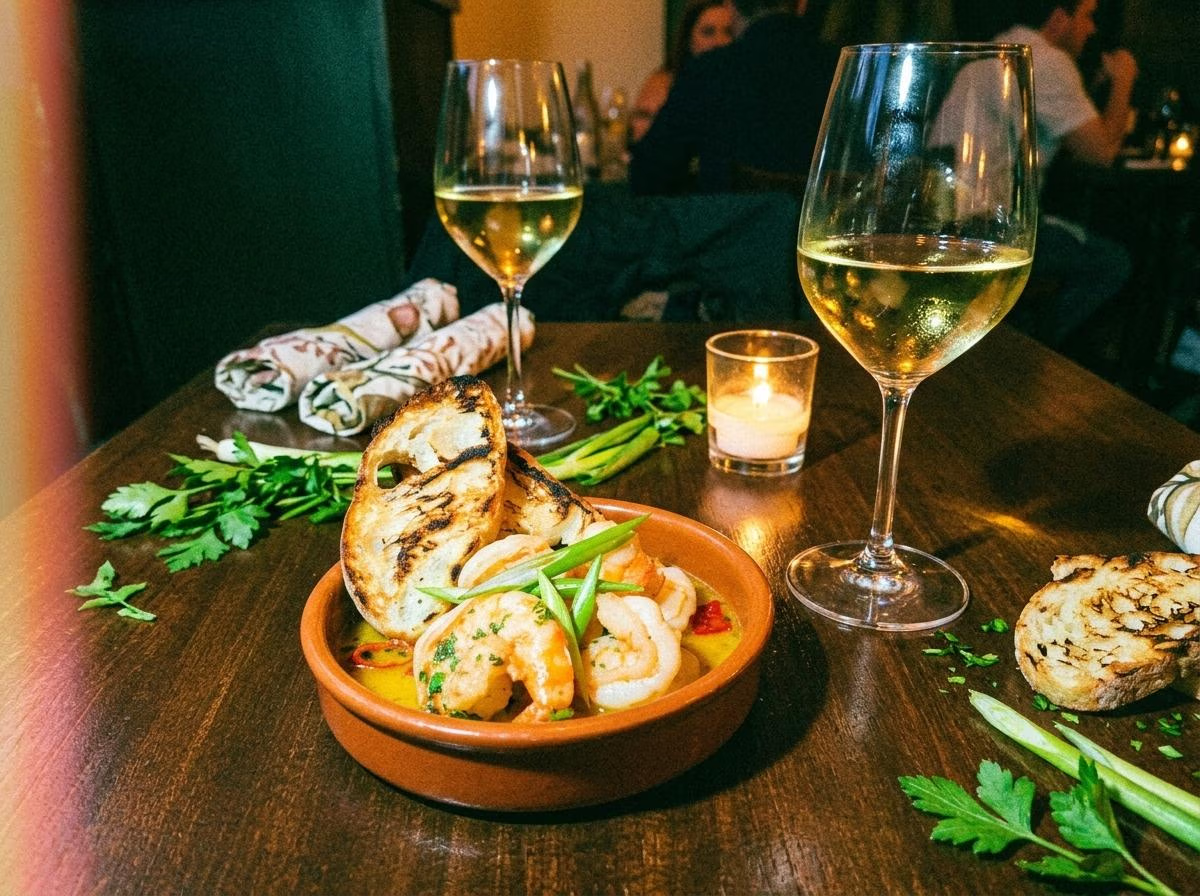
- gambas al ajillo;
- patatas bravas;
- crisp cauliflower;
- salmon;
- salad;
- and artisan pizzas.
That gives a wine-led diner several different flavor directions rather than one fixed entrée-and-wine combination.
The deeper question:
Which wine goes with which dish?
belongs on the Mediterranean Wine Pairing Hub, not here.
Why West Loop Is Relevant
The strongest part of the existing article is the idea that West Loop is worth considering for wine-led dining.
But that should be grounded in the neighborhood’s real restaurant concentration rather than generic claims that it is “the best.”
Choose Chicago describes West Loop as one of the city’s dynamic dining destinations, with Randolph Street’s Restaurant Row containing celebrated restaurants, bars and varied dining concepts.
That makes West Loop useful for someone who wants:
- wine before dinner;
- wine with dinner;
- small plates;
- a full restaurant meal;
- or a larger evening built around several nearby hospitality options.
Randolph Street Gives Wine Drinkers More Than One Format
One reason this area works well is that the neighborhood does not contain only one kind of drinking or dining venue.
Choose Chicago’s current West Loop guide identifies:
- wine-focused restaurants;
- bars;
- Mediterranean small-plate concepts;
- and City Winery, which combines wine production, dining and live entertainment.
The useful takeaway is not:
West Loop has the objectively best wine bars in Chicago.
It is:
West Loop gives wine drinkers several different formats within one dining district.
How to Choose the Right Wine Experience
Use this decision framework.
| If You Want… | Prioritize… |
|---|---|
| One or two glasses | Strong by-the-glass list |
| A bottle with dinner | Bottle depth + full food menu |
| Guided education | Tasting or flight program |
| Unfamiliar grapes | Clear descriptions + helpful staff |
| Food-first evening | Restaurant with strong wine integration |
| Wine-first evening | Dedicated wine-bar format |
| A group meal | Seating, food range, bottle options |
| Date night | Atmosphere + conversation fit |
| Specific varietals | Current wine inventory |
| Regional exploration | Wines identified by place/grape |
Where Nia Fits
Nia should be positioned accurately:
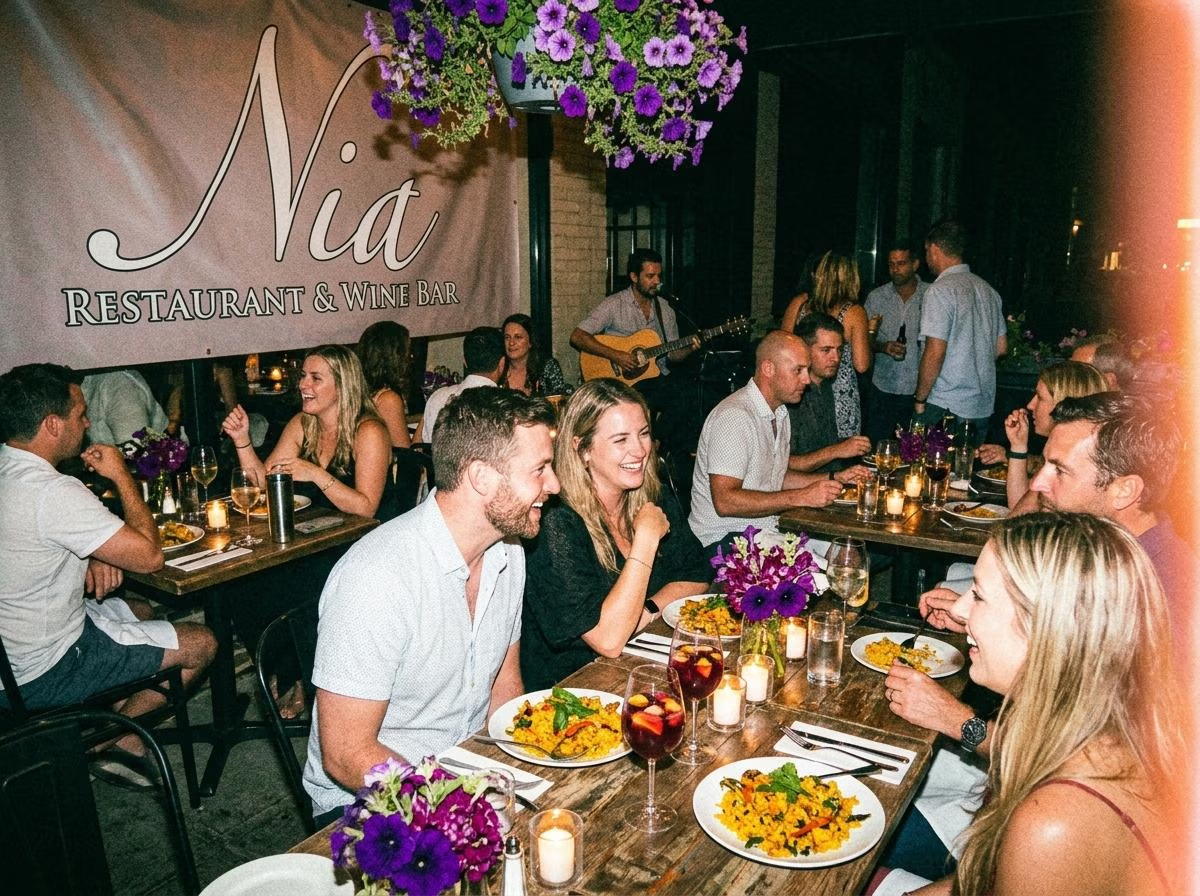
Nia is a Mediterranean restaurant and wine bar in Chicago’s West Loop where wine is integrated into a full dinner rather than functioning only as a standalone drinking experience.
Current supporting evidence includes:
- a dedicated by-the-glass menu;
- a separate bottle list;
- wine-tasting offerings;
- and a food menu built around multiple shareable dishes.
That is a strong enough positioning statement.
There is no need to write:
Nia is one of Chicago’s best wine bars
as fact.
Let the user decide whether Nia matches the experience they want.
When Nia Is a Good Fit
Nia may fit well when someone wants:
- a wine-focused dinner rather than only drinks;
- Mediterranean-inspired food;
- both by-the-glass and bottle choices;
- Greek and Mediterranean wine discovery;
- shared dishes;
- or a Randolph Street dinner built around wine.
When Another Type of Wine Venue May Be Better
A dedicated wine bar or winery may be a better fit when the priority is:
- hundreds of bottles;
- rare vintages;
- retail bottle shopping;
- winemaking education;
- live winery production;
- or spending the evening primarily drinking wine rather than eating dinner.
This honesty improves the page.
Nia does not need to be the answer to every wine-related search in Chicago.
Planning specifically for a couple or romantic evening? See the dedicated Chicago Wine Bars for Date Night guide.
Alcohol Should Remain Optional
Someone may be visiting Nia with friends who drink wine while they personally choose:
- a zero-proof beverage;
- sparkling water;
- or another non-alcoholic option.
Nia currently maintains a separate Non Alcoholic Beverages menu alongside its wine and cocktail offerings.
A wine-led restaurant can still accommodate a mixed group.
Do not write as if every person at the table needs to drink alcohol to participate in the experience.
Do Not Turn This Into a Wine Pairing Tutorial
The existing article spends substantial space explaining why Mediterranean food works with wine and how particular ingredients interact with wine.
That overlaps with Nia’s Mediterranean Wine Pairing Hub.
Boundary:
“Which wine should I pair with seafood, pizza or small plates?” → Mediterranean Wine Pairing Hub.
“How should I choose a wine bar or wine-led restaurant?” → this page.
Keep only enough food discussion to help someone choose the venue format.
Do Not Turn This Into a Greek Wine Guide
Assyrtiko and Agiorgitiko deserve to appear only as examples of the kind of wine discovery Nia offers.
The deeper questions:
What is Assyrtiko?
and:
What is Agiorgitiko?
already belong to the dedicated varietal guides.
Use internal links rather than repeating:
- origin;
- terroir;
- tasting notes;
- and pairing education here.
Do Not Turn This Into a West Loop Neighborhood Hub
The existing page spends a lot of time describing West Loop generally.
That risks competing with Nia’s existing neighborhood/wine hub.
Boundary:
“Why is West Loop a strong neighborhood for dining, wine and a night out?” → West Loop neighborhood/wine hub.
“How do I choose a wine bar in Chicago, and where does West Loop fit?” → this page.
Keep West Loop context short and decision-oriented.
Frequently Asked Questions
What makes a good wine bar in Chicago?
Look for a wine program that matches your goals.
Important factors include:
- by-the-glass range;
- bottle selection;
- food availability;
- wine guidance;
- tasting options;
- price transparency;
- and the type of atmosphere you want.
What is the best wine bar in Chicago?
There is no single objective best wine bar.
A dedicated wine enthusiast looking for rare bottles may choose differently from someone who wants dinner with a bottle, a guided tasting, or a casual glass.
The better question is:
Which wine experience fits your evening?
Is West Loop good for wine bars?
West Loop is one of Chicago’s major dining districts, with Restaurant Row and nearby Fulton Market offering restaurants, bars and wine-focused concepts in a concentrated area.
What is the difference between a wine bar and a restaurant with a wine program?
A wine bar usually makes wine the main attraction.
A wine-led restaurant gives food and wine more equal importance.
Nia is closer to the second model because it combines a full Mediterranean-inspired dinner menu with separate by-the-glass, bottle and tasting offerings.
Does Nia have wine by the glass?
Yes.
Nia’s current Wine By Glass menu includes sparkling, rosé, white and red wines from several regions and grape varieties.
Does Nia have Greek wine?
Yes.
Current examples include Greek rosé, Chardonnay, Sauvignon Blanc and Agiorgitiko by the glass, with additional Greek selections appearing on the bottle list.
Does Nia have wine tasting?
Nia currently maintains a Wine Tasting page with a premium wine pairing offering.
Check the current tasting page before visiting because the specific wines and format can change.
What should a beginner order at a wine bar?
Start with the style you already enjoy.
For example:
- crisp dry white
- fruit-forward red
- soft red
- sparkling
- or:
- slightly sweet white
Then ask the server which current glass fits that preference.
Is a large wine list always better?
No.
A useful wine list should provide enough choice while still being understandable and aligned with the venue’s food and style.
What if I want Greek wine specifically?
Use this page to decide whether a wine-led restaurant fits your evening, then move to Nia’s:
- Assyrtiko guide;
- Agiorgitiko guide;
- or Best Wine for Greek Food guide
for deeper education.
Does Nia offer wine only, or can I have a full dinner?
Nia is a full restaurant with a current Mediterranean-inspired dinner menu as well as its wine program.
Is this the same as Nia’s date-night wine-bar guide?
No.
This page should serve general wine-bar selection intent.
The dedicated date-night page should own:
- romantic atmosphere;
- couples;
- anniversaries;
- and wine-bar date planning.
Is this page a ranking of Chicago wine bars?
No.
It is a selection guide designed to help users decide what type of wine venue they need and whether West Loop wine-led dining fits that goal.
A Better Way to Search for a Chicago Wine Bar
Instead of searching only:
best wine bar Chicago
try narrowing the decision.
For example:
- wine bar with food Chicago
- wine tasting West Loop
- Greek wine Chicago
- wine bar with small plates Chicago
- wine-led restaurant West Loop
- wine bar for date night Chicago
- restaurant with good wine list West Loop
Each of these represents a different user need.
This article should help the reader identify that need before choosing a venue.