Best Wine Bars in Chicago for Date Night: How to Choose the Right One
Choosing a wine bar for date night is different from choosing a restaurant simply because you are hungry.
A good wine-bar date is built around time, conversation, atmosphere, and discovery. The wine matters, but so do the room, seating, music level, food, hospitality, and whether two people can actually talk without feeling rushed.
Chicago has wine-focused destinations ranging from intimate neighborhood bars to restaurants where wine and dinner receive equal attention. Some work especially well for couples who want a full meal. Others are better for a glass of wine before dinner, a tasting experience, or an unhurried second stop after the main meal.
That variety is useful because there is no single wine bar that is best for every date.
A first date may benefit from a casual room with wines by the glass and enough activity to prevent awkward silence. An anniversary may call for a longer dinner, shared bottle, and more intimate atmosphere. A couple who enjoys learning about wine may prefer a guided tasting, while another pair may care much more about food and conversation than technical wine knowledge.
This guide looks at what actually makes a Chicago wine bar work for date night, gives several current examples for different types of couples, and explains where a wine-bar evening fits within Nia’s wider West Loop date-night content.
Why Wine Bars Work Well for Date Night
The appeal of a wine bar is not simply that alcohol somehow creates better conversation.
That would be the wrong way to frame the experience.
What can make wine bars effective for dates is the format around the wine. Many are designed for sitting, talking, tasting slowly, ordering smaller dishes, and remaining at the table longer than someone might at a high-turnover bar.
A bottle does not create connection by itself.
The room can create the conditions for it.
Lower lighting, smaller tables, thoughtful pacing, approachable service, and a menu designed around smaller dishes can make it easier for two people to focus on each other.
Wine also gives couples something to explore together. Looking at a list, asking for a recommendation, comparing two glasses, or deciding whether to order another bottle can become part of the shared experience.
The value comes from discovery and pacing rather than from alcohol supposedly making people more interesting or emotionally open.
What Makes a Wine Bar Good for a Date?
A strong date-night wine bar usually balances several factors rather than excelling at only one.
The wine list needs enough personality to make the experience interesting without making someone who is new to wine feel excluded.
The room should have enough energy to feel alive while remaining conversation-friendly.
Food should be substantial enough for the kind of date you are planning. Some wine bars are perfect for cheese, charcuterie, and a few bites but are not intended to replace dinner. Others operate more like full restaurants with an extensive wine program.
Hospitality matters as well.
A person who says, “I usually like crisp white wine but I don’t know what grape to order,” should feel just as welcome as someone who can discuss regions, producers, vintages, and winemaking methods.
For a date, the best wine program is often the one that creates curiosity rather than pressure.
Start by Deciding Whether Wine or the Date Is the Main Event
This distinction makes choosing much easier.
Some couples want a wine-focused date. They may be excited by flights, rare bottles, unusual grapes, guided tastings, or talking with knowledgeable staff about producers and regions.
Other couples simply want a comfortable date where good wine happens to be available.
Those are different experiences.
If wine is the main event, a dedicated wine bar with tastings, half pours, or an unusual bottle program may be the strongest choice.
If dinner is equally important, look for a restaurant-wine-bar hybrid where the food can support a complete evening.
If wine is only one part of a larger night, choose somewhere that fits naturally before or after another reservation rather than expecting the wine bar to carry the entire date.
Best for a West Loop Dinner-and-Wine Date: Nia Restaurant & Wine Bar
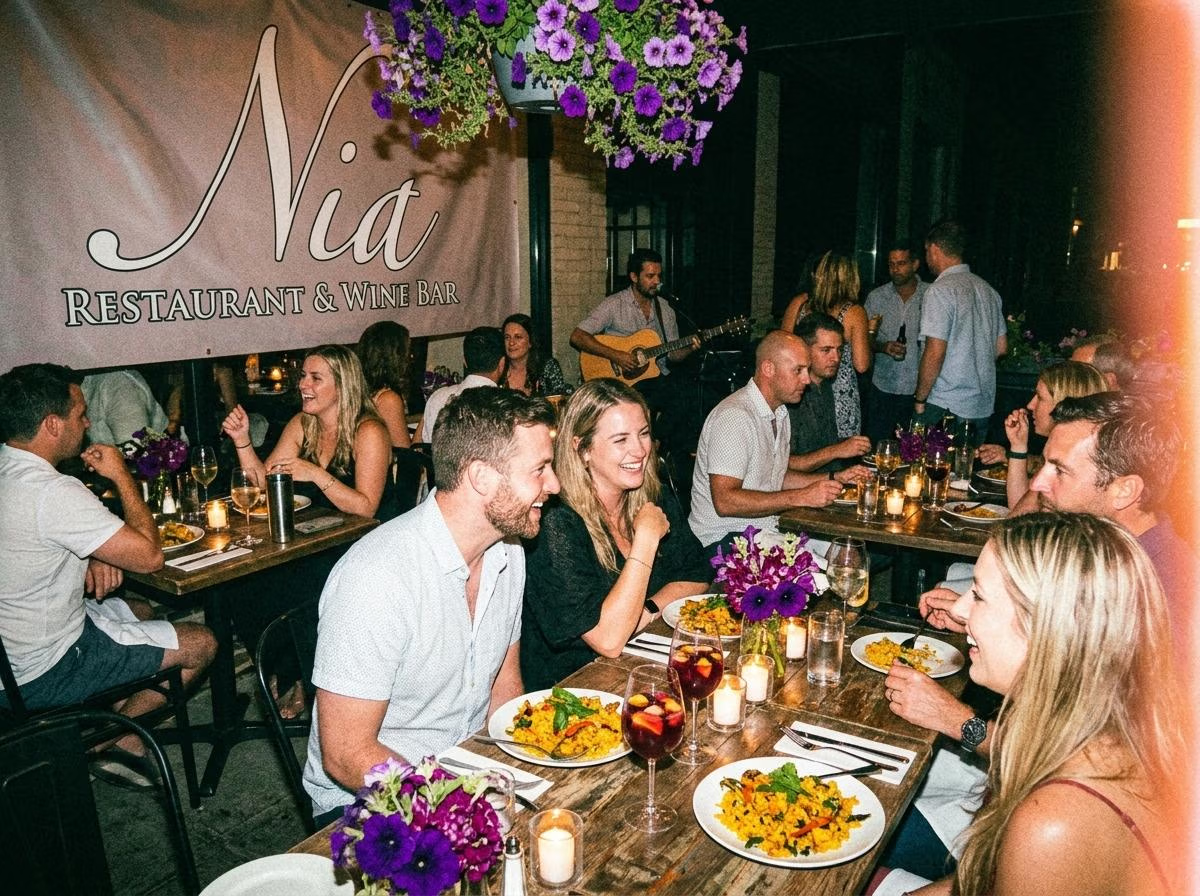
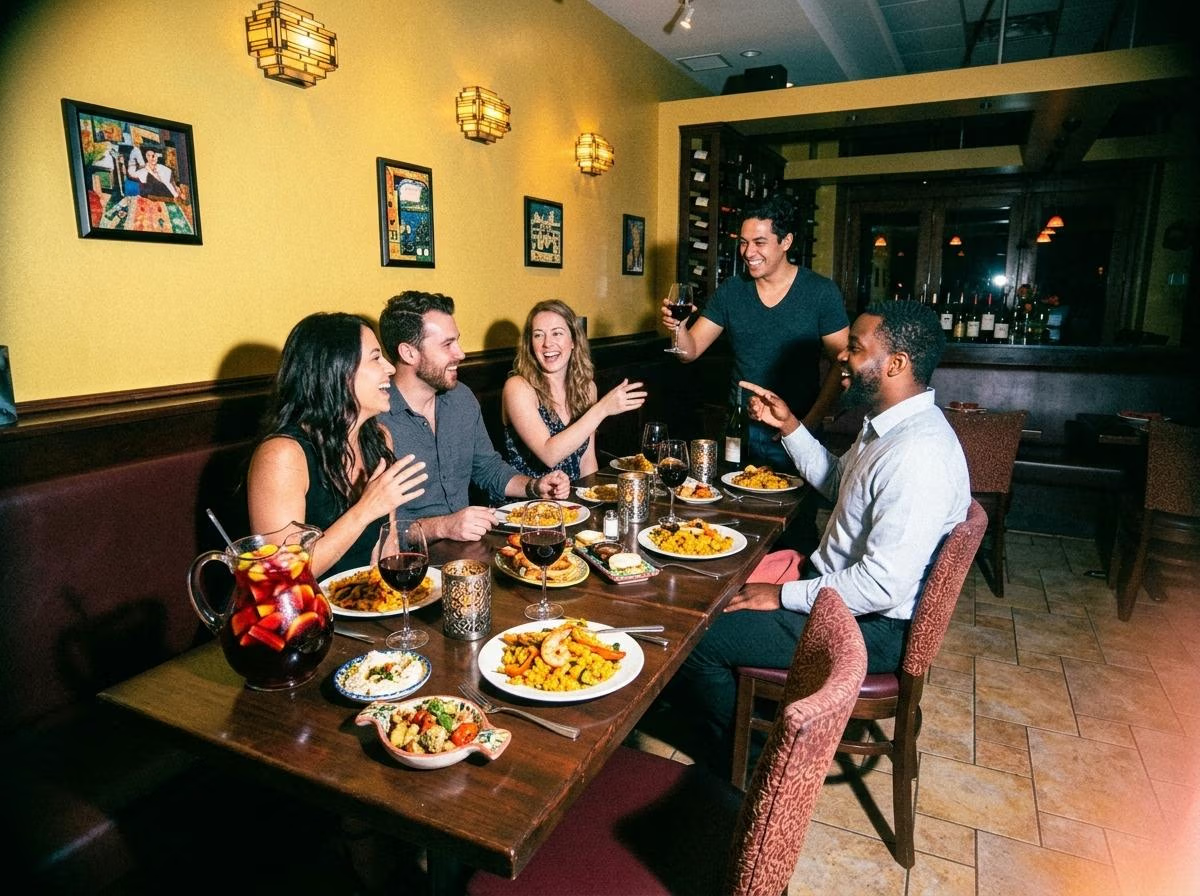
Nia Restaurant & Wine Bar combines a wine-focused dining experience with Mediterranean-inspired food and shared plates on Randolph Street in the West Loop.
This makes Nia more appropriate for couples who want the wine bar to double as the main dinner destination rather than a quick pre-dinner glass.
Nia’s current wine program includes wines by the glass and bottle from several regions, while its food concept emphasizes Mediterranean-inspired cuisine with Spanish roots and dishes designed for sharing. The restaurant is located at 803 W. Randolph Street.
That shared-dining element changes the type of wine date.
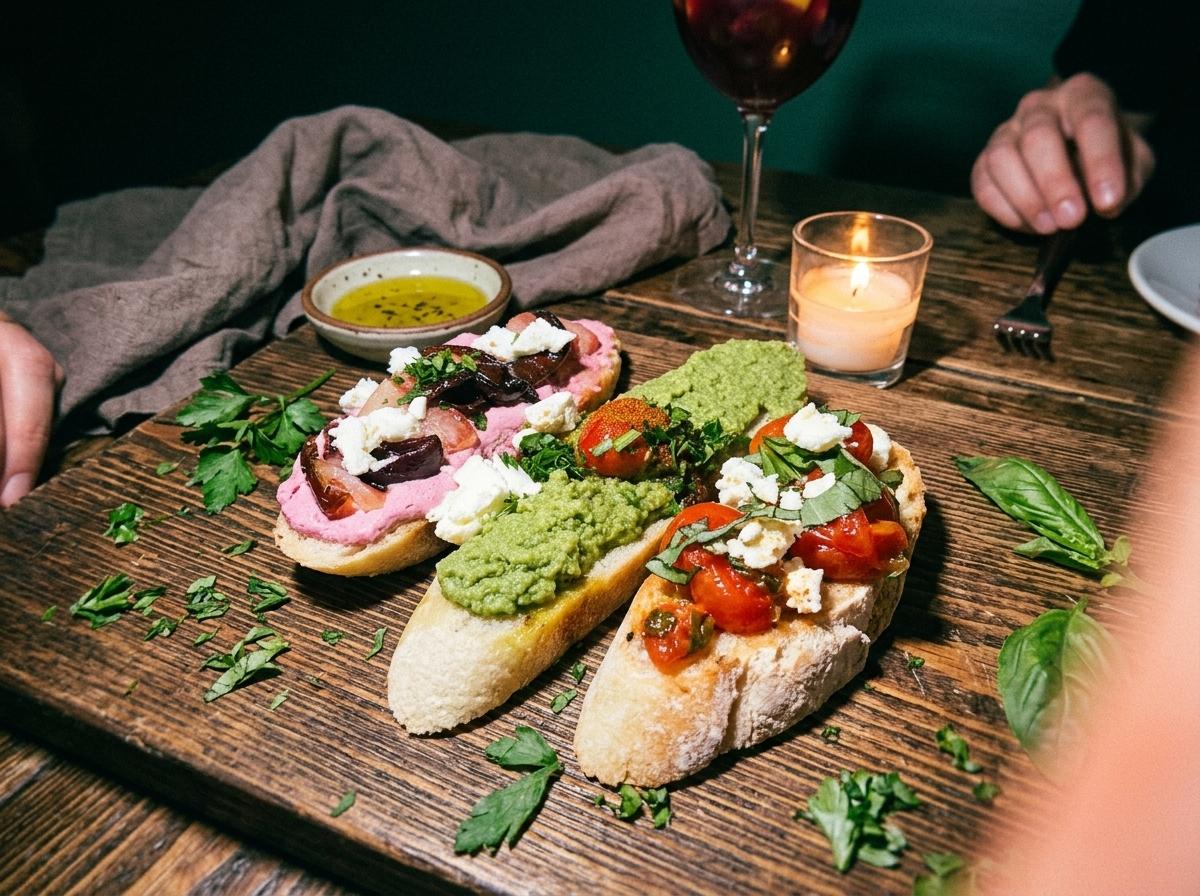
Instead of sitting with one glass and a small snack, couples can build a meal gradually, compare several dishes, and select wine according to the direction the food takes.
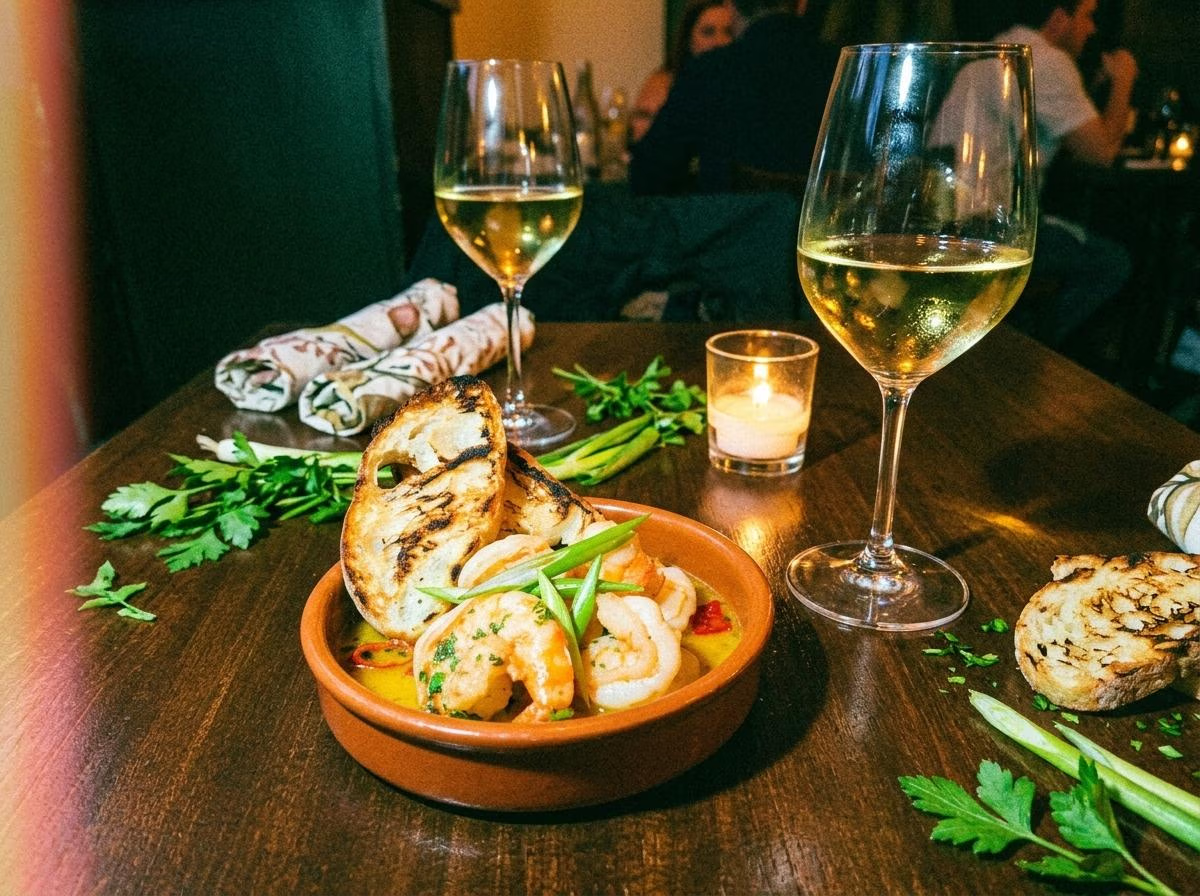
A seafood-heavy order might lead toward a crisp white. A mixed table of vegetables, cheese, and smaller plates may work with rosé or sparkling wine. Grilled and richer dishes can create opportunities for medium-bodied reds.
For couples who want detailed technical pairing advice, Nia’s dedicated Mediterranean wine-pairing hub should handle that topic. This page should stay focused on why the overall venue works as one kind of Chicago wine-bar date.
Best for an Intimate West Loop Wine-Bar Mood: The Press Room
The Press Room is a lower-level West Loop wine and cocktail bar at 1134 W. Washington Boulevard.
Its own site describes it as an intimate wine and cocktail bar with food, curated wines, cocktails, and attentive service. Choose Chicago also highlights the venue’s cozy setting and includes it among romantic Chicago dining options.
This makes it a different kind of West Loop wine date from Nia.
Nia works particularly well when couples want Mediterranean shared dining to anchor the night. The Press Room is worth considering when the desired mood is more subterranean, bar-oriented, and intimate.
That distinction is useful for this article because a strong “best wine bars” guide should not simply repeat that every destination is romantic for the same reasons.
Different venues solve different date-night needs.
The Press Room can make sense for couples who want wine and dinner in a smaller-feeling setting or who prefer a bar atmosphere over a conventional restaurant room.
Best for a Classic Wine-Bar Experience: Webster’s Wine Bar
Webster’s Wine Bar in Logan Square is one of Chicago’s established wine-focused bars.
Time Out describes the bar as a place for exploring a broad selection of wines with guidance from knowledgeable staff, alongside cheese and charcuterie.
This kind of wine bar is particularly useful for couples who want wine itself to be a meaningful part of the date.
You do not necessarily need a full multi-course dinner or highly polished special-occasion atmosphere.
The appeal is more relaxed: sit down, explore a few wines, ask questions, share food, and let the evening develop.
That can make a classic neighborhood wine bar especially appealing for an early date where the goal is conversation without creating the pressure of a formal dinner.
It can also work for long-term couples who enjoy wine but want something less structured than a tasting menu or anniversary restaurant.
Best for a Tasting Experience for Two: Le Midi Wine
Le Midi Wine on Division Street offers another distinctive format for a wine date.
Its current reservation information includes a dedicated Tasting Experience for Two, built around several wines and a shared snack board, in addition to standard table reservations. The venue also encourages walk-ins and offers a substantial bottle selection.
This makes it especially relevant for couples who want the date to revolve around trying wine together rather than simply ordering one familiar glass each.
A tasting creates an automatic progression.
There is always something to discuss: which wine each person prefers, how the styles differ, what changes when food is introduced, and whether either person discovers something they would order again.
That structure can be useful for an early date because the tasting itself provides natural conversation without requiring constant planning.
It can be equally appealing for established couples looking for a low-pressure activity that is more interactive than simply going out for a drink.
Best for a Wine-and-Dinner Date Outside the West Loop: Ella Elli
Ella Elli in Chicago’s Southport neighborhood combines a significant wine program with a dinner menu influenced by European flavors.
Its official site describes an atypical wine list, dinner plates with French and Italian influence, and a warm dining environment. The venue also hosts dedicated wine dinners built around specific regions and paired courses.
This makes it another example of the restaurant-wine-bar hybrid.
Couples who want food to matter as much as the wine may prefer this format to a venue centered mainly on bottles and snacks.
It also illustrates why “best wine bar” should not mean only one style of business.
For one couple, the best wine date means a small neighborhood bar and a few glasses.
For another, it means a complete dinner where the wine list is central to the restaurant’s identity.
What These Chicago Wine Bars Actually Have in Common
The examples above are different, but several qualities connect them.
They give wine a meaningful role rather than treating it as an afterthought.
They also provide reasons to stay for more than one quick drink, whether through food, tastings, bottle selection, atmosphere, or a combination of those elements.
Most importantly for date night, each gives couples something to share.
That might be a bottle.
It might be several tasting pours.
It might be cheese and snacks.
It might be a complete Mediterranean meal.
The shared component creates interaction.
That is far more useful than claiming that wine itself automatically produces meaningful conversation.
Why “Wine Creates Better Conversations” Needs More Careful Language
The current version of this page argues repeatedly that wine causes conversations to become deeper and more meaningful.
That claim should be rewritten.
Alcohol can affect mood, judgment, and behavior, and it should not be promoted as a tool for emotional connection.
The more defensible point is that wine-bar environments can be designed around conversation.
The difference matters.
A comfortable table, reasonable noise level, unhurried service, food that can be shared, and a drink that gives people something to explore can help create a slower social experience.
Someone who chooses not to drink alcohol can enjoy exactly the same conversation-friendly environment.
That is why a date-night wine-bar guide should focus on hospitality and setting rather than suggesting that alcohol improves relationships.
A Wine Date Does Not Require Both People to Know Wine
Wine can feel intimidating because lists may contain unfamiliar grapes, regions, and producers.
That does not make a wine bar inappropriate for beginners.
In fact, good wine hospitality should work particularly well for people who are still learning.
You do not need to know the difference between Assyrtiko and Albariño before arriving.
You can describe what you already enjoy.
Maybe you like crisp and dry whites.
Maybe you prefer softer reds.
Maybe you do not like sweet wine.
Maybe you want something unusual but approachable.
A strong server can use those preferences as a starting point.
For date night, this can be more enjoyable than pretending to understand a list neither person has seen before.
By the Glass Versus a Bottle on Date Night
Both formats create different experiences.
Ordering wine by the glass allows each person to choose independently.
This is ideal when one person likes white wine and the other prefers red, or when you want to explore several styles during the evening.
A bottle works particularly well when both people enjoy the same wine and plan to stay for a longer meal.
Sharing a bottle also removes the need to make a new decision every time a glass is empty.
For first dates, by-the-glass ordering can provide more flexibility.
For longer dinners or established couples who already know what they enjoy, a bottle may feel more natural.
There is no more romantic option.
Choose according to the meal and preferences.
Wine Flights Can Turn a Drink Into an Activity
Wine flights or tasting experiences create a date-night activity without requiring a second venue.
Instead of ordering one glass each, couples can taste several wines side by side.
This naturally creates comparison.
One wine may feel brighter.
Another may taste richer.
One person may strongly prefer the wine the other dislikes.
That difference can make the experience more interesting.
A tasting also gives couples who are new to wine an opportunity to learn through direct comparison rather than reading descriptions.
The important thing is to treat the flight as an experience, not a competition to identify flavors correctly.
There is no prize for discovering a tasting note before your date does.
Food Matters More Than People Expect at a Wine Bar
A wine list can be excellent and still fail as a date-night destination if the food does not match what you need.
If the wine bar serves only a few snacks, that may be perfect for a second stop after dinner.
It may be disappointing if both people arrive hungry expecting a full meal.
Check the menu before deciding.
Cheese, charcuterie, olives, bread, and small snacks may be enough for a casual glass.
A longer date may benefit from more substantial food.
Restaurant-wine-bar hybrids such as Nia or Ella Elli can make sense when dinner itself is important.
Dedicated wine bars such as Webster’s or Le Midi may appeal more strongly when tasting and conversation are the focus.
The better choice depends on the evening.
Shared Food Can Make a Wine Date More Interactive
Shared food fits naturally with wine because it allows couples to taste different combinations throughout the evening.
One glass may work particularly well with a salty cheese.
Another may feel completely different beside seafood or grilled vegetables.
The food therefore becomes part of the exploration.
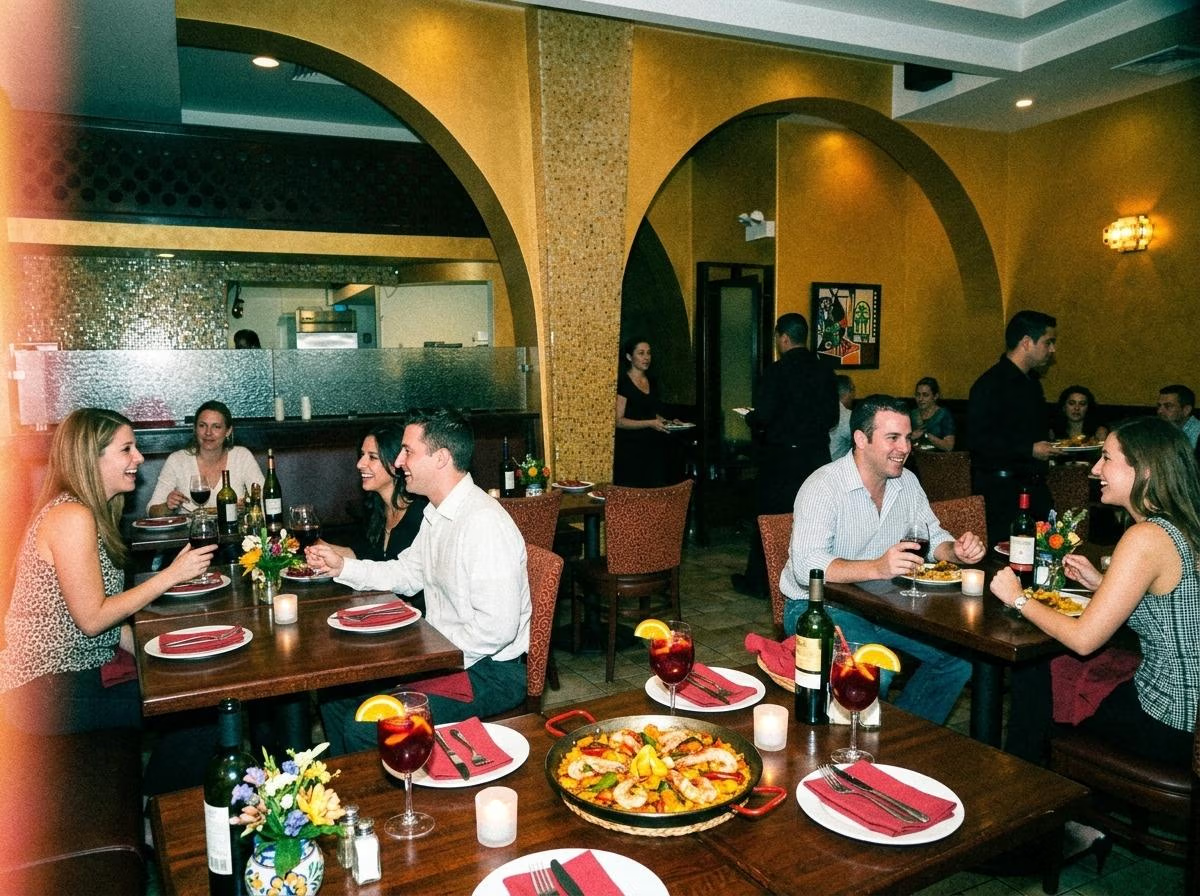
Mediterranean small plates can be especially useful because one meal may include vegetables, seafood, cheese, grilled dishes, breads, dips, and meats.
This creates several pairing possibilities without requiring a formal tasting menu.
Nia’s shared Mediterranean format is relevant here, but detailed instructions about what wine belongs with each dish should stay on the separate wine-pairing hub.
This article should explain the date-night format rather than duplicate the site’s technical pairing resource.
Atmosphere: Intimate Does Not Mean Silent
A good date-night wine bar needs balance.
A completely silent room can feel uncomfortable on an early date.
A very loud bar can make conversation exhausting.
The ideal environment usually contains enough surrounding activity to create energy while allowing two people to speak in normal voices.
This is why couples should look beyond words such as romantic, cozy, and intimate.
Those labels are subjective.
Consider the actual room.
Is it a tiny neighborhood space?
Is it a basement bar?
Is it a full restaurant?
Does it have a busy bar program?
Does music become louder later in the evening?
The right answer depends on how much energy you want around the table.
Seating Can Change the Date
Table seating and bar seating create different experiences.
A traditional two-top allows couples to face each other and is generally better for conversation.
Bar seating can feel more casual and reduce some of the pressure associated with a formal date.
Sitting side by side at the bar can also create more interaction with the bartender or wine staff, which may be appealing when wine exploration is the point.
Neither is automatically superior.
A first date may feel easier at the bar.
An anniversary may benefit from a more private table.
A spontaneous glass after dinner may not justify worrying about the distinction at all.
Choose the seating style according to the type of date.
First Date: Keep the Wine Bar Flexible
Wine bars can work especially well for first dates because the commitment level can remain flexible.
You can meet for one glass.
If conversation is going well, order food or another round.
If the evening naturally reaches its endpoint, neither person has to leave halfway through a five-course tasting menu.
By-the-glass options become especially useful here.
A casual wine bar with approachable staff and enough food to extend the evening can provide the right balance between structure and flexibility.
This page should stop there.
The broader question of how to plan an entire first date in the West Loop belongs on Nia’s primary date-night hub.
Long-Term Couples: Use Wine as a Discovery Activity
Couples who have been together for years face a different problem.
Date night can become repetitive.
Dinner at the same type of restaurant followed by the same routine may no longer feel like much of an event.
A wine bar can introduce something new without requiring a highly elaborate plan.
Try a grape neither person knows.
Choose a region you have never explored.
Order contrasting glasses and compare them.
Book a tasting experience.
Attend a wine dinner if a venue is offering one.
The value lies in discovering something together.
You do not need to know whether the wine is considered prestigious for the experience to feel different from a normal night out.
Anniversary Dates Need a Different Wine-Bar Choice
An anniversary usually deserves more consideration than a spontaneous glass.
If dinner is the main celebration, choose a wine bar that can support a complete meal.
If the wine bar is only one stage of the evening, you may prefer somewhere focused on atmosphere and bottles rather than extensive food.
Couples planning an anniversary should also consider seating, pacing, reservation availability, and whether the venue feels meaningful enough for the milestone.
Those anniversary-specific decisions belong in greater detail on the dedicated Anniversary Dinner in Chicago’s West Loop guide.
This wine-bar article should not recreate that entire page.
The Best Wine Bar for Conversation Is Not Necessarily the Quietest
Conversation needs enough privacy to feel comfortable, but total silence can create its own pressure.
A little surrounding energy can help people relax.
The goal is a room where the environment supports conversation rather than competing with it.
This may mean a low-volume neighborhood wine bar for one couple and a busier restaurant-wine-bar for another.
Before reserving, think about the person you are going with.
Do they enjoy quiet spaces?
Do they prefer energetic rooms?
Does live music improve the evening or make talking harder?
The best date-night environment is personal.
Does a Wine Bar Need a Huge Wine List?
No.
A very large bottle list can be impressive, but size does not guarantee a better date.
A shorter list can be more interesting when it has been selected thoughtfully.
What matters is whether there are enough options across price points, styles, regions, and grapes for different preferences.
By-the-glass diversity can be particularly important for dates because two people may want different things.
Staff guidance also matters.
A smaller list that someone can explain confidently may create a better experience than hundreds of bottles presented without context.
The goal should be discovery without unnecessary complexity.
What If One Person Does Not Drink?
A wine bar can still work, but check the non-alcoholic program before choosing it.
One person should not spend the entire date with water simply because the other enjoys wine.
Thoughtful non-alcoholic cocktails, sparkling beverages, alcohol-free wines, teas, or other options can make the experience more inclusive.
Nia currently lists non-alcoholic beverages alongside its wider beverage program.
If alcohol is the only thing holding the evening together, the venue may not be the right choice for a mixed-preference couple.
A good date should work for both people.
White Wine, Red Wine, Rosé, or Sparkling?
Do not choose according to what seems most romantic.
Choose according to taste and food.
Sparkling wine can feel celebratory and works well with many salty or fried foods.
Crisp white wine can pair naturally with seafood, vegetables, herbs, and lighter plates.
Rosé can be useful across a varied shared meal.
Red wine can work especially well with grilled dishes, mushrooms, tomato-based food, meats, and richer flavors.
If both people prefer different styles, order separate glasses.
There is no reason to force one bottle simply because sharing sounds romantic.
Detailed grape-and-food pairing belongs on the Mediterranean wine hub.
Wine Is Optional, Even at a Wine-Bar Date
The point deserves emphasis because the current article places too much weight on wine itself as the source of connection.
A successful date does not require alcohol.
A wine bar works because of the experience around the table.
Someone can order a non-alcoholic beverage and still enjoy the room, food, service, conversation, and pacing.
This also keeps the page aligned with Nia’s claim-safe alcohol content.
The site should never imply that drinking wine makes conversation deeper or relationships stronger.
How Much Should You Spend on a Wine-Bar Date?
There is no correct amount.
A wine date can involve two glasses and a small plate or a full dinner with a bottle.
Review menus before arriving if budget matters.
Wine prices can vary significantly according to region, producer, vintage, rarity, and how a restaurant structures its program.
If you are early in a relationship, do not assume spending heavily makes the date more meaningful.
A thoughtful venue within a comfortable budget is usually better than choosing an expensive bottle primarily to signal importance.
The same applies to long-term couples.
Good wine does not need to become financial stress.
Should You Reserve a Wine Bar?
That depends on the venue and the type of date.
Some wine bars primarily welcome walk-ins.
Others accept or strongly encourage reservations.
Some reserve tables for dinner but keep bar seating available for walk-ins.
Le Midi currently offers limited standard reservations and dedicated tasting reservations, while The Press Room states that dinner reservations are available and drinks-only lounge seating is handled on a walk-in basis.
Check the current venue policy before planning around a specific time.
Do not assume every wine bar operates like a standard restaurant.
A Wine Bar Can Be the Whole Date or One Part of It
This is one of the biggest differences between wine bars.
Some are destinations where couples can spend the entire evening.
Others work beautifully as a first or second stop.
A full-service wine-focused restaurant can handle dinner, wine, dessert, and several hours of conversation.
A smaller bar may be stronger as the place you meet before dinner or go afterward for one more glass.
Neither format is better.
The correct choice depends on what you want the date to accomplish.
This page should help readers select that wine-focused part of the evening.
The complete sequence of activities belongs on the broader Chicago or West Loop date-night guide.
Choosing Between West Loop and Neighborhood Wine Bars
The West Loop offers an advantage for couples who want wine to connect easily with a larger dinner or evening because restaurants and hospitality venues are concentrated across the neighborhood.
A neighborhood wine bar in Logan Square, Wicker Park, Lakeview, or another part of Chicago may offer a more self-contained experience.
Neither is inherently more romantic.
West Loop can work particularly well when you want dinner, wine, and other options close together.
A neighborhood wine bar can feel more relaxed when you want the bar itself to be the entire destination.
Choose location according to the evening rather than simply selecting the nearest high-rated result.
How to Choose From Chicago’s Wine Bars
Start with four questions.
First, are you looking for a complete dinner or mainly wine and smaller food?
Second, do you want a relaxed neighborhood bar, an intimate special-occasion room, or a more energetic restaurant environment?
Third, how interested are both people in wine itself?
Fourth, do you want the wine bar to be the entire date or only one stage of a larger night?
Once those questions are answered, recommendations become much more useful.
A couple who wants dinner and Mediterranean shared plates may choose differently from a couple wanting a structured wine tasting.
A first date may require flexibility.
An anniversary may require greater planning.
A spontaneous evening may simply require a comfortable room with good wines by the glass.
“Best” therefore means best for the type of date you are actually planning.
Frequently Asked Questions About Chicago Wine Bars for Date Night
Are wine bars good for date night?
Yes, particularly when the venue has a conversation-friendly atmosphere, good seating, approachable wine service, and food appropriate for the length of the date.
Wine bars often encourage slower pacing and provide couples with something to explore together.
The benefit comes from the environment and experience rather than alcohol itself.
What makes a wine bar romantic?
Warm lighting, comfortable seating, manageable noise, good service, unhurried pacing, interesting drinks, and enough personal space can all contribute.
Romance is subjective, however.
One couple may prefer a quiet neighborhood bar while another enjoys a livelier restaurant-wine-bar.
What are some wine bars in Chicago that work for dates?
Different venues fit different styles.
Nia Restaurant & Wine Bar can work for a West Loop dinner centered on Mediterranean shared food and wine.
The Press Room offers an intimate lower-level West Loop wine-bar setting.
Webster’s Wine Bar provides a more traditional neighborhood wine-bar experience in Logan Square.
Le Midi Wine currently offers wine tasting experiences for two on Division Street.
Ella Elli combines a significant wine program with a more complete dinner experience in the Southport area.
Always check current menus, reservation policies, and hours before visiting because restaurant operations change.
What is a good wine bar for date night in the West Loop?
For a full Mediterranean dinner-and-wine experience, Nia is one option on Randolph Street.
For a more intimate lower-level wine-and-cocktail bar atmosphere, The Press Room is another West Loop option.
The better choice depends on whether dinner, wine exploration, or the bar atmosphere is the primary goal.
Is a wine tasting a good first date?
It can be.
A tasting gives both people something structured to experience and discuss, which can reduce pressure to generate conversation constantly.
However, choose a format that allows enough time for normal conversation rather than turning the entire date into a technical class.
A flexible tasting with food can work particularly well.
Should I order a bottle on a first date?
Only if both people want the same wine and expect to stay long enough to enjoy it comfortably.
Wine by the glass can provide more flexibility, especially if each person has different preferences.
There is no date-night rule requiring a shared bottle.
What wine is best for a romantic date?
There is no universally romantic wine.
Sparkling wine can feel celebratory, crisp whites work well with seafood and lighter food, rosé is versatile, and red wine can complement richer dishes.
Choose something both people actually enjoy rather than selecting wine based on romantic stereotypes.
Do wine bars serve enough food for dinner?
Some do and some do not.
Dedicated wine bars may focus on snacks, cheese, charcuterie, or smaller dishes.
Restaurant-wine-bar hybrids may provide a complete dinner.
Check the current menu before planning the wine bar as your only food stop.
Can I go to a wine bar if I do not know anything about wine?
Yes.
A good wine bar should make recommendations approachable for beginners.
Explain what flavors you already like rather than worrying about grape terminology.
You can ask for something dry, light, crisp, fruity, smooth, bold, or adventurous and allow the staff to guide you.
Can a wine bar work if one person does not drink alcohol?
Yes, provided the venue offers suitable non-alcoholic options and both people enjoy the setting and food.
Wine should not be treated as a requirement for connection or romance.
Are wine bars better for first dates or anniversaries?
They can work for both, but the venue may be different.
First dates often benefit from flexibility, by-the-glass options, and a casual environment.
Anniversaries may benefit from reservations, a full food menu, a bottle or tasting experience, and a more deliberate atmosphere.
For detailed anniversary planning, use the dedicated anniversary guide.
Is Nia a wine bar or a restaurant?
Nia operates as Nia Restaurant & Wine Bar and combines Mediterranean-inspired shared dining with a curated wine program in Chicago’s West Loop.
That makes it closer to a full dinner-and-wine destination than a wine-only bar.
Choose the Wine Bar According to the Conversation You Want
The best Chicago wine bar for date night is not necessarily the venue with the longest wine list.
It is the place that gives the two of you the type of evening you actually want.
If you want a complete West Loop dinner built around Mediterranean shared dishes and wine, Nia provides one type of experience.
If you want a lower-level intimate wine-bar environment, The Press Room offers another.
If the classic neighborhood wine-bar experience is the priority, Webster’s provides a different direction.
If you want a tasting built specifically for two people, Le Midi offers another format.
If a complete wine-and-dinner restaurant experience outside the West Loop sounds better, Ella Elli provides yet another style.
The useful lesson is not that one of those businesses is objectively more romantic than the others.
They serve different kinds of dates.
Look at the food.
Look at the seating.
Consider the noise level.
Decide whether wine is the main activity or simply part of dinner.
Think about whether you want a reservation or a flexible walk-in experience.
And choose the place that gives conversation enough room to happen naturally.
Wine can be part of the experience.
It does not need to be credited for creating the connection.