Greek food can be remarkably wine-friendly because many of its defining flavors naturally interact with acidity, fruit, minerality, herbs, salt, smoke, and tannin. Lemon, olive oil, grilled seafood, feta, yogurt, oregano, garlic, tomato, legumes, vegetables, lamb, and char-grilled meats can each point toward a different style of wine, yet the meal rarely needs to become complicated.
The most useful place to begin is not with a rigid rule such as “white wine with fish and red wine with meat.” Greek food is too varied for that. A better approach is to look at how the dish is prepared, how rich it is, whether lemon or tomato provides acidity, whether cheese contributes salt, whether yogurt brings creaminess, and whether grilling adds enough intensity to support a structured red wine.
Greek wine itself offers excellent examples of how those pairings work. Assyrtiko can provide the acidity and structure needed for seafood and salty foods. Moschofilero brings aromatic freshness that can work with lighter appetizers, herbs, and seafood. Agiorgitiko can move comfortably into poultry, grilled meats, tomato-based dishes, and cheese. Xinomavro offers higher acidity and firmer tannins for richer meats, tomato-driven food, and more intense savory preparations.
The official Wines of Greece grape guide similarly identifies Assyrtiko with seafood and poultry, Agiorgitiko with poultry, red meats, pasta, spicy dishes, and cheese, while its Xinomavro guidance emphasizes richer foods and high-intensity flavors.
This guide focuses specifically on Greek-food wine pairing. It is not intended to replace Nia’s broader Mediterranean wine guide, which covers Spanish, Italian, French, Greek, and other Mediterranean wines across a wider range of dishes. Here, the purpose is narrower: understanding how Greek wine styles can complement the characteristic flavors of Greek and Greek-influenced food.
The Best Wine for Greek Food Depends on the Dish
There is no single wine that qualifies as the best choice for every Greek meal.
A plate of grilled octopus and lemon creates completely different pairing requirements from slow-cooked lamb. Creamy tzatziki behaves differently with wine than tomato-rich meatballs. Feta introduces salt, while grilled fish introduces delicacy, minerality, and smoke. Moussaka introduces eggplant, meat, tomato, spice, and creamy béchamel simultaneously.
That means successful pairing starts with the structure of the food.
When the dish is light, citrus-driven, seafood-focused, herbal, or salty, fresh Greek white wines are often the easiest direction. When the table moves toward poultry, tomato, grilled meats, or richer cheese, rosé or medium-bodied red wines become increasingly useful. When lamb, beef, mushrooms, or long-cooked savory dishes dominate, structured reds such as Xinomavro can come into their own.
The pairing does not have to reproduce tradition exactly. Greek wine works because of its structure, not because wine and food must come from the same country.
Wines of Greece describes modern Greek wines as particularly adaptable because acidity, freshness, structure, and distinctive native grape varieties allow them to respond to a dish’s actual texture, seasoning, and intensity rather than simply its national origin.
Understanding the Main Greek Wine Styles
Before pairing individual dishes, it helps to understand a few Greek grapes that appear frequently in conversations about food and wine.
Assyrtiko is one of Greece’s best-known white grapes. It originated on Santorini but is now planted in several parts of Greece. Wines of Greece describes Assyrtiko as a structured white variety that maintains crisp acidity and is particularly food-friendly with grilled fish and seafood.
Moschofilero is an aromatic grape associated especially with Mantinia in the Peloponnese. It is often made as a dry white and can also appear in sparkling and rosé styles. Wines of Greece describes it as aromatic, refreshing, and particularly comfortable with seafood and elegant dishes.
Agiorgitiko is an important red grape closely associated with Nemea. Depending on how it is made, it can range from fresh and fruit-driven to more structured and oak-aged. Wines of Greece identifies it as highly food-friendly, with lighter styles working across several dishes while fuller Nemea versions can accompany grilled meats, poultry, stews, pasta, and cheese.
Xinomavro tends to bring higher acidity, firmer tannin, and more savory complexity. Wines of Greece notes that lighter or rosé expressions can work with richer fish, poultry, salads, and tomato dishes, while fuller reds are particularly suited to beef, lamb, hard cheeses, mushrooms, and other savory foods.
Those four grapes alone provide enough range to cover a large portion of a Greek meal.
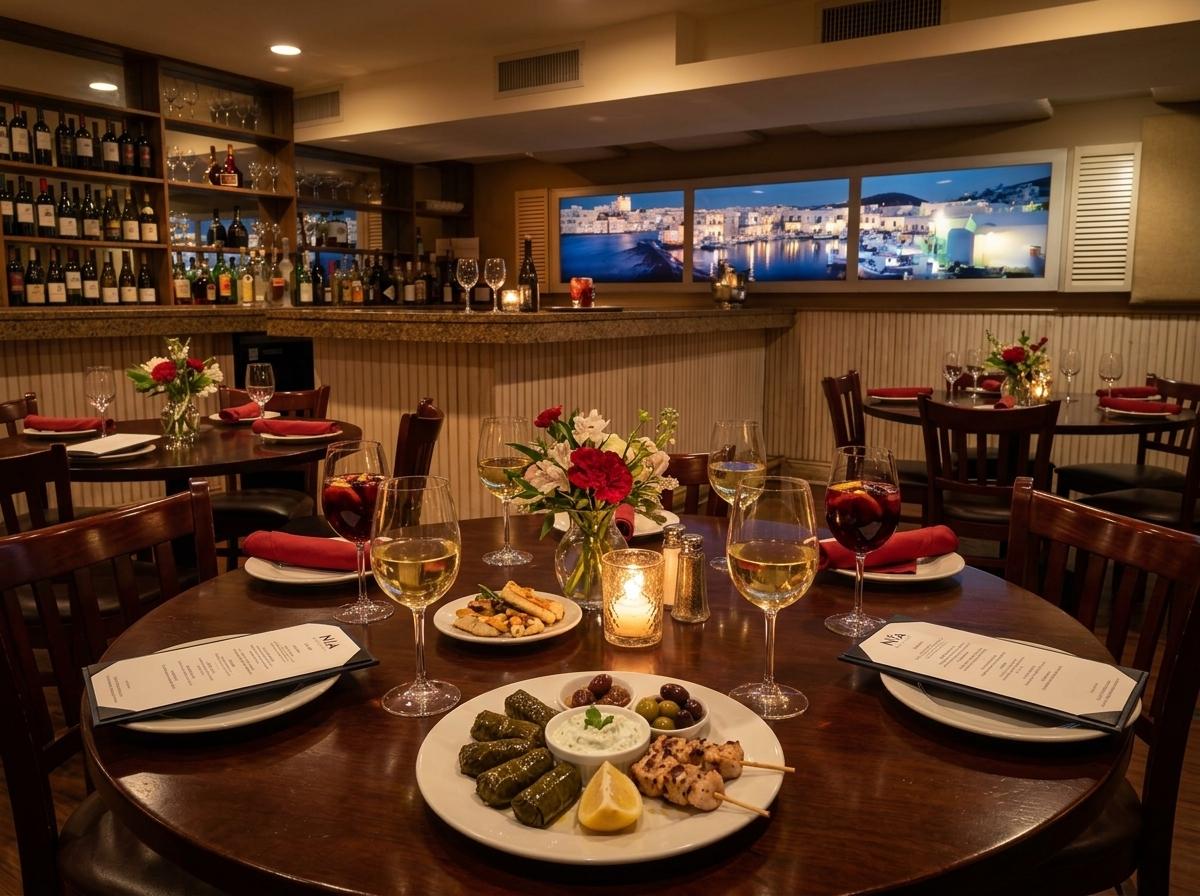
Why Assyrtiko Works So Well With Greek Food
Assyrtiko is often one of the safest starting points for people exploring Greek wine.
Its appeal comes largely from acidity and structure. Greek food frequently uses olive oil, lemon, herbs, seafood, salty cheese, and grilled flavors, all of which can benefit from a wine that remains bright and refreshing.
With seafood, acidity helps preserve freshness rather than making the dish feel heavy. With olive oil, the wine can refresh the palate after each bite. With salty ingredients such as feta or olives, the combination can make the fruit and mineral qualities of the wine feel particularly lively.
Assyrtiko from Santorini is especially associated with a mineral, concentrated style and is widely considered a natural partner for fish, seafood, and salty or briny foods.
That does not mean every Assyrtiko tastes identical. Wines made outside Santorini can show more overt fruit and somewhat different texture while retaining the variety’s characteristic freshness.
For pairing purposes, the basic lesson remains consistent: when the table is dominated by seafood, lemon, olive oil, herbs, and salty appetizers, Assyrtiko deserves serious consideration.
Best Wine With Greek Seafood
Greek seafood dishes often combine relatively delicate proteins with assertive supporting flavors.
Fish may be grilled and finished with lemon and olive oil. Octopus can introduce smoke and char. Shrimp may involve garlic, herbs, tomato, or rich olive oil. Calamari may be grilled or fried. Seafood stews can bring tomato and deeper savory flavors.
Because preparation matters so much, “seafood means white wine” is not a complete answer.
For simply grilled fish, Assyrtiko is one of the strongest choices because its acidity and structure can match citrus, salt, and char without overwhelming the fish.
Moschofilero can work when the dish is more delicate or herbal. Its aromatic profile can complement seafood served with fresh herbs, vegetables, or lighter sauces.
Rosé can become useful when the seafood includes tomato, roasted peppers, or a mixture of flavors that might overpower a very delicate white.
For fatty fish such as salmon or tuna, lighter Xinomavro styles can even work because acidity and savory character allow the red wine to handle richer fish without requiring a massive body. Wines of Greece specifically notes that lighter Xinomavro styles can pair with rich fish including tuna and salmon.
Best Wine With Grilled Fish
Grilling changes the pairing because it adds smoke and char.
A lightly poached or steamed fish may need a particularly delicate wine. Grilled fish has more intensity and can therefore support a wine with greater structure.
Assyrtiko remains one of the best options because it combines freshness with enough weight to stand beside charred flavors.
The official Wines of Greece Assyrtiko profile specifically describes the grape as highly food-friendly and particularly suited to grilled fish and seafood.
If the fish is dressed heavily with herbs, Moschofilero can provide another direction.
If roasted tomato or peppers become important components of the dish, a dry Greek rosé can offer an effective bridge between fresh seafood and richer vegetable flavors.
The most useful rule is to pair with the complete preparation rather than the fish alone.
Best Wine With Shrimp
Shrimp has natural sweetness, so the wine should usually preserve rather than overpower it.
Moschofilero can be particularly attractive when shrimp is prepared with herbs, lemon, or lighter seasonings because its aromatic nature adds interest while maintaining freshness.
Assyrtiko works when the dish contains garlic, olive oil, salt, citrus, or grilled flavors.
For tomato-based shrimp preparations, rosé can become more useful because it provides more fruit and body while retaining enough freshness for seafood.
A very tannic red wine can make delicate shrimp feel secondary, particularly when the preparation is simple.
Nia’s broader Mediterranean menu currently includes shrimp preparations such as gambas al ajillo and shrimp paella, but these are Spanish-influenced dishes rather than traditional Greek dishes. They provide useful examples of why pairing should follow flavor structure instead of cuisine labels alone. Nia’s current bottle list also includes Greek Moschofilero and Assyrtiko.
Best Wine With Grilled Octopus
Octopus offers more intensity than many delicate seafood dishes, particularly when it has been grilled.
The charred exterior, savory texture, olive oil, herbs, and lemon create a dish that can support more structure in the wine.
Assyrtiko is still an excellent option because acidity and minerality work naturally with salt, lemon, and seafood.
Dry rosé is another useful direction when the octopus is heavily grilled or served with tomato, peppers, or more robust Mediterranean accompaniments.
A lighter red can work as well, particularly if the octopus is served in a savory or tomato-rich preparation. The wine should remain fresh and relatively restrained in tannin so that the seafood is not overwhelmed.
This is a good example of why wine color should not become a rigid rule. The cooking method can shift the pairing just as much as the protein itself.

Best Wine With Calamari
The ideal wine for calamari depends heavily on whether it is grilled or fried.
Grilled calamari works well with Assyrtiko because the wine can handle lemon, herbs, salt, and char while keeping the pairing fresh.
Fried calamari benefits from acidity for a different reason. Fried food coats the palate, so a crisp white or sparkling wine provides refreshment between bites.
Moschofilero can work particularly well when the seasoning remains relatively delicate.
Greek sparkling wine can also be an excellent option with fried calamari because carbonation and acidity provide contrast against the crisp coating.
The most important principle is not whether the calamari is Greek. It is whether the wine has enough freshness to respond to the preparation.
Best Wine With Greek Mezze
Mezze creates a different challenge because several flavors arrive together.
A Greek mezze spread may include olives, tzatziki, hummus or other dips, feta, vegetables, spreads, bread, grilled items, seafood, and other small plates.
Trying to select a separate wine for every dish can make the meal unnecessarily complicated.
Instead, choose a flexible wine.
Assyrtiko is useful when salty, lemony, seafood, and vegetable flavors dominate the table.
Moschofilero works especially well when the spread leans toward herbs, lighter dips, fresh vegetables, and aromatic flavors.
Dry rosé can be the most versatile choice when the table contains a mixture of cheese, vegetables, seafood, and some meat.
A lighter Agiorgitiko can work when grilled meat, tomato, and richer foods begin to dominate.
The objective with mezze is not one perfect pairing. It is choosing a wine that remains enjoyable across most of the table.
Best Wine With Tzatziki
Tzatziki combines yogurt, cucumber, garlic, herbs, and acidity.
That means the wine needs to deal with creaminess while respecting fresh green flavors.
Moschofilero is a natural option because its aromatic freshness can complement herbs and cucumber without feeling heavy.
Assyrtiko can also work particularly well when the tzatziki is bright with lemon or served alongside salty and grilled foods.
Dry rosé becomes useful when tzatziki is only one part of a larger mixed spread.
Avoid wines with excessive tannin, particularly when tzatziki is being eaten largely on its own. Yogurt and garlic generally benefit from freshness rather than heavy structure.
The current Nia tasting menu includes chicken skewers served with tzatziki and lemon, providing a practical example of how creamy yogurt, citrus, and grilled poultry can appear in the same bite.
Best Wine With Hummus and Chickpea-Based Dishes
Hummus is associated more broadly with the eastern Mediterranean and Middle East rather than being uniquely Greek, but it often appears on Mediterranean tables.
Its texture is creamy, while tahini adds richness and earthiness. Lemon and garlic introduce freshness and intensity.
Moschofilero works when herbs and citrus dominate.
Assyrtiko can provide enough acidity to cut through tahini and olive oil.
Dry rosé is especially useful if the hummus is part of a larger table containing vegetables, cheese, grilled meat, or spice.
At Nia, the current menu includes rosemary hummus with cauliflower and chili oil. Because chili is involved, a fresh aromatic white or rosé can be more comfortable than a powerful tannic red.
Best Wine With Greek Olives
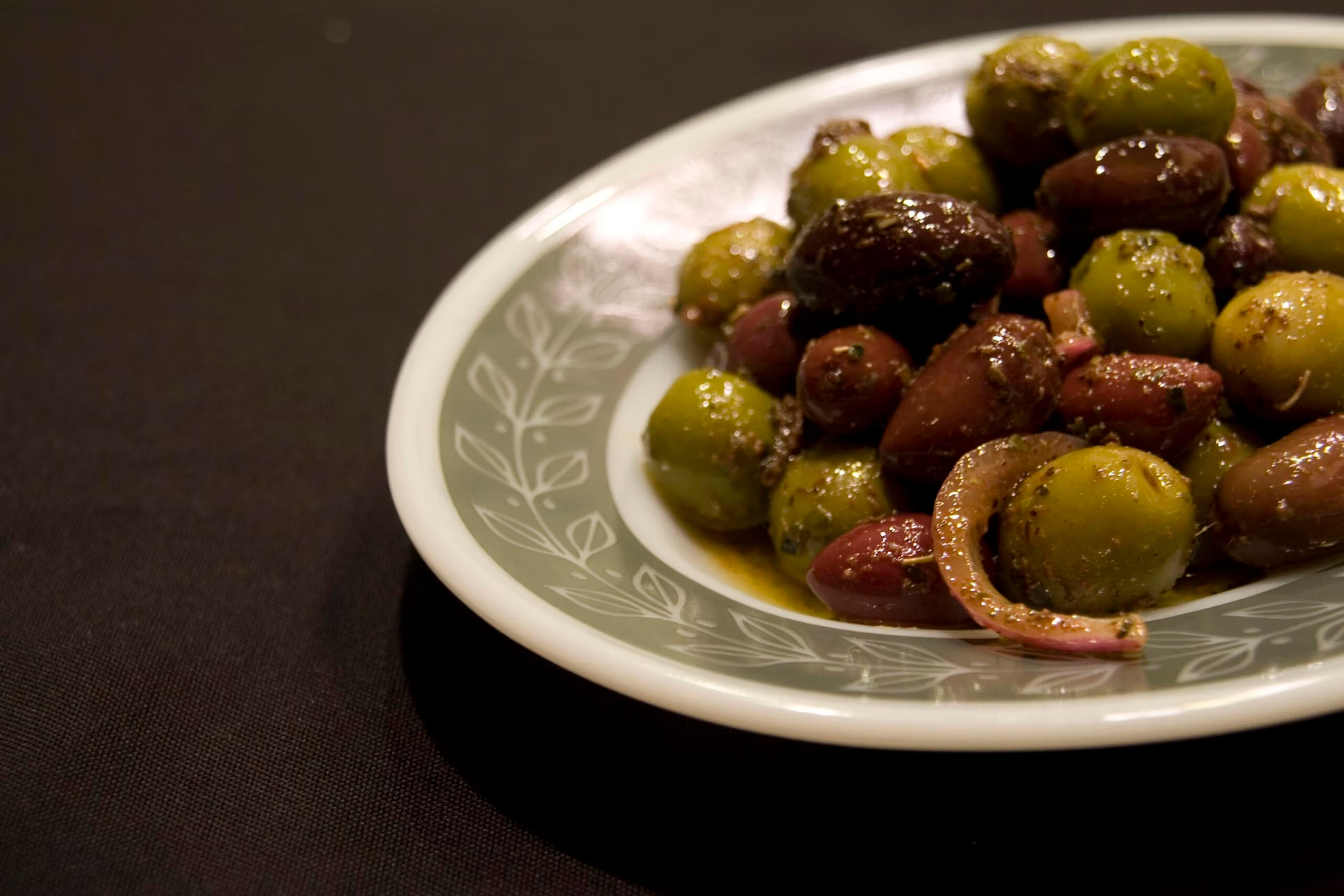
Olives are intensely savory, salty, and sometimes mildly bitter.
Those characteristics usually favor fresh wines with high acidity.
Assyrtiko is an obvious choice because its freshness and mineral profile can stand beside salty, briny flavors.
Sparkling wine can also work extremely well because bubbles and acidity provide contrast.
Dry rosé offers another flexible choice when olives are part of a mixed mezze spread.
Strongly tannic red wines are generally less useful when olives are the primary food because bitterness and tannin can sometimes exaggerate one another.
Nia’s current menu includes marinated Mediterranean olives, while its wine list features several Greek white and red grapes.
Best Wine With Feta
Feta combines salt, tanginess, and creamy texture.
That combination can be particularly friendly to high-acid wines.
Assyrtiko is a strong option because acidity provides contrast against the cheese while salt can make the wine feel more expressive.
Moschofilero can work when feta appears in a salad with herbs, cucumber, or lighter vegetables.
Rosé is highly versatile when feta is combined with tomato, peppers, olives, or grilled vegetables.
Agiorgitiko can work when feta becomes part of a richer preparation involving meat, roasted vegetables, or tomato.
The correct pairing therefore depends less on the feta itself than on what surrounds it.
A piece of feta with tomato and cucumber creates a very different wine problem from feta baked with meat, peppers, or herbs.
Best Wine With Greek Salad
Greek salad combines several flavors that point naturally toward fresh wines.
Tomato brings acidity. Cucumber brings freshness. Feta adds salt and creaminess. Olives contribute brininess. Oregano and herbs add aromatic intensity.
Assyrtiko can work because it has enough acidity to remain lively beside tomato and enough structure for feta and olives.
Moschofilero provides an excellent alternative when the herbal and fresh vegetable aspects dominate.
Dry rosé can be especially successful because its fruit works with tomato while its acidity keeps the pairing fresh.
A highly tannic red is usually unnecessary because there is little protein or fat in the dish to soften the tannin.
Greek salad is one of the clearest examples of why acidity and freshness matter more than prestige when selecting wine.
Best Wine With Spanakopita
Spanakopita combines pastry, spinach, herbs, feta, and richness from fat.
That combination requires a wine capable of refreshing the palate while respecting green herbal flavors.
Moschofilero can work beautifully because its aromatic character complements herbs while acidity balances pastry and cheese.
Assyrtiko also works, particularly when the filling is salty and feta-forward.
Dry sparkling wine is another useful option because carbonation can offset the pastry’s richness.
If the spanakopita is part of a larger mezze table rather than being served alone, choose according to the entire meal rather than optimizing specifically for the pastry.
Best Wine With Dolmades
Dolmades can contain rice, herbs, lemon, and sometimes meat, so the filling determines the best pairing.
Vegetarian rice-and-herb dolmades pair naturally with Moschofilero because freshness and aromatics can mirror the herbal character.
Assyrtiko can work particularly well when lemon is prominent.
If the filling contains meat and has greater savory depth, rosé or lighter Agiorgitiko becomes more attractive.
The grape leaves themselves introduce an earthy, herbal character, so extremely oaky or heavily tannic wines can easily dominate lighter versions of the dish.
Again, intensity should guide the pairing.
Best Wine With Grilled Vegetables
Greek cooking frequently uses peppers, eggplant, zucchini, onions, tomatoes, and other vegetables prepared over heat.
Grilling adds smoky flavor and increases intensity, opening the door to both white and red wine.
Assyrtiko can work when the vegetables are dressed with lemon, herbs, and olive oil.
Rosé is particularly versatile when peppers and tomato are involved.
Agiorgitiko becomes useful when the vegetables are deeply charred, combined with cheese, or served alongside meat.
Xinomavro can work with mushrooms, tomato, or intensely savory vegetable dishes, but a fuller version may be unnecessary for simple grilled zucchini or peppers.
The vegetable itself matters less than the preparation.
Best Wine With Moussaka
Moussaka requires a more structured pairing because it often combines eggplant, ground meat, tomato, spices, and creamy béchamel.
A light white wine may become lost beside so many rich and savory components.
Agiorgitiko is one of the easiest Greek reds to consider because its fruit and moderate structure can complement meat, tomato, spices, and roasted eggplant without making the pairing overly aggressive.
Xinomavro can work particularly well when the moussaka is deeply savory and meat-driven. Its acidity responds to tomato, while tannins can handle protein and richness.
Wines of Greece identifies Xinomavro as especially suited to intense flavors, tomato-based dishes, meat, and savory food.
For diners who prefer white wine, a fuller Assyrtiko may still work, especially when acidity is needed to offset béchamel and meat richness.
There is rarely only one acceptable answer.
Best Wine With Souvlaki
Souvlaki pairing depends on whether the skewers contain chicken, pork, lamb, or another meat.
Chicken souvlaki is flexible. Moschofilero or Assyrtiko can work when lemon and herbs dominate, while rosé or lighter Agiorgitiko becomes more attractive when the chicken has strong grill character.
Pork souvlaki can support Agiorgitiko, particularly when herbs and char are prominent.
Lamb generally allows greater red-wine structure and can move toward fuller Agiorgitiko or Xinomavro.
Tzatziki can shift the balance back toward fresher styles because yogurt, cucumber, herbs, and garlic all benefit from acidity.
This is why pairing the entire plate matters. “Wine with chicken” is not enough information if the chicken comes with yogurt, lemon, herbs, tomato, or grilled vegetables.
Best Wine With Greek Chicken
Chicken is one of the most versatile foods for Greek wine.
When it is prepared with lemon, herbs, olive oil, and lighter seasonings, Assyrtiko and Moschofilero can both work well.
Assyrtiko offers more mineral structure and acidity, while Moschofilero provides greater aromatic lift.
When the chicken is heavily grilled, seasoned, or served with tomato, Agiorgitiko becomes particularly useful.
The official Wines of Greece grape guide lists poultry among Agiorgitiko’s recommended food categories, while Assyrtiko is also listed as appropriate with white meats and poultry.
That overlap demonstrates an important pairing principle: one dish can work with several wines for different reasons.
The best choice depends on which flavors you want to emphasize.
Best Wine With Lamb
Lamb is one of the foods most naturally suited to Greek red wine.
Its richness and strong savory flavor can support tannin and deeper fruit.
Agiorgitiko works particularly well with grilled or roasted lamb when the dish contains herbs and moderate richness.
Xinomavro can become an even stronger match when the lamb is especially rich, slow-cooked, smoky, or intensely seasoned.
Wines of Greece specifically recommends fuller Xinomavro styles with lamb and other rich meats because the wine’s firm tannin and high acidity interact effectively with protein and fat.
The sauce still matters. Lamb finished heavily with lemon and herbs can work with fresher styles than lamb braised in a rich tomato sauce.
If several dishes are being shared, a medium-bodied Agiorgitiko may be more versatile across the whole table than the most structured Xinomavro available.
Best Wine With Beef
Greek beef dishes can range from grilled skewers to long-cooked tomato-based preparations.
Grilled beef can work with fuller Agiorgitiko because fruit, spice, and moderate tannin complement char.
Xinomavro becomes particularly useful when beef is richer or paired with tomato, mushrooms, or deep savory flavors.
Its acidity can keep tomato-based preparations lively while tannin works with protein.
For a lighter beef dish served alongside several vegetable and cheese plates, medium-bodied Agiorgitiko may be easier across the entire meal.
The goal should not be selecting the most powerful red simply because beef is present. Match the actual weight of the dish.
Best Wine With Keftedes or Greek Meatballs
Meatballs combine protein with herbs, seasoning, and often tomato.
Agiorgitiko is an approachable choice because it can handle meat while remaining sufficiently fresh for herbs and sauce.
Xinomavro becomes attractive when tomato is particularly prominent because its high acidity can stand alongside acidic tomato sauce.
If the meatballs are served without tomato and rely more heavily on herbs and yogurt-based sauces, a lighter red or even rosé can work.
This is another case where pairing according to the sauce produces more useful results than pairing according to the meat alone.
Best Wine With Tomato-Based Greek Dishes
Tomato is one of the most important pairing ingredients because of its acidity.
A wine without enough acidity can taste dull or heavy beside tomato.
Xinomavro is especially useful because it naturally combines high acidity with savory complexity. Wines of Greece specifically identifies tomato-based preparations as strong pairing territory for the grape.
Agiorgitiko can work when the tomato dish also contains meat, herbs, or cheese.
Rosé provides a lighter alternative for vegetable-based tomato dishes.
Assyrtiko can even work with some lighter tomato preparations when the meal remains seafood- or vegetable-focused.
The core rule is straightforward: when the food is acidic, the wine generally needs enough acidity to remain balanced.
Best Wine With Pastitsio
Pastitsio combines pasta, meat sauce, tomato, spice, and creamy béchamel.
Like moussaka, it needs enough structure from the wine to remain present beside the richness.
Agiorgitiko works well because red fruit and moderate tannin can complement the meat while enough freshness remains for tomato.
Xinomavro can work particularly well with meatier, more savory versions.
A very heavy or excessively oaky red is not always necessary because the béchamel adds richness but can also make high tannin feel more obvious.
A balanced Greek red generally serves the dish more effectively than simply choosing the strongest bottle available.
Best Wine With Greek Cheese
There is no single pairing for Greek cheese because the category includes fresh, soft, hard, salty, tangy, and aged styles.
Feta works particularly well with Assyrtiko, Moschofilero, or dry rosé because salt and acidity dominate the pairing.
Harder and more aged cheeses can support red wines.
Agiorgitiko can work with a range of cheeses, and the official Wines of Greece grape guide lists cheese among its food-pairing categories.
Xinomavro can work with harder, more intensely flavored cheese when its tannin and savory complexity have enough richness to engage with.
A Greek cheese board containing several styles may benefit from choosing a versatile wine rather than optimizing for one cheese.
Dry rosé or medium-bodied Agiorgitiko can often provide that flexibility.
What About Retsina?
Retsina is one of Greece’s most distinctive traditional wine styles and is flavored through the use of pine resin during production.
Its character is very different from neutral international white wines, which means some drinkers need time to adjust to it.
With food, however, its distinctive herbal and resinous character can work especially well with strong flavors.
Wines of Greece describes modern Retsina as a style that can be incorporated successfully into bold pairings and notes its refreshing acidity.
It can work with garlic, herbs, salty mezze, fried seafood, and other assertive appetizers.
Retsina is not currently listed among the Greek bottles surfaced on Nia’s current wine page, so this article should discuss it as part of Greek wine education rather than imply that it is available at the restaurant.
That distinction is important whenever the guide moves from general Greek-wine education into Nia-specific recommendations.
When Moschofilero Is the Best Choice
Choose Moschofilero when the food is relatively light, herbal, aromatic, or seafood-focused.
It works particularly well with appetizers, herbs, light seafood, cucumber, yogurt-based dishes, salads, and vegetable preparations.
Its freshness can make it an excellent opening wine before the meal progresses into richer dishes.
The grape’s floral character also provides a different experience from the more mineral and structured profile associated with Assyrtiko.
Nia’s current bottle list includes Domaine Skouras Moschofilero from Arcadia, Greece.
That makes the grape particularly relevant for diners who want to explore Greek wine without beginning immediately with a red.
When Assyrtiko Is the Best Choice
Assyrtiko becomes especially useful when seafood, lemon, salt, olive oil, or grilling dominates.
It can accompany fish, shrimp, octopus, salty appetizers, feta, vegetables, and a wide range of other Mediterranean dishes.
Its advantage is that it often combines high freshness with enough structure to remain interesting throughout a meal.
Nia’s current bottle list includes Domaine Skouras Assyrtiko from Nemea, Greece.
Diners should remember that Nemea Assyrtiko will not necessarily taste identical to Santorini Assyrtiko, since place and winemaking influence the final wine.
The pairing principle, however, remains useful: Assyrtiko is one of the strongest Greek white options when seafood and savory Mediterranean flavors dominate the table.
When Agiorgitiko Is the Best Choice
Agiorgitiko is especially useful when the meal begins moving from seafood and lighter mezze toward chicken, grilled meat, tomato, pasta, cheese, and richer flavors.
Young examples can be fruit-driven and approachable, while oak-aged versions can provide additional structure.
Wines of Greece describes the grape as capable of several styles and notes its broad food versatility.
Nia currently features Skouras St. George Agiorgitiko from Nemea as part of its wine-tasting and tasting-menu programs, where the restaurant describes it as a Greek red with red-fruit and spice characteristics.
It is therefore a useful option for diners who want to explore a Greek red without immediately moving to the stronger tannic profile of Xinomavro.
When Xinomavro Is the Best Choice
Xinomavro becomes more appropriate when the food is intense.
Lamb, beef, rich tomato sauces, mushrooms, stews, hard cheese, and deeply savory dishes can support its tannin and acidity.
It is generally less forgiving than a soft, fruity red, which means the food needs enough weight to meet it.
Wines of Greece describes Xinomavro as a grape with high acidity, firm tannins, complex savory characteristics, and particular affinity for richer food.
For someone new to Greek red wine, Agiorgitiko may offer an easier starting point.
For diners who already enjoy structured reds and want something more serious beside lamb or beef, Xinomavro can be one of the most rewarding choices.
Greek Rosé Is Often the Most Flexible Choice
Rosé is useful when a Greek meal contains too many different flavors for one obvious white or red pairing.
A table may include feta, olives, vegetables, chicken, tomato, seafood, and dips simultaneously.
A dry rosé can sit between white and red, providing freshness for lighter food while maintaining enough fruit and structure for richer dishes.
Agiorgitiko and Xinomavro can both be used to produce rosé, depending on region and producer.
Nia’s current wine offerings include Domaine Skouras “Zoe” Rosé from Nemea, Greece, including on its happy-hour wine selection.
Rosé can therefore be a sensible choice when several people are sharing Mediterranean dishes and nobody wants to change wine with every plate.
Greek Sparkling Wine and Fried Food
Sparkling wine deserves more attention with Greek appetizers.
Fried calamari, croquettes, cheese pastries, fried vegetables, and other crisp dishes all benefit from acidity and carbonation.
The bubbles help refresh the palate between bites while the wine’s acidity keeps richness from dominating the meal.
Moschofilero can be used in sparkling styles, and the official Wines of Greece profile notes both still and sparkling wines made from the grape.
A sparkling Greek wine can therefore provide both regional relevance and a structurally strong pairing.
Even when Greek sparkling wine is not available, the underlying pairing principle remains the same.
Can You Pair Greek Food With Non-Greek Wine?
Yes.
Greek wine can create an especially interesting cultural connection with Greek food, but pairing success comes from structure rather than nationality.
Albariño can work with Greek seafood because of freshness and acidity. Sauvignon Blanc can handle herbs and vegetables. Pinot Noir can work with richer fish, mushrooms, or chicken. Sangiovese can work with tomato-based dishes. Tempranillo can complement grilled meat.
There is no rule requiring Greek food to be paired only with Greek wine.
The reason to explore Greek grapes is not that other wines are incorrect. It is that native Greek varieties often possess structural qualities that happen to work extremely well with the flavors common in Greek cuisine.
Choosing them also gives diners a chance to explore wine styles they may encounter less frequently.
How to Choose One Wine for an Entire Greek Meal
A shared Greek meal often contains too many different dishes for a technically perfect pairing with every plate.
The best strategy is to identify what dominates.
If seafood, lemon, feta, olives, vegetables, and herbs dominate, choose Assyrtiko.
If the table is lighter, highly aromatic, and full of herbs, yogurt, cucumber, seafood, and appetizers, Moschofilero may provide an even more elegant direction.
If the meal includes equal amounts of vegetables, cheese, seafood, and lighter meat, dry rosé may offer the most flexibility.
If grilled chicken, pork, meatballs, tomato, and cheese dominate, choose Agiorgitiko.
If lamb, beef, mushrooms, rich tomato dishes, and intensely savory food dominate, Xinomavro can provide the necessary structure.
The best bottle for a shared table is usually the wine that works with the largest number of dishes, not the wine that creates one perfect pairing with one plate.
When Ordering by the Glass Is Better
Sometimes one bottle is simply not the best solution.
If the meal begins with seafood and mezze but progresses into lamb or beef, different wines by the glass can make the transition much more natural.
You might begin with Moschofilero or Assyrtiko alongside lighter appetizers and seafood before moving into Agiorgitiko with chicken or grilled meat.
A structured red can follow if the final savory courses become particularly rich.
This approach can also work well for couples who prefer completely different wine styles.
One person does not need to abandon white wine simply because the other prefers red.
Nia currently offers Greek wines within both its bottle program and tasting experiences, but exact availability should always be checked against the current wine list because restaurant selections can change.
Pairing Greek Wine With a Shared Mediterranean Dinner at Nia
Nia Restaurant & Wine Bar is Mediterranean rather than exclusively Greek, so it is important not to describe every dish on the menu as traditional Greek food.
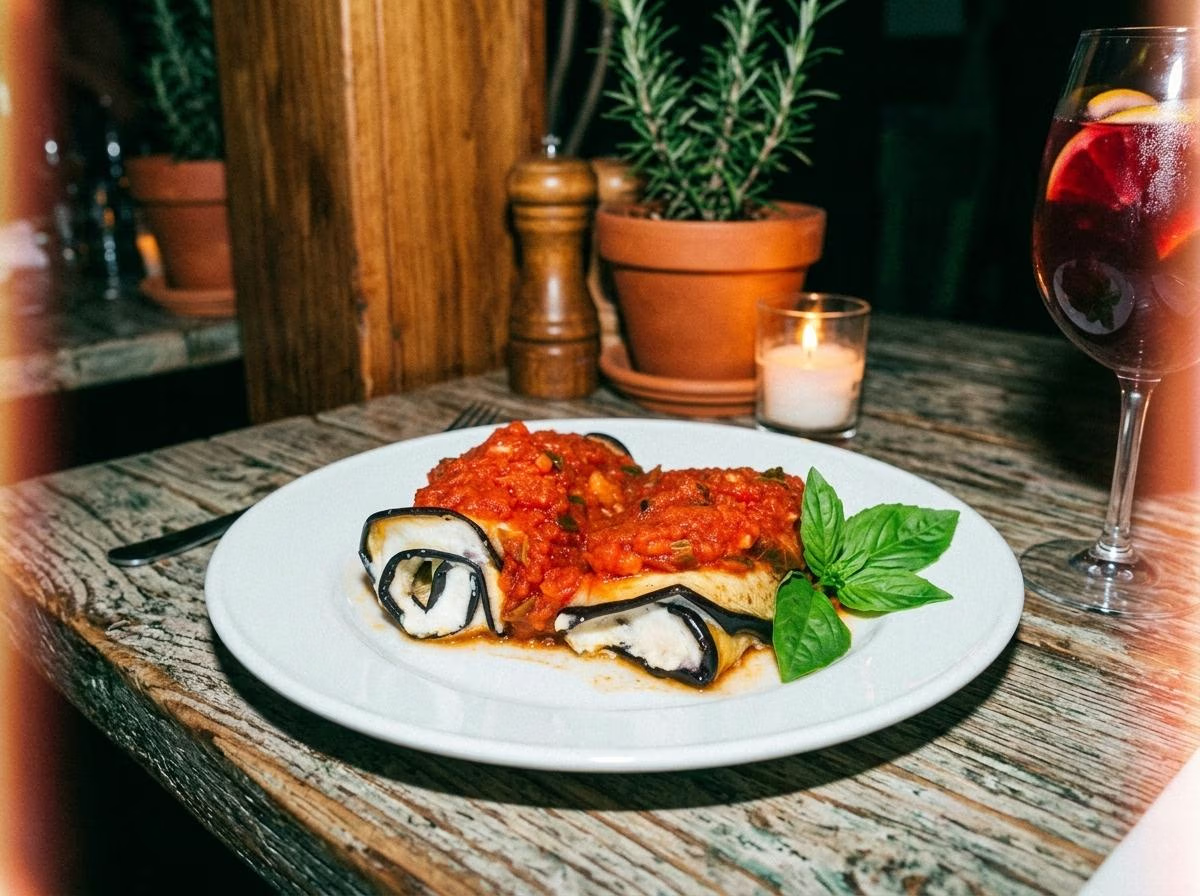
The current menu includes Spanish and broader Mediterranean influences alongside Greek ingredients and wines. Nia’s current menu features Mediterranean olives, salmon with peppers and tomato, shrimp preparations, cauliflower with rosemary hummus, chicken skewers, meatballs, pizzas, and other shared dishes.
The wine program currently provides several Greek options, including Moschofilero, Assyrtiko, Agiorgitiko, Greek Sauvignon Blanc, and other Greek selections.
That creates an opportunity to apply Greek-wine pairing principles even when the food itself is not traditionally Greek.
Assyrtiko can accompany seafood or salty appetizers. Moschofilero can work with lighter and herb-driven dishes. Agiorgitiko can move into grilled chicken, meatballs, mushroom dishes, and richer shared plates.
The broader Mediterranean wine hub should remain the place for detailed pairing advice across every cuisine represented on Nia’s menu. This page should remain specifically useful to readers who want to understand Greek wines and Greek-food pairing logic.
Do You Need to Know Greek Grapes Before Ordering?
No.
Greek grape names may initially feel unfamiliar, but diners do not need to memorize them before choosing a wine.
A useful approach is to describe what you already enjoy.
If you like crisp, dry white wines and are ordering seafood, ask for a Greek white with high acidity.
If you prefer aromatic white wine, Moschofilero may be worth exploring.
If you like softer, fruit-driven reds with moderate body, ask about Agiorgitiko.
If you enjoy structured, savory reds with noticeable acidity and tannin, Xinomavro may be more appropriate.
Wine should not feel like a vocabulary test.
Understanding the broad style is far more useful than pronouncing every grape perfectly.
Frequently Asked Questions About Wine With Greek Food
What is the best wine for Greek food?
There is no single wine that works with every Greek dish.
Assyrtiko is one of the best all-purpose choices when seafood, lemon, olive oil, feta, and salty appetizers dominate.
Moschofilero works especially well with herbs, lighter mezze, seafood, and aromatic dishes.
Agiorgitiko becomes useful with chicken, grilled meat, tomato-based dishes, pasta, and cheese.
Xinomavro is better suited to rich lamb, beef, mushrooms, tomato-heavy dishes, and other intensely savory foods.
The best choice depends on the dominant flavors of the meal.
What Greek wine goes best with seafood?
Assyrtiko is one of the strongest choices for Greek seafood because of its high acidity, mineral character, structure, and ability to complement salty and grilled flavors.
Wines of Greece specifically identifies Assyrtiko as particularly food-friendly with grilled fish and seafood.
Moschofilero is another excellent option for lighter seafood and aromatic preparations.
What wine goes with Greek grilled fish?
Assyrtiko is a classic direction because its acidity and structure can respond to lemon, olive oil, salt, and grill char.
Moschofilero can work when herbs and lighter aromatics dominate.
Dry rosé can be useful when grilled fish is accompanied by tomato, peppers, or richer vegetables.
What wine pairs with Greek lamb?
Agiorgitiko and Xinomavro are both strong choices.
Agiorgitiko can work especially well with grilled or roasted lamb when a fruit-driven, medium-bodied style is desired.
Xinomavro provides more tannin, acidity, and savory intensity and can be particularly successful with richer lamb preparations.
Wines of Greece specifically identifies full-bodied Xinomavro as an excellent match for lamb and other rich meats.
What wine goes with feta cheese?
Assyrtiko works well because acidity provides contrast against the salt and creaminess of feta.
Moschofilero can be a good choice when feta appears in a lighter salad or herb-driven dish.
Dry rosé is especially versatile when feta is combined with tomato, peppers, olives, or other vegetables.
What wine goes with tzatziki?
Moschofilero is a strong option because its aromatic freshness can complement cucumber, herbs, garlic, and yogurt.
Assyrtiko also works well when lemon and salt are prominent.
Rosé can be useful when tzatziki is part of a mixed mezze platter containing several other flavors.
What wine goes with Greek chicken?
Assyrtiko and Moschofilero work well with lemon- and herb-driven chicken.
Agiorgitiko becomes especially useful when the chicken is grilled, smoky, richly seasoned, or served with tomato.
The correct choice depends on preparation rather than simply the protein.
What wine goes with moussaka?
Agiorgitiko is one of the easiest Greek red choices because it can complement meat, tomato, eggplant, spice, and creamy béchamel without becoming excessively heavy.
Xinomavro can work particularly well with richer and more intensely savory versions.
A fuller Assyrtiko can also work for diners who prefer white wine because acidity can offset the dish’s richness.
What wine goes with Greek meatballs?
Agiorgitiko is a versatile option, particularly when meatballs are grilled or served with savory herbs.
Xinomavro becomes attractive when tomato sauce is involved because its acidity can stand alongside tomato.
Rosé can work for lighter versions or when the meatballs are part of a varied mezze table.
What wine pairs with Greek salad?
Assyrtiko, Moschofilero, and dry rosé are all strong choices.
Assyrtiko handles feta, olives, tomato, and acidity particularly well.
Moschofilero complements herbs and fresh vegetables.
Rosé can bridge the tomato, cheese, olives, and vegetables while remaining refreshing.
Is Assyrtiko always from Santorini?
No.
Assyrtiko originated on Santorini but is now grown in other Greek wine regions as well.
Wines of Greece notes that the grape has spread across Greece and can express somewhat different fruit and structural characteristics outside Santorini while retaining its characteristic freshness and minerality.
Nia’s current wine list, for example, includes a Domaine Skouras Assyrtiko from Nemea rather than Santorini.
What does Agiorgitiko taste like?
Style varies according to winemaking and aging, but Agiorgitiko commonly shows red-fruit character, moderate acidity, and relatively approachable tannins in younger expressions.
Oak-aged versions can develop greater structure, spice, and complexity.
Wines of Greece describes the grape as capable of everything from fresh rosé and youthful reds to age-worthy, oak-matured wines.
Is Xinomavro a heavy red wine?
Xinomavro is better understood in terms of structure than simple heaviness.
It is typically known for high acidity, firm tannin, savory complexity, and the ability to age.
Fuller versions can work particularly well with rich meats and savory dishes, while lighter, sparkling, or rosé expressions can pair with a wider range of foods.
Is Moschofilero sweet?
Moschofilero is commonly made into dry white wine, although the grape can be used for multiple styles.
Its floral and aromatic character can sometimes make the wine smell sweeter than it actually tastes.
The Wines of Greece profile emphasizes dry white and sparkling expressions from Mantinia.
Does Nia serve Greek wine?
Yes. Nia’s current bottle list includes Greek wines such as Domaine Skouras Moschofilero, Domaine Skouras Assyrtiko, Alpha Estate Sauvignon Blanc from Florina, Vidiano from Crete, and Greek red selections including Agiorgitiko.
Because restaurant wine lists change, guests should check the current wine menu for availability before visiting.
Does Nia have a sommelier?
The current live article uses the phrase “Nia’s Sommelier”, but the publicly accessible Nia pages reviewed for this update do not clearly identify a named sommelier with credentials.
For that reason, this rewritten page should not make unsupported claims that its recommendations come from a specific sommelier unless Nia can verify who that person is and wishes to publish the attribution.
The content can accurately refer to Nia’s curated wine program, wine selection, or knowledgeable restaurant team without inventing an expert credential.
Start With the Dish, Then Choose the Greek Wine
The easiest way to pair wine with Greek food is to stop searching for one universal bottle.
Greek cuisine contains too many different textures and flavors for that approach.
Seafood, lemon, olive oil, feta, olives, herbs, yogurt, grilled vegetables, tomato, chicken, lamb, and beef each create different pairing needs.
When the meal is bright, salty, seafood-driven, and citrus-heavy, Assyrtiko is one of the strongest choices.
When herbs, lighter mezze, vegetables, and aromatic flavors dominate, Moschofilero can be particularly appealing.
When the meal moves into chicken, grilled meats, tomato, cheese, and richer shared dishes, Agiorgitiko offers considerable versatility.
When lamb, beef, mushrooms, tomato sauces, and deeper savory flavors become central, Xinomavro provides the structure to match them.
Rosé and sparkling Greek wines can bridge the gaps when the table contains too many different small plates for one obvious white or red.
Those principles are more useful than memorizing a list of fixed combinations because they continue working even when the specific dishes change.
At Nia in Chicago’s West Loop, diners can explore Greek wines within a broader Mediterranean wine program and apply the same logic to the restaurant’s seafood, vegetables, grilled dishes, cheeses, and shared plates.
The goal is not to discover an objectively perfect wine.
It is to choose a wine whose acidity, body, fruit, tannin, and aromatics make the food more enjoyable while still being something you genuinely want to drink.
Mediterranean Inspired Menu Chicago Restaurant and Wine Bar