What Is Agiorgitiko?
Agiorgitiko is one of Greece’s major indigenous red grape varieties and the signature grape of Nemea in the Peloponnese.
It can produce a surprisingly wide range of wines, from fresh, fruit-driven reds intended to be enjoyed young to more structured, oak-aged wines capable of further bottle development. Wines of Greece describes the variety as particularly versatile, with young examples showing fresh red fruit, medium acidity and soft tannins, while more ambitious oak-aged examples can develop greater structure, spice and complexity.
For someone trying Greek red wine for the first time, Agiorgitiko is useful because there is no single rigid expression.
Quick Answer
Agiorgitiko is an indigenous Greek red grape most closely associated with Nemea in the Peloponnese. Young versions often show fresh red fruit, medium acidity and softer tannins, while oak-aged styles can become deeper, spicier and more structured. PDO Nemea red wines are made from 100% Agiorgitiko. Nia currently lists Skouras Agiorgitiko “St. George” from Nemea on its Wine By Glass menu.
Typical examples can show red and dark fruit, soft to ripe tannins, medium to fuller body depending on style, spice, and, in oak-aged examples, notes such as vanilla, tobacco or chocolate.
Where Does Agiorgitiko Come From?
Agiorgitiko is strongly associated with Nemea, a wine region in the northeastern Peloponnese.
The connection between the grape and the region is deep enough that Nemea is generally treated as Agiorgitiko’s reference point.
Wines of Greece identifies PDO Nemea as Greece’s largest red-wine PDO zone and explains that the region includes considerable variation in altitude, soil, orientation, and ripening conditions.
That helps explain why Agiorgitiko from Nemea can appear in multiple styles rather than tasting identical from producer to producer.
What Does “Agiorgitiko” Mean?

The name is connected historically with Agios Georgios — Saint George.
Wines of Greece explains that Nemea was formerly called Agios Georgios and that Agiorgitiko can be understood as the grape associated with Saint George.
That connection also makes the current Nia pour particularly easy to remember: Skouras “St. George” Agiorgitiko.
How Do You Pronounce Agiorgitiko?
English speakers often find the name intimidating at first.
A practical approximation is: ah-yor-YEE-ti-ko
Pronunciation can vary slightly by speaker, so this does not need to become a phonetics lesson.
The important point for restaurant guests is simpler: you do not need perfect Greek pronunciation to order the wine.
You can also ask for: the Skouras Agiorgitiko or the Greek red from Nemea.
What Does Agiorgitiko Taste Like?
There is no single tasting profile for every Agiorgitiko.
Wines of Greece describes young Agiorgitiko as commonly showing fresh red-fruit aromas, medium acidity, and soft tannins.
More structured, oak-aged versions can show concentrated red fruit, sweet spice, chocolate, and a firmer tannic structure.
Agiorgitiko often emphasizes red fruit and approachable tannins, but its body, oak influence, spice and structure depend strongly on where it is grown and how it is made.
Is Agiorgitiko Always a Soft Red Wine?
No.
“Velvety” is a useful description for some examples, particularly because classic Nemea wines can have ripe tannins and a rounded texture.
But Agiorgitiko can also produce more structured wines.
PDO Nemea includes styles ranging from youthful, fruit-driven reds to more tannic wines intended for aging.
That means: soft and structured are not contradictions.
They can describe different expressions of the same grape.
Young Agiorgitiko vs Oak-Aged Agiorgitiko
Understanding this difference makes the grape much easier to explore.
Young / Fruit-Driven Agiorgitiko
Expect the emphasis to be more on fresh red fruit, drinkability, moderate structure, and softer tannins.
These can work well for drinkers who want a red that is expressive without feeling especially heavy.
Oak-Aged Agiorgitiko
Oak and longer maturation can bring greater tannic structure, spice, tobacco, vanilla, chocolate-like notes, and deeper fruit concentration.
Wines of Greece notes that some oak-aged styles can continue developing in bottle, while more ambitious versions are made specifically with aging potential in mind.
What Is PDO Nemea?
PDO stands for Protected Designation of Origin.
For Nemea, the important wine rule is very clear: PDO Nemea wines are made from 100% Agiorgitiko and the designation applies to red wines.
The PDO zone includes multiple villages and a wide altitude range.
As a result, the words Nemea Agiorgitiko do not mean every producer will make the same style.
Think of PDO Nemea as a protected place, a defined grape, and a framework within which producers can still create different expressions.
Does All Agiorgitiko Come From Nemea?
No.
Nemea is the grape’s historic and stylistic center, but Agiorgitiko is now grown in other Greek regions too.
Wines of Greece notes plantings in areas including other parts of the Peloponnese, Attica, Macedonia, and additional Greek wine zones.
This is another reason not to treat Agiorgitiko and PDO Nemea as interchangeable terms.
All PDO Nemea red is Agiorgitiko.
Not every Agiorgitiko wine is PDO Nemea.
What Styles Can Agiorgitiko Produce?
Agiorgitiko is most closely associated with red wine, but the variety itself is capable of more than one format.
Wines of Greece describes it as a “multidynamic” grape capable of producing young red wines, oak-aged red wines, rosé, and sweet styles.
Within PDO Nemea specifically, the designation applies to red-wine styles made entirely from Agiorgitiko.
For this Nia page, however, stay focused on dry red Agiorgitiko because that is the style relevant to the current restaurant pour.
Agiorgitiko vs Xinomavro
This is a useful comparison because both are important Greek red varieties.
Agiorgitiko often leans toward riper fruit, softer tannins, rounder texture, and greater immediate approachability in many youthful styles.
Xinomavro is often discussed as more savory, firmer, and more tannic.
That difference is one reason Agiorgitiko can work as a comfortable entry point for diners who are new to Greek reds.
Agiorgitiko vs Tempranillo
This comparison is especially relevant at Nia because the current Wine By Glass menu also includes a Rioja Tempranillo.
Both can offer red-fruit character, spice, and food-friendly structure.
But they should not be presented as interchangeable.
Nia’s current Wine By Glass page describes Skouras Agiorgitiko “St. George” as medium-bodied with dark fruit and soft spice; while Voelos Crianza Tempranillo is described with red berry, vanilla and balanced oak.
A guest choosing between them can ask: Do I want the Greek red built around Agiorgitiko, or a Rioja expression centered on Tempranillo?
The Agiorgitiko Currently Poured at Nia
Nia’s current Wine By Glass menu lists:
Skouras Agiorgitiko “St. George” | Nemea, Greece
and describes it as:
medium-bodied, dark fruit, soft spice.
Nia’s current Wine Tasting page also identifies Skouras St. George as 100% Agiorgitiko from Nemea.
That provides a very useful real example for this page.
Rather than writing vaguely about our curated Agiorgitiko selection the article should say exactly what Nia currently lists.
What Does Skouras St. George Taste Like?
Domaine Skouras describes its Saint George as a PDO Nemea wine made from 100% Agiorgitiko.
Producer tasting information for a recent vintage describes blackberry, raspberry, ripe strawberry, tobacco, clove, cinnamon, balanced acidity, ripe tannins, vanilla, and black pepper.
The wine spends time in neutral French barriques before bottle maturation.
Nia’s own menu simplifies that into: medium-bodied, dark fruit, soft spice.
That shorter description is better for restaurant use.
What Foods Pair With Agiorgitiko?
Wines of Greece lists Agiorgitiko as a flexible food-pairing red that can work with categories including white meats and poultry, red meats and game, pasta, spicy food, and cheese.
That flexibility is more useful than the current Nia article’s extremely narrow claims.
The current Nia dinner menu has changed.
So this article should pair Agiorgitiko only with dishes that are actually live.
Agiorgitiko With Nia’s Current Menu
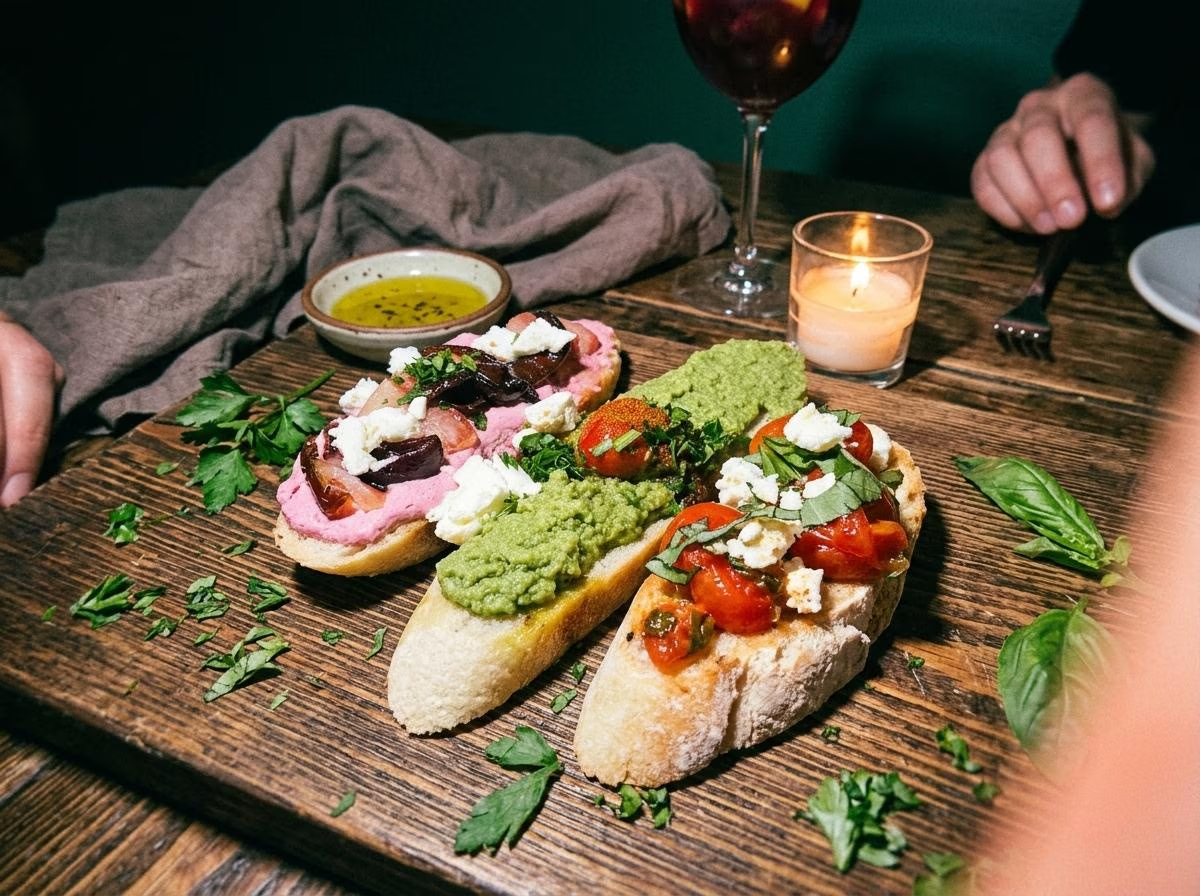
Good examples to discuss include: beef pintxos, albóndigas, chicken pintxos, meatball pizza, Basque pizza, and mushroom-and-olive tapenade crostini.
The important caveat is: wine pairing is preference-based.
Do not call any pairing objectively perfect.
Mediterranean Wine Pairing Hub
Agiorgitiko With Beef Pintxos
Beef is one of the more intuitive directions for a medium-bodied Agiorgitiko.
The wine’s fruit and spice can sit comfortably beside a savory beef dish without requiring the weight of a very powerful Cabernet-style red.
For a guest who wants red wine, meat, but not the most tannic bottle on the list, this can be a logical conversation to have with the server.
Agiorgitiko With Albóndigas
Meatballs and tomato-forward preparations can be useful with a fruit-driven red because the dish has savory depth, fat, seasoning, and acidity.
Agiorgitiko’s red-fruit profile and moderate structure can make it a reasonable option.
Do not write: Agiorgitiko is the only correct wine for albóndigas.
Some guests may prefer: Tempranillo, Chianti, or another current red.
The page should teach pairing logic rather than create rigid rules.
Agiorgitiko With Chicken Pintxos
Wines of Greece specifically includes poultry among the grape’s broad pairing categories.
That makes chicken pintxos a more defensible current Nia pairing than the outdated branzino/skirt-steak examples on the existing article.
Whether Agiorgitiko is the best choice will depend on the seasoning, sauce, and the guest’s preference.
Agiorgitiko With Pizza
Pizza can work well with red wines when the toppings include tomato, meat, mushrooms, cheese, or savory herbs.
At Nia, the current meatball, Basque and trufa/funghi pizzas give different directions.
A fruit-driven red such as Agiorgitiko may be especially appealing to someone who wants more body than a rosé, less overt structure than Cabernet, and a red that can continue across several shared dishes.
What About Seafood?
This is where the current page should become more nuanced.
The live article recommends Agiorgitiko with branzino.
That is not inherently impossible.
But it is not the clearest educational example for the grape.
For seafood dishes such as shrimp, salmon, or lighter fish, many diners may prefer white wine, rosé, or a lighter red.
The Mediterranean Wine Pairing Hub should own the broader question: Which wine works best with seafood?
Can Agiorgitiko Work With Vegetables?
Yes, depending on preparation.
Think about roasted flavors, mushrooms, olive-based dishes, tomato, herbs, and savory intensity rather than whether the dish contains meat.
For example, Nia’s mushroom-and-olive tapenade crostini may provide a more natural red-wine context than a very delicate vegetable dish.
Again: pairing depends on the complete dish.

Is Agiorgitiko Served Chilled?
Most red Agiorgitiko is served as a red wine rather than refrigerator-cold.
But “room temperature” can also be misleading if the room is warm.
Agiorgitiko is generally served at normal red-wine service temperature, with the exact service depending on style.
Does Agiorgitiko Need Decanting?
Sometimes.
A young, fruit-forward example may not need much air.
A more structured or mature example may benefit from additional exposure.
Do not write one universal rule for the entire grape.
For the bottle currently poured at Nia: ask the restaurant team how it is being served that evening.
Can Agiorgitiko Age?
Yes.
But again: style matters.
Wines of Greece notes that some oak-aged Agiorgitiko can develop for several years in bottle, while more structured versions are designed with longer aging in mind.
This does not mean every inexpensive, fruit-forward Agiorgitiko should be cellared.
check producer, vintage and style rather than aging the grape name alone.
Why Nemea’s Altitude Matters
PDO Nemea spans substantial differences in altitude.
Wines of Greece says the production zone ranges from roughly 200 meters up to around 850 meters, creating variation in ripening conditions and wine character.
That makes a useful educational point: Nemea is not one uniform vineyard.
Elevation, soil, exposure, and winemaking all shape the final wine.
A Note on the Hercules Story
Nemea is closely connected with the myth of Hercules and the Nemean lion.
Wines of Greece discusses local tradition linking Nemea Agiorgitiko with the legend sometimes called “Hercules’ Blood.”
This can be included as cultural context.
But label it clearly as legend or tradition, not historical fact.
Is Agiorgitiko Good for Beginners?
It can be.
If someone is new to Greek reds, a fruit-driven, softer-tannin Agiorgitiko can be less intimidating than a more aggressively tannic style.
But avoid saying: everyone will like it.
Wine preference is subjective.
If you usually enjoy medium-bodied, fruit-forward reds with moderate tannin, Agiorgitiko may be worth trying.
Is Agiorgitiko Dry?
Many common Agiorgitiko wines are dry.
But the grape can also be used for sweet styles.
Within PDO Nemea, regulations allow multiple red wine types including dry and sweet expressions.
Agiorgitiko is a grape variety, not a guarantee of one sweetness level.
The current Nia pour is a dry red.
Is Agiorgitiko Full-Bodied?
Sometimes.
Many examples are better described as medium-bodied or medium-to-full-bodied.
Nia currently describes Skouras St. George as medium-bodied.
Other Nemea wines can be more concentrated and powerful.
Do not define the whole grape as full-bodied or light-bodied.
Does Agiorgitiko Have High Tannins?
Not necessarily.
Young styles are often associated with softer tannins.
More ambitious oak-aged examples can be significantly more structured.
Again, the grape’s versatility matters more than one adjective.
Can You Try Agiorgitiko by the Glass at Nia?
Nia’s current Wine By Glass menu lists: Skouras Agiorgitiko “St. George” from Nemea.
At the time of this review, it is presented by the glass and bottle.
Because restaurant wine programs change: do not hard-code price permanently into the article.
The live Wine By Glass page should control current availability, current price, and current vintage where listed.
Nia’s Wine Tasting Also Includes Agiorgitiko
Nia’s current Wine Tasting page includes Skouras St. George as part of a premium wine pairing/tasting selection and identifies it as 100% Agiorgitiko from Nemea.
This is worth linking because it serves a different intent: Agiorgitiko article → learn about the grape and Wine Tasting page → explore current tasting availability.
Do not turn this article into a wine-tasting event sales page.
Frequently Asked Questions
What is Agiorgitiko?
Agiorgitiko is an indigenous Greek red grape strongly associated with Nemea in the Peloponnese.
It can produce styles ranging from youthful, fruit-driven reds to structured wines matured in oak.
Where does Agiorgitiko come from?
Its historic center is Nemea, Greece.
The grape is also grown elsewhere in Greece today.
What does Agiorgitiko taste like?
Common characteristics can include red fruit, dark fruit, soft or ripe tannins, spice, and, depending on oak aging, vanilla, tobacco, chocolate or additional savory complexity.
Is Agiorgitiko a light or heavy red wine?
It depends on style.
Some examples are fresh and medium-bodied.
Others are more structured and age-worthy.
Nia currently describes its Skouras St. George pour as medium-bodied.
What is Nemea wine?
PDO Nemea red wines are made from 100% Agiorgitiko within the defined Nemea production zone.
Is every Agiorgitiko a Nemea wine?
No.
Agiorgitiko is also cultivated in other Greek wine regions.
What foods go with Agiorgitiko?
Broad pairing categories include poultry, red meats, pasta, spiced dishes, and cheese.
At Nia, current menu directions worth considering include beef or chicken pintxos, albóndigas and savory pizzas.
Does Agiorgitiko pair with seafood?
It can in some preparations, but it is not automatically the best pairing for every seafood dish.
For lighter seafood, many diners may prefer white wine or rosé.
Use the broader Mediterranean Wine Pairing Guide for dish-first recommendations.
Is Agiorgitiko similar to Merlot?
Some softer, fruit-driven examples may appeal to Merlot drinkers, but Agiorgitiko is its own indigenous Greek grape and should not simply be described as Greek Merlot.
Is Agiorgitiko similar to Xinomavro?
They are quite different stylistically.
Agiorgitiko often produces softer, fruitier and rounder wines, while Xinomavro is frequently more savory and tannic.
Can Agiorgitiko age?
Some versions can.
Oak-aged and more structured examples may develop for several years or longer depending on producer and style.
Is Agiorgitiko sweet?
Most familiar dry red expressions are not sweet, but the grape can also produce sweet styles.
PDO Nemea regulations allow several red-wine styles.
Is Agiorgitiko available at Nia?
Nia’s current Wine By Glass menu lists Skouras Agiorgitiko “St. George” from Nemea.
Availability can change, so check the live wine menu before visiting.