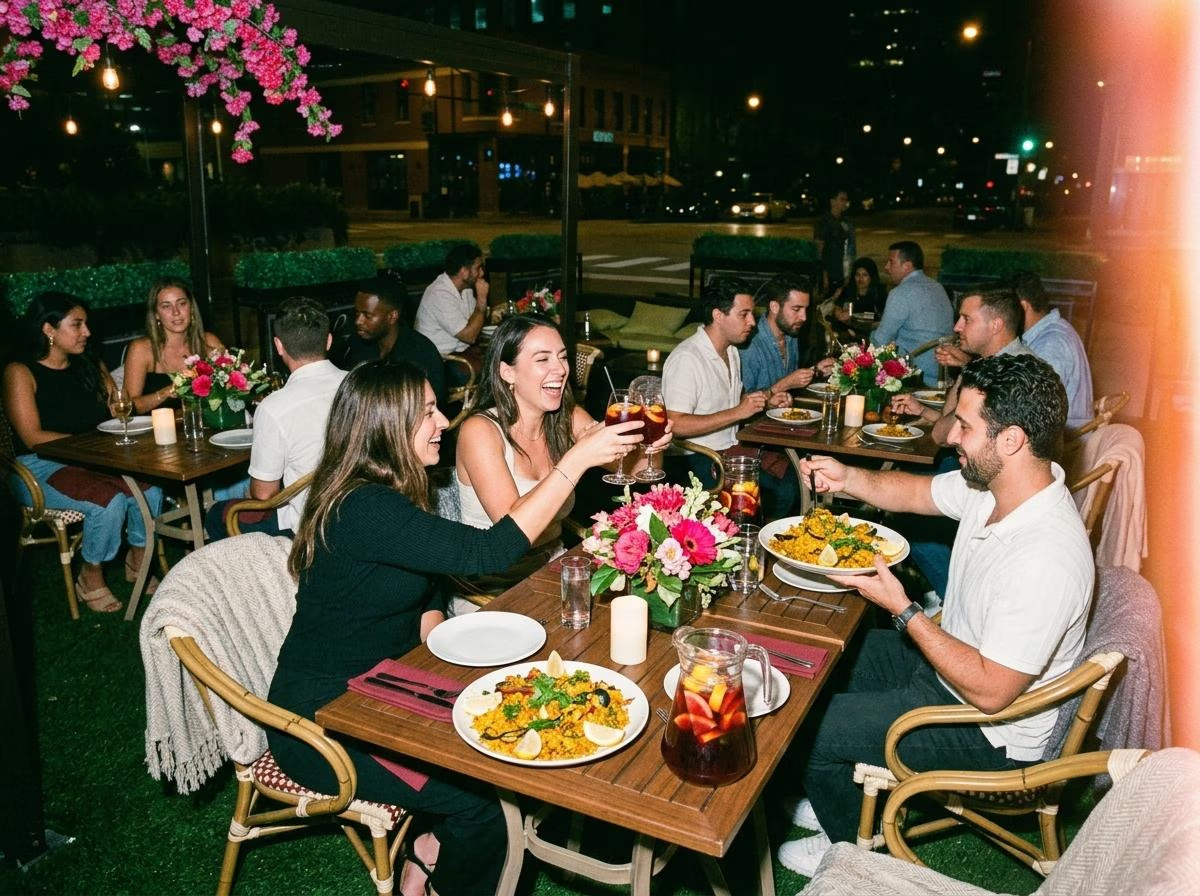
Chicago has no shortage of restaurants, which creates a different problem from not having enough options: deciding which restaurant actually fits the experience you are planning.
The right Mediterranean restaurant for a relaxed dinner for two may not be the right restaurant for a birthday group. A restaurant that works beautifully for a standard reservation may not have the layout, service structure, or menu format required for a private event. Likewise, a venue that looks impressive in photographs may not provide the atmosphere, pacing, food style, or hospitality that matters most once guests are actually seated.
Choosing well therefore requires looking beyond ratings and social-media photographs. Cuisine, menu structure, atmosphere, service, noise level, beverage options, location, dietary flexibility, reservation policies, group capabilities, and the purpose of the meal should all influence the decision.
Mediterranean restaurants can be particularly interesting because the category itself is broad. Some restaurants focus on one regional tradition, while others combine Spanish, Greek, Italian, Levantine, North African, or other Mediterranean influences. Some emphasize shared plates and wine, while others focus on individual entrées, tasting menus, casual dining, or large-format celebrations.
This guide explains how to compare those options so you can choose a Mediterranean restaurant in Chicago based on what actually matters for your dinner rather than simply selecting whichever restaurant appears first in a search result.
Start With the Occasion Before Comparing Restaurants
The easiest way to narrow restaurant choices is to begin with the reason you are dining out.
A casual dinner does not need the same features as an anniversary. A dinner for six friends creates different requirements from an event for thirty guests. A business meal may place greater importance on conversation and service consistency, while a birthday dinner may benefit from a livelier atmosphere.
This does not mean every occasion requires a completely different restaurant. A strong Mediterranean restaurant may successfully serve couples, families, business diners, and celebration groups. The important question is whether the restaurant can adapt to the experience you need.
Before looking at menus, decide what matters most. You may prioritize food exploration, private conversation, shared dining, wine, group seating, a particular neighborhood, a private room, or simply a restaurant where nobody feels rushed.
Once those priorities are clear, comparing restaurants becomes much more useful.
Understand What the Restaurant Means by “Mediterranean”
Mediterranean cuisine is not one standardized menu.
The Mediterranean region includes many countries and culinary traditions, and the food can vary considerably according to geography, local ingredients, history, and culture. Spain, Greece, Italy, southern France, Turkey, the Levant, and North Africa all contribute distinct culinary traditions.
Some Chicago restaurants focus closely on one region. Others interpret Mediterranean food more broadly by combining flavors and techniques from several areas.
Neither model is automatically better.
What matters is whether the restaurant communicates its culinary identity clearly. If a website repeatedly calls the food Mediterranean but the menu provides little indication of what that means, look more closely before booking.
Consider whether you are looking for Spanish-influenced tapas, Greek seafood and grilled dishes, Levantine mezze, Italian-Mediterranean cooking, or a restaurant that intentionally combines several influences.
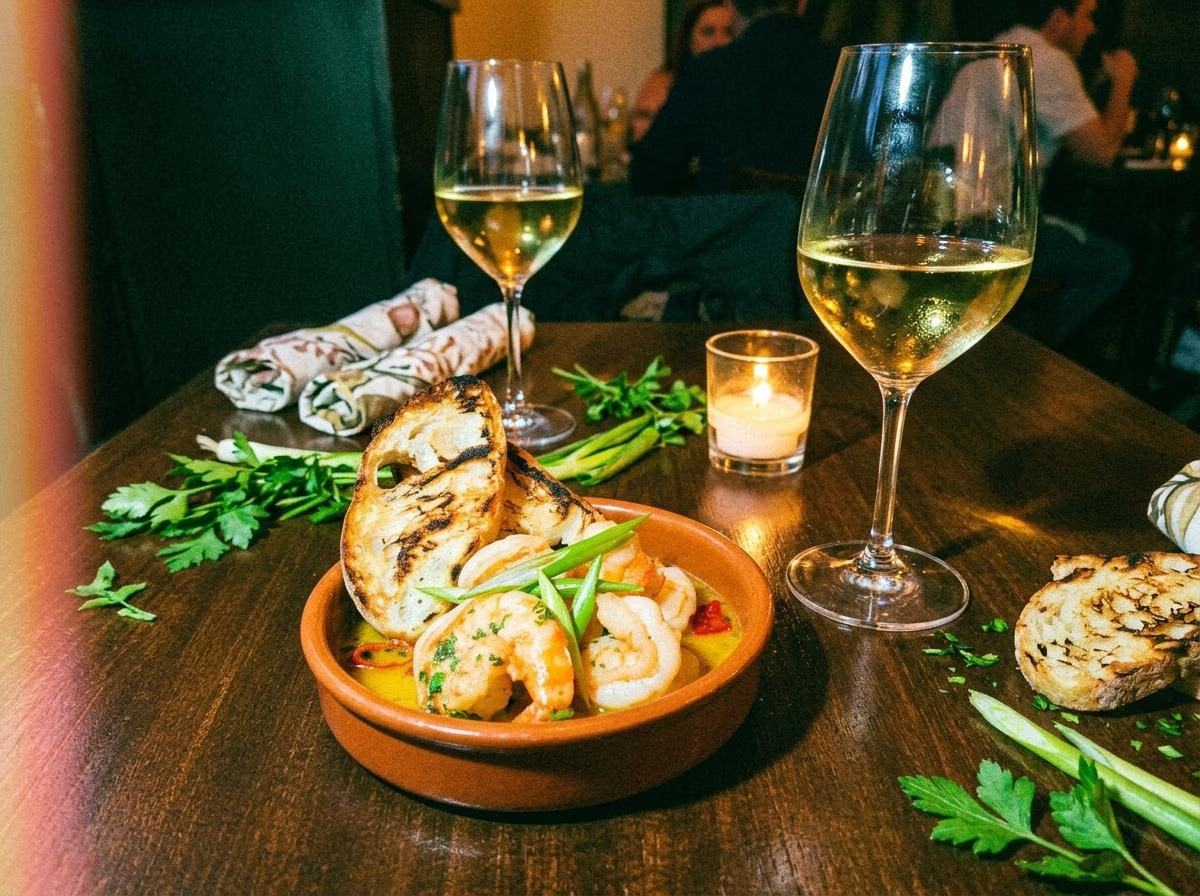
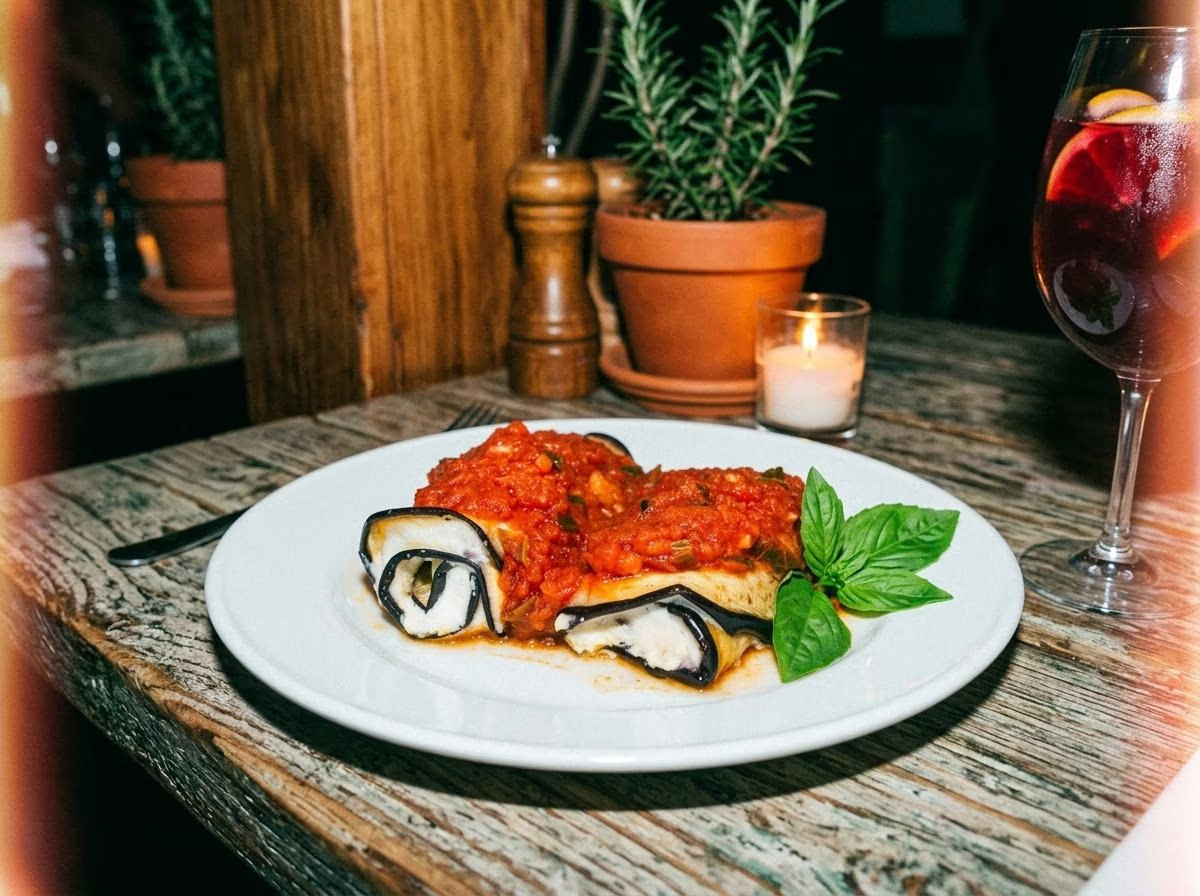
Nia Restaurant & Wine Bar, for example, currently describes its concept as Mediterranean-inspired cuisine with Spanish roots and emphasizes dishes designed for sharing. That kind of description gives diners a clearer idea of the experience before they arrive.
Read the Actual Menu Before Making a Decision
Restaurant descriptions can sound similar, so the menu usually tells you much more.
Look at whether the menu provides enough variety for the people joining you. Consider how much of the menu is designed for sharing, whether there are seafood, vegetable, meat, and vegetarian options, and whether the overall style matches what you imagine for the meal.
A menu built around small plates creates a different dining experience from one centered almost entirely on individual entrées.
Shared dishes encourage the table to order collectively, taste several flavors, and allow the meal to unfold through multiple courses. Individual entrées may be preferable when everyone wants clearly defined portions and independent choices.
Neither approach is better for every situation. The decision depends on the group.
For a couple interested in exploring several dishes, shared dining may create more interaction. For a business dinner involving guests who do not know each other well, a combination of shared starters and individual selections may sometimes feel easier. Larger social groups may appreciate family-style service because it reduces the complexity of individual ordering.
The menu format should support the people at the table rather than forcing everyone into a dining style they do not enjoy.
Look for a Menu That Can Create a Complete Meal
Variety is useful, but an enormous menu is not necessarily better.
A well-designed menu should allow guests to build a meal that feels coherent. That may include lighter dishes to begin, vegetables, seafood, meat, bread, salads, larger plates, pizza, or desserts depending on the restaurant’s concept.
When comparing Mediterranean restaurants, look for balance.
If almost every option is heavy, fried, or meat-focused, the menu may not fit diners looking for a broader Mediterranean experience. If the menu is almost entirely small snacks, it may not satisfy guests expecting a substantial dinner.
A restaurant with several complementary categories gives the table flexibility. Guests can begin with lighter dishes and continue into richer plates without feeling that every order repeats the same flavor or texture.
This matters especially for celebrations and longer meals, where the progression of dinner can influence how enjoyable the evening feels.
Consider Whether Shared Dining Fits the Occasion
Shared dining is one of the characteristics that can make Mediterranean restaurants particularly social.
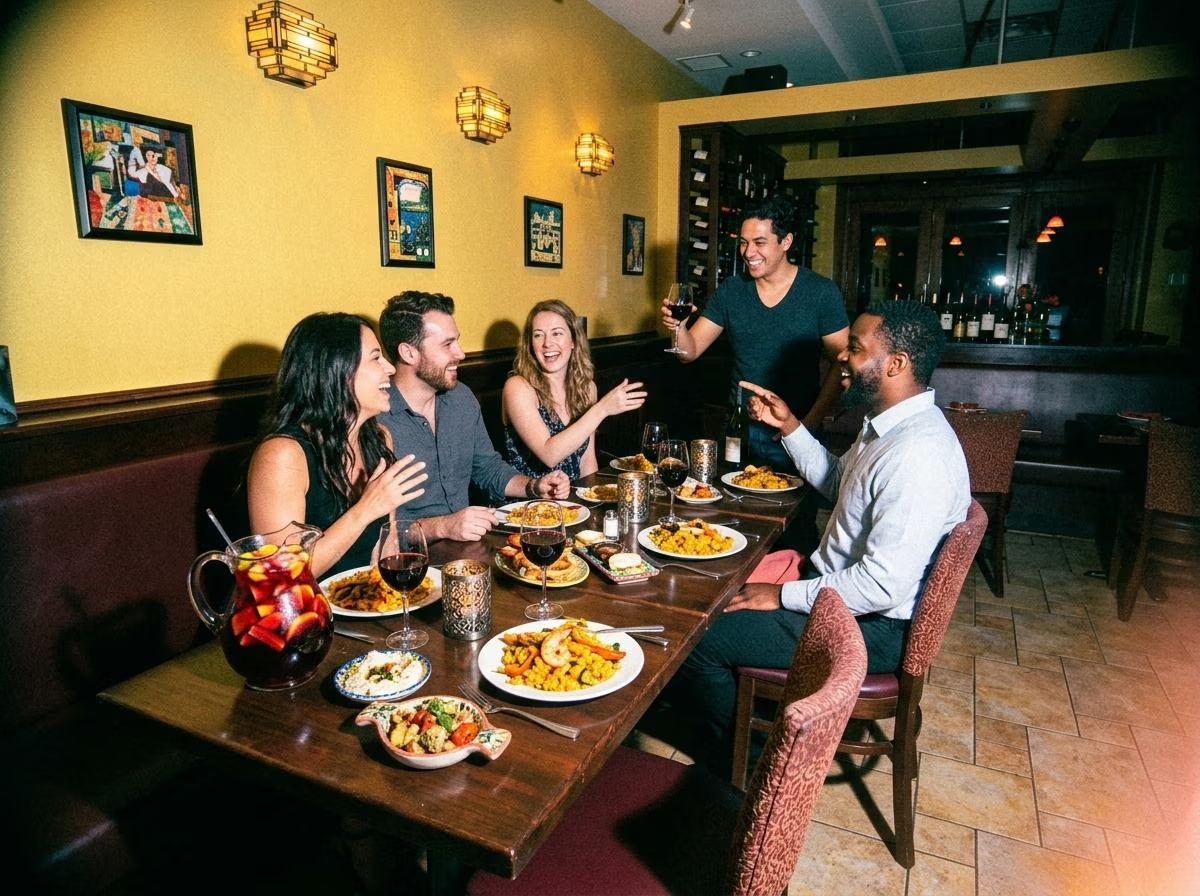
Instead of every guest focusing on one plate, the table can order several dishes and experience them together. That naturally creates conversation around what to try, which dishes people prefer, and what should come next.
For couples, the format can make dinner more interactive. For families and groups of friends, it can reduce the need for everyone to commit to one individual entrée. For business groups, family-style service can sometimes create a less formal atmosphere while still allowing a structured dinner.
However, sharing should never be assumed.
Some diners prefer having their own meal. Dietary restrictions can also make unrestricted sharing difficult. Guests with allergies may require careful separation of dishes and serving utensils.
A good restaurant should be able to explain how its menu is normally served and whether accommodations can be made when the group has different needs.
Evaluate the Atmosphere According to the Experience You Want
Atmosphere is one of the most subjective parts of choosing a restaurant.
One person’s lively dining room is another person’s excessively loud restaurant. One couple may love dramatic lighting and music, while another may prioritize a quieter table where they can talk comfortably.
Instead of asking whether a restaurant has a “good atmosphere,” ask whether the atmosphere fits your particular meal.
For a casual night with friends, energy may be part of the appeal. For an anniversary, some couples may prefer something slower and more intimate. For a business dinner, the ability to hear everyone at the table may matter far more than whether the room photographs well.
Consider lighting, music, table spacing, seating comfort, bar activity, décor, and the overall pace of the room.
The right environment is not necessarily the quietest or most sophisticated. It is the one that supports the reason you came.
Noise Level Matters More Than Many Diners Expect
Noise can dramatically influence how guests experience a meal.
A restaurant can have excellent food and attractive interiors while still being unsuitable for a dinner built around conversation.
Large open spaces, hard surfaces, loud music, crowded bars, and tightly packed tables can all increase the overall sound level.
This may be completely acceptable for an energetic social dinner. It may be less suitable for a client conversation, anniversary, or family gathering involving older relatives who find noisy environments difficult.
Reviews can sometimes help identify recurring patterns, but remember that atmosphere can vary according to the time and day.
A restaurant that feels relatively quiet at 5:30 p.m. may become much louder during peak Saturday service.
If conversation is one of your highest priorities, consider reservation timing alongside the restaurant itself.
Service Style Can Matter as Much as the Food
Food is often the first thing people compare, but service can shape the entire experience.
A restaurant designed for shared Mediterranean dining should understand pacing. Bringing every dish to the table simultaneously can create crowding and make several items cool before guests reach them.
Thoughtful pacing allows the meal to develop.
Smaller plates can arrive first, followed by richer dishes or larger selections. Guests can decide whether they want to continue ordering rather than feeling pressured to make every decision immediately.
Good service also means being able to answer questions about ingredients, wine, dietary concerns, and menu structure without making guests feel uncomfortable for asking.
For celebrations and private events, service becomes even more important because the restaurant must coordinate multiple guests rather than one small table.
A restaurant that handles ordinary dining well may not automatically handle large events well, so event-specific experience should be part of your evaluation when the occasion requires it.
Decide How Important Wine Is to the Experience
Mediterranean food and wine have strong cultural connections, but not every diner needs an extensive wine program.
If wine is important to your group, look beyond the number of bottles.
A useful wine program should complement the restaurant’s food. Staff should be able to help diners find something that fits both their preferences and their order without requiring guests to understand technical wine vocabulary.
By-the-glass variety is particularly useful when different people at the table prefer different styles or when the meal moves from seafood into richer dishes.
Bottle selections become more important for groups, celebrations, and longer dinners where several people may share the same wine.
Nia currently promotes a curated wine program alongside its Mediterranean-inspired menu, but detailed food-and-wine pairing information should live on the dedicated Mediterranean wine-pairing guide rather than being repeated throughout this restaurant-selection hub.
The role of wine here is simple: determine whether the restaurant’s beverage program supports the experience you want.
Do Not Forget About Guests Who Do Not Drink Alcohol
A strong restaurant experience should not depend on everyone drinking wine or cocktails.
If your group includes people who do not drink alcohol, look at whether the restaurant offers thoughtful non-alcoholic options instead of treating soda and water as the only alternatives.
This is particularly relevant for mixed groups, business dinners, celebrations, designated drivers, pregnant guests, and people who simply do not drink.
Alcohol should always remain optional.
When comparing restaurants for a group, beverage inclusivity can be just as useful as having an extensive wine list.
Dietary Flexibility Should Be Checked Before Booking
Mediterranean menus can include vegetables, seafood, grains, legumes, meat, dairy, bread, nuts, sauces, and numerous other ingredients.
That variety can make the cuisine adaptable, but diners should not assume that every dietary need can automatically be accommodated.
If someone in the party is vegetarian, vegan, gluten-free, dairy-free, or has another dietary preference, review the current menu before reserving.
Food allergies require even more care.
Contact the restaurant directly when an allergy is serious or when the menu does not provide enough information. Cross-contact can occur in shared kitchens, so general assumptions about an ingredient are not sufficient.
For private events, communicate dietary requirements during the planning process rather than on the day of the event.
Advance notice gives the restaurant more opportunity to explain what can realistically be accommodated.
Consider Portion Style and How Your Group Likes to Eat
Different Mediterranean restaurants approach portion size differently.
Some specialize in many small plates. Others combine appetizers with larger entrées. Some emphasize family-style menus for groups, while others offer tasting experiences.
Understanding the format before arriving prevents confusion.
A couple may enjoy ordering four or five smaller dishes gradually. A group of twelve may benefit from a preset family-style menu rather than twelve guests ordering individually. A private event may require a completely different structure designed around service efficiency and timing.
Ask yourself whether the restaurant’s normal way of serving food aligns with the experience you want.
The more guests involved, the more important this becomes.
Location Should Be Part of the Restaurant Decision
A restaurant can be excellent and still be inconvenient for the people attending.
Consider where guests are coming from, whether they will use public transportation, rideshare, taxis, or cars, and whether the neighborhood makes sense for the rest of the evening.
Chicago’s West Loop is particularly useful because of its concentration of restaurants, hospitality venues, and nearby destinations.
Nia is located at 803 W. Randolph Street in the West Loop, within the broader Randolph Street dining area. Its location can be useful for regular dinner reservations as well as people attending events or meetings elsewhere around downtown and the West Loop.
However, this page should not become another West Loop neighborhood guide.
The relevant selection question is simply whether the restaurant’s location makes arrival and departure convenient for the people attending.
Parking and Transportation Can Affect the Beginning of the Evening
Transportation often receives very little attention when choosing a restaurant, yet arriving stressed because nobody could park or find the entrance can influence the beginning of the meal.
If guests are driving, check realistic parking options rather than assuming street parking will always be available.
For larger groups, rideshare or public transportation may be easier than expecting every household to find separate parking nearby.
Corporate dinners and private celebrations should consider transportation even earlier, particularly when attendees are coming from hotels, offices, conference venues, or another event.
A restaurant’s location does not need to solve every transportation issue, but the logistics should be understood before invitations or reservations are finalized.
Use Reviews to Identify Patterns, Not Isolated Opinions
Online reviews can provide useful information, but they are most helpful when you look for recurring themes.
One negative review does not prove that a restaurant consistently provides poor service. One enthusiastic review does not guarantee that every guest will have the same experience.
Instead, examine patterns.
Do many recent diners mention welcoming service? Are there repeated comments about noise? Do groups describe how the restaurant handled larger tables? Are there recurring complaints about reservation management?
Recent reviews are generally more useful than reviews written several years earlier because restaurants can change menus, staffing, management, policies, and operating styles.
Reviews should therefore support your evaluation rather than replace it.
Social Media Should Not Be the Only Selection Tool
Restaurant images are useful because they help you understand design, presentation, seating, and atmosphere.
The problem comes when photographs become the entire decision.
A dining room photographed during a professional shoot may feel very different during peak service. A dramatic plate may look impressive online but say very little about menu variety, service, noise, or whether the restaurant works well for your group.
Use social media to understand visual style.
Then check the menu, reservation information, location, recent reviews, group policies, and event capabilities before deciding.
The restaurant needs to work in person, not merely on a phone screen.
Compare Value, Not Just Price
The least expensive restaurant is not automatically the best value, and the most expensive is not automatically the best experience.
Value depends on what you receive for the money.
For an ordinary dinner, consider food quality, portions, service, atmosphere, beverage options, and how comfortable you feel spending time there.
For a celebration, value may also include planning support, private space, menu coordination, dedicated service, audiovisual capabilities where applicable, or the convenience of keeping the entire group together.
Before booking a private event, request current pricing and understand what is included.
Do not rely on an old blog post or third-party listing for event minimums because prices and packages can change.
The restaurant’s current event team should remain the authoritative source for a final quote.
Standard Reservations and Private Dining Are Different Products
This distinction is extremely important.
A standard restaurant reservation generally means securing a table during regular service.
Private dining involves a different level of planning. The group may require exclusive or semi-private space, predetermined food and beverage arrangements, event timing, layout decisions, deposits, contracts, or minimum spending commitments.
Do not assume that booking several tables through a standard reservation system creates a private event.
If privacy matters, contact the restaurant’s event team directly.
Nia currently promotes both ordinary reservations and separate private dining/event options. Its website identifies private dining and events for social and corporate gatherings, while standard table reservations remain available for ordinary restaurant visits.
That separation should also be reflected in this article’s internal linking.
Readers ready for an ordinary table should be directed to Reservations. Readers considering a larger or private occasion should be directed to Private Events.
How to Choose a Restaurant for an Ordinary Dinner
For a regular dinner, the decision can remain relatively simple.
Prioritize cuisine, menu format, atmosphere, price range, location, dietary fit, and reservation availability.
You usually do not need detailed event planning unless the group becomes large enough that the restaurant needs advance coordination.
Look for a menu everyone can enjoy and an environment that fits how you want to spend the evening.
If the goal is mainly to explore Mediterranean food, let the menu drive the decision.
If conversation matters more, give atmosphere and noise greater weight.
If the evening is spontaneous, availability may become the most important practical factor.
The best ordinary dinner does not need to be complicated.
How to Choose for a Date Without Turning This Into Another Date-Night Guide
Date night is one occasion this restaurant-selection framework can serve, but this page should not attempt to recreate the site’s complete West Loop date-night hub.
When evaluating a restaurant for two, focus on restaurant-specific factors.
Can you talk comfortably? Does the menu provide food both people want to try? Is sharing possible if that appeals to you? Does the beverage program fit your preferences? Is the restaurant easy to reach? Can you get an appropriate reservation time?
Those criteria help select the restaurant.
Questions about what to do before dinner, what to do afterward, seasonal West Loop activities, first-date itineraries, and walking around Fulton Market belong on the dedicated West Loop Date Night guide.
Keeping those intents separate prevents both pages from competing for the same searches.
How to Choose for an Anniversary
An anniversary often places greater importance on pacing and atmosphere.
The restaurant does not necessarily need to be formal, but it should feel different enough from an ordinary meal to match the occasion.
Consider whether you want a shared menu, wine, a tasting experience, dessert, quieter seating, or simply enough time to have a longer dinner without feeling rushed.
Mention the anniversary when reserving if the booking system allows notes.
This does not guarantee special treatment, but it gives the restaurant context.
If the anniversary involves only two or four guests, a standard reservation may be enough.
If the celebration includes a larger family group or requires privacy, contact the events team rather than treating it as an ordinary table booking.
How to Choose for a Birthday Dinner
Birthday dinners can vary from two people having dinner to a large gathering.
For a small birthday meal, restaurant atmosphere and menu variety may be sufficient selection criteria.
As the group grows, logistics become more important.
Can everyone sit together? Does the restaurant offer group menus? How are dietary needs handled? Is there a deposit? Can guests order independently, or will food be served family-style? Are cakes or outside desserts permitted? How long is the event expected to last?
These questions should be answered before invitations are finalized.
Nia currently promotes birthday dinners and group/private event options, but current policies should always be confirmed directly because party arrangements can change.
The article should help the reader understand what to ask rather than reproduce every event policy that may later become outdated.
How to Choose for a Family Celebration
Family celebrations often involve the widest range of preferences.
One table may include children, older relatives, vegetarian guests, adventurous diners, and people who simply want familiar food.
Menu breadth therefore becomes especially important.
Shared Mediterranean dining can work well because the table can order several dishes instead of requiring every person to commit to the same format.
However, seating comfort, noise, accessibility, and service pacing may matter even more when multiple generations are present.
The most fashionable restaurant in the neighborhood is not necessarily the best family-celebration restaurant.
Choose according to the people attending.
How to Choose for a Business Dinner
Business dinners should support conversation.
Food quality matters, but extremely loud rooms, cramped seating, unpredictable pacing, or a complicated ordering format can distract from the purpose of the evening.
Consider whether the restaurant feels professional without becoming unnecessarily formal.
Shared food can help create a more relaxed atmosphere, but make sure the format will feel comfortable for the guests involved.
Location is also important.
A restaurant near offices, hotels, meeting locations, or central transportation can reduce logistical friction for visiting colleagues.
For a small business dinner, a standard reservation may work well.
For client entertainment, team dinners, networking events, or larger corporate gatherings, private or semi-private arrangements may offer greater control.
Nia currently markets corporate dining and event options in addition to regular service.
Detailed corporate-event pricing and event-format information should remain on the dedicated corporate and private-event pages rather than being duplicated here.
How to Decide Whether You Actually Need Private Dining
Not every special occasion requires a private room.
A group of six celebrating a birthday may be perfectly comfortable in the main dining room. A group of twenty giving speeches or presentations may benefit greatly from separation from regular restaurant traffic.
Ask what privacy will actually accomplish.
Do you need confidential business conversation? Are speeches planned? Will guests move around rather than remain seated? Do you need audiovisual equipment? Is the event meant to feel exclusive? Would ordinary restaurant noise interfere with the experience?
If none of those needs apply, a standard group reservation may be sufficient.
If several do, private dining deserves serious consideration.
Choosing correctly can prevent both overpaying for privacy you do not need and discovering too late that a standard table cannot support the event you planned.
What to Ask When Evaluating Private Dining
Private dining should be evaluated according to practical details rather than photographs alone.
Ask about realistic guest capacity for your specific format. A seated dinner, cocktail reception, presentation, and networking event use space differently.
Ask how food is served. Family-style meals, passed appetizers, buffets, plated dinners, and tasting menus create different service requirements.
Ask about beverage arrangements and whether wine, cocktails, non-alcoholic drinks, or hosted-bar packages are available.
Ask about deposits, spending minimums, service charges, taxes, cancellation policies, final headcount deadlines, and event duration.
Ask whether there are restrictions on decorations, entertainment, cakes, signage, audiovisual equipment, or outside vendors.
These details belong in a direct conversation with the venue because they can change.
A selection guide should prepare readers to ask the correct questions rather than publish event terms that may become outdated.
Private Dining Room Versus Restaurant Buyout
These two options should not be treated as interchangeable.
A private dining room allows a group to use a designated portion of the restaurant while regular service may continue elsewhere.
A restaurant buyout gives the event much greater control over the venue and can work well for larger gatherings, receptions, corporate events, weddings, and occasions where privacy is central.
A buyout usually involves greater cost and planning because the restaurant is dedicating significantly more space and operating capacity to one group.
Nia currently publishes information about restaurant buyout and corporate-event formats, but the availability, minimums, layouts, and future spaces can change over time.
For that reason, this page should explain the difference conceptually and send serious event leads to the current Private Events information rather than reproducing detailed pricing here.
Think About Group Size Earlier Than You Think You Need To
Restaurant selection becomes much more difficult once a group exceeds the size that can comfortably fit at one ordinary table.
Do not wait until the final week to discover that the restaurant cannot seat everyone together at your preferred time.
If you are planning a larger birthday, rehearsal dinner, company dinner, or family celebration, contact the restaurant while the date is still flexible.
The events team may be able to explain whether the main dining room, group dining arrangement, private space, or full buyout makes the most sense.
Group size also affects menu structure.
A format that works beautifully for four diners can become inefficient for thirty.
Experienced event teams design service around that reality.
Ask About Accessibility According to Your Guests’ Needs
Accessibility should be considered as part of hospitality, particularly for multigenerational groups or events.
If a guest uses a wheelchair, walker, or another mobility aid, confirm whether entrances, restrooms, and the relevant dining space are accessible.
If stairs are involved in reaching a private room, ask about alternatives.
Do not assume that a general statement about the restaurant applies equally to every part of the building.
For people with hearing or sensory needs, noise and room layout may also influence comfort.
The best time to solve these issues is before the reservation is finalized.
Consider Timing, Not Just the Date
A restaurant can provide very different experiences at 5:00 p.m. and 8:30 p.m.
Earlier dining can mean a calmer room and may be easier for families, business dinners, or guests who prefer less noise.
Peak Friday and Saturday periods often provide more energy but can also mean a busier dining room.
Private events may have different early and late time windows depending on venue operations.
Think about the people attending rather than automatically choosing what is considered the most desirable dinner time.
A thoughtful 6:00 p.m. reservation can provide a better experience for one group than a fashionable 8:00 p.m. slot.
Reservation Policies Should Be Read Before Booking
Reservation systems can include cancellation policies, card requirements, deposits, time limits, or special conditions.
Do not ignore them.
For two people, the consequences may be relatively simple. For a larger table or special occasion, a misunderstanding can become expensive.
Private events require even more attention because agreements can include deposits, deadlines, minimums, taxes, service charges, and final headcount requirements.
Read the current terms provided by the restaurant rather than depending on information copied into a blog months earlier.
Policies are operational information and can change.
How Far in Advance Should You Book?
There is no universal answer because demand varies by restaurant, party size, date, season, and occasion.
A flexible weeknight dinner for two may be relatively easy to arrange.
A Saturday dinner at a preferred time generally benefits from earlier planning.
Valentine’s Day, holidays, graduation periods, convention weekends, major Chicago events, and other high-demand periods can reduce availability.
Private dining should generally be planned earlier than standard dinner reservations because the number of suitable spaces is limited and more coordination is required.
If one restaurant is central to the occasion, do not treat availability as something to solve at the last minute.
What to Look for in a Restaurant Website
A restaurant’s own website should answer many of the questions required to make a confident decision.
Look for an up-to-date menu, current location, contact information, reservation method, hours, beverage information, and event options.
For private dining, the website should provide a clear path to inquire rather than forcing guests to guess how to arrange a group event.
Look for consistency as well.
If the website contains contradictory operating hours, outdated menus, old pricing, or event spaces described as currently available in one section and future openings in another, contact the restaurant before relying on the information.
Operational accuracy is part of trust.
Why the Restaurant’s Own Website Should Be Your Final Source
Third-party restaurant directories are useful for discovery, but the restaurant itself should be the final authority for current information.
Menus change.
Hours change.
Wine lists change.
Private-event minimums change.
Spaces may open, close, or be renovated.
Reservation availability changes constantly.
Use outside reviews and guides to compare restaurants, but confirm important logistical information directly with the restaurant before visiting.
For Nia, the current official website confirms its Randolph Street location, Mediterranean-inspired concept, ordinary reservations, and private-event options.
Where Nia Fits Into This Selection Framework
Nia Restaurant & Wine Bar is located at 803 W. Randolph Street in Chicago’s West Loop and currently presents itself as a Mediterranean-inspired restaurant with Spanish roots, shared dining, curated wines, and options for both standard reservations and private events.
Rather than describing Nia as the correct choice for everyone, it is more useful to evaluate it using the same framework applied throughout this guide.
Diners interested in shared Mediterranean plates can review the current menu. Guests who consider wine an important part of dinner can examine the current wine program. Couples or small groups can use the standard reservation path, while larger groups and celebrations can explore the restaurant’s event offerings.
The West Loop location may also be useful for guests who want to dine within one of Chicago’s established restaurant districts.
Whether those characteristics make Nia the right choice depends on the occasion, group, preferred menu style, atmosphere, and logistics.
That is exactly how any restaurant should be evaluated.
When to Make a Standard Reservation at Nia
A standard reservation makes the most sense when you are planning an ordinary restaurant meal.
This may include dinner for two, a small family meal, a casual gathering with friends, or another occasion that does not require exclusive space or substantial event coordination.
Before reserving, review the current menu and available times so the experience matches what you expect.
If the evening develops into a larger group or requires special arrangements, do not simply make several independent reservations and assume they will be combined.
Contact the restaurant so the team can recommend the appropriate format.
Internal Link: Make a Reservation at Nia
When to Contact Nia About Private Events
Contact the event team when the gathering involves needs that go beyond an ordinary restaurant table.
That may include larger guest counts, private space, business presentations, speeches, birthday groups, rehearsal dinners, corporate meals, hosted beverage arrangements, or another celebration requiring more planning.
Nia’s current website promotes private dining and event options for social and business occasions.
Because event capacity, available rooms, pricing, timing, minimums, and packages can change, use the event inquiry process for the current details instead of relying on older blog information.
Internal Link: Explore Private Events at Nia
A Practical Restaurant-Selection Framework
When you are down to two or three restaurants, compare them using the same set of questions.
Begin with cuisine. Does the menu represent the type of Mediterranean food you actually want?
Then consider dining style. Do you want shared plates, individual entrées, a tasting menu, or family-style service?
Consider atmosphere. Will the room support conversation, celebration, or the energy your group wants?
Review menu variety and dietary needs. Can everyone eat comfortably without forcing one guest to piece together a meal from side dishes?
Think about beverages. Are wine, cocktails, and non-alcoholic options important?
Evaluate location and transportation. Is the restaurant reasonably convenient for the people attending?
Then determine whether a normal reservation is sufficient or whether you actually need group or private dining.
Finally, compare value. Does the overall experience justify the expected cost for this particular occasion?
Using the same framework makes restaurant comparisons more meaningful than simply comparing star ratings.
Common Mistake: Choosing Only by Popularity
Popular restaurants can be excellent, but popularity does not guarantee suitability.
A highly sought-after restaurant may be loud, difficult to reserve, focused on a menu that someone in your group dislikes, or poorly suited to the size of your gathering.
Choose according to fit.
A slightly less famous restaurant that matches your priorities can create a substantially better evening than the restaurant everyone currently sees on social media.
Popularity can be one signal of quality or demand.
It should never be the only criterion.
Common Mistake: Assuming Expensive Means Special
Price and experience are related, but not perfectly.
An expensive restaurant can provide exceptional food and service, but cost alone does not create meaning.
For many celebrations, atmosphere, hospitality, comfortable conversation, good pacing, and food that everyone enjoys matter more than prestige.
The same principle works in reverse.
A lower-priced restaurant is not automatically better value if the food, service, or setting does not fit the occasion.
Evaluate the complete experience rather than using the check average as shorthand for quality.
Common Mistake: Booking a Private Space You Do Not Need
Private dining sounds appealing, but it is not necessary for every celebration.
A small birthday group may enjoy the energy of the main dining room more than being separated in a private space.
A couple celebrating an anniversary almost certainly does not require a private room.
Private dining becomes valuable when privacy itself serves a purpose.
That purpose may include speeches, confidential discussion, presentations, larger group logistics, exclusive socializing, or a desire to control the environment.
Choose privacy because the event benefits from it, not because “private dining” sounds more impressive.
Common Mistake: Trying to Handle a Large Event as a Normal Reservation
The opposite mistake can create even greater problems.
A group of twenty cannot necessarily be managed as if it were four separate tables of five.
Large groups affect kitchen timing, seating, service staffing, beverage planning, table layout, and the experience of other guests.
If the group is large enough that sitting together matters, contact the restaurant.
Event professionals can explain which format is realistic.
Trying to avoid event planning by making multiple small reservations can result in tables being separated or the restaurant being unable to accommodate the group as expected.
Common Mistake: Ignoring Dietary Restrictions Until Arrival
Dietary needs are easier to address when they are known in advance.
This is especially true for private events, where a preset menu may already have been selected.
Ask guests about serious allergies and major dietary requirements during planning.
Then communicate those needs to the restaurant early.
Do not promise guests that every restriction can be accommodated before the restaurant has confirmed it.
Transparency protects both the diner and the kitchen.
Common Mistake: Copying an Old Event Package From a Blog
Event pricing is particularly vulnerable to becoming outdated.
Minimum spends, deposits, package structures, capacity, menus, fees, and room availability can all change.
Informational blogs should explain what prospective hosts need to consider, but the current events page and direct event inquiry should determine the actual booking terms.
This is also important for SEO.
Publishing slightly different event prices and capacities across many blog posts creates inconsistency that can confuse both customers and search engines.
Centralize transactional information on the appropriate commercial page.
Frequently Asked Questions About Choosing a Mediterranean Restaurant in Chicago
What should I look for in a Mediterranean restaurant in Chicago?
Start with the menu and determine what the restaurant means by Mediterranean cuisine. Consider whether the restaurant focuses on a particular region or combines several influences, and whether the food style matches what you want.
Then evaluate atmosphere, service, menu variety, shared dining, beverage options, dietary flexibility, location, price, reservation availability, and whether the restaurant can support your particular occasion.
The right restaurant is the one where those factors align with your needs rather than simply the restaurant with the highest rating.
Is Mediterranean food usually served family-style?
Some Mediterranean restaurants emphasize shared plates, mezze, tapas, or family-style dining, but not all do.
Others focus more heavily on individual entrées or combine both approaches.
Review the menu before reserving if shared dining is important to your group.
Nia currently emphasizes Mediterranean-inspired dishes designed for sharing, but guests should still review the current menu because specific dishes and formats can change.
Is a Mediterranean restaurant good for date night?
It can be, particularly for couples who enjoy shared food, wine, and a meal that develops through several dishes.
However, cuisine alone does not determine whether a restaurant is good for a date.
Atmosphere, noise, seating, service, and pacing also matter.
Readers looking for complete before-dinner and after-dinner planning should use the dedicated West Loop date-night hub rather than relying on this restaurant-selection guide for an entire itinerary.
Is a Mediterranean restaurant good for a birthday?
Mediterranean shared dining can work well for birthdays because several dishes can be enjoyed by the group.
The more important question is whether the restaurant can accommodate the size and style of your celebration.
Small birthday dinners may require only a normal reservation, while larger gatherings may need group or private dining arrangements.
Is a Mediterranean restaurant suitable for a business dinner?
Yes, provided the restaurant’s atmosphere and service support conversation.
For a small business dinner, look for comfortable seating, manageable noise, reliable pacing, and a menu that can accommodate different preferences.
Larger business dinners or client events may benefit from private or semi-private arrangements.
When do I need private dining instead of a standard reservation?
Private dining becomes useful when the group needs privacy, exclusive space, speeches, presentations, special layouts, hosted food and beverage arrangements, or other event-specific planning.
A small dinner does not automatically require a private room.
If you are unsure, tell the restaurant your group size and what you plan to do during the event so its team can recommend the right format.
What should I ask before booking a private dining room?
Ask about guest capacity for your specific event format, menu options, beverage arrangements, deposits, minimums, taxes, service charges, cancellation terms, final headcount deadlines, event duration, accessibility, audiovisual capabilities, decorations, cakes, outside vendors, and any other policies relevant to your event.
Request current information directly from the restaurant because event terms can change.
Should I make a restaurant reservation in advance in Chicago?
If a specific restaurant or reservation time is important, advance booking is generally the safest approach.
Weekend evenings, holidays, celebrations, and busy Chicago event periods can reduce availability.
Larger groups should plan earlier because fewer tables or event spaces can accommodate them.
How do I know whether a Mediterranean restaurant is authentic?
Authenticity is difficult to reduce to a simple checklist because Mediterranean cuisines are diverse and restaurants can interpret culinary traditions in different ways.
Instead of relying on vague authenticity claims, look for a clearly communicated culinary identity, ingredients and preparations connected with the traditions the restaurant references, and consistency between its description and menu.
A restaurant should be able to explain what inspires its food.
Are Mediterranean restaurants good for groups?
They can be particularly group-friendly when the menu is built around shared dishes or family-style service.
However, restaurant capacity, table layout, menu structure, and service model still matter.
Contact the restaurant when the group becomes larger than a normal table rather than assuming a standard booking will work.
Does Nia Restaurant offer regular reservations and private dining?
Yes. Nia’s current official site promotes standard restaurant reservations as well as separate private dining and event options for social and business gatherings.
Guests planning an ordinary meal should use the reservation path, while people organizing larger or private events should contact the events team for current details.
Where is Nia Restaurant in Chicago?
Nia Restaurant & Wine Bar is located at 803 W. Randolph Street, Chicago, IL 60607, in the West Loop.
Its Randolph Street location places it within one of Chicago’s established restaurant districts.
What type of cuisine does Nia serve?
Nia currently describes its food as Mediterranean-inspired with Spanish roots and emphasizes dishes designed for sharing alongside a curated wine program.
Because restaurant menus evolve, diners should review the current menu before visiting rather than relying solely on older blog descriptions.
Choose the Restaurant That Fits the People and the Occasion
The perfect Mediterranean restaurant is not the same for every dinner.
A couple may care most about atmosphere and conversation. A family may need menu variety and comfortable seating. A business group may prioritize location and service consistency. A birthday host may need one large table, while a private event may require an exclusive space, event menu, and dedicated planning.
That is why restaurant selection should begin with the occasion rather than with rankings.
Look at how the restaurant defines its cuisine. Read the actual menu. Understand whether the food is meant to be shared. Consider atmosphere, service, wine, non-alcoholic options, dietary needs, location, transportation, price, and reservation availability.
Then decide whether the occasion requires a normal reservation or a more structured event format.
Nia Restaurant & Wine Bar at 803 W. Randolph Street can be evaluated using exactly those criteria. Its current concept centers on Mediterranean-inspired food with Spanish roots, shared dining, curated wine, and options ranging from ordinary restaurant reservations to private and corporate events.
If you are planning a regular dinner, review the current menu and make a reservation.
If you are organizing a birthday group, corporate dinner, rehearsal dinner, private gathering, or another celebration requiring more coordination, review the restaurant’s Private Events options and contact the events team for current availability and terms.
The strongest restaurant choice is ultimately not the place that tries to be everything to everyone.
It is the restaurant whose food, hospitality, atmosphere, and logistics match the people you are bringing together.