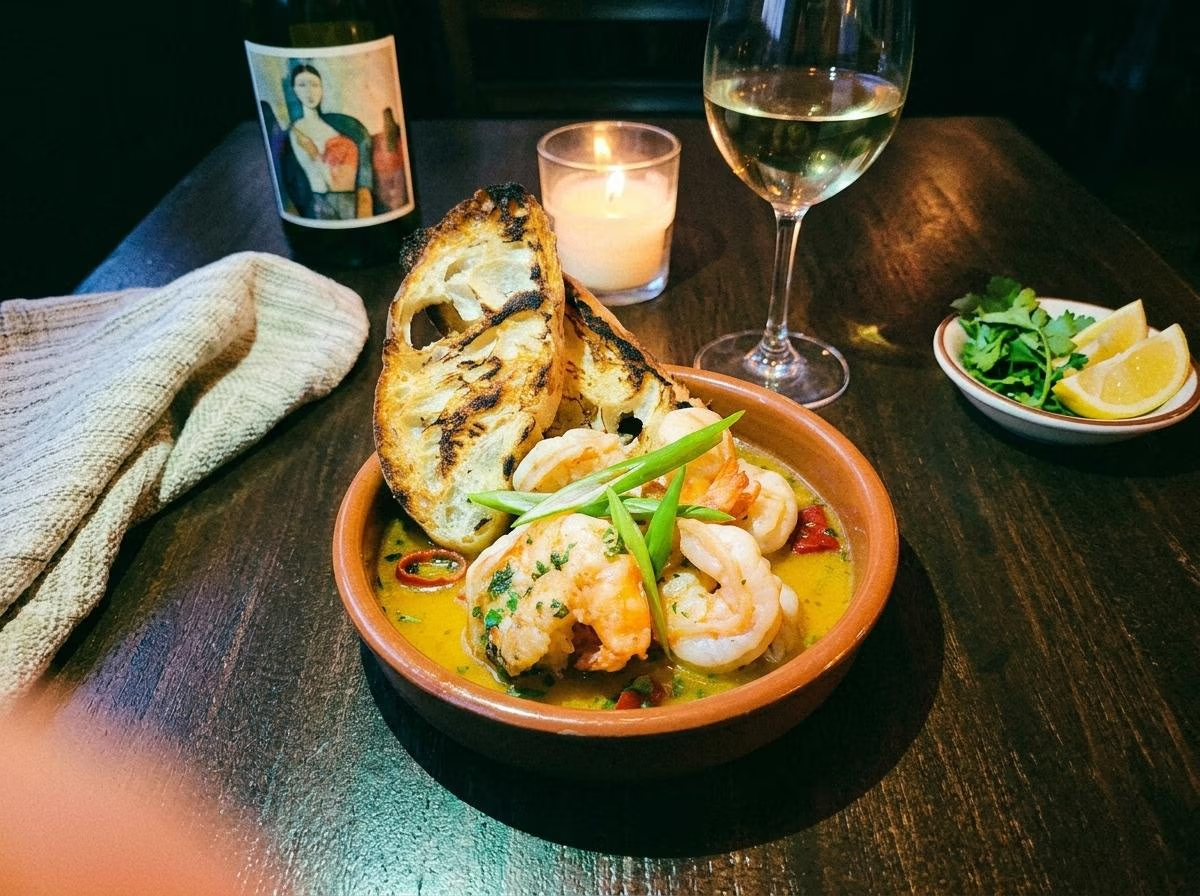
White wine can be crisp, aromatic, mineral, fruity, dry, rich, or lightly sweet, and it has an established place at dining tables around the Mediterranean and elsewhere. But when people ask whether white wine is “bad for you,” the answer requires more care than simply labeling wine healthy or unhealthy.
White wine contains alcohol. That matters more from a health perspective than whether the wine is white, red, rosé, expensive, natural, Mediterranean, organic, or paired with a nutritious meal. Current health guidance does not recommend starting to drink wine for health benefits, and drinking less alcohol generally reduces alcohol-related risk compared with drinking more.
The American Heart Association states that people who do not currently drink alcohol should not start and that alcohol should not be consumed in an attempt to gain heart-health benefits. Its 2025 scientific guidance also notes that any level of alcohol consumption carries potential health risks and that evidence does not establish a direct cause-and-effect relationship between drinking wine and improved cardiovascular health.
The CDC similarly notes that even moderate alcohol consumption may carry greater health risks than not drinking and advises people who do drink that drinking less can reduce risk.
So the useful question is not whether white wine deserves a simple “good” or “bad” label. A better question is: what should someone understand about alcohol, serving size, individual risk, and moderation if they choose to drink white wine?
At Nia Restaurant & Wine Bar in Chicago’s West Loop, white wine is best discussed in the context of flavor and food pairing rather than medical benefit. Nia’s current wine program includes styles such as Albariño, Sauvignon Blanc, Chardonnay, Riesling, Moschofilero, Assyrtiko, Vidiano, Verdejo, Pinot Bianco, and other whites designed to accompany different Mediterranean dishes.
This guide separates those two subjects clearly: first, what responsible current health guidance says about alcohol; second, how white wine can be enjoyed as a food-pairing choice by adults who already choose to drink.
Is White Wine Bad for You?
White wine is an alcoholic beverage, and alcohol is associated with health risks.
That does not mean one glass produces the same risk as heavy or repeated drinking. Alcohol-related risk generally increases as exposure increases, and drinking patterns matter. But it also means the responsible answer is not that white wine becomes “healthy” simply because someone drinks it with dinner or chooses a particular grape.
The World Health Organization notes that ethanol—the alcohol contained in wine, beer, and spirits—is responsible for alcohol-related carcinogenic risk and that the type, quality, or price of the beverage does not remove that risk. WHO’s cancer guidance states that there is no risk-free level of alcohol consumption for cancer.
The American Heart Association takes a similarly cautious position from a cardiovascular perspective. It advises people who do not drink not to start and emphasizes that research has not demonstrated a direct protective effect from consuming wine.
A more accurate conclusion is therefore:
White wine is not a health food. It is an alcoholic beverage that some adults choose to enjoy, and drinking less generally means less alcohol-related risk.
That framing allows people to make informed choices without exaggerating either the risks of an occasional glass or supposed benefits that have not been established.
White Wine Is Not Healthier Simply Because It Is White
People sometimes assume white wine must be lighter or healthier than red wine because the color and flavor can seem more delicate.
Color is not a reliable measure of alcohol-related health impact.
Both red and white wine contain ethanol. From the perspective of many alcohol-related risks, the amount of alcohol consumed matters more than whether the wine came from white or red grapes.
WHO specifically emphasizes that the harmful component is alcohol itself rather than the category of beverage. Wine, beer, and spirits can all contribute to alcohol-related risk because each contains ethanol.
White wines also vary widely in alcohol by volume. A lighter white may have a relatively modest ABV, while another white can be considerably stronger. Serving size therefore matters alongside the percentage of alcohol in the bottle.
Rather than asking whether white wine is healthier than red wine, it is more useful to ask how much alcohol the serving actually contains.

What Counts as One Glass of Wine?
A restaurant wine glass can physically hold far more than one standard drink.
In the United States, a standard drink contains approximately 14 grams of pure alcohol. A commonly used example is 5 fluid ounces of wine at 12% alcohol by volume.
That definition is useful because wine strength varies.
Five ounces of a 12% ABV wine represents approximately one standard drink, but the same five-ounce pour of a wine with substantially higher alcohol contains more alcohol.
Likewise, an eight- or nine-ounce home pour is not automatically “one drink” simply because it fits inside one wine glass.
This is why both pour size and ABV matter.
People trying to understand their alcohol intake should pay attention to those measurements rather than counting glasses without considering what is actually in them.
What Does “Moderation” Mean?
The word moderation is often used casually in restaurant and wine content, but it should be defined carefully.
The American Heart Association currently describes moderation as no more than two alcoholic drinks per day for men and no more than one per day for women for adults who choose to drink. However, the same organization stresses that these limits should not be interpreted as recommended targets or proof that drinking at those levels is risk-free.
The CDC likewise states that moderate drinking may still carry greater health risks than not drinking, including for certain chronic conditions.
For a restaurant article, the safest way to explain this is:
Moderation is an upper-limit concept used in public-health guidance, not a goal people need to reach.
Someone who drinks less than those limits does not need to drink more. Someone who does not drink has no health reason to start.
And some people should avoid alcohol entirely regardless of those general limits.
Less Alcohol Generally Means Lower Alcohol-Related Risk
“Everything in moderation” can sound reassuring, but it can also give the impression that drinking within a particular number is completely safe.
That is too simplistic.
Alcohol risk exists on a spectrum. Heavy drinking and binge drinking create substantially greater risks, but lower levels are not necessarily risk-free.
The CDC states that drinking less is better for health than drinking more and that even moderate drinking can increase certain health risks compared with not drinking.
The American Heart Association likewise reports that heavy and binge drinking are consistently associated with cardiovascular problems and that even moderate consumption may worsen blood pressure in some people.
WHO’s cancer guidance is even more explicit: cancer risk can rise at low alcohol exposures, and no alcohol-containing beverage is exempt simply because it is wine.
The useful takeaway is not that everyone who drinks a glass of wine should panic. It is that the language used around alcohol should be accurate.
There is no need to advertise a particular amount of wine as “healthy.”
Does White Wine Have Heart-Health Benefits?
A restaurant should not claim that white wine protects the heart.
Older popular discussions sometimes suggested that drinking wine might improve cardiovascular health. Most of that attention centered on red wine, but similar claims sometimes spread to wine more generally.
The American Heart Association states that research has not established a cause-and-effect relationship showing that drinking alcohol improves heart health. It does not recommend drinking wine or other alcoholic beverages to obtain cardiovascular benefits.
Its updated cardiovascular guidance continues to advise people who do not consume alcohol not to start and people who do drink to limit intake.
For this reason, phrases such as “white wine supports heart health,” “a glass of wine is good for your heart,” or “white wine is part of a heart-healthy lifestyle” should not appear in Nia’s content.
White wine can be discussed as pleasurable, flavorful, culturally relevant, and food-friendly.
It should not be sold as cardiovascular therapy.
What About Antioxidants in White Wine?
Wine contains various naturally occurring compounds from grapes and fermentation, but the presence of those compounds does not turn an alcoholic beverage into a health recommendation.
It is especially misleading to describe white wine as beneficial simply because it contains antioxidants.
Foods such as fruits, vegetables, nuts, legumes, and other plant foods can provide a wide range of beneficial compounds without exposing someone to alcohol.
The American Heart Association makes a similar point when discussing wine: potentially beneficial plant compounds associated with wine can also be obtained from foods such as grapes, berries, and other plant sources, so alcohol does not need to be consumed to obtain them.
Therefore, the presence of antioxidants should not be used as a reason to encourage drinking.
The more useful reason to choose a white wine is because you enjoy its flavor and it complements the meal.
Is White Wine Part of the Mediterranean Diet?
Wine has historical and cultural connections with parts of the Mediterranean region, but alcohol is not required to follow a Mediterranean-style eating pattern.
This distinction is important because restaurant articles sometimes present wine as if it were one of the ingredients responsible for the health reputation of Mediterranean eating.
That is not an appropriate conclusion.
The American Heart Association’s current dietary guidance states that people who do not consume alcohol should not start.
A Mediterranean-style diet can be built around vegetables, fruits, legumes, whole grains, nuts, seeds, olive oil, fish, seafood, and other foods without alcohol.
For adults who already choose to drink, wine may be part of a cultural or dining experience.
But it should not be described as a necessary component of Mediterranean nutrition.
Mediterranean Food Does Not Cancel Out Alcohol Risk
Pairing wine with vegetables, fish, seafood, olive oil, or another Mediterranean meal does not eliminate the effects of alcohol.
Eating while drinking can influence how quickly alcohol is absorbed, and enjoying a drink with food may encourage a slower dining pace, but the body is still exposed to ethanol.
The American Heart Association notes that consuming alcohol with meals can slow absorption, but it does not present eating with alcohol as a method of making alcohol harmless.
This distinction matters for Nia because wine and Mediterranean food naturally appear together on the menu.
It is reasonable to say:
Albariño can taste excellent with shrimp.
It is not reasonable to say:
Albariño becomes healthy because it is paired with seafood and olive oil.
Food pairing is about flavor.
Health guidance is a separate question.
Are White Wines Lower in Calories?
Not automatically.
Calories in wine depend on factors including alcohol content, serving size, and residual sugar.
The American Heart Association notes that a glass of beer or wine is commonly in the range of roughly 100 to 150 calories, although actual amounts vary.
A dry white may sometimes contain fewer calories than a sweet wine or large cocktail, but the word “white” does not guarantee that a wine is low-calorie.
A higher-ABV dry wine can contain meaningful calories from alcohol even if it contains very little sugar.
A sweet white may contain additional calories from residual sugar.
And a large restaurant or home pour will contain more calories and more alcohol than a smaller pour of the same wine.
Therefore, phrases such as “white wine is a lighter choice for people watching calories” should be avoided unless a specific serving has verified nutritional information.
Does Dry Wine Mean Alcohol-Free or Low-Alcohol?
No.
“Dry” refers primarily to the amount of residual sugar perceived in the finished wine.
A dry white wine can still contain a substantial percentage of alcohol.
For example, Albariño, Sauvignon Blanc, Assyrtiko, Chardonnay, Pinot Grigio, and Verdejo are frequently produced in dry styles, but their alcohol levels can still vary considerably from bottle to bottle.
The correct way to understand alcohol strength is to check the ABV on the label, not to infer it from sweetness.
This is particularly useful for diners who want to moderate alcohol intake while still enjoying wine.
Sweetness and Alcohol Are Different
Another misconception is that sweet wine automatically contains more alcohol than dry wine.
That is not necessarily true.
Wine sweetness comes primarily from residual sugar, while alcohol comes from fermented sugar that yeast converts into ethanol.
Some sweet wines have relatively low alcohol. Others may be fortified and considerably stronger. Dry wines can also have relatively high alcohol.
The safest practical rule is simple:
Check ABV when alcohol amount matters.
Consider sweetness separately when thinking about flavor, pairing, or sugar intake.

Who Should Avoid Alcohol?
General moderation guidance does not apply equally to everyone.
The American Heart Association and CDC identify several situations in which people should not drink alcohol, including people who are pregnant or may be pregnant, people younger than the legal drinking age, people taking medications that interact with alcohol, people with certain medical conditions that can be worsened by alcohol, and people who cannot control their alcohol consumption or are recovering from alcohol use disorder.
People planning to drive or operate machinery should also avoid drinking alcohol.
Individual health circumstances can be complicated, so a restaurant article should not tell someone whether drinking is safe for their particular condition or medication.
That decision belongs between the individual and an appropriate healthcare professional.
What About Alcohol and Medications?
Alcohol can interact with both prescription and over-the-counter medications.
The type of interaction varies. Alcohol may increase sedation, alter how medications are metabolized, increase bleeding risk with certain drugs, affect blood sugar, or worsen other side effects depending on the medication.
The American Heart Association specifically advises checking with a pharmacist or healthcare professional regarding potential alcohol interactions with medications.
A restaurant should therefore never tell someone that a glass of wine is safe with a medication based on general information.
If there is uncertainty, ask a healthcare professional before drinking.
White Wine and Blood Sugar
Alcohol and blood sugar interactions can be complicated, particularly for people with diabetes who use insulin or certain medications.
Wine should therefore not be marketed as “diabetic friendly.”
The American Heart Association notes that alcohol can affect blood glucose and may contribute to dangerous hypoglycemia in some people using medications such as insulin or sulfonylureas.
Someone managing diabetes should discuss alcohol with their physician or registered dietitian rather than relying on whether a wine is dry, white, low-sugar, or described as Mediterranean.
Dry wine containing less residual sugar is not the same thing as medically safe alcohol consumption.
Is Organic, Natural, or Expensive White Wine Safer?
Not from an alcohol perspective.
Winemaking method, farming practice, producer prestige, bottle price, and region can all affect flavor, production philosophy, and purchasing decisions.
They do not remove ethanol.
WHO specifically notes that alcohol-related risk comes from alcohol itself regardless of the quality or price of the beverage.
A carefully made bottle from a respected winery can be an excellent wine.
It should not be described as medically safer merely because it is artisanal, natural, organic, biodynamic, expensive, or produced in the Mediterranean.
Quality and health risk are separate questions.
Is Mediterranean White Wine Different From Other White Wine?
From a flavor perspective, Mediterranean wine can be very distinctive.
Greek Assyrtiko can offer high acidity, mineral character, and enough structure for seafood and grilled foods. Spanish Albariño can be bright, fresh, and particularly useful with shellfish. Verdejo can show citrus, herbs, and texture. Greek Moschofilero can be aromatic and fresh, while Vidiano from Crete can offer a different balance of fruit, body, and acidity.
Those qualities make Mediterranean wines interesting with food.
They do not give Mediterranean white wine a special exemption from alcohol-related health considerations.
The health question remains about ethanol exposure and individual circumstances.
The wine question is about aroma, acidity, body, texture, sweetness, and how those characteristics interact with food.
Keeping those questions separate makes the content both more accurate and more useful.
Why White Wine Works So Well With Mediterranean Food
White wine often succeeds with Mediterranean food because many white wines have enough acidity to respond to olive oil, seafood, lemon, herbs, salty foods, and vegetable-based dishes.
Acidity refreshes the palate after richer ingredients.
Citrus and mineral flavors can echo lemon, seafood, and briny elements.
Herbal characteristics in wines such as Sauvignon Blanc or Verdejo can work naturally with herbs and vegetables.
More textured whites, including some Chardonnay and Assyrtiko, can stand beside richer fish, creamy preparations, cheese, or roasted foods.
This is the reason Nia’s white-wine content should focus primarily on pairing.
Pairing is a culinary claim that can be explained through flavor.
It does not require making medical promises.
Albariño With Seafood
Albariño is one of the easiest white wines to pair with Mediterranean seafood.
Its fresh acidity can complement shrimp, shellfish, garlic, olive oil, lemon, and other bright ingredients while keeping the meal from feeling heavy.
Nia’s current by-the-glass wine menu includes Senda Verde Albariño from Rías Baixas, Spain, described by the restaurant as showing bright acidity, stone fruit, and coastal minerality.
That makes it a natural style to consider when the table leans toward shrimp or other seafood dishes.
For more detailed discussion about why Albariño works with individual dishes, readers should be directed to Nia’s comprehensive Mediterranean Wine-Pairing Guide rather than duplicating the entire pairing explanation here.
Assyrtiko With Seafood and Grilled Foods
Assyrtiko is a Greek grape valued for freshness, acidity, and structure.
It can work particularly well with fish, shellfish, salty appetizers, grilled vegetables, herbs, olive oil, and lemon.
Nia’s current bottle list includes Domaine Skouras Assyrtiko from Nemea, Greece.
Assyrtiko is also covered in more depth within Nia’s Greek-food pairing guide, where the article can explore its relationship with grilled fish, feta, Greek mezze, and other Greek-specific dishes.
On this page, its role is simpler.
It is an example of how a Mediterranean white wine can contribute freshness and structure to a meal without needing to be marketed through health claims.
Sauvignon Blanc With Herbs and Vegetables
Sauvignon Blanc can be particularly effective when herbs, vegetables, citrus, peppers, or other fresh flavors dominate the plate.
Nia currently pours Alpha Estate Sauvignon Blanc from Florina, Greece, describing it as showing vibrant acidity, citrus zest, and herbal notes.
Those characteristics can naturally echo green herbs and citrus-driven Mediterranean food.
Again, the reason to choose the wine is flavor compatibility.
Calling it “healthy” would add nothing useful to the pairing recommendation.
Chardonnay With Richer Dishes
Chardonnay covers a broad range of styles, from relatively lean and mineral to rich, oaked, and creamy.
That versatility makes it useful when Mediterranean dishes become more substantial.
Salmon, roasted fish, creamy sauces, mushrooms, cheese, and richer shared plates can provide enough weight for a fuller white wine.
Nia’s current by-the-glass selection includes Skouras “Almyra” Chardonnay from Nemea, Greece, described as showing balanced oak and ripe orchard fruit.
The useful pairing question is whether the Chardonnay’s weight matches the dish.
There is no need to turn the decision into a nutritional comparison with red wine.
Riesling With Spice
Riesling can be particularly useful when food contains chili, spice, or contrasting sweet and savory flavors.
A lightly off-dry Riesling may soften the perception of heat more comfortably than a high-alcohol, heavily tannic wine.
Nia’s current by-the-glass list includes a lightly off-dry Riesling with citrus and stone-fruit characteristics.
That makes Riesling an interesting pairing option when the menu includes spicy elements.
Whether the wine is appropriate for an individual from a health perspective remains a separate question determined by alcohol consumption and personal circumstances.
Verdejo With Mediterranean Small Plates
Verdejo, especially from Spain’s Rueda region, can provide citrus, herbal character, freshness, and varying degrees of texture.
Those characteristics can work well with vegetables, herbs, seafood, olives, lighter small plates, and other Mediterranean flavors.
Nia’s current bottle list includes Buil & Giné Verdejo from Rueda, Spain.
This is a useful example of how the restaurant can discuss wine in a way that is educational and specific.
“Herbal Verdejo can complement herb-driven small plates” tells the reader something meaningful.
“White wine has health benefits” does not.
Moschofilero and Aromatic White Wine
Moschofilero is a Greek grape known for aromatic, fresh white wines.
It can be particularly interesting with lighter appetizers, vegetables, herbs, citrus, seafood, and yogurt-based flavors.
Nia’s current bottle list includes Domaine Skouras Moschofilero from Arcadia, Greece.
Readers who specifically want to understand Moschofilero with Greek food should be directed to the dedicated Best Wine for Greek Food guide.
This article only needs enough pairing information to explain how different white-wine styles can be selected according to the meal.
Is It Better to Drink White Wine With Food?
If someone has already chosen to drink alcohol, enjoying wine with food may affect the pace and absorption of alcohol, but it does not eliminate alcohol-related risk.
The American Heart Association notes that drinking with meals can slow alcohol absorption.
From a restaurant perspective, food also gives wine a culinary purpose.
Instead of drinking primarily for intoxication, wine can be selected to complement seafood, vegetables, grilled dishes, cheese, or other elements of dinner.
However, this should not be converted into the claim that drinking wine with food is medically healthy.
Pairing can improve the dining experience.
It does not neutralize ethanol.
Hydration Does Not Cancel Alcohol
Drinking water during dinner is sensible, particularly over a longer meal.
Alternating alcoholic drinks with non-alcoholic beverages may also help someone drink more slowly.
The American Heart Association includes alternating alcoholic and non-alcoholic beverages among practical strategies for people who choose to drink.
But water does not remove alcohol from the bloodstream or make an unlimited amount of wine safe.
Hydration is not an antidote.
The body still needs time to metabolize alcohol.
Can Coffee Sober You Up After Wine?
Coffee can make someone feel more alert, but it does not remove alcohol from the body.
The same is true for cold showers, food, exercise, or other commonly suggested shortcuts.
Time is required for alcohol to be metabolized.
For that reason, someone who has been drinking should not assume that feeling more awake means they are safe to drive.
Restaurant alcohol content should avoid implying that coffee, dessert, food, or water can make someone immediately sober.
White Wine and Driving
If you are driving, the safest approach is not to drink alcohol.
It is difficult for an individual to accurately judge impairment based solely on how they feel.
Body size, food intake, medication use, drinking speed, ABV, serving size, sleep, and individual metabolism can all influence alcohol’s effects.
The American Heart Association specifically lists people planning to drive or operate machinery among those who should not drink.
At a restaurant, rideshare, public transportation, a designated driver, or another safe transportation plan can remove the need to make that calculation later.
You Do Not Need Alcohol to Enjoy Mediterranean Dining
Mediterranean dining should never be presented as incomplete without wine.
Food can be enjoyed with sparkling water, non-alcoholic cocktails, alcohol-free wine alternatives, tea, coffee, or other beverages depending on the meal and restaurant.
Nia currently maintains a dedicated non-alcoholic beverage section alongside its wine and cocktail offerings, reinforcing the fact that guests can participate in the dining experience without alcohol.
That inclusivity is important.
People may avoid alcohol for medical, religious, personal, recovery-related, pregnancy-related, driving, training, or simple preference reasons.
None of those guests should be made to feel that they are missing the “healthy” or authentic way to experience Mediterranean food.
A Better Way to Think About White Wine
Instead of asking whether white wine is good or bad, separate the decision into three questions.
First, do you want to drink alcohol at all? For some people, the answer will be no, and that is entirely compatible with Mediterranean dining.
Second, if you choose to drink, how much are you actually consuming? Look at serving size and ABV rather than relying on the number of glasses.
Third, if wine is part of the meal, what style works with the food? That is where Albariño, Assyrtiko, Sauvignon Blanc, Chardonnay, Riesling, Verdejo, Moschofilero, and other wines become interesting.
This framework is much more useful than pretending one bottle offers health benefits while another does not.
White Wine at Nia in Chicago’s West Loop
Nia Restaurant & Wine Bar currently offers a range of white-wine styles that reflect its broader Mediterranean approach.
Its by-the-glass list includes Senda Verde Albariño from Rías Baixas, Skouras Chardonnay from Greece, Hirschbach & Söhne Riesling from Germany, and Alpha Estate Sauvignon Blanc from Greece.
Its bottle program expands into Mediterranean varieties and regions, including Moschofilero, Vidiano, Verdejo, Assyrtiko, Pinot Bianco, Pinot Gris, Chardonnay, and additional whites.
The value of that selection is variety.
Someone ordering seafood may prefer an acidic, mineral white. Another diner may want a more aromatic wine with vegetables and herbs. Richer dishes may support Chardonnay. Spice may make Riesling particularly interesting.
The purpose of the wine program is to offer different flavor possibilities.
It should not be promoted as a collection of health products.
Frequently Asked Questions About White Wine and Moderation
Is white wine bad for you?
White wine contains alcohol, and alcohol consumption carries health risks.
Risk generally increases as alcohol exposure increases, but even lower levels are not necessarily risk-free. The CDC states that even moderate alcohol consumption may increase certain health risks compared with not drinking.
If someone does not currently drink, major health organizations do not recommend starting for health reasons.
Is white wine healthy?
It is more accurate to describe white wine as an alcoholic beverage than as a healthy food.
White wine can be enjoyed for flavor and food pairing by adults who choose to drink, but it should not be presented as a way to improve health or prevent disease.
The American Heart Association specifically does not recommend consuming wine or other alcohol to obtain supposed cardiovascular benefits.
Is one glass of white wine safe?
No universal amount can be guaranteed risk-free for every person.
Individual health, medications, pregnancy status, alcohol-use history, age, and other factors can change whether alcohol is appropriate.
Public-health guidance uses standard-drink limits to describe lower-risk consumption patterns, but those limits are not guarantees of safety.
For U.S. standard-drink calculations, approximately 5 ounces of 12% ABV wine contains one standard drink.
What does drinking wine in moderation mean?
The American Heart Association currently defines moderation for adults who choose to drink as no more than one drink per day for women and no more than two drinks per day for men.
That should be viewed as an upper limit rather than a health target.
The same guidance states that people who do not drink should not start and that alcohol can still carry risks at moderate levels.
Is white wine better for you than red wine?
There is no reason to treat white wine as risk-free simply because it is lighter in color.
Both contain ethanol.
The alcohol amount, serving size, drinking pattern, and individual’s circumstances matter more for alcohol-related health risk than wine color.
Is red wine healthier than white wine?
Claims that red wine is uniquely beneficial for the heart have not been proven as a direct cause-and-effect relationship.
The American Heart Association does not recommend drinking red wine, white wine, or any other alcoholic beverage for health benefits.
Choose between red and white according to taste and food pairing rather than trying to use wine as medicine.
Does white wine contain antioxidants?
Wine can contain plant compounds originating from grapes, but the presence of antioxidants does not make alcohol a health recommendation.
Similar or broader ranges of plant compounds can be obtained from foods such as grapes, berries, vegetables, and other plant foods without consuming alcohol.
Is white wine part of the Mediterranean diet?
Wine has cultural connections with some Mediterranean regions, but alcohol is not necessary to follow a Mediterranean-style dietary pattern.
Current American Heart Association guidance says people who do not drink should not start.
A Mediterranean-style eating pattern can be followed entirely without alcohol.
Is white wine lower in calories than red wine?
Not necessarily.
Calories depend on serving size, alcohol content, residual sugar, and the specific wine.
Wine color alone does not reliably tell you which option contains fewer calories.
Is dry white wine low in alcohol?
Not automatically.
Dry refers mainly to residual sugar rather than alcohol content.
Check the bottle’s ABV if alcohol strength matters to you.
Is dry white wine sugar-free?
Dry wine generally contains relatively little residual sugar compared with sweet wine, but “dry” should not automatically be interpreted as zero sugar.
Exact values differ by wine.
It also remains an alcoholic beverage regardless of residual sugar level.
Can I drink white wine if I have a medical condition?
That depends on the condition, medications, and individual circumstances.
A restaurant article cannot determine whether alcohol is safe for a specific person.
The American Heart Association and CDC both note that people with certain health conditions or medication interactions may need to avoid alcohol.
Ask your physician, pharmacist, or other qualified healthcare professional when individual guidance is needed.
Can I drink white wine while pregnant?
Major health guidance advises avoiding alcohol during pregnancy.
The American Heart Association identifies pregnancy and trying to become pregnant among situations in which alcohol should not be consumed.
Can I drink white wine if I am driving?
The safest choice when driving is not to consume alcohol.
People may be impaired before they recognize it themselves, and the effect of a drink varies according to multiple individual factors.
Arrange a designated driver, rideshare, taxi, public transportation, or another safe option if alcohol will be part of the evening.
What white wine goes well with Mediterranean seafood?
Albariño and Assyrtiko are two especially useful options because their acidity and freshness work well with seafood, lemon, herbs, olive oil, and salty flavors.
Sauvignon Blanc can also work when vegetables and herbs dominate, while fuller Chardonnay can complement richer fish preparations.
For detailed pairings by dish, use Nia’s comprehensive Mediterranean wine-pairing guide.
What white wine goes well with spicy Mediterranean food?
A lightly off-dry Riesling can work well because fruit and modest sweetness may soften the perception of chili heat.
Some aromatic whites and rosés can also be useful depending on the dish.
Avoid assuming the highest-alcohol wine will be the strongest pairing, because alcohol itself can make spicy food feel hotter.
Do I need to drink wine to enjoy dinner at Nia?
No.
Wine is one option within the dining experience, not a requirement.
Guests can choose alcoholic or non-alcoholic beverages according to preference and individual circumstances.
Enjoy White Wine for Flavor, Not for a Health Promise
The most responsible way to talk about white wine is also the simplest.
White wine can taste excellent.
It can highlight seafood, refresh the palate after olive oil and richer dishes, complement herbs and vegetables, soften spicy flavors in certain styles, and introduce diners to grapes and wine regions they may never have explored before.
None of those qualities require pretending that alcohol is beneficial for health.
Current guidance is clear that people who do not drink should not start for perceived health benefits. People who do choose to drink should understand serving size, ABV, individual health considerations, and the fact that lower alcohol exposure generally means lower alcohol-related risk.
At Nia in Chicago’s West Loop, white wine is best positioned for what a restaurant can genuinely speak about with authority: taste, grape variety, region, aroma, structure, and food pairing.
Albariño can bring acidity to seafood. Assyrtiko can stand beside salty and grilled Mediterranean flavors. Sauvignon Blanc can echo herbs and citrus. Chardonnay can provide enough texture for richer dishes. Riesling can create contrast with spice. Moschofilero and Verdejo can introduce aromatic and herbal dimensions to a shared table.
Those are meaningful reasons to explore wine.
“Drink this because it is healthy” is not.
For adults who choose to drink, the goal should be to make an informed decision, enjoy the wine for what it is, and never mistake a pleasurable dining experience for medical advice.