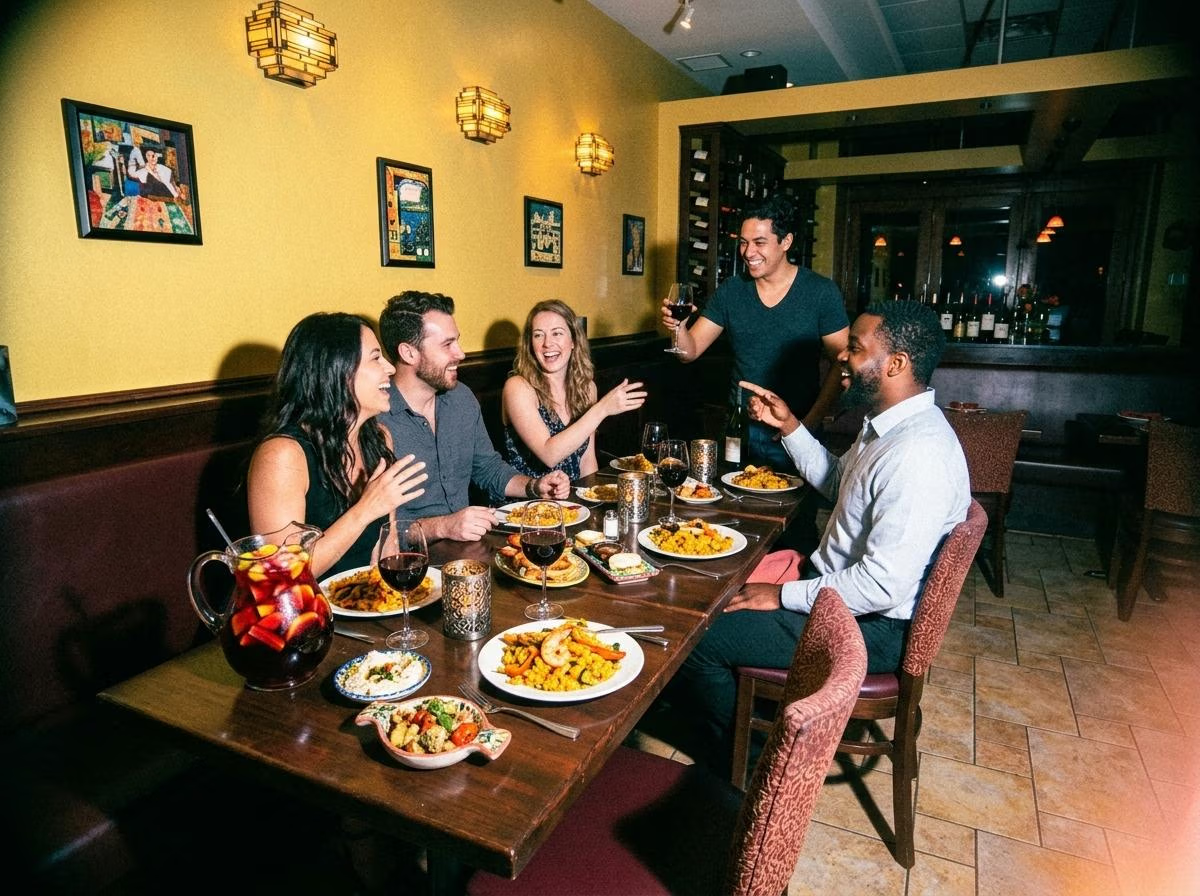
What makes a restaurant romantic?
The simplest answer is that romance rarely comes from one feature.
A restaurant does not become romantic simply because the lights are dim, candles are placed on the tables, or wine appears on the menu. Those details can contribute to the mood, but they only work when the entire dining experience allows two people to feel comfortable, present, and focused on each other.
Lighting matters.
So does sound.
Table spacing matters.
So does the way staff approach the table.
The pace of the meal matters, as does seating comfort, temperature, menu design, food presentation, and how easily couples can have a conversation without competing with the room around them.
That is why some visually impressive restaurants feel surprisingly unromantic once you sit down, while another restaurant with simpler décor can create an evening couples remember for years.
Romance in a restaurant is less about decoration than how all of the details work together.
This guide looks specifically at those elements.
It is not a list of date-night activities, a ranking of romantic restaurants, or a guide to selecting a Mediterranean restaurant in Chicago. Those topics require different pages.
Here, the question is more fundamental:
What characteristics actually make a restaurant feel romantic?
Romance Begins With Comfort, Not Decoration
Restaurants often try to communicate romance visually.
Candles, flowers, warm colors, dark walls, elegant glassware, and decorative lighting are immediately noticeable, which makes them easy to photograph and market.
But visual style only creates the first impression.
A restaurant can look romantic and still feel uncomfortable if the chairs are difficult to sit in, the tables are too close together, the music is too loud, the room is too cold, or servers interrupt the conversation every few minutes.
Comfort is less glamorous than décor, but it often determines whether couples actually enjoy staying at the table.
Romantic dining usually involves lingering.
People may order several courses, share food, talk between dishes, have dessert, or simply remain at the table longer than they would during a quick everyday meal.
That means physical and emotional comfort matter from the moment guests arrive until the end of the evening.
The best romantic environments usually feel intentional without constantly reminding diners that someone is trying to manufacture romance.
1. Lighting Creates the First Layer of Atmosphere
Lighting is one of the most powerful elements of restaurant atmosphere because diners experience it immediately.
Very bright lighting can make a room feel practical, energetic, or fast-paced.
Extremely dark lighting can create intimacy but become frustrating when guests struggle to read menus or see their food.
Romantic lighting usually lives somewhere between those extremes.
The goal is warmth.
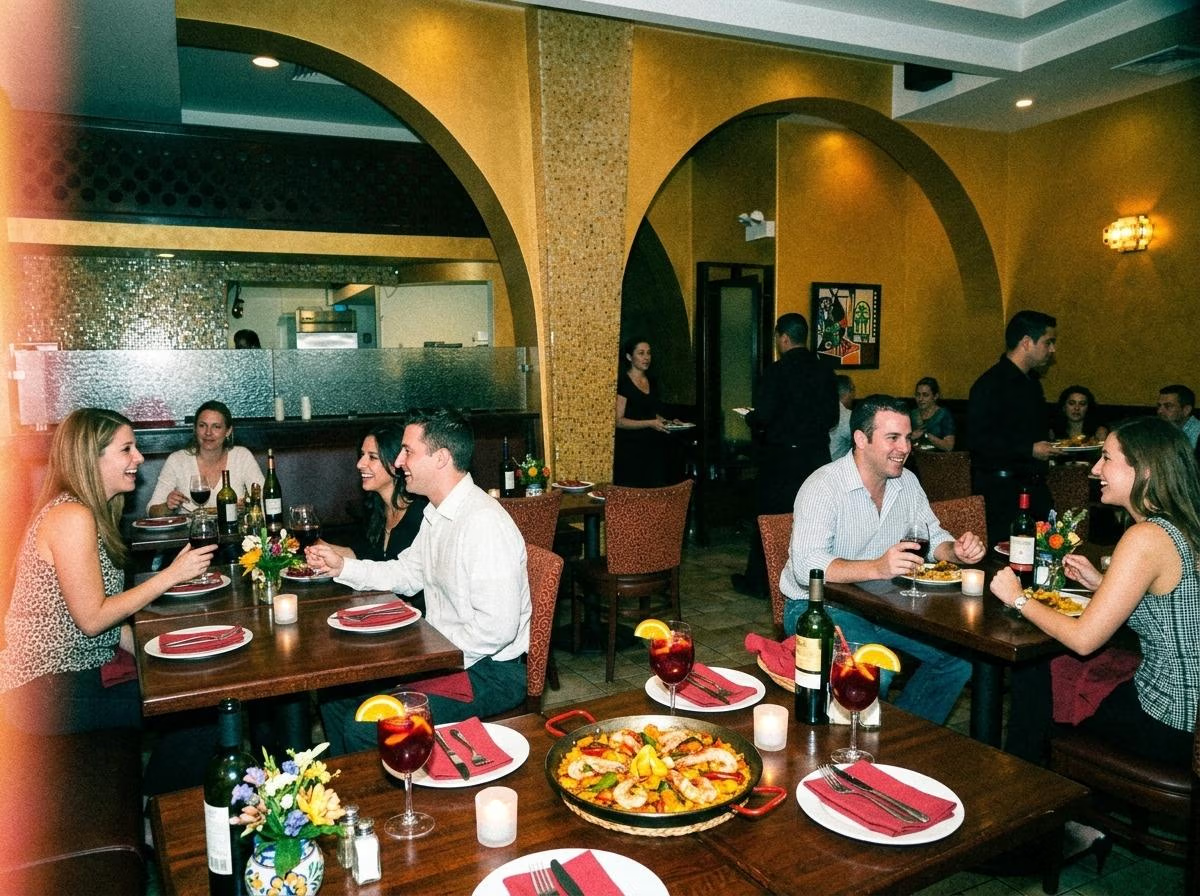
Indirect light, candles, wall sconces, pendant lights, shaded fixtures, and carefully positioned lamps can create depth instead of illuminating every part of the room equally.
This helps tables feel more individual even when several couples are dining in the same space.
Good lighting also directs attention.
Instead of focusing on the entire restaurant, diners naturally pay more attention to the table, the food, and the person sitting across from them.
That visual concentration can make a large restaurant feel more intimate than its actual size suggests.
Romantic Lighting Should Still Be Functional
Darkness should not be confused with romance.
If guests need their phone flashlights to read the menu, the lighting has stopped supporting the experience.
Couples should also be able to see food clearly enough to enjoy its colors, presentation, and texture.
The strongest restaurant lighting therefore serves several purposes simultaneously.
It creates warmth.
It softens the room.
It helps individual tables feel personal.
And it still allows guests to participate comfortably in the meal.
2. Acoustics May Matter Even More Than Lighting
A restaurant can recover from imperfect décor.
It is much harder to recover from a room where two people cannot hear each other.
Conversation is one of the central activities of romantic dining, which makes acoustics enormously important.
Restaurants naturally contain sound from conversations, plates, glassware, kitchen activity, music, doors, bars, and service movement.
Some background sound is useful.
A completely silent restaurant can make diners feel self-conscious because every conversation seems exposed.
The problem occurs when ambient noise becomes strong enough that couples need to raise their voices repeatedly.
At that point, the room begins competing with the relationship.
What Helps a Restaurant Control Noise?
Restaurant acoustics can be influenced by flooring, ceiling height, wall materials, curtains, upholstery, booths, decorative textiles, acoustic treatments, room dividers, table placement, and music volume.
Hard surfaces reflect sound.
Soft surfaces absorb more of it.
The shape of the room also matters.
A large open dining room with exposed ceilings may create a completely different sound environment from several smaller connected spaces.
None of those design choices automatically makes one restaurant more romantic than another.
The important result is balance.
A romantic restaurant should feel alive without making conversation exhausting.
3. Table Spacing Creates Psychological Privacy
Privacy does not necessarily mean dining behind a closed door.
For most couples, what matters is psychological privacy: the feeling that the conversation belongs to them even though other diners are nearby.
Table spacing plays a major role.
When tables are extremely close, couples may hear the entire conversation beside them and become equally aware that their own conversation can be heard.
That changes how freely people speak.
Sufficient distance between tables creates a subtle sense of separation.
Booths, plants, architectural features, changes in floor level, columns, partial walls, and intelligent seating arrangements can produce similar effects.
The goal is not isolation.
Romantic restaurants still benefit from social energy.
The goal is enough personal space that a couple can temporarily forget about the rest of the room.
4. Seating Should Encourage Conversation
Furniture influences interaction more than people usually realize.
Traditional two-person tables allow couples to face each other directly.
Booths can create greater enclosure and physical comfort.
Corner seating may feel more protected.
Bar seating changes the dynamic by placing people beside one another rather than opposite each other.
None of these is universally more romantic.
A first date may feel less intense when two people sit at a bar.
An anniversary may feel more intentional at a comfortable table.
Couples who enjoy people-watching may prefer seating where they can both see the room.
Other couples may prefer a booth that minimizes distractions.
What matters is that the seating supports the way people want to communicate.
Comfortable Chairs Matter
Romantic restaurant design sometimes makes the mistake of prioritizing furniture appearance over comfort.
That becomes obvious after forty-five minutes.
If couples are expected to enjoy multiple courses, wine, dessert, and extended conversation, seating needs to support that length of stay.
The most beautiful chair in the room adds little romance if diners spend the second half of dinner thinking about their backs.
5. Service Should Feel Present Without Feeling Intrusive
Service has unusual importance during romantic dining because staff need to accomplish two seemingly opposite goals.
They must be attentive.
And they must know when not to interrupt.
Good romantic service often feels almost invisible.
Water appears when needed.
Questions are answered clearly.
Courses arrive at an appropriate pace.
Empty plates are cleared without creating unnecessary disruption.
Staff remain available without checking the table every few minutes.
That rhythm allows couples to concentrate on each other while still feeling well cared for.
6. Pacing Can Determine Whether Dinner Feels Romantic or Rushed
A romantic dinner needs time.
That does not mean every romantic meal should last three hours.
It means the pace should fit the occasion.
When appetizers, main courses, and dessert arrive too quickly, the meal can feel transactional.
Couples may barely finish one dish before the next appears.
The table becomes crowded.
Conversation keeps getting interrupted.
And the evening begins to feel like something the restaurant wants to complete rather than something diners are allowed to experience.
At the opposite extreme, excessive delays can become frustrating.
Romantic pacing is therefore not simply slow service.
It is well-timed service.
There should be enough time to enjoy each stage of the meal without creating the feeling that guests have been forgotten.
Shared Dining Makes Pacing Even More Important
When several dishes are designed to be shared, course timing becomes part of the experience.
Bringing six plates simultaneously may create visual excitement, but it can also overwhelm the table.
Spacing dishes allows couples to taste one thing, discuss it, move to another flavor, and decide whether they want to order more.
That progression can make the meal feel exploratory rather than mechanical.
7. Food Should Give Couples Something to Experience Together
Excellent food is important in almost every restaurant.
But food contributes to romance differently when it gives two people something to experience together.
That could involve sharing several plates.
It could involve a tasting menu.
It could involve choosing dessert together.
It might be trying an unfamiliar ingredient or comparing two dishes.
Shared experiences create natural conversation without requiring the restaurant to manufacture entertainment.
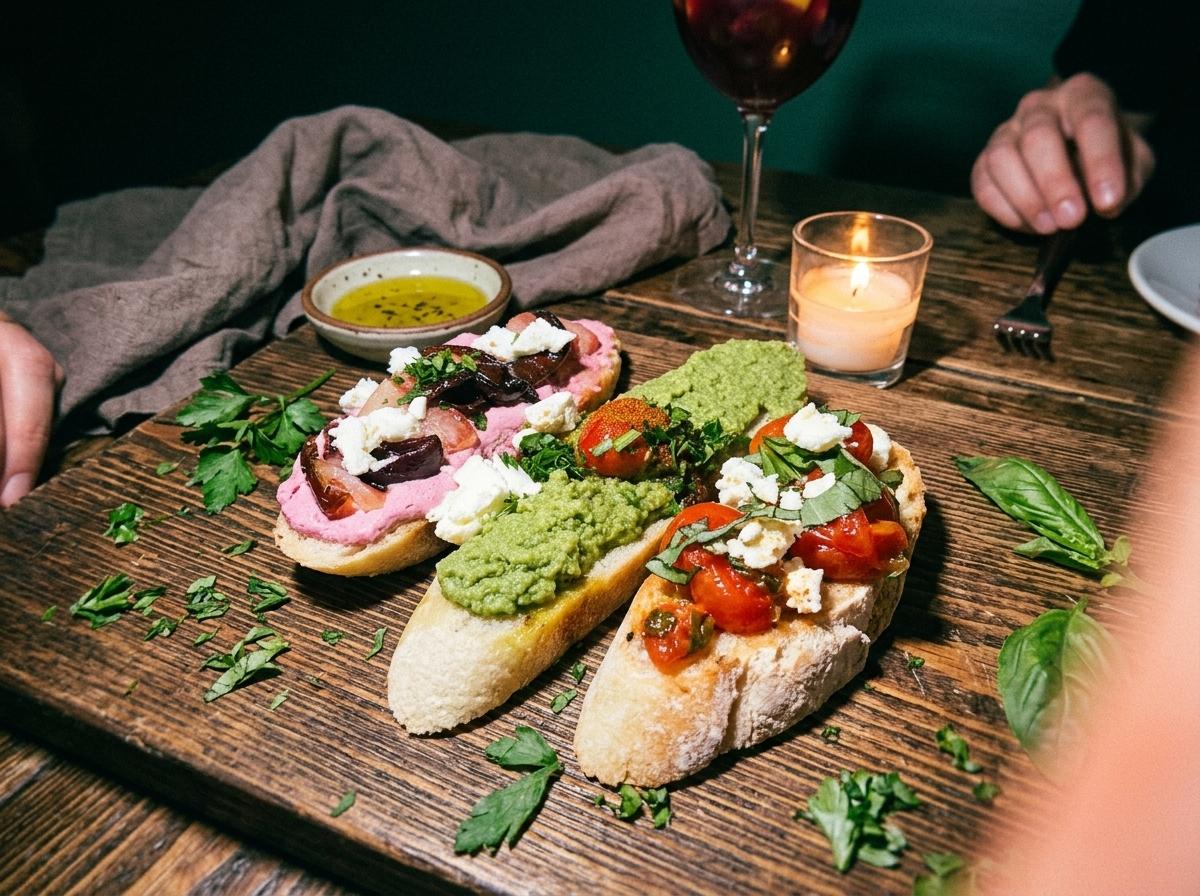
This is one reason small-plate and Mediterranean-style dining can work well for couples.
However, sharing food should not be described as inherently more romantic than ordering individual entrées.
Some couples dislike sharing.
Some people have dietary restrictions.
Others simply want their own dish.
A romantic restaurant succeeds when its menu allows the diners to enjoy the evening comfortably rather than forcing them into one prescribed version of romance.
8. The Menu Should Feel Interesting Without Becoming Work
A romantic dinner loses some of its ease when the menu requires fifteen minutes of explanation before anyone understands how to order.
Complexity is not the same thing as sophistication.
A well-designed menu should give couples enough variety to explore while making the ordering process relatively intuitive.
At a small-plate restaurant, diners should understand approximately how many dishes may create a meal.
At a tasting-menu restaurant, the progression and major dietary considerations should be clear.
At a wine-focused restaurant, staff should be able to help people navigate unfamiliar options without making them feel uninformed.
The best romantic meals create curiosity without creating anxiety.
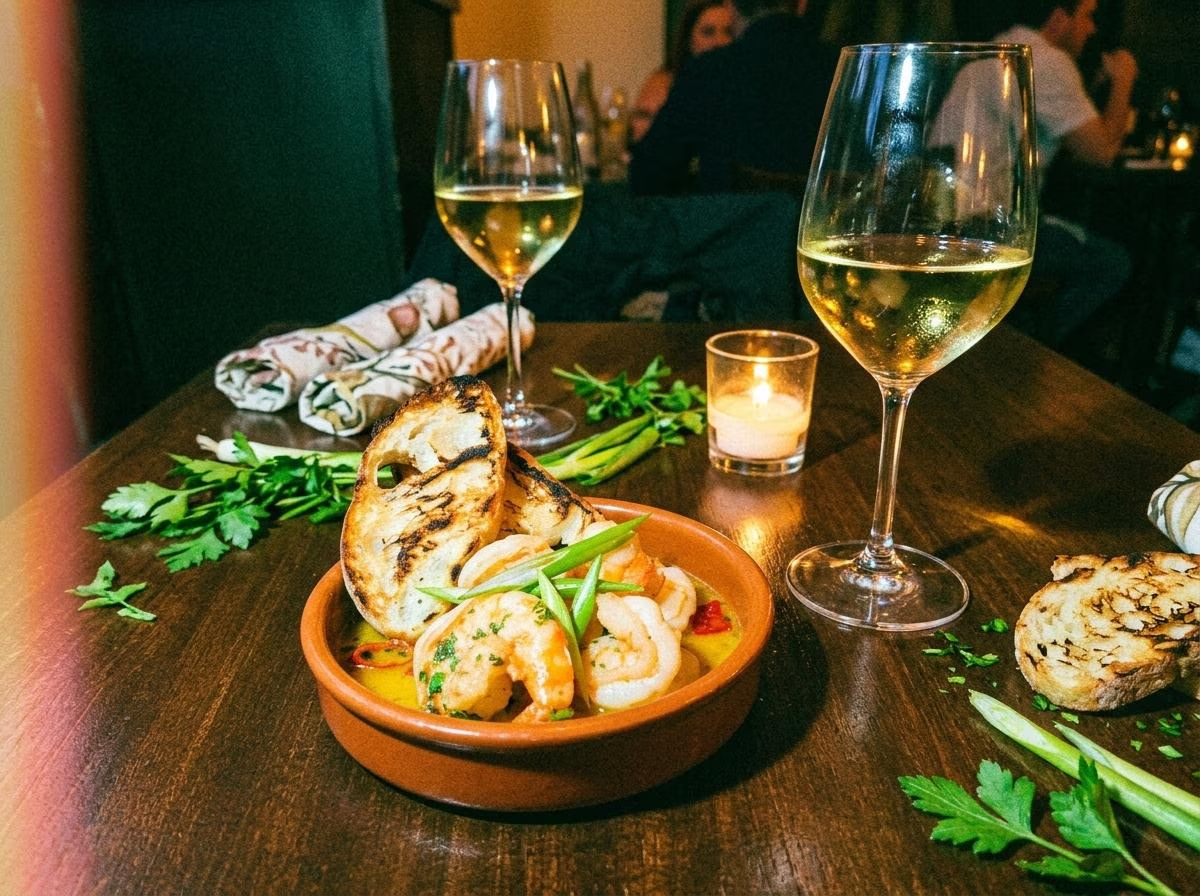
9. Wine Can Be Part of the Ritual, but It Does Not Create Romance
Wine has a long cultural association with celebrations and dining.
For couples who already enjoy wine, choosing a bottle together can become part of the meal.
They may compare styles, discover a grape they have not tried, or select something that works across shared dishes.
The ritual can contribute to a sense that dinner is different from an ordinary meal.
But wine itself should not be credited with creating intimacy or stronger conversation.
Couples who do not drink alcohol should be able to experience the same romantic environment.
Wine is optional.
Romance is not dependent on alcohol.
10. Non-Alcoholic Options Are Part of Modern Hospitality
Romantic restaurant design should include guests who do not drink.
Someone may avoid alcohol because of personal preference, pregnancy, health considerations, medication, religious practice, driving, recovery, or many other reasons.
A beverage program that provides thoughtful non-alcoholic choices allows both people to participate in the ritual of ordering something special without making alcohol the center of the evening.
This matters because romance is about the experience shared by the couple, not whether both glasses contain wine.
11. Music Should Shape the Mood, Not Control It
Music can change a restaurant almost instantly.
The same dining room can feel relaxed, energetic, sophisticated, nostalgic, or chaotic depending on volume and selection.
For romantic dining, music is most effective when guests notice the atmosphere it creates without constantly noticing the music itself.
Volume matters more than genre.
Soft jazz played too loudly can become just as disruptive as dance music.
Likewise, an energetic playlist at a controlled volume can work perfectly well in a lively romantic restaurant.
Live music introduces another consideration.
It can turn dinner into a more distinctive experience, but if the performance becomes the primary focus, conversation may become secondary.
Couples should therefore consider whether they want dinner with entertainment or dinner around conversation.
Those are different experiences.
12. Temperature, Airflow, and Physical Comfort Matter
Romantic restaurant articles rarely discuss temperature because it is not visually exciting.
Guests notice it immediately.
A dining room that is too cold can make people uncomfortable for the entire meal.
A room that is too warm may make a long dinner tiring.
Patio dining introduces additional variables such as wind, humidity, sun exposure, heaters, and sudden weather changes.
Comfortable airflow also matters.
A table directly beneath a strong air-conditioning vent may feel very different from one elsewhere in the room.
These details illustrate a larger principle:
Romance depends partly on removing distractions.
The fewer physical annoyances diners need to think about, the more attention they can give to the meal and each other.
13. Smell Influences Atmosphere Too
Restaurants are sensory environments.
A pleasant smell from bread, roasted food, herbs, coffee, or another part of the kitchen can contribute positively to anticipation.
Strong cleaning chemicals, smoke, restroom odors, or overwhelming fragrance can do the opposite.
Scent should rarely dominate the restaurant.
Like music and lighting, it works best when it contributes subconsciously rather than demanding attention.
14. First Impressions Begin Before the Food Arrives
Romantic dining begins before anyone orders.
The entrance matters.
The greeting matters.
The transition from outside into the restaurant matters.
Couples immediately notice whether they are welcomed warmly, whether the host appears prepared for their reservation, and whether the restaurant feels organized or chaotic.
A romantic experience can be weakened before the first drink arrives if guests spend fifteen minutes standing awkwardly near an entrance without information about their table.
Likewise, a calm welcome can immediately make people feel confident that the evening is being handled well.
A good arrival removes uncertainty.
Guests know where to go.
They feel expected.
And they can transition quickly into the evening.
15. Small Details Matter Because Couples Notice Them Over Time
Romantic restaurants rarely need theatrical gestures.
Often, ordinary details have greater impact.
Clean glassware matters.
Stable tables matter.
Menus in good condition matter.
Bathrooms matter.
Coat handling can matter during Chicago winter.
The timing of water service matters.
Whether staff remember a dietary request matters.
None of these details sounds romantic individually.
Together, they communicate care.
That is often what guests interpret as hospitality.
A beautiful dining room may attract someone once.
Consistency in the small details is what makes them comfortable returning for another important occasion.
16. Privacy Does Not Require a Private Room
Romantic and private are related concepts but should not be confused.
A couple celebrating dinner for two rarely needs a private dining room.
A well-designed main dining room can provide enough personal space without removing the atmosphere of the restaurant.
In fact, complete isolation can sometimes make a dinner feel more formal than the couple wants.
For an ordinary romantic meal, good table positioning and comfortable acoustic separation are usually more important than literal enclosure.
17. Romantic Does Not Necessarily Mean Formal
One of the biggest misconceptions about romantic restaurants is that they must be expensive and formal.
Romance can exist in polished fine dining.
It can also exist in a small wine bar, neighborhood restaurant, patio, counter seat, or lively shared-plate restaurant.
Formality is simply one style.
For some couples, highly structured service makes an occasion feel important.
For others, formal service creates pressure.
The right romantic atmosphere reflects the people at the table.
That is why restaurant designers and operators should think less about creating one universal image of romance and more about creating comfort, attention, and enough space for connection.
18. Expensive Does Not Automatically Mean Romantic
Price can buy premium ingredients, more staff, expensive interiors, rare wines, and elaborate service.
It cannot guarantee emotional comfort.
A couple may enjoy a modest restaurant where the service feels warm and conversation comes naturally far more than a high-priced restaurant where they feel self-conscious.
Romance is not measured by the check average.
Value should be considered in relation to the experience.
If couples leave feeling that they had time together, enjoyed the food, felt comfortable, and would want to return, the restaurant succeeded regardless of whether it belongs in the city’s highest price category.
19. A Romantic Restaurant Needs the Right Amount of Energy
Too little energy can make a dining room feel empty.
Too much can make it feel chaotic.
Romantic restaurants often succeed in the middle.
There is movement.
Other people are enjoying dinner.
Music is present.
Glasses and plates create some background sound.
But none of those elements takes control of the evening.
This balance is especially important because different couples prefer different levels of energy.
A quiet early reservation might feel perfect for one pair.
Another couple may prefer the restaurant during its busiest period because the surrounding energy makes the night feel exciting.
A restaurant can therefore be romantic in more than one way depending on timing.
20. A Romantic Restaurant Should Make Phones Feel Less Interesting
Restaurants cannot control whether guests use their phones.
But the strongest dining experiences give people reasons not to.
Interesting food creates attention.
Conversation-friendly sound makes speaking easier.
Warm lighting makes the table feel visually contained.
A well-paced meal provides a natural sequence of experiences.
When all of those elements work together, constantly checking a phone begins to feel less necessary.
That is one of the strongest signs that restaurant atmosphere is working.
The environment is engaging enough that guests become more present.
21. Shared Experiences Matter More Than Decorative Clichés
Rose petals and candles can be attractive.
They are not required.
Some of the strongest romantic restaurant memories come from experiences couples did not anticipate.
Trying a dish neither person knows.
Laughing over something unexpectedly spicy.
Discovering a wine they both love.
Sharing dessert even though neither planned to order it.
Having a conversation continue long after the plates have been cleared.
Restaurants create the framework.
The couple creates the meaning.
That is why the best romantic restaurants avoid making every table feel like a staged proposal scene.
They provide enough atmosphere for individual experiences to happen naturally.
22. Where Nia Fits Into the Romantic Dining Framework
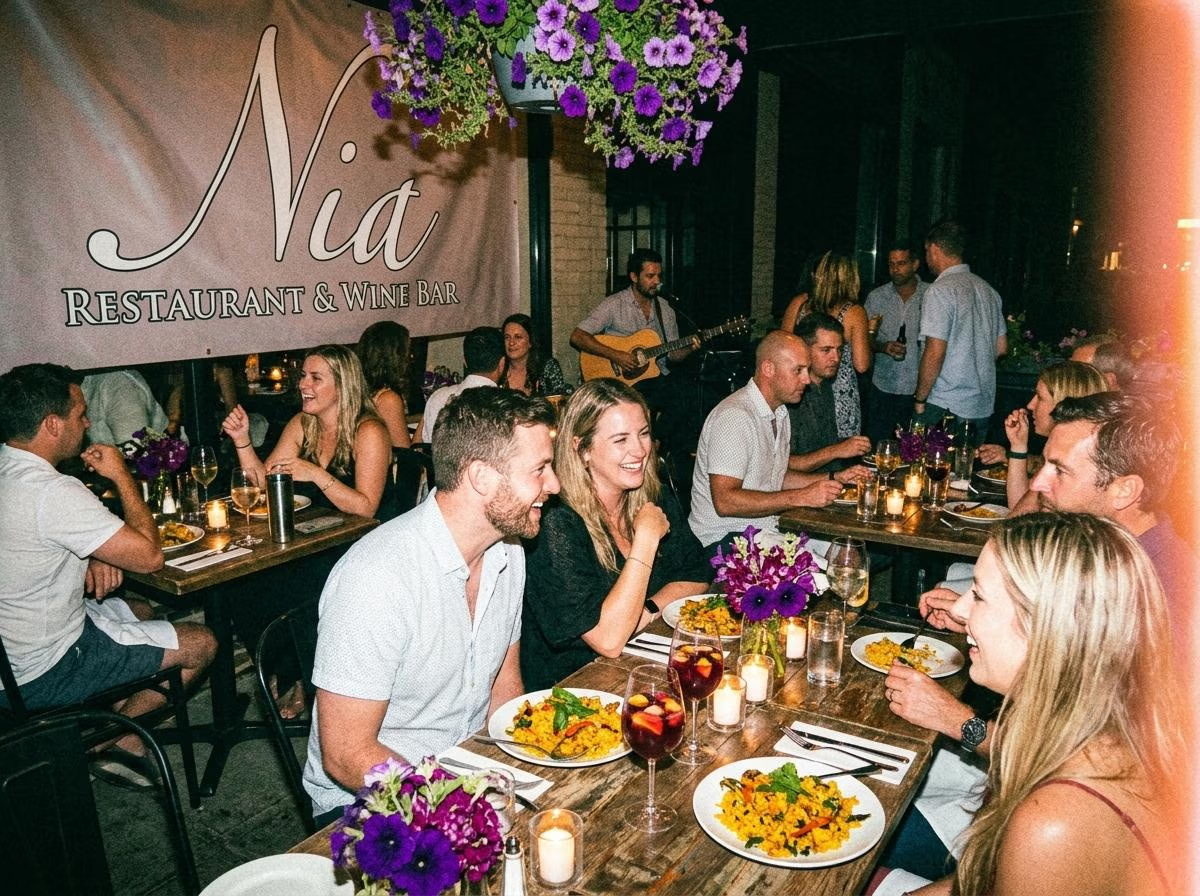
Nia Restaurant & Wine Bar is located at 803 W. Randolph Street in Chicago’s West Loop. Its official site currently describes the restaurant as Mediterranean-inspired with Spanish roots, curated wines, and an intimate dining experience designed around sharing.
Those characteristics overlap with several elements described throughout this guide.
Shared food can make dinner more interactive.
A wine program gives couples who enjoy wine another element to explore.
The West Loop location places the restaurant within a major Chicago dining district.
And Nia currently positions its atmosphere around intimate dining and warm hospitality.
However, this article should not become a long argument that Nia is automatically Chicago’s most romantic restaurant.
That would undermine the informational intent.
Nia should appear as an example of how several romantic-dining principles can exist within one restaurant format.
Readers who specifically want help deciding whether a Mediterranean restaurant is right for their date should continue to the dedicated romantic restaurant-selection guide.
Readers who want a complete West Loop evening should continue to the date-night hub.
23. How Can Diners Tell Whether a Restaurant Will Feel Romantic Before Visiting?
You cannot know everything from a website, but several clues can help.
Look at photographs of the dining room rather than only photographs of food.
Notice table spacing.
Look at seating style.
Pay attention to whether the space appears bar-focused, restaurant-focused, or entertainment-focused.
Read recent reviews specifically for comments about noise, pacing, seating, and service instead of looking only at the overall rating.
Check the menu.
Determine whether dinner is designed to be quick or whether several courses can unfold naturally.
Review reservation times.
An earlier reservation may create a different environment from peak Saturday evening.
And remember that “romantic” is subjective.
The question is not whether hundreds of strangers call the restaurant romantic.
The question is whether its environment matches what you find comfortable.
24. Can a Busy Restaurant Still Be Romantic?
Absolutely.
Busy and romantic are not opposites.
Some couples prefer restaurants with visible energy because the environment makes the evening feel exciting.
What matters is whether the room remains functional for the couple.
Can they hear each other?
Do they have enough personal space?
Does service continue to feel attentive?
Are they able to remain at the table comfortably?
If the answer is yes, a busy restaurant can be extremely romantic.
The goal is not silence.
The goal is controlled energy.
25. Can a Casual Restaurant Be Romantic?
Yes.
Romance does not require formal service, tasting menus, expensive wine, or elaborate décor.
A casual restaurant can feel romantic when couples are comfortable, conversation comes easily, service feels welcoming, and the meal gives them time together.
In some relationships, informality actually improves the evening because neither person feels pressure to behave according to someone else’s idea of a special occasion.
The emotional quality of the evening matters more than the restaurant category.
26. Can Patio Dining Feel Romantic?
Patios can be very romantic when weather, lighting, seating, and street activity cooperate.
Outdoor dining introduces additional sensory elements.
Evening light changes gradually.
City sounds create a different background.
Warm weather can make the meal feel relaxed.
But patios also create variables that indoor dining controls more easily.
Traffic can be loud.
Wind can affect temperature and table comfort.
Rain may change the reservation.
A crowded sidewalk can reduce privacy.
For a casual date, those variables may add charm.
For a heavily planned anniversary, some couples may prefer the predictability of indoor seating.
27. Does a Romantic Restaurant Need Candles?
No.
Candles are one tool among many.
They create warm localized light and have strong cultural associations with romantic dinners.
But a restaurant can achieve the same sense of intimacy through indirect lighting, wall sconces, pendant fixtures, lamps, or architectural design.
Likewise, placing candles on every table cannot rescue a room that is too loud, uncomfortable, rushed, or crowded.
Romantic design works as a system.
28. Does a Romantic Restaurant Need Wine?
No.
Wine may be part of the experience for adults who already enjoy it, but alcohol is not a requirement for romantic dining.
The same atmosphere, pacing, food, and service should work for couples drinking sparkling water, non-alcoholic cocktails, tea, or another beverage.
A restaurant creates the environment.
Couples create the relationship.
29. Does a Romantic Restaurant Need Private Dining?
Usually not.
Private dining solves a different problem.
A romantic dinner for two generally needs only enough privacy to feel comfortable.
Table spacing, acoustics, and seating position usually provide that more naturally than a completely separate room.
If the occasion evolves into a larger event, then private dining becomes relevant.
That topic belongs on the site’s private-event pages rather than becoming a major part of this romantic-atmosphere explainer.
30. Should a Romantic Restaurant Be Quiet?
It should be quiet enough.
Complete silence is not necessary and may even make guests uncomfortable.
People often prefer some surrounding activity because it creates social privacy.
The important threshold is whether couples can speak naturally.
If guests need to lean across the table and repeatedly ask each other to repeat sentences, the room is probably too loud for a conversation-focused dinner.
Romantic acoustics are about balance rather than silence.
31. Why Food Quality Still Matters
Atmosphere cannot compensate indefinitely for disappointing food.
Romantic dining is still dining.
Food should be something guests want to eat, remember, and potentially return for.
However, excellent cuisine is only one component of the experience.
A technically accomplished dish eaten in an uncomfortable environment may create less satisfaction than a simpler dish served within a restaurant where the entire evening feels considered.
That is why restaurant romance is best understood as experience design rather than decoration.
Food, service, sound, lighting, furniture, menu structure, and hospitality all contribute.
Frequently Asked Questions About Romantic Restaurants
What makes a restaurant romantic?
A restaurant generally feels romantic when lighting, acoustics, seating, table spacing, service, pacing, food, and atmosphere work together to support comfort and conversation.
No single feature creates romance on its own.
The strongest romantic restaurants allow couples to focus on each other without being distracted by excessive noise, uncomfortable seating, rushed service, or overcrowding.
Is dim lighting what makes a restaurant romantic?
Dim or warm lighting can contribute to an intimate atmosphere, but darkness alone does not make a restaurant romantic.
Lighting should still allow diners to see menus, food, and each other comfortably.
Acoustics, seating, service, pacing, and privacy are equally important.
Why is noise level important in a romantic restaurant?
Conversation is central to many romantic dinners.
If the room is excessively loud, couples may need to raise their voices or repeatedly ask each other to repeat themselves.
A good romantic restaurant generally maintains enough background activity to feel lively without allowing sound to dominate the conversation.
How important is table spacing for romance?
Table spacing contributes to psychological privacy.
Couples generally feel more comfortable when they are not constantly aware of neighboring conversations or worried that other diners can hear everything they say.
Privacy does not require complete isolation; it requires enough personal space to feel comfortable.
Are booths more romantic than tables?
Not necessarily.
Booths can create enclosure and comfort, while traditional tables may be better for face-to-face conversation.
Bar seats can work especially well for casual dates.
The best seating arrangement depends on the couple and occasion.
Why does service matter in a romantic restaurant?
Service controls much of the meal’s rhythm.
Staff should be available when needed without interrupting conversations unnecessarily.
Well-paced courses, clear menu guidance, timely beverage service, and respectful attention can make a romantic dinner feel natural instead of rushed or overmanaged.
Are shared plates more romantic?
Shared plates can make a meal more interactive because couples select and taste dishes together.
However, they are not automatically more romantic.
Some couples prefer individual entrées, and dietary needs may make sharing less practical.
The best menu format is the one both people enjoy.
Does wine make a restaurant more romantic?
Wine may be part of the traditional romantic-dining ritual for adults who choose to drink, but it does not create romance by itself.
A good wine program can provide another shared experience and complement the food.
Couples who do not drink should be able to enjoy the same romantic atmosphere.
Can a restaurant be romantic without alcohol?
Yes.
Romance comes primarily from atmosphere, comfort, hospitality, food, pacing, and the people sharing the table.
Alcohol is optional.
Can a loud restaurant still be romantic?
Yes, if the room remains comfortable enough for conversation.
Some couples enjoy energetic restaurants.
The issue is not whether a restaurant is busy but whether noise prevents people from hearing each other naturally.
Can a casual restaurant be romantic?
Absolutely.
Romantic dining does not require formal service or high prices.
A casual restaurant can feel romantic when couples are comfortable, food is enjoyable, service is welcoming, and the environment gives them enough space and time to connect.
What makes a restaurant good for a first date?
First dates often benefit from moderate energy, flexible ordering, comfortable conversation, and an environment that does not feel excessively formal.
A restaurant where couples can begin with drinks or small plates and extend the evening naturally can work well.
For complete first-date planning, use the dedicated date-night guide rather than this atmosphere explainer.
Is Mediterranean food good for romantic dining?
Mediterranean-style dining can work well for couples because many menus include dishes designed for sharing, allowing diners to experience several flavors together.
However, cuisine alone does not make a restaurant romantic.
Lighting, acoustics, service, comfort, and pacing still matter.
Is Nia Restaurant romantic?
Nia Restaurant & Wine Bar currently describes its West Loop concept around Mediterranean-inspired food with Spanish roots, curated wines, and intimate dining designed for sharing. It is located at 803 W. Randolph Street, Chicago, IL 60607.
Those characteristics align with several of the romantic-dining elements discussed in this guide.
Whether it feels right for a particular couple still depends on their preferences and the kind of evening they want.
Romance Is the Result of Many Small Decisions
The restaurants people remember romantically are rarely memorable because of one dramatic feature.
They are memorable because many ordinary details disappear into the experience.
The lighting feels warm without becoming impractical.
The music is present without becoming intrusive.
The chairs remain comfortable.
Other diners provide energy without destroying privacy.
Service appears when needed and recedes when conversation takes over.
Food arrives at a natural pace.
The menu gives couples something to explore.
And the room allows people to stay focused on each other.
That is what makes a restaurant romantic.
Not candles alone.
Not expensive wine.
Not dark walls.
Not a “romantic restaurant” label on a search result.
The strongest romantic restaurants create an environment where guests can stop thinking about the restaurant’s mechanics.
Once that happens, the meal stops feeling like a transaction and becomes shared time.
For Nia Restaurant & Wine Bar in Chicago’s West Loop, its Mediterranean-inspired shared-dining format, wine program, and Randolph Street setting provide one example of how some of these elements can come together.
But this page should remain bigger than Nia itself.
Its purpose is to explain why certain dining rooms feel romantic and others do not.
Readers who understand those elements can then make better decisions about first dates, anniversaries, wine-bar evenings, and special dinners without relying entirely on generic “best romantic restaurants” rankings.