Mediterranean cuisine can be confusing the first time you encounter the term because it sounds like one clearly defined cuisine.
It is not.
There is no single Mediterranean menu that represents every country surrounding the Mediterranean Sea. Spanish tapas, Greek grilled seafood, Italian pasta, Lebanese mezze, Turkish kebabs, Provençal vegetable dishes, North African spice combinations, and island cooking traditions can all belong within the much larger Mediterranean culinary world while tasting very different from one another.
That diversity is the most important thing to understand before your first visit to a Mediterranean restaurant.
A restaurant may lean strongly Spanish.
Another may be Greek.
Another may center Levantine food.
Another may combine dishes from several Mediterranean traditions.
And another may describe itself as Mediterranean-inspired, meaning it uses ingredients, preparations, and influences from the region without presenting itself as a traditional restaurant from one specific country.
Nia Restaurant & Wine Bar falls into that final category. Its current site describes the restaurant as Mediterranean-inspired cuisine with Spanish roots, while its live menu combines recognizable Spanish dishes such as patatas bravas, croquetas, pintxos, albóndigas, gambas al ajillo, and shrimp paella with broader Mediterranean ingredients and preparations such as olives, hummus, salmon with pipérade, salads, and other shared plates.
For a first-time diner, that means the goal should not be to memorize every Mediterranean dish before sitting down.
It is much more useful to understand:
what the term Mediterranean cuisine actually covers;
how regional styles differ;
why menus often include several dishes designed for sharing;
what unfamiliar words such as tapas, mezze, pintxos, or paella mean;
how ingredients such as olive oil, tomato, peppers, herbs, citrus, seafood, legumes, and cheese are used;
and how to build a meal without ordering either far too little or far too much.
This guide provides that foundation.
What Is Mediterranean Cuisine?
Mediterranean cuisine is an umbrella term for food traditions associated with countries and communities around the Mediterranean Sea.
It includes parts of:
Southern Europe;
the Adriatic and Balkan Mediterranean;
the Eastern Mediterranean;
the Levant;
North Africa;
and numerous Mediterranean islands.
That geography alone should make it clear why Mediterranean cuisine cannot be reduced to one flavor profile.
Spain and Lebanon are both connected to the Mediterranean.
Their cuisines are not interchangeable.
Italy and Morocco both belong to the region.
Their traditional dishes, spices, breads, cooking techniques, and dining customs can be dramatically different.
Greece, Turkey, southern France, Tunisia, Cyprus, Croatia, Egypt, and other Mediterranean areas each contribute additional culinary traditions.
When restaurants outside the region use the term Mediterranean, they are usually describing either a particular regional tradition or a menu influenced by several of them.
The Most Important Rule: Mediterranean Is Not One National Cuisine
One of the easiest mistakes for first-time diners is assuming Mediterranean food means Greek food.
Another is assuming it means Italian food.
Neither is correct.
Greek and Italian cuisines are both Mediterranean, but they represent only part of the region.
Similarly, hummus is not a universal Mediterranean dish served throughout Spain, France, and Italy.
Tapas is not a universal Mediterranean word for every small plate.
Paella does not represent all Spanish food, much less all Mediterranean food.
And olive oil alone does not turn a dish into Mediterranean cuisine.
The word is useful because there are shared geographic histories, ingredients, agricultural traditions, and patterns of exchange across the region.
But those connections exist alongside major differences.
A useful Mediterranean restaurant should make those influences clearer rather than presenting the entire region as though it has one menu.
A Simple Way to Understand the Main Mediterranean Food Regions
There are many ways to divide Mediterranean cuisines, and no short classification captures every cultural boundary perfectly.
For a first-time diner, however, thinking in a few broad culinary regions can make menus much easier to understand.
Mediterranean cuisine has become one of the most celebrated culinary traditions in the world, admired not only for its vibrant flavors but also for the philosophy that surrounds every meal. Unlike many dining styles that focus primarily on individual dishes, Mediterranean cuisine represents an entire way of experiencing food. It brings together fresh ingredients, centuries-old traditions, regional diversity, family gatherings, and a culture that values conversation just as much as cooking. For many first-time diners, however, the experience can also feel unfamiliar. Menus often introduce ingredients, cooking methods, and dish names that are new, leaving guests wondering where to begin and what makes Mediterranean food so distinctive.
The answer lies in understanding that Mediterranean cuisine is not the product of one country or one culture.
Instead, it is the collective culinary heritage of dozens of civilizations that have flourished around the Mediterranean Sea for thousands of years. Countries including Greece, Spain, Italy, Turkey, Lebanon, Morocco, Egypt, France, and several others have each contributed ingredients, techniques, traditions, and regional specialties that together form one of the richest culinary landscapes anywhere in the world. Although each region maintains its own unique identity, they all share a common appreciation for fresh produce, seasonal cooking, quality olive oil, aromatic herbs, seafood, grilled meats, artisan breads, and meals designed to bring people together.
This shared philosophy is one of the reasons Mediterranean cuisine continues growing in popularity across major cities around the world, including Chicago.
Today’s diners increasingly seek experiences rather than simply meals. They want restaurants where hospitality feels genuine, ingredients are prepared with care, and dining encourages meaningful conversation rather than hurried service.
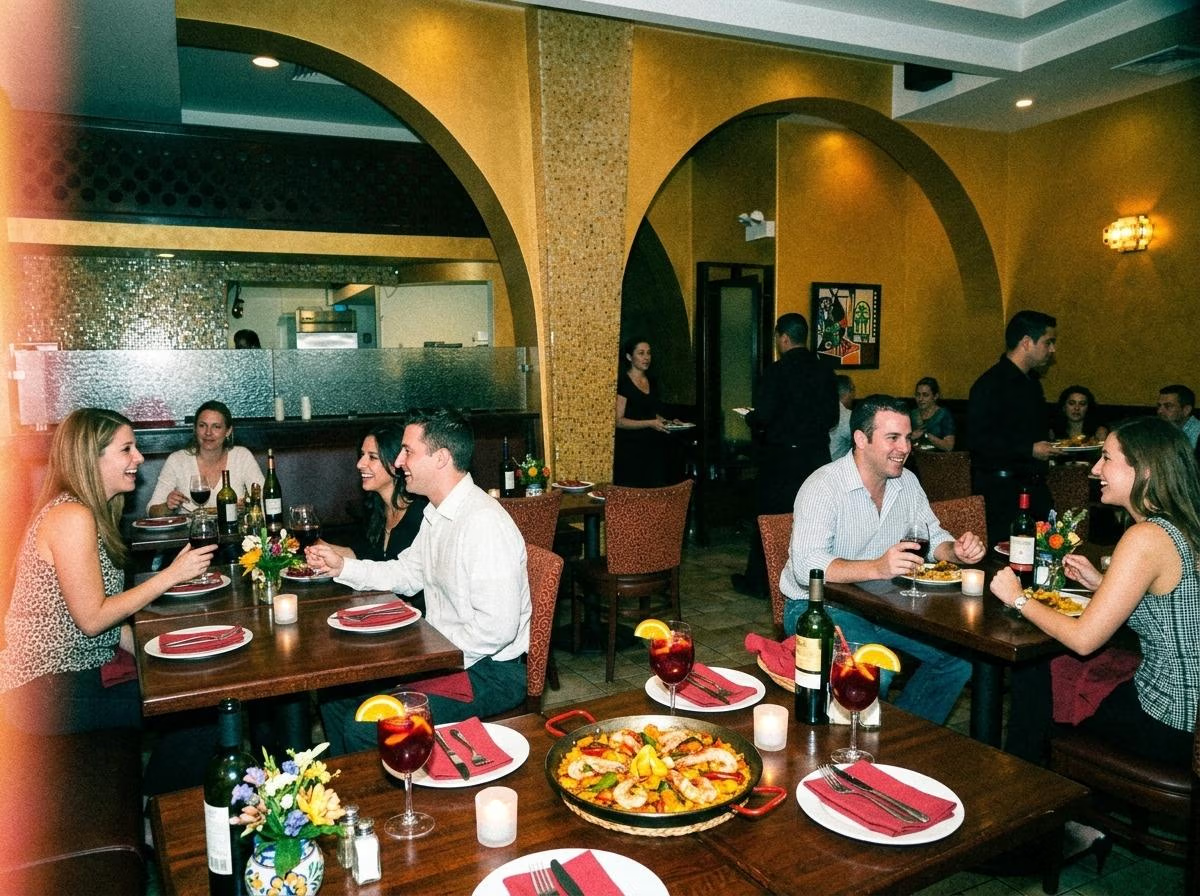
Mediterranean restaurants naturally align with these expectations because their traditions have always emphasized generosity, sharing, and enjoying food at a relaxed pace. Meals unfold gradually through multiple courses, allowing guests to appreciate each ingredient while spending time with family, friends, or colleagues around the table.
For first-time visitors, this approach can feel refreshingly different from more conventional dining experiences.
Rather than immediately choosing an entrée, many Mediterranean meals begin with an assortment of mezze—small dishes designed to be shared by everyone at the table. Freshly baked bread arrives alongside flavorful dips, marinated vegetables, artisan cheeses, olives, roasted peppers, and seasonal specialties. These opening courses encourage guests to sample multiple flavors while naturally creating conversation before larger dishes arrive. Instead of rushing toward the main course, every stage of the meal becomes an opportunity to discover something new.
Quick Answer
Mediterranean cuisine is a diverse culinary tradition inspired by the countries surrounding the Mediterranean Sea. Rather than representing a single style of cooking, it combines regional influences from Southern Europe, North Africa, and the Eastern Mediterranean while emphasizing fresh vegetables, olive oil, seafood, grilled meats, legumes, herbs, whole grains, artisan breads, and seasonal ingredients. Beyond the food itself, Mediterranean dining celebrates hospitality, sharing, conversation, and enjoying meals at a relaxed pace, making it one of the world’s most admired and enduring culinary traditions.
One of the greatest misconceptions about Mediterranean food is the belief that it refers to only Greek cuisine or only Italian cuisine.
In reality, Mediterranean cooking encompasses an extraordinary variety of regional traditions that have influenced one another for centuries through trade, migration, and cultural exchange. Spanish tapas, Lebanese mezze, Turkish kebabs, Greek seafood, Moroccan spices, Italian olive oils, and French coastal cooking all contribute unique characteristics while remaining connected through shared ingredients and cooking philosophies.
Another defining feature of Mediterranean cuisine is its commitment to seasonality.
Rather than relying heavily on processed ingredients, traditional Mediterranean cooking emphasizes vegetables harvested at their peak, freshly caught seafood, premium olive oils, fragrant herbs, legumes, citrus fruits, artisan cheeses, and carefully selected spices. This focus on freshness allows simple ingredients to produce remarkably complex flavors without unnecessary preparation or excessive seasoning.
The following table highlights several of the characteristics that define Mediterranean cuisine.
| Characteristic | Why It Matters |
| Fresh Seasonal Ingredients | Creates vibrant flavors while reflecting regional harvests. |
| Olive Oil as a Foundation | Adds richness while serving as one of the defining ingredients of Mediterranean cooking. |
| Shared Dining Culture | Encourages conversation, generosity, and connection around the table. |
| Regional Diversity | Combines culinary traditions from multiple Mediterranean countries. |
| Simple Cooking Techniques | Allows high-quality ingredients to remain the focus of every dish. |
| Hospitality-Centered Dining | Treats meals as social experiences rather than simply eating. |
Modern diners are increasingly attracted to Mediterranean restaurants because these traditions align naturally with contemporary lifestyles. People want food that feels authentic, thoughtfully prepared, and enjoyable without unnecessary complexity. They also appreciate dining experiences that encourage connection rather than rushing through meals. Mediterranean cuisine satisfies both desires by combining centuries of culinary knowledge with timeless hospitality principles that remain just as relevant today as they were generations ago.
Understanding Mediterranean cuisine therefore begins not with memorizing menu items but with appreciating the philosophy behind them. Every ingredient, every shared plate, every carefully prepared dish, and every course reflects a tradition built around bringing people together. Whether guests are enjoying a casual lunch, celebrating a special occasion, exploring new flavors for the first time, or gathering with family and friends, Mediterranean dining offers an experience where exceptional food and meaningful hospitality become inseparable.
Throughout this guide, we will explore the history of Mediterranean cuisine, the ingredients that define its identity, the cultural traditions behind its most popular dishes, the health benefits associated with this style of eating, and what first-time visitors can expect when dining at a Mediterranean restaurant. By understanding not only what appears on the plate but also the centuries of tradition behind every meal, diners can approach their first Mediterranean dining experience with greater confidence, curiosity, and appreciation for one of the world’s most influential culinary cultures.
The History and Philosophy Behind Mediterranean Cuisine
One of the reasons Mediterranean cuisine continues to captivate diners around the world is that it represents far more than a collection of recipes. Every dish served today reflects thousands of years of cultural exchange, regional traditions, agricultural knowledge, and family customs that have been carefully preserved across generations. Unlike many modern food trends that evolve over relatively short periods, Mediterranean cuisine has developed gradually through centuries of history, influenced by civilizations that viewed food not simply as nourishment but as an essential part of everyday life, hospitality, and community.
The Mediterranean Sea has long served as one of history’s most important crossroads.
For thousands of years, merchants, travelers, explorers, and civilizations moved across these waters, bringing with them ingredients, spices, cooking techniques, and culinary traditions that gradually blended together. Ancient Greeks, Romans, Phoenicians, Egyptians, Ottomans, Arabs, Spaniards, Italians, French, and North African cultures all contributed unique influences that continue shaping Mediterranean cuisine today. Rather than replacing one another, these traditions evolved together, creating remarkable culinary diversity while maintaining a shared appreciation for freshness, simplicity, and balance.
This rich cultural heritage explains why Mediterranean cuisine cannot be reduced to one country’s food.
Greek cuisine emphasizes fresh seafood, olive oil, herbs, yogurt, and grilled meats. Spain contributes tapas, saffron-infused rice dishes, cured meats, and vibrant seafood traditions. Italy introduces handcrafted pasta, regional cheeses, tomatoes, and olive oils that vary dramatically from one region to another. Lebanon offers mezze, hummus, labneh, fresh herbs, and aromatic spices. Turkey adds grilled kebabs, artisan breads, and flavorful vegetable dishes, while Morocco introduces fragrant spices, preserved lemons, and slow-cooked specialties. Although each region possesses its own culinary identity, they remain connected through common ingredients and a shared philosophy that celebrates gathering around the table.
The remarkable diversity of Mediterranean cuisine demonstrates that its greatest strength lies not in uniformity but in its ability to unite different traditions through common values.
Perhaps the most defining characteristic is hospitality.
Across Mediterranean cultures, welcoming guests has always been viewed as a reflection of generosity and respect. Meals are rarely treated as hurried obligations. Instead, they become opportunities to strengthen relationships, celebrate milestones, exchange stories, and spend uninterrupted time together. The table becomes a place where conversation develops naturally, often continuing long after the final course has been served.
This philosophy remains just as relevant today as it was centuries ago.
In today’s fast-paced world, where many meals are consumed quickly between meetings or eaten while multitasking, Mediterranean dining offers a refreshing alternative. Guests are encouraged to slow down, appreciate carefully prepared ingredients, enjoy multiple courses, and focus on the people sharing the meal rather than simply finishing it. This slower rhythm transforms dining into an experience rather than a routine activity.
The following table highlights several historical influences that continue shaping Mediterranean cuisine today.
| Historical Influence | Lasting Impact on Mediterranean Cuisine |
| Ancient Greek Civilization | Olive oil, seafood traditions, communal dining, fresh herbs |
| Roman Empire | Agricultural expansion, wine culture, bread making, regional trade |
| Arab Influence | Spices, citrus fruits, rice, almonds, preserved ingredients |
| Ottoman Empire | Grilled meats, kebabs, layered pastries, shared dining traditions |
| Spanish & North African Exchange | Saffron, seafood, spices, rice dishes, tapas culture |
| Coastal Mediterranean Regions | Fresh fish, seasonal vegetables, locally sourced ingredients |
Another defining aspect of Mediterranean cuisine is its respect for ingredients.
Rather than relying on heavy sauces or complicated preparation methods, traditional Mediterranean cooking allows each ingredient to retain its natural character. Fresh tomatoes, extra virgin olive oil, herbs such as oregano, thyme, rosemary, basil, and parsley, seasonal vegetables, citrus fruits, artisan cheeses, legumes, seafood, and premium meats are prepared using techniques that enhance rather than overpower their flavor. Grilling, roasting, baking, slow cooking, and simple seasoning remain preferred methods because they preserve texture while highlighting freshness.
This approach reflects centuries of agricultural tradition.
Communities surrounding the Mediterranean historically relied on ingredients grown locally and harvested according to the seasons. Farmers, fishermen, bakers, cheesemakers, and olive growers all contributed directly to local food culture, creating meals built around availability rather than industrial production. Even today, many Mediterranean restaurants continue embracing this philosophy by emphasizing seasonal menus, carefully sourced ingredients, and recipes inspired by regional traditions.
Equally important is the role of shared dining.
Unlike dining styles where each guest orders a completely separate meal, Mediterranean cuisine often encourages multiple dishes placed at the center of the table. Mezze, artisan breads, olives, roasted vegetables, seafood, cheeses, grilled specialties, and desserts become experiences shared collectively. This encourages conversation, discovery, and interaction while allowing guests to experience a wider range of flavors throughout the meal.
The following table illustrates several core principles that continue defining Mediterranean dining today.
| Mediterranean Philosophy | Why It Matters |
| Fresh Seasonal Produce | Delivers vibrant flavor while respecting natural growing cycles. |
| Shared Meals | Encourages conversation, generosity, and stronger social connections. |
| Simple Cooking Techniques | Highlights ingredient quality rather than excessive preparation. |
| Hospitality First | Treats every guest as an honored visitor rather than simply a customer. |
| Regional Authenticity | Preserves traditional recipes while celebrating local diversity. |
| Balanced Dining Experience | Combines exceptional food, relaxed pacing, and meaningful interaction. |
These principles explain why Mediterranean cuisine continues attracting diners from every part of the world. While recipes naturally evolve and restaurants introduce contemporary interpretations, the underlying philosophy remains remarkably consistent. Fresh ingredients, thoughtful preparation, generous hospitality, and shared experiences continue defining every meal regardless of whether it is enjoyed in a coastal village overlooking the Mediterranean Sea or within a modern restaurant in Chicago’s West Loop.
Understanding this history allows diners to appreciate Mediterranean cuisine from a broader perspective. Every shared appetizer, carefully grilled seafood dish, artisan bread, seasonal vegetable, handcrafted dessert, and thoughtfully selected wine represents generations of culinary tradition shaped by cultures that viewed food as an expression of community rather than simply nourishment. That enduring philosophy is precisely what continues making Mediterranean cuisine one of the world’s most respected, welcoming, and timeless dining experiences.
What to Expect During Your First Mediterranean Dining Experience
For many people, visiting a Mediterranean restaurant for the first time is an exciting opportunity to explore one of the world’s most celebrated culinary traditions. At the same time, it can also feel slightly unfamiliar. Menus often introduce regional specialties, traditional cooking techniques, and ingredients that differ from those found in more familiar dining experiences. Questions naturally arise about where to begin, which dishes to order, whether meals are designed to be shared, and how Mediterranean dining differs from the conventional restaurant experience. Fortunately, one of the defining characteristics of Mediterranean hospitality is that every guest—whether visiting for the first time or returning regularly—is welcomed with warmth, generosity, and a genuine desire to create a memorable experience.
Unlike many dining styles where guests immediately select individual appetizers and entrées, Mediterranean meals often begin with a collection of smaller dishes that gradually introduce the flavors of the region. This approach reflects centuries of culinary tradition in which meals are viewed as social occasions rather than hurried routines. Families and friends gather around the table, enjoying conversation while tasting a variety of freshly prepared dishes before progressing naturally toward larger courses. The meal develops gradually, allowing everyone to appreciate both the cuisine and the company surrounding the table.
One of the first experiences many guests encounter is mezze.
Mezze refers to an assortment of small plates served at the beginning of the meal, offering an introduction to the diversity of Mediterranean flavors. Freshly baked artisan bread accompanies creamy hummus, smoky baba ganoush, marinated olives, roasted vegetables, labneh, seasonal salads, stuffed grape leaves, and other regional specialties depending on the restaurant’s culinary focus. Rather than treating appetizers as individual selections, mezze encourages sharing, discussion, and exploration, allowing every guest to sample multiple dishes instead of committing to only one.
This communal style of dining changes the rhythm of the evening in meaningful ways.
Instead of concentrating entirely on individual plates, guests naturally interact throughout the meal. They recommend favorite dishes, compare flavors, discuss ingredients, and enjoy discovering new combinations together. Conversation develops effortlessly because every course introduces something different to experience collectively. This slower pace is one of the defining characteristics that distinguishes Mediterranean dining from more conventional restaurant formats.
The following table outlines how a traditional Mediterranean dining experience often unfolds.
| Stage of the Meal | What Guests Can Expect |
| Welcome & Seating | Warm hospitality and a relaxed atmosphere designed to encourage conversation. |
| Mezze & Shared Starters | Fresh dips, artisan bread, olives, seasonal vegetables, and regional specialties served for sharing. |
| Main Courses | Grilled seafood, premium meats, vegetarian specialties, fresh pasta, or seasonal regional dishes. |
| Wine or Beverage Pairings | Carefully selected wines, handcrafted cocktails, or specialty beverages that complement the cuisine. |
| Desserts | Traditional Mediterranean sweets prepared with ingredients such as honey, pistachios, citrus, or seasonal fruits. |
| Relaxed Conclusion | Guests are encouraged to enjoy the experience without feeling rushed, reflecting Mediterranean hospitality traditions. |
Freshness remains another defining element throughout the dining experience.
Mediterranean cuisine has long emphasized seasonal ingredients rather than heavily processed foods. Vegetables harvested at their peak, fragrant herbs, premium olive oil, freshly caught seafood, artisan cheeses, legumes, citrus fruits, and carefully sourced meats all contribute to menus that celebrate natural flavors. Rather than masking ingredients beneath rich sauces or excessive seasoning, chefs often prepare dishes using simple techniques that allow every component to retain its individual character.
This philosophy extends to cooking methods as well.
Grilling, roasting, baking, braising, and slow cooking remain among the most commonly used techniques because they preserve texture while enhancing natural flavor. Olive oil frequently replaces heavier fats, while herbs such as oregano, rosemary, thyme, parsley, basil, dill, and mint provide complexity without overwhelming the ingredients themselves. The result is cuisine that feels vibrant, balanced, and deeply connected to the regions from which it originates.
Wine also occupies an important place within Mediterranean dining traditions.
Across many Mediterranean countries, wine has historically accompanied meals rather than standing apart from them. Thoughtfully selected pairings complement seafood, grilled meats, fresh vegetables, artisan cheeses, and desserts while contributing to the relaxed pace that defines the overall experience. For guests who prefer non-alcoholic beverages, many restaurants offer handcrafted mocktails, sparkling refreshments, fresh juices, and Mediterranean-inspired drinks that provide equally enjoyable pairings.
The following table highlights several menu categories first-time diners frequently encounter.
| Menu Category | Typical Mediterranean Experience |
| Mezze | Shared appetizers introducing multiple regional flavors. |
| Fresh Salads | Seasonal vegetables, herbs, olive oil, cheeses, and citrus dressings. |
| Seafood Specialties | Simply prepared fish, shrimp, octopus, or shellfish emphasizing freshness. |
| Grilled Meats | Lamb, chicken, beef, or kebabs seasoned with herbs and spices. |
| Vegetarian Selections | Legumes, roasted vegetables, grains, cheeses, and traditional plant-based dishes. |
| Traditional Desserts | Honey-based pastries, fresh fruit, pistachios, yogurt desserts, and regional sweets. |
Perhaps the greatest surprise for first-time visitors is discovering that Mediterranean dining is as much about atmosphere as it is about cuisine.
Guests are rarely encouraged to rush through their meals. Instead, attentive hospitality, carefully paced service, inviting interiors, and thoughtfully prepared dishes create an environment where conversations naturally become the centerpiece of the evening. Meals unfold comfortably, allowing guests to appreciate every course without feeling pressured to finish quickly. This relaxed approach reflects generations of Mediterranean culture where dining has always represented an opportunity to strengthen relationships through shared experiences.
For many diners, the first visit to a Mediterranean restaurant becomes the beginning of a much deeper appreciation for this remarkable culinary tradition. Beyond introducing new flavors, it offers an entirely different perspective on hospitality, community, and the simple pleasure of gathering around a table. Whether celebrating a special occasion, enjoying a casual dinner with friends, or exploring Mediterranean cuisine for the very first time, guests often discover that the experience extends well beyond the food itself. It is the combination of authentic ingredients, centuries of culinary heritage, warm hospitality, and meaningful conversation that continues making Mediterranean dining one of the world’s most admired and enduring food cultures.
Western Mediterranean: Spain and Southern France
Spanish Mediterranean cooking contributes some of the dishes international diners most readily recognize.
These can include:
tapas;
pintxos;
paella and other rice dishes;
croquetas;
patatas bravas;
gambas al ajillo;
cured meats;
olives;
seafood;
tomato-based dishes;
saffron;
peppers;
and grilled foods.
Southern French Mediterranean traditions bring another set of preparations involving seafood, vegetables, herbs, olive oil, garlic, tomato, and regional specialties.
Even within Spain itself, regional differences are substantial.
Basque food is not identical to Catalan food.
Valencian rice traditions are not identical to Andalusian cooking.
So when a restaurant says it has Spanish roots, it is more useful to examine the actual dishes than assume one unified Spanish style.
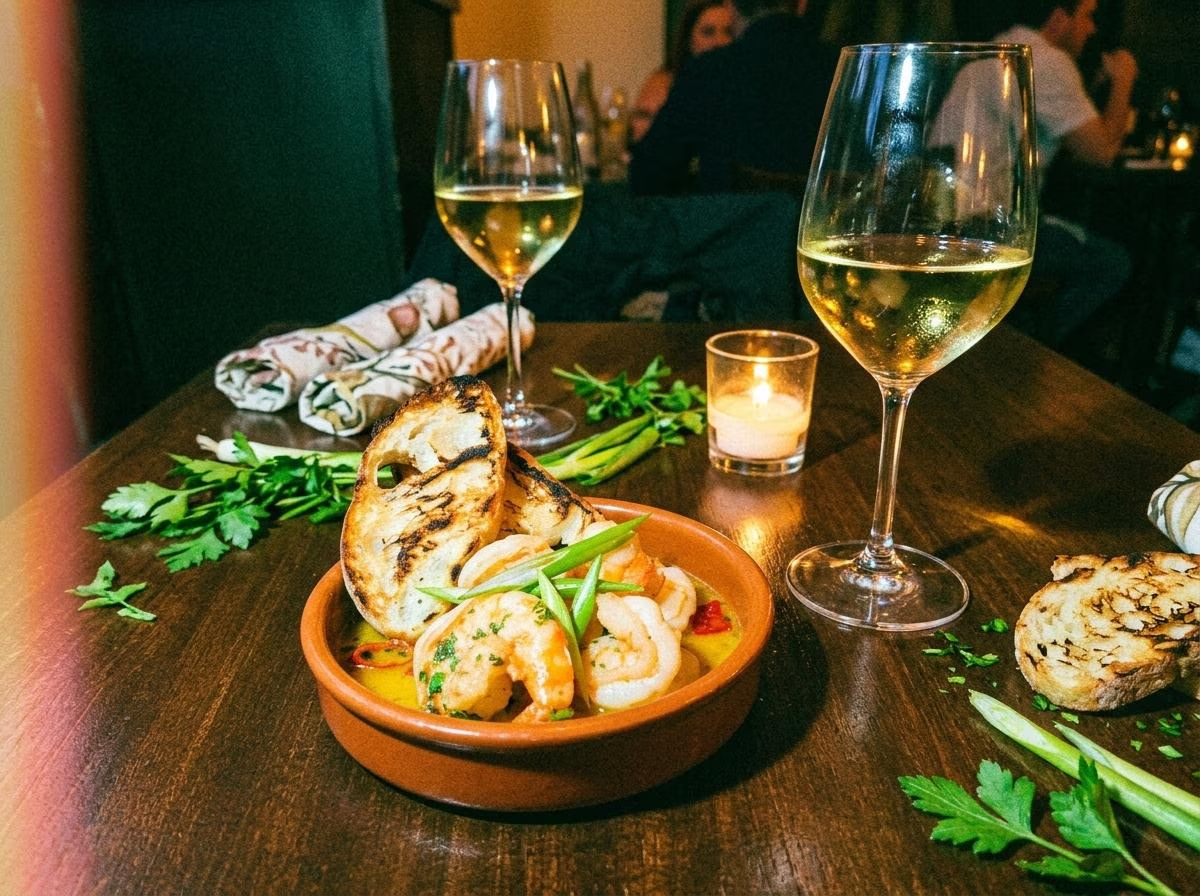
At Nia, current Spanish-rooted examples include patatas bravas, ham-and-cheese croquetas, chicken and beef pintxos, albóndigas, gambas al ajillo, shrimp paella, and a pan-con-tomate-inspired crostini.
Italy and the Central Mediterranean
Italian cuisine is itself extremely regional.
Northern and southern Italy can differ substantially in grains, pasta shapes, sauces, cheeses, vegetables, seafood, meats, and fats.
Mediterranean Italian cooking may bring to mind:
tomato;
olive oil;
seafood;
vegetables;
pasta;
breads;
cheese;
citrus;
herbs;
and regional wines.
But describing all Italian cuisine as one Mediterranean template would erase many local differences.
For first-time diners, the important point is simply that pasta and pizza can exist within Mediterranean food culture, but Mediterranean cuisine is much larger than pasta and pizza.
Nia currently serves several artisan pizzas alongside Spanish and broader Mediterranean small plates, illustrating how modern Mediterranean-inspired restaurants may cross traditional category lines rather than reproduce a single country’s menu.
Greece and the Aegean
Greek cooking is another major Mediterranean tradition.
Common ingredients and dishes can involve:
olive oil;
seafood;
grilled meats;
yogurt;
cheese;
lemon;
herbs;
vegetables;
beans;
grains;
breads;
and olives.
But again, Greece contains regional and island differences of its own.
A Greek seafood dish and a Spanish garlic-shrimp dish may share olive oil and seafood while tasting completely different.
This is why ingredient overlap does not mean cultural sameness.
Eastern Mediterranean and Levantine Traditions
Eastern Mediterranean and Levantine menus often introduce diners to dishes such as:
hummus;
labneh;
baba ganoush;
flatbreads;
grilled meats;
herb-rich salads;
legumes;
yogurt-based preparations;
tahini;
stuffed vegetables;
and collections of small dishes commonly discussed through mezze.
These traditions are particularly important because American restaurant marketing often uses Mediterranean as shorthand for hummus, pita, falafel, and grilled proteins.
Those foods are part of the Mediterranean culinary landscape.
They are not the entire landscape.
Nia’s current menu, for example, includes rosemary hummus with crisp cauliflower, but that one dish does not turn the restaurant into a Levantine restaurant.
Turkey and the Eastern Aegean
Turkish cuisine connects Europe and Asia and includes an enormous range of dishes involving:
grilled meats;
vegetables;
yogurt;
breads;
seafood;
eggplant;
legumes;
pastries;
herbs;
and small shared dishes.
Some dishes overlap conceptually with neighboring Greek, Balkan, Levantine, and Middle Eastern food traditions while retaining distinctly Turkish preparations and terminology.
The lesson for a first-time diner is that overlapping ingredients do not erase regional identity.
North African Mediterranean Traditions
The southern coast of the Mediterranean introduces another major culinary world.
North African Mediterranean cuisines can use:
couscous;
preserved citrus;
tomato;
peppers;
chickpeas;
lamb;
seafood;
olives;
nuts;
dried fruits;
aromatic spices;
and slow-cooked preparations.
Moroccan, Tunisian, Algerian, Egyptian, and neighboring traditions should not be treated as one interchangeable cuisine, but they demonstrate how limited the familiar stereotype of “olive oil, hummus, and Greek salad” really is.
Mediterranean cuisine can be fresh and herb-driven.
It can also be deeply spiced, slow-cooked, smoky, rich, or intensely savory.
The Mediterranean Is Connected by Exchange, Not Uniformity
Centuries of trade, migration, empire, agriculture, religion, travel, and cultural exchange have moved ingredients and cooking ideas around the Mediterranean.
That helps explain why similar ingredients repeatedly appear in places that maintain very different culinary identities.
Olives appear across many regions.
So do breads.
Seafood matters to many coastal communities.
Tomato became central to multiple Mediterranean cuisines after its arrival from the Americas.
Rice traditions developed in several areas.
Citrus, spices, nuts, legumes, grains, and cheeses moved through complex historical networks.
What emerged was not one Mediterranean cuisine.
It was a region of cuisines constantly influencing one another while remaining locally distinctive.
That nuance is more accurate than claiming that every Mediterranean culture shares one timeless dining philosophy.
What Ingredients Are Common in Mediterranean Cooking?
There is no mandatory ingredient list.
However, several categories appear frequently across different Mediterranean cuisines.
You may encounter:
olive oil;
olives;
tomatoes;
peppers;
eggplant;
onions;
garlic;
leafy vegetables;
beans and lentils;
chickpeas;
rice and other grains;
bread;
nuts and seeds;
fish and shellfish;
lamb;
chicken;
beef;
yogurt;
regional cheeses;
citrus;
herbs;
and spices.
The exact combinations depend on place.
A Spanish dish might combine shrimp, garlic, olive oil, chili, and wine.
A Levantine dish may combine chickpeas, tahini, lemon, and garlic.
A North African preparation may combine vegetables or meat with spices and preserved lemon.
A Greek dish may combine yogurt, herbs, olive oil, and grilled protein.
The value of a first-time cuisine guide is showing the range.
The detailed question what do individual Mediterranean ingredients contribute? should remain on Nia’s separate Mediterranean Ingredient Guide rather than being repeated completely here.
Olive Oil Is Important, but It Is Not the Whole Cuisine
Olive oil is strongly associated with Mediterranean food because olive cultivation has deep roots in many parts of the region.
It may be used to:
cook vegetables;
dress salads;
carry garlic or herbs;
finish seafood;
dress bread;
or add richness to legumes and grains.
But not every Mediterranean dish is built around olive oil.
Different regions and dishes may also use dairy fats, animal fats, or other cooking methods.
A first-time diner should therefore think of olive oil as an important recurring ingredient rather than a universal test of authenticity.
For a deeper explanation of olive oil and other ingredients, use Nia’s dedicated ingredient guide.
Herbs and Spices Are Region-Specific
Restaurant copy often describes Mediterranean cuisine vaguely as using “fresh herbs and spices.”
That is true but not particularly informative.
The interesting question is which herbs and spices.
Basil, parsley, oregano, rosemary, thyme, mint, dill, cilantro, saffron, paprika, cumin, cinnamon, fennel, chili, and many others can appear across the Mediterranean.
They do not all appear together.
A Spanish paella may use saffron.
A Greek preparation might rely more strongly on oregano and lemon.
A Levantine salad may emphasize parsley and mint.
A North African dish may develop through cumin, coriander, chili, or warm spices.
This is another reason Mediterranean cuisine should be understood regionally rather than as one generic seasoning profile.
How Is Mediterranean Food Usually Cooked?
There is no single Mediterranean cooking technique.
Common methods across different regional cuisines include:
grilling;
roasting;
baking;
pan-searing;
sautéing;
braising;
slow cooking;
frying;
poaching;
stewing;
and cooking with grains or rice.
The current version of Nia’s Mediterranean cuisine article repeatedly suggests Mediterranean cooking generally avoids heavy sauces and relies primarily on simple preparations. That is too broad. Mediterranean cuisines include both extremely simple dishes and rich sauces, fried foods, slow-cooked dishes, pastries, cheese-heavy preparations, and elaborate recipes.
A better principle is:
Technique depends on the dish and region.
A grilled fish and a slow-cooked North African dish can both be Mediterranean.
Neither needs to resemble the other.
What Are Small Plates?
Many Mediterranean restaurants use small plates, but small plates are not uniquely Mediterranean.
The term simply describes a portion and menu format.
A restaurant may encourage the table to order several dishes rather than giving every person one large entrée.
That format allows diners to experience more variety.
However, different Mediterranean cultures have their own terminology and traditions.
Two words in particular need to remain distinct:
tapas
and
mezze.
What Are Tapas?
Tapas belongs specifically to Spanish culinary culture.
Tapas can include small portions such as:
patatas bravas;
croquetas;
gambas al ajillo;
olives;
meatballs;
seafood;
cured meats;
cheese;
and numerous regional specialties.
Modern restaurants may serve tapas as individual bites, appetizers, or enough dishes to create a full meal.
Nia already has a dedicated Best Tapas in Chicago guide responsible for explaining tapas, pintxos, Spanish small plates, and local Chicago restaurant comparisons.
This broad Mediterranean cuisine guide should therefore introduce the term and move on.
What Is Mezze?
Mezze describes a shared-dish tradition found across parts of the Eastern Mediterranean, Middle East, and neighboring regions.
It may include:
dips;
bread;
olives;
salads;
vegetables;
cheese;
legumes;
seafood;
or grilled proteins.
Nia already has a much deeper Mediterranean Small Plates Explained: A Complete Guide to Mezze Dining article. The existing mezze page specifically focuses on the meaning, history, food categories, and social format of mezze.
This page should not compete with it.
The simplest distinction for first-time diners is:
Tapas = Spanish.
Mezze = Eastern Mediterranean / Middle Eastern shared-dish traditions.
Small plates = broad restaurant format.
What Are Pintxos?
Pintxos are particularly associated with northern Spain and Basque food culture.
They are often smaller bites and may involve bread, skewers, meat, seafood, peppers, cheese, or other ingredients.
Nia’s current menu lists chicken pintxos and beef pintxos.
If you see pintxos on a menu, do not assume it is simply another word for all Mediterranean appetizers.
It signals a specifically Spanish regional influence.
What Is Paella?
Paella is a Spanish rice dish with roots in Valencia.
Different versions may feature meat, vegetables, seafood, or modern restaurant combinations.
Nia currently offers a shrimp paella made with saffron rice, shrimp, peas, peppers, parsley, extra-virgin olive oil, and lemon.
That dish should not be used here as an excuse to reproduce the entire history of paella.
Nia’s separate Best Paella in Chicago guide owns the deeper questions about Valencian paella, seafood paella, socarrat, rice, and Chicago paella options.
For a first-time diner, it is enough to know that paella is a Spanish rice tradition rather than a general Mediterranean rice category.
Do Mediterranean Restaurants Always Serve Mezze First?
No.
This is another overgeneralization in the current article.
The live version states that many Mediterranean meals begin with mezze and then treats that format almost as though it defines the Mediterranean restaurant experience.
That may be appropriate in certain Eastern Mediterranean or Levantine restaurant contexts.
It is not a universal Mediterranean sequence.
A Spanish restaurant may begin with tapas.
An Italian meal follows different course traditions.
A Mediterranean-inspired restaurant may simply list small plates without using either term.
Nia’s current menu uses the heading small plates, not a universal mezze progression.
The first-time diner should therefore follow the restaurant’s own menu structure rather than expecting every Mediterranean meal to work the same way.
How Should You Order at a Mediterranean Restaurant for the First Time?
Begin by identifying what kind of Mediterranean restaurant you are visiting.
Is the restaurant:
Greek?
Spanish?
Lebanese?
Turkish?
Italian?
North African?
or broadly Mediterranean-inspired?
That immediately gives the menu more context.
Next, look at how the menu is structured.
Does it emphasize small plates?
Does it have starters and entrées?
Does it offer a tasting menu?
Are dishes described as family-style?
Does the restaurant recommend sharing?
Then ask a simple question:
Do we want to taste several things, or does everyone want their own main dish?
There is no rule saying Mediterranean dining must involve sharing.
Sharing works beautifully for some groups.
Other diners prefer individual dishes.
The restaurant format should guide you.
A Beginner-Friendly Way to Build a Shared Meal
If the restaurant uses shared plates, try creating contrast.
Do not order five dishes that are all fried, all meat-heavy, or all based on the same sauce.
A balanced progression may include:
something simple or fresh;
something vegetable-driven;
something crisp or fried;
something seafood- or protein-based;
and one more substantial dish if the table needs it.
At Nia today, two diners might begin with olives or a sourdough crostini, add crisp cauliflower or patatas bravas, choose gambas or pintxos, and then decide whether shrimp paella, salmon, pizza, or another dish is needed.
That is only one possible progression.
The point is variety.
Should You Order Everything at Once?
Not necessarily.
Small-plate menus can make over-ordering surprisingly easy.
Each individual dish looks manageable.
Then six or eight plates arrive simultaneously and there is no room on the table.
If the restaurant allows it, ordering in stages can be more comfortable.
Start with a few dishes.
See how large they are.
Notice how quickly the table is eating.
Then decide whether to add another round.
This is especially useful on a first visit because portion sizes differ substantially between restaurants.
What If You Do Not Recognize Half the Menu?
Ask.
There is no reason to pretend familiarity with terminology you have never encountered.
Useful questions include:
Is this spicy?
Is this intended for sharing?
How large is the portion?
What is this sauce?
Does this dish contain dairy?
Is this a traditional dish or the restaurant’s interpretation?
Which dishes would you recommend for someone trying the cuisine for the first time?
A good restaurant should be able to answer those questions without making the diner feel inexperienced.
Curiosity is part of trying a new cuisine.
Does Mediterranean Food Always Mean Hummus and Pita?
No.
Hummus and flatbreads are strongly associated with certain Eastern Mediterranean and Middle Eastern traditions.
They are not universal across all Mediterranean cuisines.
You would not judge a Spanish tapas restaurant by whether it serves hummus.
You would not judge a traditional Italian restaurant by whether it serves baba ganoush.
And you should not assume a Mediterranean-inspired restaurant needs every familiar Mediterranean stereotype on one menu.
Nia currently serves rosemary hummus with crisp cauliflower, but its broader menu leans strongly toward Spanish-rooted and modern Mediterranean shared dishes.
Does Mediterranean Cuisine Always Include Seafood?
Seafood is important in many coastal Mediterranean food traditions, but not every Mediterranean meal needs seafood.
The region includes extensive coastlines, islands, fishing traditions, and seafood cuisines, yet inland communities and meat-, grain-, vegetable-, or legume-based traditions are equally important.
A menu might include:
fish;
shrimp;
octopus;
squid;
mussels;
or other shellfish.
Another Mediterranean menu might focus much more strongly on lamb, chicken, vegetables, beans, grains, or pasta.
Nia currently serves seafood examples including pan-seared salmon, shrimp paella, and gambas al ajillo.
For deeper seafood sourcing and preparation questions, those belong on Nia’s dedicated Mediterranean Seafood guide.
Is Mediterranean Cuisine Vegetarian-Friendly?
It often can be, but the answer depends on the restaurant.
Many Mediterranean cuisines contain substantial traditions built around:
vegetables;
beans;
lentils;
chickpeas;
grains;
bread;
cheese;
yogurt;
olives;
nuts;
seeds;
and herbs.
That means vegetarian diners frequently have several options.
But it should not be assumed that every Mediterranean menu is automatically vegetarian-friendly.
Stocks, sauces, cooking fats, garnishes, cheese, or shared preparation may affect whether a dish fits someone’s needs.
At Nia, current meat-free-looking options include marinated olives, pan-con-tomate-style crostini, salad, crisp cauliflower with rosemary hummus, patatas bravas, veggie croquettes, and several pizzas, though anyone with strict dietary requirements should verify ingredients and preparation directly with the restaurant.
Does Mediterranean Cuisine Mean “Healthy Food”?
This needs careful separation.
Mediterranean cuisine and the Mediterranean dietary pattern studied in nutrition research are related, but they are not identical.
Mediterranean restaurant cuisine may include:
vegetables;
legumes;
fish;
olive oil;
whole foods;
and other ingredients also found in Mediterranean-style dietary research.
It may also include:
fried dishes;
refined bread;
pizza;
dessert;
cheese-heavy preparations;
cured meat;
alcohol;
and richer celebratory foods.
That is normal.
A cuisine is a cultural food tradition.
A dietary pattern is a nutrition framework.
The current article contains a FAQ asking why Mediterranean cuisine is considered one of the healthiest cuisines and then generalizes from vegetables, whole grains, olive oil, seafood, and minimally processed foods to the cuisine as a whole.
That section should be shortened and redirected.
Nia already has an evidence-led Mediterranean Diet Health Guide responsible for the deeper nutrition question.
This page should simply say:
Mediterranean cuisine contains many foods that also appear within researched Mediterranean dietary patterns, but not every Mediterranean restaurant dish carries the same nutritional profile.
That is accurate and protects the two search intents.
Mediterranean Food Does Not Need a Health Claim to Be Worth Eating
This distinction is useful for restaurant content.
A guest can order patatas bravas because crisp potatoes with spicy tomato sauce and saffron aioli sound good.
Shrimp can be enjoyable because garlic, olive oil, chili, and wine work well together.
A pizza can be worth ordering because the ingredients appeal to the table.
Dessert can be dessert.
Restaurant content becomes less trustworthy when every olive, tomato, fish, herb, or glass of wine is turned into a medical benefit.
The cuisine has enough culinary value without that.
What Are Common Mediterranean Flavor Building Blocks?
Rather than trying to memorize dishes, it can help to recognize common flavor roles.
Acidity
Lemon, vinegar, tomato, wine, and other acidic ingredients can brighten food and balance fat.
Fat and Richness
Olive oil, cheese, yogurt, nuts, tahini, and meat fats can provide body and richness.
Aromatics
Garlic, onions, herbs, spices, and citrus zest can create depth before heavier sauces are added.
Salt and Brine
Olives, cheeses, cured foods, preserved ingredients, and seafood may contribute saltiness or briny flavor.
Smoke and Char
Grilling, roasting, blistering, and browning can add another layer.
Freshness
Herbs, raw vegetables, citrus, and fresh greens can create contrast against cooked or richer dishes.
These roles appear in different combinations throughout Mediterranean cooking.
The specific ingredients and techniques remain regional.
Why Tomato Appears So Often
Tomato has become central to numerous Mediterranean cuisines.
It can appear:
fresh;
roasted;
cooked into sauces;
reduced into jam;
combined with peppers and onions;
or used with meat, seafood, bread, rice, and cheese.
Nia’s current menu uses tomato across pan con tomate, salmon pipérade, patatas bravas, pizza sauces, and other preparations.
This makes tomato a useful example of one ingredient serving several different culinary roles.
For a complete ingredient-by-ingredient explanation, however, use the separate ingredient guide.
Why Bread Matters
Bread is often treated as filler in modern nutrition discussions, but culturally it can play important roles in Mediterranean meals.
Bread may:
carry tomato or cheese;
accompany dips;
absorb seafood sauces;
sit beside soups;
or form part of the structure of the meal.
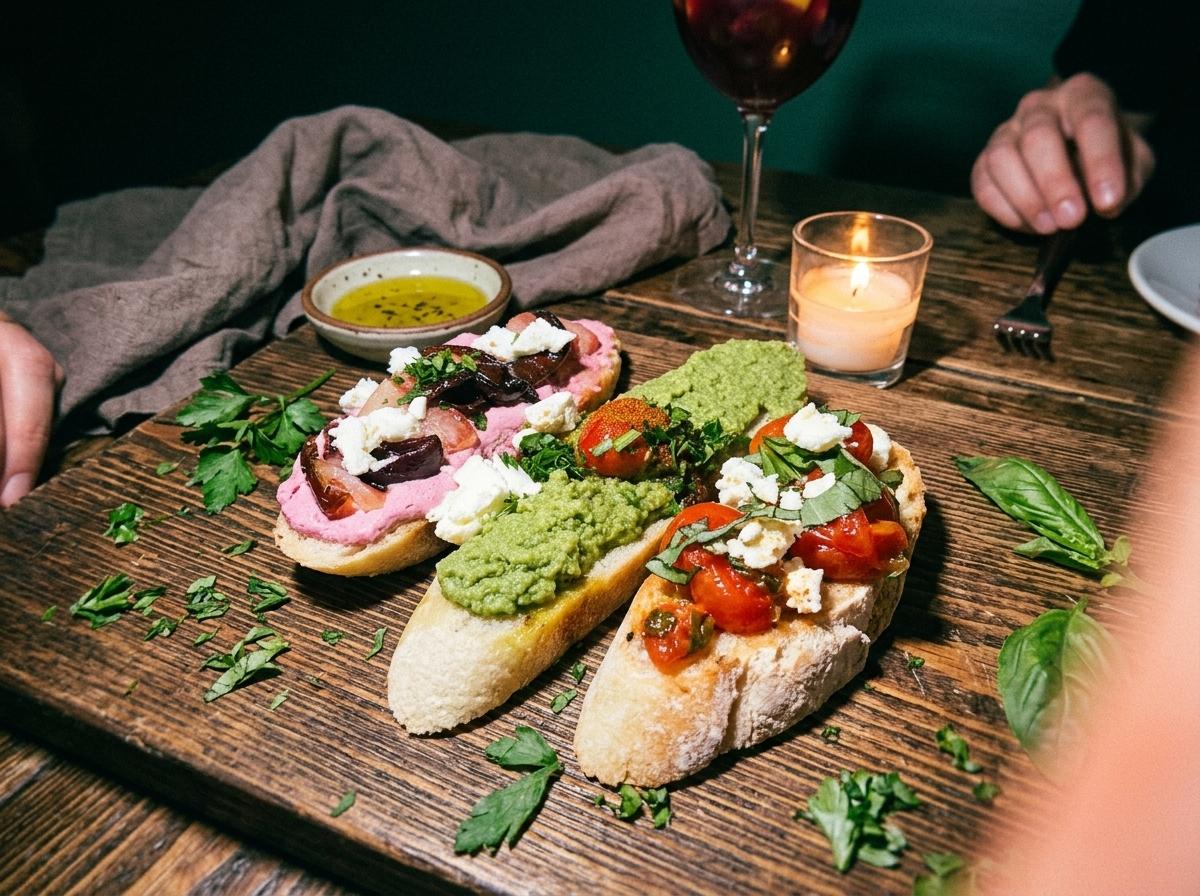
Nia currently uses house-made sourdough crostini in several preparations and serves crusty bread with gambas al ajillo specifically where it can pick up the garlic-infused oil and wine sauce.
The point is functional.
Bread is not always there simply to fill the basket.
Is Mediterranean Food Spicy?
Sometimes.
But spicy can mean two different things.
A dish can be heavily seasoned with aromatic spices without being hot from chili.
Another dish can actually contain noticeable heat.
Mediterranean cuisines contain both.
Spanish dishes may use chili or paprika.
North African dishes can use complex spice combinations and sometimes significant heat.
Other preparations may be extremely mild.
If chili heat matters to you, ask about the individual dish rather than trying to classify Mediterranean cuisine as spicy or not spicy.
Is Mediterranean Food Heavy or Light?
It can be either.
A lemon-and-herb seafood dish may feel light.
A cheese-rich pizza, fried croquettes, slow-cooked meat dish, creamy dip spread, or pastry may feel much richer.
This is another stereotype worth abandoning.
Mediterranean cuisine is broad enough to include everyday vegetable dishes and extremely indulgent celebration food.
The meal becomes lighter or heavier according to what you order.
What Beverages Go With Mediterranean Food?
There is no single Mediterranean beverage pairing.
Depending on restaurant and region, diners may encounter:
wine;
beer;
spirits;
cocktails;
coffee;
tea;
sparkling water;
fruit-based drinks;
or non-alcoholic beverages.
Nia operates specifically as a restaurant and wine bar and maintains separate current menus for wines by the glass, bottles, cocktails, and non-alcoholic drinks.
For a first-time diner, the useful advice is simple:
Order the beverage you actually enjoy.
If you want detailed wine pairing based on seafood, vegetables, meat, spice, or shared plates, Nia’s dedicated Mediterranean Wine Pairing guide should handle that question.
This cuisine explainer should not duplicate it.
Do You Need Wine to Have a Mediterranean Dining Experience?
No.
Wine has important cultural histories in parts of the Mediterranean, but it is not universally consumed across every Mediterranean culture or by every diner.
Religion, region, personal preference, health, driving, recovery, pregnancy, and many other factors affect alcohol use.
A Mediterranean meal remains Mediterranean without alcohol.
Restaurants should therefore offer the dining experience without treating wine as mandatory.
What Desserts Might You Encounter?
Desserts vary as dramatically as savory dishes.
Depending on region, they may feature:
honey;
nuts;
pastry;
fruit;
citrus;
cheese;
yogurt;
custard;
chocolate;
coffee;
or spices.
At Nia today, the current desserts are churros with cinnamon sugar and semi-sweet chocolate, and burnt Basque cheesecake with honey, clementine, and nuts.
Both reflect the restaurant’s Spanish-rooted and broader Mediterranean-inspired positioning rather than attempting to represent the dessert traditions of the entire Mediterranean.
What Does “Authentic Mediterranean” Actually Mean?
Use this phrase carefully.
There is no single authority that can certify one menu as universally authentic Mediterranean cuisine because Mediterranean cuisine is not one national cuisine.
Authenticity is more meaningful when tied to something specific.
For example:
an authentic Valencian paella;
a traditional Greek regional preparation;
a Lebanese family recipe;
a classic Catalan dish;
or a Turkish specialty prepared in a recognizable regional style.
The phrase becomes much weaker when a restaurant simply says:
everything we serve is authentically Mediterranean.
Nia currently describes itself as Mediterranean-inspired with Spanish roots.
That is actually a useful formulation because it leaves room for interpretation and combination rather than claiming to represent every Mediterranean culinary tradition.
Traditional vs Mediterranean-Inspired
This distinction can make a first visit much easier to understand.
A traditional dish usually has a recognizable cultural and regional framework.
A Mediterranean-inspired dish may borrow ingredients, techniques, or flavor combinations from the region while adapting them.
Neither category is automatically better.
A traditional preparation may be valuable because it preserves regional culinary identity.
An inspired dish may be interesting because a chef combines influences creatively.
The important thing is transparent language.
A restaurant should not describe a major reinterpretation as though it were an untouched traditional recipe when it is not.
What Does Mediterranean-Inspired Mean at Nia?
Nia’s current menu is a good case study because it contains several recognizable traditions without fitting neatly into one national category.
Spanish-rooted dishes currently include:
patatas bravas;
croquetas;
pintxos;
albóndigas;
gambas al ajillo;
shrimp paella;
and churros.
Other dishes broaden the menu through:
rosemary hummus;
Mediterranean olives;
pan-seared salmon with pipérade;
salad;
Italian-influenced cheeses;
artisan pizza;
and other shared preparations.
The homepage itself describes the concept as Mediterranean-inspired cuisine with Spanish roots.
That is the best lens through which a first-time guest should read the menu.
Nia is not trying to function as a museum of one country’s traditional food.
It is a contemporary Chicago restaurant using Mediterranean and especially Spanish influences within a shared-dining format.
A First-Time Nia Meal: How to Read the Menu
The live menu currently begins with sourdough crostini and then moves into a broad small plates section before artisan pizza and dessert.
That tells the diner something immediately:
You do not necessarily need to order one starter and one entrée per person.
The menu can be approached collaboratively.
Begin With One Simple Dish
Olives or one crostini preparation can give the table something to begin with while deciding what direction the meal should take.
Add a Vegetable or Crisp Plate
Crisp cauliflower with rosemary hummus, patatas bravas, salad, or veggie croquettes introduce different textures and flavors.
Add Seafood or Meat According to Preference
Current options include salmon, shrimp paella, gambas al ajillo, chicken pintxos, beef pintxos, and albóndigas.
Add Pizza Only if the Table Wants More Food
Pizza can become a larger shared element rather than something everyone must order individually.
Finish With Dessert if You Want It
Churros and burnt Basque cheesecake currently give diners two very different endings.
There is no mandatory sequence.
The value of the format is flexibility.
How Many Dishes Should You Order?
There is no fixed Mediterranean rule.
Small-plate portion sizes vary from restaurant to restaurant and even from dish to dish within the same restaurant.
Two skewers may divide differently from a bowl of olives.
A salmon plate differs from croquettes.
Paella contains rice and may be more filling.
Pizza adds another larger shared component.
For a first visit, order gradually and ask the server how many plates usually work for your table size.
That is more reliable than an internet article prescribing exactly four plates for two people or eight plates for four.
Can Everyone Order Their Own Dish?
Yes.
Sharing is common in many restaurant formats, but it should not become a social requirement.
Some diners have:
allergies;
dietary restrictions;
different spice tolerances;
different appetites;
or simply no interest in sharing everything.
A good dining experience should accommodate those preferences where the menu allows.
The phrase designed for sharing describes a format.
It does not mean every guest must share every bite.
Mediterranean Food and Food Allergies
Never rely on the cuisine label alone to determine whether something is safe.
Mediterranean menus may contain major allergens including:
wheat;
milk;
eggs;
fish;
shellfish;
tree nuts;
sesame;
and other ingredients.
Dips may contain tahini.
Cheeses may appear in salads or breads.
Seafood stock may appear in rice.
Shared fryers or preparation areas may create cross-contact.
Nia’s current menu specifically asks guests to communicate food allergies to restaurant staff.
That direct communication is more reliable than guessing from a dish name.
Is Mediterranean Cuisine Good for Groups?
It can be particularly convenient when a menu offers varied shared dishes.
One person may prefer seafood.
Another may want meat.
Another may want vegetables.
A table can build variety without requiring everyone to order the same thing.
But very large groups introduce another planning problem.
At that point, family-style group menus or private-dining arrangements may be easier than trying to coordinate dozens of individual small plates.
This article should not expand into event packages.
If the group becomes an event, direct the reader to Nia’s current Group Menu or Private Events pages.
Is Mediterranean Cuisine Good for Date Night?
It can be.
Sharing dishes gives couples something to experience together, and a varied menu makes it easier to extend the meal gradually.
But this broad cuisine article should stop there.
Questions about:
what to do before dinner;
romantic atmosphere;
anniversaries;
wine bars;
activities;
or complete West Loop itineraries
already have dedicated Nia content owners.
This page explains the food.
The date-night pages explain the occasion.
Mediterranean Cuisine vs Mediterranean Diet
This distinction deserves a final clear explanation because it is one of the largest content-overlap risks on Nia’s site.
Mediterranean cuisine is the collection of food traditions associated with Mediterranean cultures.
The Mediterranean diet is a modern nutrition-research concept based on dietary patterns observed in parts of the region and studied in relation to health outcomes.
They overlap.
They are not identical.
A restaurant can be Mediterranean and still serve:
dessert;
fried food;
refined bread;
cheese;
cured meat;
cocktails;
wine;
rich sauces;
or celebratory dishes.
Calling all of those dishes “healthy because they are Mediterranean” would be inaccurate.
Nia’s dedicated health article should own the evidence-based dietary question.
This cuisine page should own cultural and dining orientation.
Common Misconceptions Before Your First Mediterranean Meal
“Mediterranean Means Greek”
No. Greek cuisine is one Mediterranean cuisine among many.
“Mediterranean Means Hummus and Pita”
No. Those foods reflect particular regional traditions, not the entire Mediterranean.
“Tapas and Mezze Are the Same Thing”
No. Tapas is Spanish; mezze belongs to other Mediterranean and Middle Eastern shared-dish traditions.
“Everything Is Meant to Be Shared”
No. Many restaurants encourage sharing, but dining styles vary by region and restaurant.
“All Mediterranean Food Is Healthy”
No. Cuisine and nutrition research are not interchangeable.
“Mediterranean Food Is Always Light”
No. It can include fried dishes, slow-cooked meat, pastry, cheese, rich sauces, pizza, and desserts.
“Mediterranean Food Is Always Spicy”
No. Some dishes contain heat; others are very mild.
“Olive Oil Makes Any Dish Mediterranean”
No. Cuisine is more than one ingredient.
“Authentic Mediterranean Means One Particular Menu”
No. There is no single Mediterranean national cuisine.
Frequently Asked Questions About Mediterranean Cuisine
What is Mediterranean cuisine?
Mediterranean cuisine is a broad umbrella for food traditions from countries and communities around the Mediterranean Sea.
It includes diverse Southern European, Eastern Mediterranean, Levantine, North African, island, and coastal cuisines rather than one standardized cooking style.
Which countries are considered part of Mediterranean cuisine?
Commonly discussed Mediterranean culinary traditions include those of Spain, southern France, Italy, Greece, Turkey, Cyprus, Lebanon and other parts of the Levant, North African countries such as Morocco, Tunisia, Algeria, and Egypt, Balkan and Adriatic areas, and Mediterranean islands.
The exact definition varies because culinary regions do not follow simple restaurant-category boundaries.
Is Mediterranean cuisine the same as Greek food?
No.
Greek cuisine is one important Mediterranean tradition, but Mediterranean cuisine includes many others.
Is Italian food Mediterranean?
Large parts of Italian culinary tradition are connected to the Mediterranean, particularly central and southern Italy and the islands, but Italian cuisine is highly regional and should not be reduced to one generic Mediterranean style.
Is Spanish food Mediterranean?
Much of Spain has strong Mediterranean culinary traditions, especially along the eastern and southern coasts and islands.
Spanish cooking also includes many regional identities extending beyond a simple Mediterranean label.
What are common Mediterranean ingredients?
Common categories include olive oil, vegetables, tomato, peppers, garlic, onions, legumes, grains, bread, nuts, seeds, seafood, meats, yogurt, cheese, herbs, citrus, olives, and regional spices.
Their importance and preparation vary significantly by region.
What are common Mediterranean dishes?
There is no single list, but diners may encounter tapas, mezze, grilled seafood, rice dishes, pasta, bread-based dishes, salads, dips, kebabs, slow-cooked meats, legumes, vegetable preparations, cheeses, and regional desserts.
What is the difference between tapas and mezze?
Tapas is Spanish.
Mezze refers to shared-dish traditions found across parts of the Eastern Mediterranean, Middle East, and nearby regions.
Nia maintains separate guides for each topic because the cultural and search intents are different.
What should I order the first time I visit a Mediterranean restaurant?
First identify the restaurant’s regional focus.
Then choose a small range of contrasting dishes rather than trying to order every familiar Mediterranean item.
If it is a shared-plate menu, consider combining something fresh or vegetable-driven with one richer dish and a seafood or meat option.
Ask the server for guidance on portion sizes.
Does Mediterranean food include vegetarian dishes?
Yes, many Mediterranean cuisines have extensive traditions involving vegetables, legumes, grains, breads, cheese, yogurt, nuts, and herbs.
Actual restaurant options vary.
Does Mediterranean food include seafood?
Yes, seafood is important in many coastal Mediterranean cuisines, but it is not required in every meal or every regional tradition.
Is Mediterranean cuisine spicy?
It can be, but not universally.
Some regions and dishes use significant chili or aromatic spices, while others are mild.
Is Mediterranean cuisine healthy?
Some foods common in Mediterranean cuisine overlap with the Mediterranean dietary pattern studied in nutrition research.
However, cuisine and dietary research are not identical, and individual restaurant dishes vary widely.
For the evidence-based health question, use Nia’s dedicated Mediterranean Diet guide.
What is Mediterranean-inspired food?
Mediterranean-inspired food uses ingredients, techniques, or flavor ideas from Mediterranean cuisines without necessarily claiming to reproduce one specific traditional regional cuisine.
Nia currently describes itself as Mediterranean-inspired with Spanish roots.
What type of Mediterranean food does Nia serve?
Nia currently combines Spanish-rooted dishes such as patatas bravas, croquetas, pintxos, albóndigas, gambas al ajillo, and shrimp paella with broader Mediterranean dishes and ingredients including olives, hummus, salmon, vegetables, cheeses, and artisan pizza.
Does Nia serve mezze?
Nia’s current dinner menu uses the broader label small plates rather than presenting the meal as a formal mezze menu. It includes some dishes that fit broader Mediterranean shared-dining traditions, such as olives and hummus, alongside Spanish-rooted tapas-style dishes.
For mezze as a cultural and dining format, use Nia’s separate mezze guide.
Does Nia serve tapas?
Nia currently serves several recognizable Spanish tapas-style dishes, but the overall restaurant is Mediterranean-inspired rather than exclusively a Spanish tapas bar.
Is paella Mediterranean food?
Paella is a Spanish rice tradition with roots in Valencia, which forms part of the wider Mediterranean culinary landscape.
For deeper paella information, use Nia’s separate Chicago paella guide.
Do I need to drink wine with Mediterranean food?
No.
Wine can be part of some Mediterranean dining traditions, but it is optional.
Nia also maintains cocktails and non-alcoholic beverage offerings.
Where is Nia Restaurant?
Nia Restaurant & Wine Bar is located at 803 W. Randolph Street, Chicago, IL 60607, in the West Loop. Its current site describes the concept as Mediterranean-inspired cuisine with Spanish roots.
Your First Mediterranean Meal Does Not Need to Be Complicated
The most important thing to bring to a Mediterranean restaurant is not expertise.
It is curiosity.
You do not need to know whether every herb belongs to Spain, Greece, Lebanon, Turkey, Morocco, or Italy before ordering.
You do not need to pronounce every dish perfectly.
And you do not need to build the meal according to one supposed Mediterranean formula.
Start by understanding the restaurant.
What region or combination of regions inspires it?
Does the menu use small plates?
Does it focus on seafood?
Does it emphasize grilled meats?
Is the food Spanish, Greek, Levantine, Italian, North African, or broadly Mediterranean-inspired?
Once that is clear, the menu becomes much easier.
Order a few things that contrast.
Ask questions when you need to.
Try something unfamiliar.
And remember that the word Mediterranean describes an enormous culinary landscape rather than one rigid set of dishes.
At Nia in Chicago’s West Loop, the current expression of that idea is a Mediterranean-inspired menu with Spanish roots: croquetas, pintxos, patatas bravas, gambas al ajillo, albóndigas, shrimp paella, olives, hummus, seafood, pizza, and other shared dishes all coexist on one menu.
That does not represent the whole Mediterranean.
No restaurant can.
It represents one contemporary interpretation.
Understanding that distinction is the best preparation for your first visit.