Spanish Wine & Food Pairing Guide: What to Drink With Paella, Tapas, Pintxos and More
Spanish wine is much broader than:
red Rioja with steak
and:
white wine with seafood.
Spain produces crisp Atlantic whites, aromatic inland whites, fresh lighter reds, structured oak-aged wines, sparkling wines and fortified wines across very different climates and regions.
For diners, the useful question is not:
What is the single best Spanish wine?
It is:
Which Spanish wine style fits the food actually on the table?
At Nia, that question is especially relevant because the current dinner menu includes Spanish-rooted dishes such as:
- shrimp paella;
- gambas al ajillo;
- patatas bravas;
- albóndigas;
- chicken pintxos;
- beef pintxos;
- croquetas;
- and Basque pizza.
Nia’s current wine program also gives diners several genuinely different Spanish directions.
The current Wine By Glass menu includes:
Senda Verde Albariño from Rías Baixas
and:
Voelos Crianza Tempranillo from Rioja.
The current bottle list adds:
- Buil & Gine Verdejo “Nosis” from Rueda
- Cuatro Pasos Mencía from Bierzo
- Voelos Crianza Tempranillo from Rioja
- and:
- Bodegas Urbina Tempranillo from Rioja.
That gives this article a clear, useful role:
teach diners how those Spanish wine styles differ and when each one may make sense.
Quick Answer: Which Spanish Wine Should You Choose?
Use this as a starting point rather than a rigid rule.
| If You Are Ordering… | Spanish Wine Direction to Consider |
|---|---|
| Shrimp paella | Albariño or Verdejo |
| Gambas al ajillo | Albariño |
| Salmon | Albariño, Verdejo or lighter Rioja depending on preparation |
| Patatas bravas | Verdejo, Albariño or Tempranillo depending on preference |
| Croquetas | Albariño or Verdejo |
| Chicken pintxos | Verdejo or Rioja Crianza |
| Beef pintxos | Rioja Tempranillo or Mencía |
| Albóndigas | Rioja Tempranillo |
| Mushroom/truffle pizza | Mencía or Rioja |
| Basque pizza | Rioja Crianza |
| Several mixed tapas | Start with a versatile white or medium-bodied red |
This is not a list of “perfect” pairings.
Wine preference depends on:
- the exact dish;
- sauce;
- spice;
- body;
- and what the diner actually likes.
Start With the Region, Not Just the Color
Two Spanish white wines can taste completely different.
Two Spanish reds can also differ dramatically.
That is why:
white with fish / red with meat
is too simplistic.
For this page, four Spanish categories matter most:
Rías Baixas Albariño
Crisp, aromatic Atlantic white.
Rueda Verdejo
Fresh Spanish white that can show citrus, herbs and more savory character.
Rioja Tempranillo
Red wine ranging from youthful and fruit-driven to more developed, oak-influenced styles.
Bierzo Mencía
A red that can provide fruit, freshness and medium-bodied structure without necessarily carrying the weight of a bigger Cabernet-style wine.
These four directions give diners much more useful information than simply saying:
Spanish white
or:
Spanish red.
Albariño: The Spanish White to Know for Seafood
Nia currently offers Senda Verde Albariño from Rías Baixas by the glass, describing it as having bright acidity, stone fruit and coastal minerality.
Rías Baixas is in Galicia on Spain’s Atlantic coast and is closely associated with the Albariño grape.
The region’s official wine organization describes Albariño as typically crisp and fresh, with natural acidity and aromas/flavors that can include citrus, white peach, apricot and other fruit characteristics.
That profile explains why Albariño is often associated with seafood.
The useful pairing logic is:
acidity + freshness + seafood
rather than:
Albariño is magically perfect with every fish dish.
Albariño With Shrimp Paella
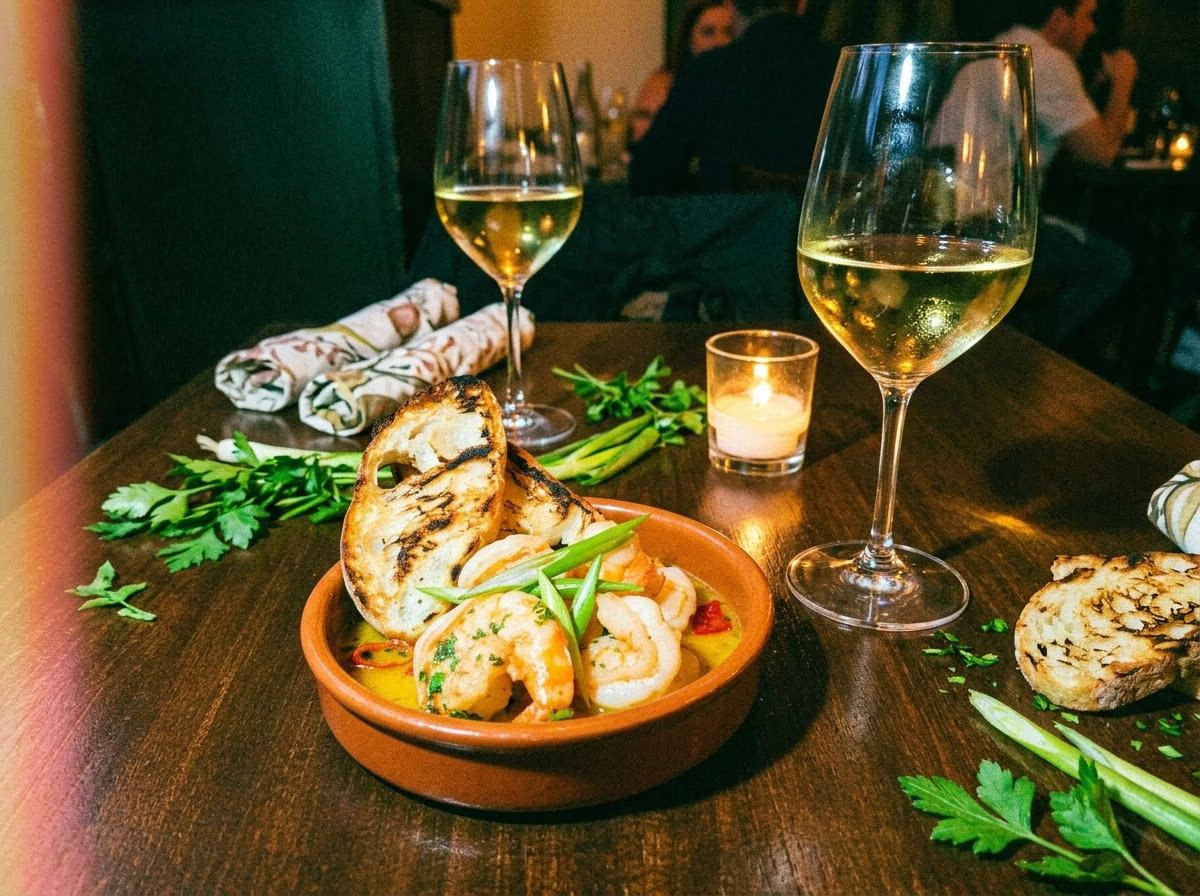
Nia’s current shrimp paella includes:
- saffron rice;
- shrimp;
- peas;
- peppers;
- parsley;
- extra-virgin olive oil;
- and lemon.
That gives Albariño several natural points of connection.
Its acidity can provide freshness beside:
- rice;
- olive oil;
- and shrimp.
Its citrus and stone-fruit character can also sit comfortably beside:
- lemon;
- herbs;
- and saffron-driven flavors.
The current Nia article already identifies Albariño with shrimp paella, but the rewrite should remove phrases such as:
“perfectly complements”
and:
“brings out the best in every bite.”
A stronger version is:
Albariño is one of the most logical Spanish white wines to consider with Nia’s shrimp paella because its acidity keeps the pairing fresh beside saffron rice, olive oil and seafood.
Albariño With Gambas al Ajillo
Nia’s current gambas al ajillo combines:
- shrimp;
- garlic-infused olive oil;
- Spanish chili;
- white wine;
- and crusty bread.
This may be an even clearer Albariño pairing than paella.
Why?
Because the dish contains:
- rich olive oil;
- garlic;
- shrimp;
- and chili.
A fresh white can provide contrast against that richness without adding significant tannin.
Albariño’s acidity makes it a strong option to consider.
Again:
strong option
not:
perfect match.
Albariño With Croquetas
Nia currently serves ham and cheese croquetas with aioli.
A crisp white can work well with fried food because acidity may provide a refreshing contrast to:
- fried crust;
- cheese;
- and creamy sauce.
Albariño also gives the table a wine that can continue naturally if the next dishes are:
- shrimp;
- salad;
- or another lighter plate.
That versatility matters when several dishes are shared.
Albariño With Salmon
Nia currently serves pan-seared salmon with pipérade made from peppers, onions and tomato.
Salmon is richer than shrimp.
That means the pairing decision becomes more interesting.
Albariño may still work because it has:
- acidity;
- freshness;
- and enough character to avoid disappearing beside richer fish.
But tomato and peppers add savory depth.
Some diners may prefer:
- Verdejo;
- rosé;
- or even a lighter red.
This is exactly why this page should teach decision-making rather than rigid pairings.
What Makes Rías Baixas Different?
Rías Baixas is influenced by the Atlantic.
Its official regional organization describes:
- a cool maritime environment;
- granite-dominant soils;
- and Albariño wines with naturally high acidity and an aromatic profile.
That geographic context matters because it explains why a Rías Baixas Albariño often feels different from a fuller, warmer-climate white wine.
But avoid oversimplifications such as:
“you can taste the ocean.”
Words such as:
- coastal;
- mineral;
- saline;
- or maritime
are useful tasting and regional descriptors.
They should not be presented as literal seawater entering the wine.
Verdejo: A Different Spanish White Direction
Nia’s current bottle list includes Buil & Gine Verdejo “Nosis” from Rueda, Spain.
The existing article is correct that Verdejo deserves a place in a Spanish-wine guide.
The problem is the current example.
It recommends Verdejo with:
grilled branzino, which is no longer part of Nia’s current dinner menu.
That section should be rebuilt around dishes that actually exist.
Good current candidates include:
- chicken pintxos;
- gambas al ajillo;
- patatas bravas;
- crisp cauliflower;
- and shrimp paella.
Albariño vs Verdejo
This comparison is more useful than treating both wines as generic crisp whites.
Albariño
Often associated with:
- fresh acidity;
- stone fruit;
- citrus;
- floral notes;
- and Atlantic freshness.
Verdejo
Can also be fresh and bright, but may show:
- herbal;
- citrus;
- stone-fruit;
- or slightly more savory characteristics depending on producer and style.
If someone is choosing between them:
Albariño can be an intuitive seafood-first choice.
Verdejo may appeal if you want a Spanish white that can move more broadly between seafood, vegetables and poultry.
The exact bottle still matters.
Verdejo With Chicken Pintxos
Nia’s current chicken pintxos are skewered chicken served with spicy remoulade.
This is a useful pairing because:
- chicken itself is mild;
- the remoulade adds richness and spice;
- and a fresh white can provide contrast.
Verdejo can be considered when the diner wants:
- a white wine;
- good acidity;
- and something more savory or herbal than a fruit-forward white.
Verdejo With Patatas Bravas
Nia’s patatas bravas combine:
- crisp potatoes;
- spicy tomato sauce;
- and saffron aioli.
That dish is harder to pair than it first appears.
You have:
- fat;
- fried texture;
- tomato;
- spice;
- and creamy aioli.
A bright Verdejo can work because acidity may refresh the palate.
But Albariño or even a lighter red may also make sense depending on the table.
Do not publish:
“Verdejo is the correct wine for patatas bravas.”
Teach the tradeoff.
Verdejo With Crisp Cauliflower
Nia’s current crisp cauliflower includes:
- rosemary hummus;
- chili oil;
- and pita.
A fresh Spanish white can work well here because it does not add tannin to:
- hummus;
- fried texture;
- or chili.
Verdejo’s potential herbal character also gives it a logical place next to:
- rosemary;
- chili;
- and savory vegetable flavors.
Rioja: More Than One Kind of Red Wine
The existing Nia article describes Rioja mainly as a bold red for steak.
That is too narrow.
Rioja is a wine region.
Its wines can vary substantially based on:
- grape composition;
- producer;
- origin;
- and aging.
Tempranillo is Rioja’s most characteristic red grape, and the region’s official regulatory body describes it as capable of producing:
- rosé;
- young reds;
- and wines designed for aging.
With extended aging, Tempranillo can develop characteristics such as:
- vanilla;
- cocoa;
- licorice;
- and other maturation notes alongside red and dark fruit.
That is more useful than simply calling all Rioja:
bold and spicy.
Nia’s Current Rioja Options
Nia currently offers Voelos Crianza Tempranillo from Rioja by the glass.
Nia describes it as:
- red berry fruit;
- vanilla;
- and balanced oak.
The current bottle list also includes:
Voelos Crianza Tempranillo
and:
Bodegas Urbina Tempranillo from Rioja.
This gives the page a practical advantage.
Readers can learn the category and then see how Rioja actually appears on Nia’s current list.
What Does Crianza Mean?
Rioja uses aging terminology that includes categories such as:
- Genérico;
- Crianza;
- Reserva;
- and Gran Reserva.
For Rioja red wine, Crianza requires minimum aging before release, including time in oak. Rioja’s official regulatory information describes red Crianza as aged for at least two years, including at least one year in 225-liter oak barrels.
That helps explain why a Crianza may show:
both fruit
and:
oak-related characteristics.
It is useful education for a guest choosing Nia’s current Voelos Crianza.
Rioja Crianza With Beef Pintxos
Nia’s current beef pintxos are grilled skewered beef with basil pesto.
This is a strong current Rioja pairing direction.
A medium-bodied Tempranillo with:
- fruit;
- oak;
- and moderate structure
can work beside grilled beef without automatically becoming as powerful as a larger Cabernet.
Rioja’s own educational material identifies Crianza as a versatile food style and gives examples across meat, vegetables and other savory dishes.
For Nia’s beef pintxos:
Rioja is worth considering.
Do not call it mandatory.
Rioja Crianza With Albóndigas
Nia’s current albóndigas are Spanish-style meatballs served in a rich española sauce.
This is arguably an even more natural Rioja context.
The dish brings:
- meat;
- sauce;
- savory concentration;
- and richness.
Tempranillo’s fruit and spice can make it a useful companion.
Oak-aged Rioja can also provide:
- vanilla;
- spice;
- and additional savory complexity.
This section should replace the outdated skirt steak pairing currently used on the page.
Rioja With Basque Pizza
Nia’s Basque pizza currently includes:
- roasted red peppers;
- red onions;
- jamón;
- confit garlic;
- chili flake;
- and pomodoro sauce.
This creates several red-wine-friendly elements:
- tomato;
- cured meat;
- garlic;
- and roasted pepper.
A Rioja Crianza can make sense because it has enough structure for:
jamón;
and:
tomato,
without requiring the heaviness of a very large red.
This is a better current pairing example than generic “beef tapas.”
Rioja With Meatball Pizza
Nia’s meatball pizza includes:
- house-made meatballs;
- mozzarella;
- tomato;
- and herbs.
Again, Rioja is an intuitive option because:
- Tempranillo;
- tomato;
- meat;
- and cheese
can work naturally together.
But a guest may also prefer:
- Sangiovese;
- Agiorgitiko;
- or another current red.
The page should recommend a style, not impose one answer.
What About Rioja With Chicken?
Do not assume red wine requires beef.
Rioja’s official pairing materials include examples such as roasted or grilled chicken depending on wine style.
Nia’s chicken pintxos can therefore work with Rioja for someone who prefers red.
This is useful for a table where:
one diner wants chicken
but:
does not want white wine.
Mencía: The Spanish Red This Page Should Add
The existing article completely ignores Mencía.
That is a missed opportunity because Nia’s current bottle list includes Cuatro Pasos Pizarras de Otero Mencía from Bierzo, Castilla y León.
Adding Mencía makes the Spanish guide much more distinct from the general Mediterranean Wine Pairing Hub.
It also prevents the article from implying that Spanish red wine means only:
Rioja.
Where Mencía Fits
Mencía can give diners another red-wine path when they want something outside the classic Rioja/Tempranillo framework.
For this page, keep the explanation simple:
Mencía can work as a medium-bodied Spanish red direction for savory foods when a diner wants:
- fruit;
- freshness;
- and structure
without necessarily moving into the richest red category.
Nia’s own current bottle menu places its Mencía within the:
fruit, spice, minerality, medium tannins
section.
That is the best on-site framework to use.
Mencía With Mushroom and Truffle Pizza
Nia’s current trufa pizza includes:
- béchamel;
- mushroom;
- confit garlic;
- pecorino;
- mozzarella;
- and honey truffle drizzle.
Mushroom gives the dish an earthy, savory profile.
A medium-bodied red such as Mencía can be worth considering when the diner wants:
red wine
without:
very heavy oak or tannin.
This creates a unique pairing that is not already repeated across every other Nia wine article.
Mencía With Beef Pintxos
Mencía can also be an alternative to Rioja with beef pintxos.
The decision becomes:
Rioja Crianza → more obvious oak-aged Tempranillo direction
versus:
Mencía → different Spanish red style with medium structure.
That is useful wine education.
It gives the diner a decision rather than another generic pairing command.
What About Cava and Sherry?
Spain also produces major categories such as:
- Cava;
- Fino;
- Manzanilla;
- Amontillado;
- Oloroso;
- and Pedro Ximénez.
However, there is an important Nia-specific technical issue.
Nia’s current Wine Bottles page contains a modern current list, but farther down the same page it also displays a large “Wine List 2020” section that contains old Cava and Sherry inventory.
Therefore:
Do not use those legacy Cava or Sherry bottles as current Nia recommendations.
They are historical/stale inventory unless operations confirms otherwise.
For this article, focus current pairing recommendations only on wines that appear in the active list above the legacy section.
Operationally:
remove or archive the Wine List 2020 section from the live Wine Bottles page.
It creates confusion for both customers and search engines.
What About Sangria?
Sangria is relevant to Spanish-influenced dining, but it is not the central search intent of this page.
Nia currently promotes sangria through its Happy Hour and other active restaurant offerings.
Keep sangria to one short note.
Do not turn the Spanish Wine Guide into:
a sangria page.
Wine regions, grapes and pairing decisions are the main value here.
Spanish Wine Is Not One Flavor
This is one of the core lessons the page should leave with the reader.
Compare:
Albariño
Atlantic white.
Bright, crisp, aromatic.
Verdejo
Fresh Spanish white with potential citrus, herbal and savory character.
Tempranillo / Rioja
Red-fruit-driven wine whose style can shift substantially with aging.
Mencía
Another Spanish red direction with medium-bodied potential and a different regional identity.
Those differences are far more educational than telling the reader:
Spain makes great food-friendly wine.
How to Choose Spanish Wine at Nia
Use four questions.
1. White or Red?
If the table is mostly ordering:
- shrimp;
- vegetables;
- croquetas;
- or lighter dishes,
a white may be an easy starting point.
If the table is leaning toward:
- beef;
- meatballs;
- jamón;
- tomato-heavy pizza;
- or richer savory dishes,
a red may make more sense.
This is only a starting framework.
2. Crisp or Rich?
For crisp:
consider Albariño or Verdejo.
For richer red structure:
consider Rioja Tempranillo.
For a medium-bodied alternative:
consider Mencía.
3. One Dish or Several?
If the table is ordering one main dish:
a more specific match can work.
If the table is sharing:
- paella;
- gambas;
- patatas;
- croquetas;
- and pizza
together,
choose something versatile rather than trying to find a separate wine for every plate.
4. Familiar or New?
If you already know Rioja:
try the Tempranillo.
If you typically drink Sauvignon Blanc or other crisp whites:
Albariño may be an approachable new direction.
If you want something less familiar:
consider Verdejo or Mencía.
That decision structure makes the article much more useful for both beginners and experienced drinkers.
Can One Spanish Wine Work Across Several Tapas?
Yes.
It does not have to match every plate perfectly.
For example:
Albariño may travel reasonably well across:
- croquetas;
- shrimp;
- salad;
- and some vegetable dishes.
A Rioja Crianza may move across:
- albóndigas;
- beef pintxos;
- and pizza.
The point of shared dining is not to create a separate technical pairing for every plate.
Choose a wine that works reasonably well across the dominant flavors.
Albariño vs Rioja: Which Should You Choose?
This is probably the simplest decision on the current Nia list.
Choose Albariño When
you want:
- white wine;
- higher acidity;
- seafood;
- lighter food;
- or a fresh opening glass.
Choose Rioja Crianza When
you want:
- red wine;
- red fruit;
- oak influence;
- meat;
- pizza;
- or a more savory direction.
Nia currently offers both by the glass, which means a diner does not have to commit to a bottle to compare the styles.
Albariño vs Verdejo
Choose Albariño if you want:
- a more explicitly Atlantic;
- crisp;
- stone-fruit-driven style.
Consider Verdejo if you want:
- another Spanish white direction;
- possibly with more herbal/savory character;
- and you are comfortable ordering a bottle under Nia’s current list.
The current Nia menu offers Albariño by the glass while Verdejo appears on the bottle list, so the purchase format matters too.
Rioja vs Mencía
Both are Spanish reds.
They should not be treated as interchangeable.
Nia’s current bottle list places:
Voelos Rioja Tempranillo
and:
Cuatro Pasos Mencía
within its medium-tannin wine section.
Use Rioja when you want:
- classic Tempranillo;
- red fruit;
- oak;
- and a familiar Spanish-red framework.
Try Mencía when you want:
- a different regional red;
- medium-bodied structure;
- and something outside the standard Rioja path.
Does Spanish Wine Only Pair With Spanish Food?
No.
Wine does not need to share the exact nationality of the dish.
Albariño can work with many seafood dishes.
Rioja can work with:
- roasted poultry;
- pasta;
- vegetables;
- meat;
- or pizza.
Rioja’s official wine organization itself presents its wines with broad food categories rather than limiting them to Spanish cooking.
Spanish wine at Nia is especially relevant because of the restaurant’s Spanish roots.
But the pairing logic should remain based on:
- structure;
- flavor;
- acidity;
- tannin;
- and preference.
Does Albariño Have to Come From Rías Baixas?
Albariño is grown beyond Rías Baixas.
However, Rías Baixas is the grape’s major reference region in northwestern Spain and is strongly associated with the variety. The DO describes Albariño as its flagship native grape.
Nia’s current Albariño is specifically from:
Rías Baixas.
That is the relevant version for this article.
Is Rioja a Grape?
No.
This is an important beginner question.
Rioja is a wine region/designation.
Tempranillo is a grape.
Tempranillo is the dominant and most characteristic red grape of Rioja, but Rioja wine is not synonymous with one grape in every case.
Therefore Nia’s current listing:
Voelos Crianza Tempranillo | Rioja, Spain
communicates both:
- the grape
- and:
- the region.
What Does Crianza Mean on a Rioja Label?
Crianza indicates an aging category rather than a grape variety.
For Rioja red wines, the category requires aging before release, including oak-barrel maturation.
That helps explain why Nia’s current Voelos Crianza is described with:
- red berry;
- vanilla;
- and balanced oak.
Is Spanish Wine Always Heavy?
No.
This is another stereotype worth removing.
Spanish wine includes:
- light and fresh whites;
- structured whites;
- rosé;
- sparkling wine;
- lighter reds;
- medium-bodied reds;
- powerful aged reds;
- and fortified wines.
Nia’s current Spanish selection alone demonstrates this range through:
- Albariño;
- Verdejo;
- Mencía;
- and Tempranillo.
Is Albariño Sweet?
Rías Baixas Albariño is commonly produced as a dry white.
The region describes its wines as generally crisp, fresh and bone-dry, though styles vary across subregions and winemaking approaches.
Nia’s current Senda Verde is positioned as:
- bright;
- acid-driven;
- and mineral,
not as a sweet wine.
Does Rioja Always Taste Like Vanilla?
No.
Vanilla can appear in some oak-aged Rioja wines, but the category is much broader.
Tempranillo itself can show:
- red fruit;
- dark fruit;
- and floral notes,
while aging can contribute characteristics including:
- vanilla;
- cocoa;
- and licorice.
Do not reduce Rioja to:
vanilla red wine.
A Simple Spanish Wine Dinner at Nia
If a table wants to explore Spain without turning dinner into a formal wine tasting, a simple structure could be:
Start With Albariño
Consider Albariño with:
- gambas al ajillo;
- croquetas;
- or shrimp paella.
Move to Rioja
If the table later orders:
- albóndigas;
- beef pintxos;
- Basque pizza;
- or meatball pizza,
consider switching to Tempranillo.
This lets a table experience:
an Atlantic Spanish white
and:
an oak-influenced Spanish red
without requiring an elaborate tasting program.
The wines remain optional.
Guests who do not drink alcohol can use Nia’s non-alcoholic beverage menu instead.
Frequently Asked Questions
What Spanish wines does Nia currently have?
Current Spanish selections include:
- Albariño from Rías Baixas by the glass;
- Rioja Crianza Tempranillo by the glass;
- Verdejo from Rueda by the bottle;
- Mencía from Bierzo by the bottle;
- and additional Rioja Tempranillo on the bottle list.
Availability can change, so the live wine menus should remain the source of truth.
What Spanish wine pairs with shrimp paella?
Albariño is a strong option to consider because its acidity and fresh character can work with:
- shrimp;
- saffron rice;
- olive oil;
- herbs;
- and lemon.
Verdejo is another Spanish white direction worth considering.
What wine pairs with gambas al ajillo?
Albariño is a particularly logical Spanish option because the dish combines:
- shrimp;
- garlic;
- olive oil;
- and chili.
A crisp white can contrast the oil and keep the pairing fresh.
What wine pairs with patatas bravas?
There is no single answer.
Depending on preference:
- Albariño;
- Verdejo;
- or a medium-bodied Tempranillo
could all work.
The tomato, saffron aioli and spice level matter.
What Spanish wine pairs with beef pintxos?
Rioja Tempranillo is a strong direction.
Mencía can provide another Spanish red option if you want something different from Rioja.
What Spanish wine works with albóndigas?
Rioja Tempranillo is one of the clearest choices to consider with Nia’s Spanish-style meatballs and rich española sauce.
What Spanish wine goes with pizza?
It depends on the toppings.
Rioja can work well with:
- meatball;
- Basque;
- and tomato-based pizza.
Mencía can be worth considering with mushroom-forward pizza.
Is Albariño a Spanish wine?
Yes.
Albariño is strongly associated with Rías Baixas in Galicia, northwestern Spain.
Is Rioja a grape?
No.
Rioja is a Spanish wine region/designation.
Tempranillo is its most characteristic red grape.
What is Verdejo?
Verdejo is a Spanish white grape strongly associated with Rueda.
Nia’s current bottle list includes a Verdejo from Rueda.
What is Mencía?
Mencía is a Spanish red grape associated with northwestern regions including Bierzo.
Nia currently lists a Mencía from Bierzo on its bottle menu.
Does Nia offer Rioja by the glass?
Yes.
The current Wine By Glass menu lists Voelos Crianza Tempranillo from Rioja.
Does Nia offer Albariño by the glass?
Yes.
The current Wine By Glass menu lists Senda Verde Albariño from Rías Baixas.
Does Nia offer Verdejo by the glass?
Not according to the current Wine By Glass menu reviewed.
Verdejo currently appears on the bottle list.
Does Nia have Cava or Sherry?
Do not rely on the old listings currently visible farther down the Wine Bottles page.
Those Cava and Sherry entries appear under a clearly labeled Wine List 2020 section and should not be treated as current inventory without restaurant confirmation.