How a Mediterranean Wine Program Is Built: Nia’s Chicago Wine List Explained
A restaurant wine list should do more than collect bottles.
A useful wine program has to work for different guests, different foods and different ways of dining.
One guest may want:
one familiar glass of Cabernet.
Another may want:
a Greek red they have never tasted.
A table sharing shrimp, vegetables and pizza may need something flexible enough to move across several dishes.
Another group may prefer a bottle with more structure for the second half of dinner.
That is where the idea of a wine program becomes more useful than simply talking about a wine list.
At Nia Restaurant & Wine Bar in Chicago’s West Loop, the current menus show a program spanning sparkling wine, rosé, white wine and red wine by the glass, alongside a substantially deeper bottle list. The current selection includes wines from Greece, Spain, Italy and France as well as California and other regions.
That mix gives this page a clear purpose:
Explain how those different parts work together.
It should not attempt to tell the reader the “perfect” wine for every individual dish.
Nia already has separate content for that.
Quick Answer: What Makes a Mediterranean Wine Program Work?
A strong Mediterranean restaurant wine program usually needs several layers:
| Program Layer | What It Does |
|---|---|
| Sparkling / rosé | Creates flexible opening and shared-plate options |
| Crisp whites | Supports seafood, herbs, citrus and lighter dishes |
| More structured whites | Works when dishes become richer |
| Softer / medium-bodied reds | Moves across vegetables, tomato, meat and pizza |
| Structured reds | Gives guests options for richer savory dishes |
| Familiar grapes | Makes the list approachable |
| Indigenous / regional grapes | Creates discovery |
| Wines by the glass | Low-commitment exploration |
| Bottle list | Adds depth and range |
First: What Is a Mediterranean Wine Program?
There is no official universal definition.
A Mediterranean wine program is best understood as a wine list whose identity is substantially connected to the cuisines and wine regions surrounding the Mediterranean while still giving diners enough flexibility to choose according to their own preferences.
That may include wines from:
- Greece;
- Spain;
- Italy;
- southern France;
- and other Mediterranean regions.
But a restaurant does not need to ban:
- California Cabernet;
- Oregon Pinot Gris;
- or another non-Mediterranean wine
to have a coherent Mediterranean wine identity.
Nia’s current list illustrates this point well.
It contains a substantial selection of:
- Greek;
- Spanish;
- Italian;
- and French wines,
but it also contains California and other international bottles.
The program is therefore better described as:
Mediterranean-led rather than Mediterranean-exclusive.
That is more accurate than implying every bottle must come from a Mediterranean country.
A Wine Program Needs Familiar Entry Points
Not everyone who visits a wine-focused restaurant wants to discover an unfamiliar grape.
Some diners simply want:
- Cabernet Sauvignon;
- Pinot Noir;
- Chardonnay;
- Sauvignon Blanc;
- or Merlot.
Those familiar varieties matter because they give guests an easy entry point.
Nia’s current by-the-glass list includes:
- Raymond “R” Collection Cabernet Sauvignon;
- Alexander Valley Merlot;
- Raeburn Pinot Noir;
- Skouras Almyra Chardonnay;
- and Alpha Estate Sauvignon Blanc.
The interesting part is that familiar grapes can still introduce diners to different regions.
For example:
the current Chardonnay and Sauvignon Blanc selections are Greek.
That creates a relatively approachable way for someone to explore Greek wine without first having to understand an unfamiliar indigenous grape.
A Good List Should Also Create Discovery
If every wine is completely familiar, a Mediterranean wine program loses part of what makes it distinctive.
That is where grapes such as:
- Agiorgitiko;
- Assyrtiko;
- Moschofilero;
- Vidiano;
- and Mencía
become useful.
Nia currently pours Skouras Agiorgitiko “St. George” from Nemea by the glass, while the bottle list includes additional Greek wines such as Moschofilero, Vidiano and Assyrtiko.
This creates two levels of discovery:
lower commitment → unfamiliar grape by the glass
and:
deeper exploration → bottle selection.
That distinction should become one of the central educational points on this page.
Why Wines by the Glass Matter
A by-the-glass program does something a bottle list cannot.
It allows someone to explore without committing the entire table to one bottle.
That matters for:
- diners new to Greek wine;
- people eating different dishes;
- solo diners;
- couples with different preferences;
- or anyone who wants one wine early in the meal and another later.
Nia’s current by-the-glass list provides several clear style directions.
For example:
Sparkling
Jean-Louis Blanc de Blancs provides a bright, citrus-focused sparkling option.
Rosé
Skouras Zoe gives guests a dry Greek rosé.
Crisp White
Senda Verde Albariño offers bright acidity and stone-fruit character.
Off-Dry White
Hirschbach & Söhne Riesling gives the list a lightly off-dry option.
Greek Red
Skouras Agiorgitiko “St. George” creates an indigenous Greek-grape entry point.
Spanish Red
Voelos Crianza introduces Rioja Tempranillo.
Italian Red
Carpineto Chianti Classico Riserva gives guests a Sangiovese-based option.
This is much more informative than repeatedly saying:
Nia has a curated wine list.
Show how the list functions.
Why the Bottle List Needs to Be Deeper
If the by-the-glass list is the introduction, the bottle list provides depth.
Nia’s current bottle menu organizes whites and reds partly by style.
For whites, the current categories move from:
aromatic, crisp, citrus
through:
medium-bodied, fruit and minerality
to:
full-bodied, rich and complex.
Reds likewise move from:
fresh fruit, light tannins
through:
fruit, spice, minerality, medium tannins
to:
full-bodied, robust and rich.
That structure is useful because guests do not necessarily think first in terms of:
- appellation;
- producer;
- or vintage.
Many think:
I want something crisp.
I want a softer red.
I want a fuller bottle.
Organizing a wine program partly around sensory style can make a deeper list easier to navigate.
Greek Wine Has a Clear Role at Nia
Greek wine should be one of the distinctive elements of Nia’s wine identity, but this article should stay factual rather than treating every Greek wine as exotic.
Current Greek selections include wines from regions such as:
- Nemea;
- Arcadia;
- Florina;
- Crete;
- and the wider Peloponnese.
Current examples include:
- Skouras Zoe Rosé;
- Skouras Almyra Chardonnay;
- Alpha Estate Sauvignon Blanc;
- Skouras Agiorgitiko “St. George”;
- Moschofilero;
- Vidiano;
- Assyrtiko;
- Skouras Agiorgitiko Grande Cuvée;
- Skouras Megas Oenos;
- and Alpha Estate S.M.X.
That gives the wine program an opportunity to offer both:
familiar grapes from Greece
and:
indigenous Greek grapes.
That is a far stronger story than simply repeating:
authentic Mediterranean wines.
Familiar Greek Wines vs Indigenous Greek Grapes
This is a useful distinction for beginner drinkers.
Familiar Grapes Grown in Greece
Someone may recognize:
- Chardonnay;
- Sauvignon Blanc;
- or a Cabernet-based blend.
The fact that the wine comes from Greece becomes the new variable.
Indigenous Greek Grapes
Someone may instead choose:
- Agiorgitiko;
- Assyrtiko;
- Moschofilero;
- or Vidiano.
Now the grape itself becomes part of the exploration.
Both belong on the same wine list.
One provides familiarity.
The other provides discovery.
A balanced program needs both.
Where Agiorgitiko Fits
Nia currently lists Agiorgitiko at multiple levels.
The by-the-glass menu includes Skouras “St. George” from Nemea, described as medium-bodied with dark fruit and soft spice.
The bottle list also includes a Skouras Agiorgitiko Grande Cuvée from Nemea.
That is an excellent example of how a restaurant can offer:
an accessible introduction to a grape
and:
a deeper bottle-level expression.
The dedicated Agiorgitiko page should explain:
- Nemea;
- taste;
- tannin;
- styles;
- and food pairing.
This wine-program page should only explain the grape’s role in the overall list.
Where Assyrtiko Fits
Assyrtiko is another useful example—but the current details must remain accurate.
Nia’s current bottle list includes Domaine Skouras Assyrtiko from Nemea.
It is not currently listed by the glass on Nia’s live Wine By Glass menu.
Therefore this page should not casually say:
“start with a glass of Assyrtiko.”
Instead:
Assyrtiko currently adds Greek-white depth to the bottle list.
The dedicated Assyrtiko guide should own:
- Santorini;
- mainland expressions;
- acidity;
- minerality;
- and pairing.
Spain Is Important to the Program Too
Nia’s Mediterranean identity is not solely Greek.
Spanish wine currently appears in both the glass and bottle programs.
By the glass, Nia currently lists:
- Albariño from Rías Baixas;
- and Tempranillo from Rioja.
The bottle list includes additional Spanish grapes and regions including:
- Verdejo from Rueda;
- Mencía from Bierzo;
- and additional Rioja Tempranillo.
That gives the restaurant a natural connection between:
Spanish-rooted food influences
and:
Spanish wine regions.
This page should describe that relationship broadly.
It should not attempt to recreate the entire Mediterranean Wine Pairing Hub.
Italy Adds Another Layer
Nia’s current list also reaches across several Italian regions and grapes.
Examples include:
- Pinot Bianco from Alto Adige;
- Garganega from Soave;
- Barbera;
- Corvina;
- Sangiovese from Chianti Classico;
- Negroamaro;
- Amarone;
- Barolo;
- and a Tuscan Sangiovese blend.
That diversity matters because “Italian wine” is not one category of flavor.
A Mediterranean-led list benefits when it can move between:
- lighter whites;
- savory medium-bodied reds;
- and deeper structured bottles.
France and International Wines Keep the List Flexible
The current bottle list also contains wines from regions such as:
- Sancerre;
- Loire;
- Champagne;
- Côtes-du-Rhône;
- Médoc;
- Chinon;
- Bordeaux;
- Margaux;
- and Lalande-de-Pomerol,
alongside California and Oregon wines.
Why include them?
Because restaurant wine programs have to serve actual guests—not an abstract geographic rule.
A diner who wants:
- Napa Cabernet;
- Pinot Noir;
- Sancerre;
- or Champagne
should not be excluded simply because the food is Mediterranean-inspired.
The strongest program has a point of view without becoming restrictive.
How the Food Should Influence the Wine Program
A restaurant wine list cannot be designed independently from the kitchen.
Nia’s current dinner menu moves between:
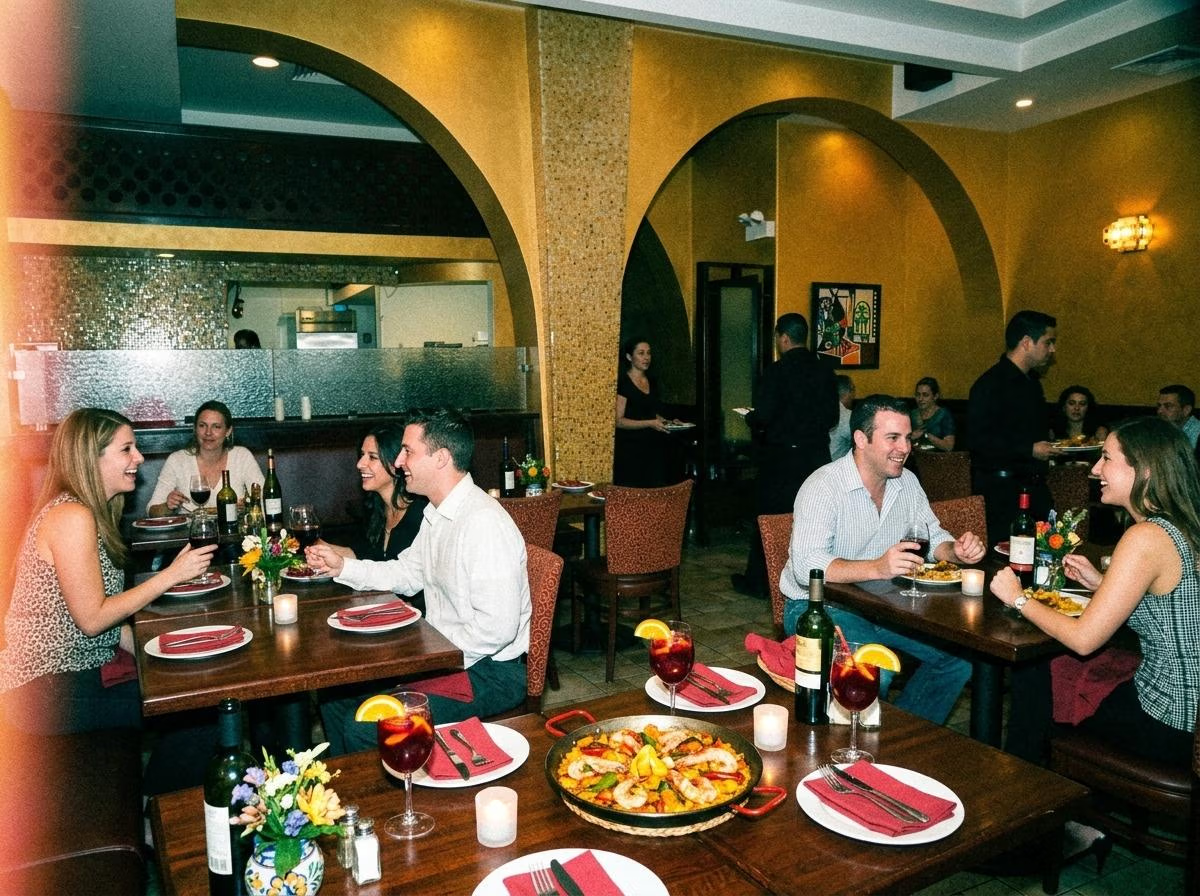
- shrimp paella;
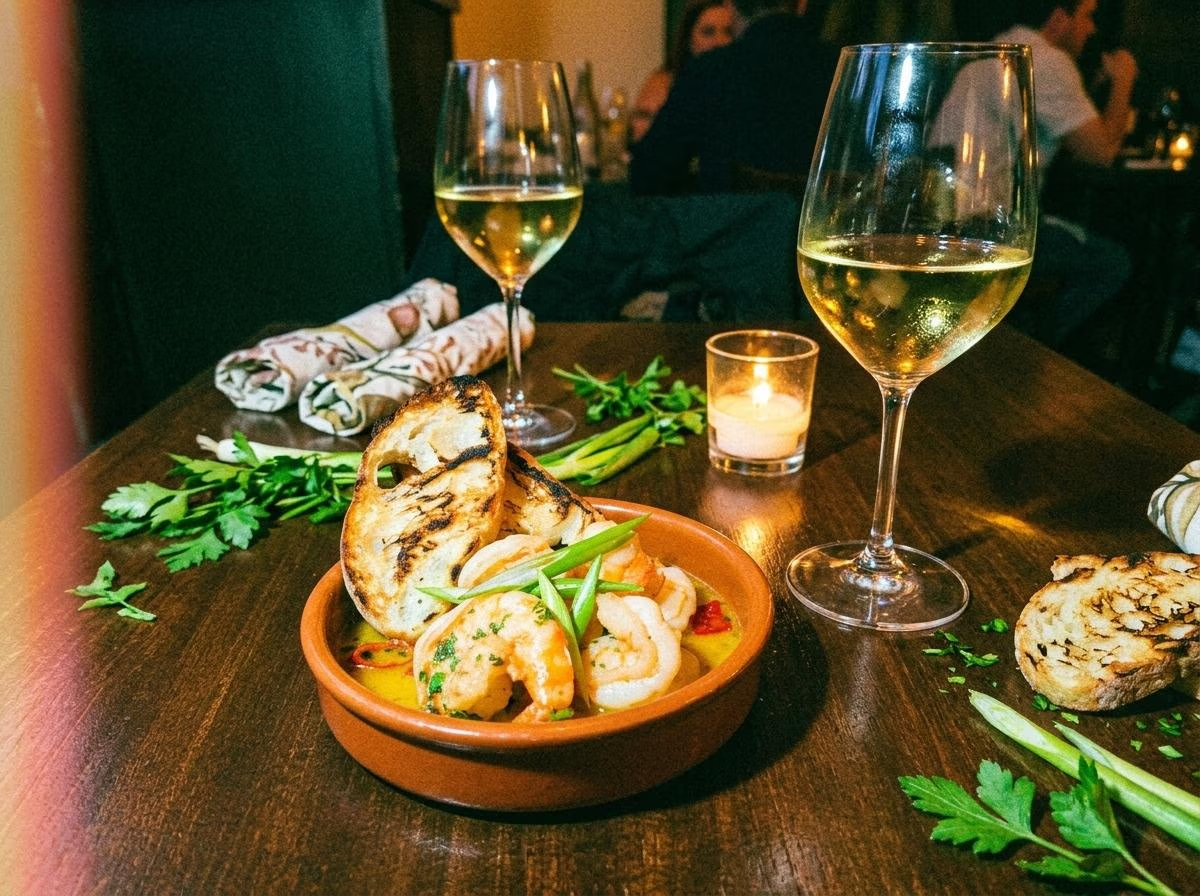
- gambas al ajillo;
- pan-seared salmon;
- chicken pintxos;
- beef pintxos;
- albóndigas;
- patatas bravas;
- crisp cauliflower;
- salads;
- crostini;
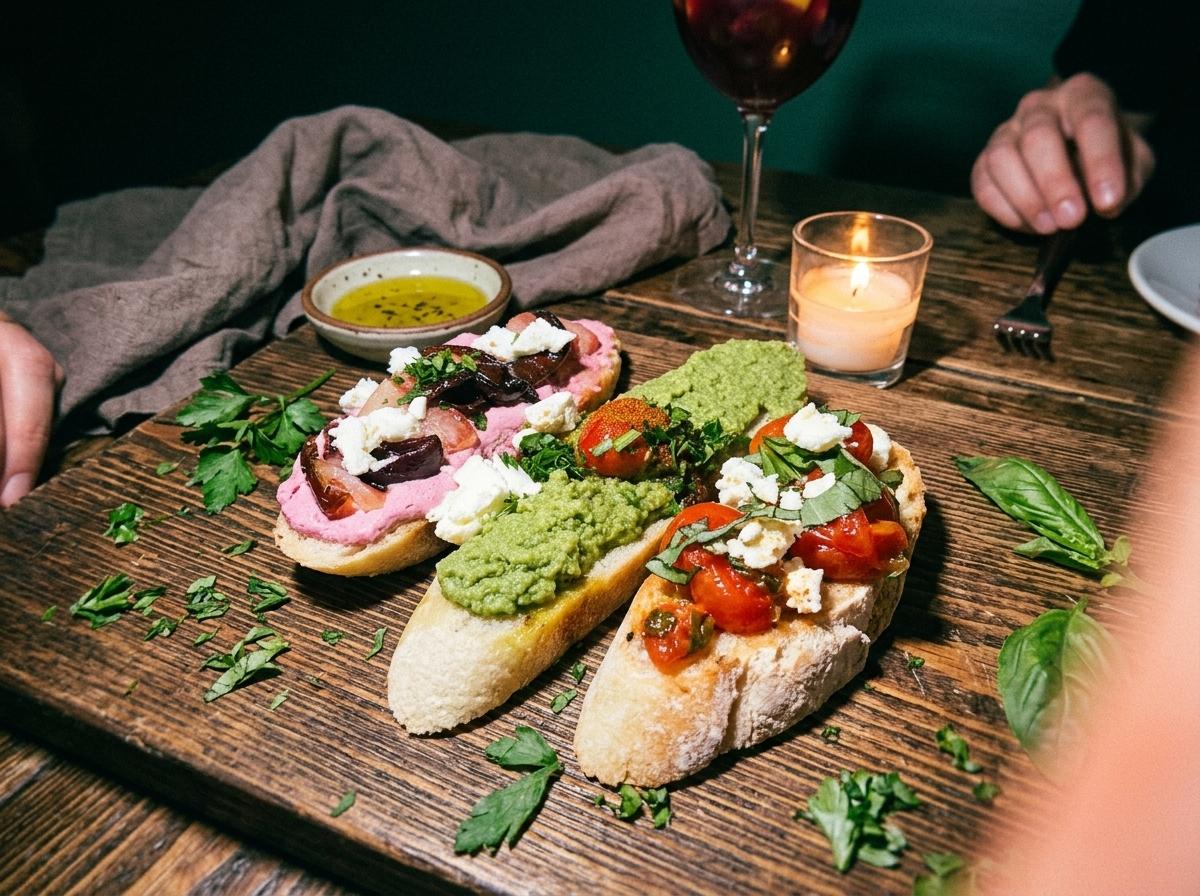
- and multiple pizzas.
That creates very different wine needs.
The program needs enough range to handle:
- seafood;
- garlic;
- olive oil;
- tomato;
- spice;
- fried textures;
- cheese;
- beef;
- chicken;
- mushrooms;
- and shared-table dining.
That does not mean every dish needs one assigned wine.
It means the wine program must contain enough structural diversity to give diners reasonable choices.
Wine Pairing Should Influence the List Without Taking Over This Page
The current live article spends a large amount of time teaching:
- white with fish;
- rosé with shared plates;
- sparkling with salty foods;
- lighter reds with vegetables;
- and bolder reds with meat.
Those ideas are useful.
But they belong primarily on:
the Mediterranean Wine Pairing Hub.
This page should keep only the program-level principle:
A wine list needs enough acidity, weight, tannin, fruit and stylistic range to handle the restaurant’s menu.
Then link users who want:
“What should I drink with shrimp paella?”
to the dedicated pairing page.
That keeps the two intents separate.
Why Shared Plates Change Wine-List Design
Shared dining creates an interesting challenge.
A table may be eating:
- shrimp;
- potatoes;
- vegetables;
- meatballs;
- mushrooms;
- and pizza
at roughly the same time.
A hyper-specific wine that works beautifully with one plate may feel less useful across the entire table.
That creates a need for versatile styles.
Examples might include:
- crisp whites;
- dry rosé;
- sparkling wines;
- or medium-bodied reds.
But this is not a rigid rule.
The key wine-program principle is:
the list should give guests options that can move across several dishes when needed.
One Glass vs One Bottle
This is an important restaurant-wine decision.
Choose By the Glass When
- different diners want different styles;
- you want to try an unfamiliar grape;
- the meal moves between very different dishes;
- or you only want one serving.
Choose a Bottle When
- the table broadly agrees on style;
- several people want the same wine;
- the bottle suits most of the meal;
- or exploring a wine beyond the by-the-glass list matters.
Nia’s separate glass and bottle lists support both approaches.
How Beginners Should Navigate Nia’s Wine Program
A guest should not have to understand every grape on the list.
Start with preferences.
Say:
I want a dry white with high acidity.
or:
I normally drink Pinot Noir and want something similar in weight.
or:
I want a softer red rather than a heavily tannic Cabernet.
or:
I want to try a Greek grape tonight.
These statements are more useful than pretending to recognize every region.
The wine list should make exploration easier—not turn dinner into a test.
How Experienced Wine Drinkers Can Use the List
A more experienced wine drinker may want to look at:
- region;
- grape;
- producer;
- style;
- tannin;
- body;
- or where a wine sits in the bottle-list hierarchy.
The current Nia bottle list provides enough regional variety to move from:
Greek indigenous grapes
to:
- Italian classics;
- Rioja;
- Bordeaux;
- Loire;
- Champagne;
- and California.
That is where the bottle program adds depth beyond the more compact glass list.
What Does “Curated” Actually Mean?
Restaurant wine content often uses the word:
curated
without explaining anything.
A curated list should ideally show evidence of deliberate choices.
That can mean:
- multiple price points;
- different body levels;
- several regions;
- both familiar and unfamiliar grapes;
- by-the-glass discovery;
- deeper bottle options;
- and styles that work with the restaurant’s actual cuisine.
The word becomes meaningful only when those choices are visible.
Nia’s current lists provide enough evidence to discuss those decisions concretely.
So instead of writing:
“Our expertly curated wines elevate every experience.”
write:
“The current program gives diners familiar international grapes alongside Greek, Spanish and Italian regional wines, with a separate bottle list for guests who want deeper exploration.”
That actually tells the reader something.
Is Nia’s Wine Program Exclusively Mediterranean?
No.
And it should not be described that way.
Current wines extend beyond Mediterranean regions into:
- California;
- Oregon;
- Germany;
- Bordeaux;
- Loire;
- and other regions.
The accurate positioning is:
Mediterranean-led and internationally supplemented.
That reflects the restaurant’s culinary identity without misrepresenting the inventory.
Is Nia a Wine Bar or a Restaurant With a Wine Program?
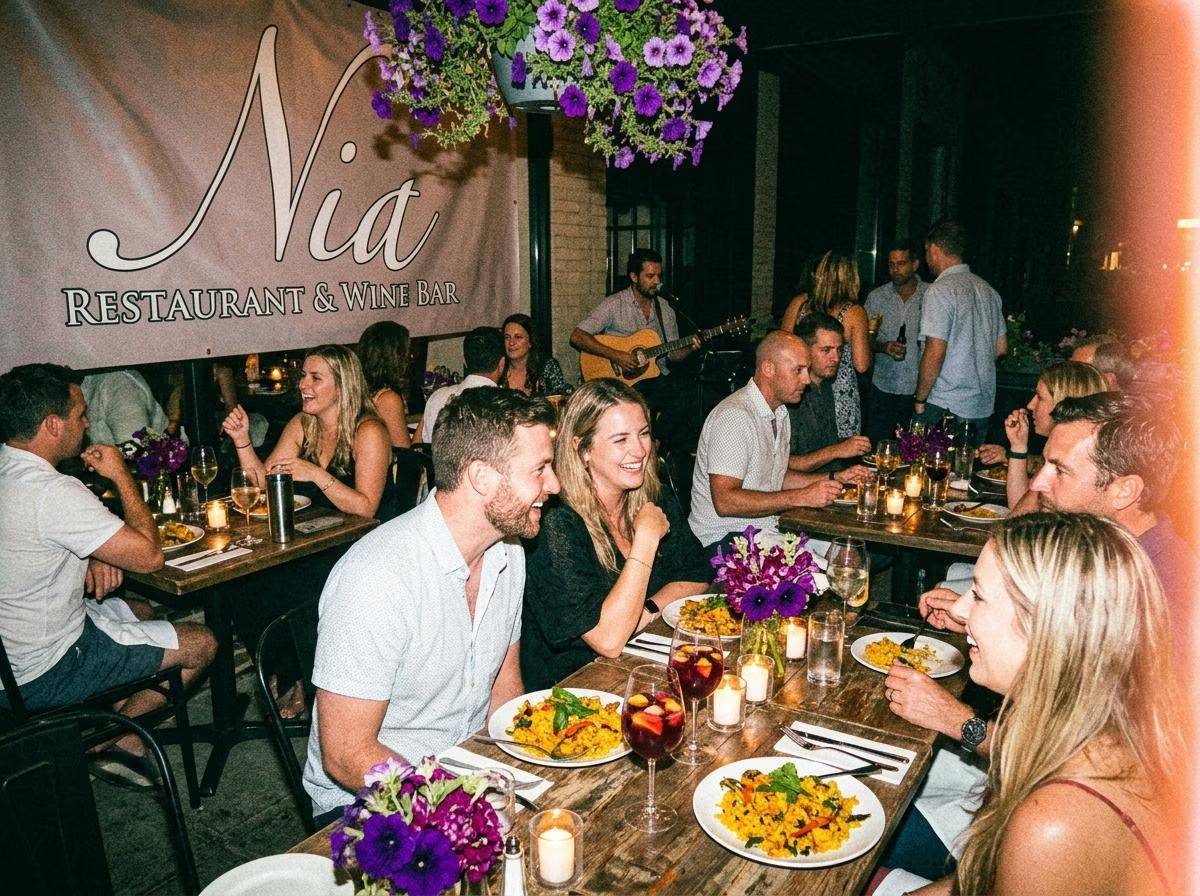
Nia describes itself as a restaurant and wine bar.
Operationally, its site supports both identities through:
- a full dinner menu;
- Wine By Glass;
- Wine Bottles;
- Wine Tasting;
- cocktails;
- and other beverage menus.
Wine Program vs Wine Pairing: They Are Different Intents
This distinction is essential.
Wine Program Intent
The reader wants to understand:
- what types of wines are on the list;
- how the list is organized;
- which regions and grapes appear;
- why both glass and bottle programs exist;
- and how the overall program fits the restaurant.
Owner: this page.
Wine Pairing Intent
The reader wants to know:
- what wine to drink with shrimp;
- paella;
- salmon;
- small plates;
- pizza;
- or another dish.
Owner: Mediterranean Wine Pairing Hub.
Do not let both pages answer both questions at equal depth.
Wine Program vs Wine Tasting
These are also different.
A wine program is the broader system.
A tasting is a specific experience.
Nia currently publishes a separate Wine Tasting offering featuring Skouras St. George Agiorgitiko, Voelos Crianza Tempranillo and Chianti Classico in its current premium pairing.
That page should own:
- current tasting wines;
- current tasting format;
- current pricing;
- and current availability.
This article should say only:
Nia also offers structured tasting options; check the current Wine Tasting page for the live format.
Do not duplicate the tasting menu here.
Alcohol Is Optional
A wine-program article naturally focuses on wine.
But it should not imply everyone at the table needs to drink.
Nia also maintains non-alcoholic beverage options.
Guests who do not drink alcohol can use Nia’s non-alcoholic beverage menu instead; participation in a wine-focused dinner does not require everyone at the table to drink wine.
Frequently Asked Questions
What is a Mediterranean wine program?
A Mediterranean wine program is a wine list whose identity substantially reflects Mediterranean wine regions and food traditions while remaining broad enough to serve different diners and dishes.
It may include wines from Greece, Spain, Italy and France alongside wines from other regions.
Is Nia’s wine list only Mediterranean wine?
No.
Nia’s current program includes substantial Greek, Spanish, Italian and French representation, but it also includes wines from California, Oregon, Germany and elsewhere.
Does Nia serve Greek wine?
Yes.
Current Greek selections include wines from Nemea, Florina, Arcadia, Crete and other Greek regions.
Does Nia have Agiorgitiko?
Yes.
The current by-the-glass menu includes Skouras Agiorgitiko “St. George” from Nemea, and the bottle list includes a Skouras Agiorgitiko Grande Cuvée.
Does Nia have Assyrtiko?
Yes.
Nia’s current bottle list includes Domaine Skouras Assyrtiko from Nemea. It is not currently listed on the by-the-glass menu reviewed.
Does Nia serve Spanish wine?
Yes.
Current examples include Albariño from Rías Baixas and Tempranillo from Rioja by the glass, with additional Spanish wines on the bottle list.
Does Nia serve Italian wine?
Yes.
Current Italian selections include Sangiovese/Chianti Classico and several additional bottle options from regions including Alto Adige, Veneto, Piedmont, Tuscany and Puglia.
Does Nia have wine by the glass?
Yes.
Its current Wine By Glass menu includes sparkling, rosé, white and red categories.
Does Nia have wine bottles?
Yes.
Nia publishes a substantially broader bottle list that extends beyond its by-the-glass program.
Why have both wine by the glass and bottle wine?
By-the-glass wine lets diners explore individual styles with lower commitment.
A bottle list gives the restaurant greater depth and lets a table explore wines that may not be practical to pour individually.
What wine works with Mediterranean food?
There is no single wine for all Mediterranean food.
The cuisine can include seafood, vegetables, tomato, garlic, olive oil, herbs, meat, fried foods and shared plates.
Use the dedicated Mediterranean Wine Pairing Hub for dish-specific recommendations.
Does Nia offer wine tasting?
Yes.
Nia currently publishes a separate Wine Tasting offering. The specific format and wines should be checked on that page because they can change.
Is Nia’s wine program sommelier-led?
Nia’s blog currently uses “our sommelier” terminology, but the live menu pages reviewed do not identify a named current sommelier.
Until the restaurant verifies the current role and person, this article should describe the Nia wine program rather than attribute specific decisions or quotations to an unnamed sommelier.
Is Nia a wine bar?
Nia identifies itself as Nia Restaurant & Wine Bar and operates a full dinner menu alongside separate glass, bottle and tasting wine offerings.
Where can I learn about individual Greek grapes?
Use Nia’s dedicated varietal pages for:
- Agiorgitiko;
- and:
- Assyrtiko.
Those pages should own grape-specific education rather than repeating it here.
How can a beginner choose wine at Nia?
The easiest way to approach the list is not to memorize grapes.
Start with four questions.
1. Do You Want White, Rosé, Sparkling or Red?
This immediately narrows the list.
2. What Style Do You Normally Like?
Examples:
- crisp;
- fruit-forward;
- soft;
- dry;
- full-bodied;
- or lightly sweet.
3. Are You Sharing Several Dishes or Eating One Main Dish?
Shared tables may benefit from versatile wine.
A single substantial dish may allow a more specific choice.
4. Do You Want Something Familiar or Something New?
If familiar:
choose a grape or style you already know.
If exploratory:
ask about:
- Agiorgitiko;
- Assyrtiko;
- Moschofilero;
- Vidiano;
- Mencía;
- or another regionally distinctive wine.
That is what a good wine program should make possible.
What wines work across shared plates?
Shared tables may benefit from versatile wine.
Examples might include:
- crisp whites;
- dry rosé;
- sparkling wines;
- or medium-bodied reds.
The key wine-program principle is:
the list should give guests options that can move across several dishes when needed.
What is the difference between a wine program and wine tasting?
A wine program is the broader system.
A tasting is a specific experience.
Nia currently publishes a separate Wine Tasting offering. The specific format and wines should be checked on that page because they can change.
Want to explore Nia’s current wine program?
Want to explore Nia’s current wine program? Review the live Wine By Glass and Wine Bottles menus before your visit. If you are more interested in a structured tasting, check the current Wine Tasting offering separately.