Mediterranean Small Plates Explained: A Complete Guide to Mezze Dining
Mezze is often introduced as “Mediterranean small plates.”
That description is useful as a starting point, but it is not quite enough.
Mezze is not simply any food served on a small plate, and it is not a generic word that can be applied to every shared dish from Spain to Morocco.
It refers to a family of shared-dish traditions found across parts of the Eastern Mediterranean, Middle East, Balkans, Greece, Turkey, Cyprus, the Levant, and neighboring food cultures. The exact spelling, dishes, serving order, and meaning vary considerably from place to place.
A Greek mezze table may look different from a Lebanese one.
A Turkish meze spread may emphasize different dishes from one served in Jordan.
Balkan meze traditions add still more variation.
What connects these traditions is not one mandatory recipe.
It is the idea of building a table from multiple dishes rather than treating one large individual entrée as the only center of the meal.
Bread may sit beside dips.
Olives may share the table with vegetables.
Cheese may appear alongside seafood.
Beans or chickpeas may sit beside grilled food.
Some dishes arrive cold.
Others arrive hot.
A few may be substantial enough to feel like small mains.
Together, they create the meal.
That is the core idea this page should own.
Nia Restaurant & Wine Bar can provide a contemporary Chicago example of shared Mediterranean dining, but it is important to describe Nia accurately. Its current site positions the restaurant as Mediterranean-inspired with Spanish roots, and its live dinner menu uses the broad heading small plates rather than presenting itself as a traditional mezze restaurant. Current dishes include marinated Mediterranean olives and crisp cauliflower with rosemary hummus alongside distinctly Spanish-rooted plates such as croquetas, patatas bravas, pintxos, albóndigas, gambas al ajillo, and shrimp paella.
Those categories should not be collapsed.
This guide explains mezze first.
Then it explains how the idea relates to broader Mediterranean small-plate dining and where Nia fits without relabeling Spanish tapas as mezze.
What Is Mezze?
Mezze—also written meze, maza, or in other regional variations—generally refers to an assortment of small dishes served for sharing.
Depending on the culture and occasion, mezze can function as:
- a beginning to a larger meal;
- a collection of snacks with drinks;
- a long shared lunch;
- a social evening spread;
- or the entire meal.
That flexibility is part of what makes the term difficult to reduce to one English equivalent.
Calling mezze appetizers can undersell it.
Calling it small plates is broader than the original cultural meaning.
Calling it Mediterranean tapas is inaccurate because tapas belongs specifically to Spanish food culture.
The most useful definition is:
Mezze is a shared-dish dining tradition in which several small preparations are placed on the table for people to eat together, with the specific dishes and customs varying by region.
Is It “Mezze” or “Meze”?
Both spellings appear in English.
The variation reflects the term’s movement across different languages and food cultures.
You may encounter:
mezze
meze
maza
and other transliterations.
The spelling does not tell you whether one version is more authentic than another.
For this article, mezze is used as the primary English spelling because that is the established keyword and the spelling already used by Nia’s page.
When discussing a specifically Turkish or Balkan context, meze may also appear.
Where Is Mezze Traditionally Found?
Mezze-style dining appears across a wide area that can include parts of:
- the Levant;
- Turkey;
- Greece;
- Cyprus;
- the Balkans;
- parts of the Middle East;
- and neighboring Mediterranean food cultures.
Specific dishes, names, dining customs, and meanings vary.
The useful conclusion is not:
Every Mediterranean country serves the same mezze tradition.
It is:
Mezze belongs to a connected but highly varied family of Eastern Mediterranean, Middle Eastern, Greek, Turkish, Balkan, and neighboring food traditions.
Mezze Is Not the Same as “Mediterranean Cuisine”
Mediterranean cuisine is a huge umbrella.
It includes Spanish, Italian, Greek, Turkish, Levantine, North African, Adriatic, island, and many other regional traditions.
Mezze belongs to only part of that world.
This distinction matters because otherwise almost every Mediterranean dish risks being mislabeled.
Spanish croquetas are not mezze simply because they are small.
Patatas bravas are not mezze.
Pintxos are not mezze.
A slice of Italian pizza is not mezze.
A Catalan pan con tomate is not automatically mezze.
A shared Mediterranean restaurant may serve food influenced by both mezze cultures and Spanish tapas traditions, but cultural categories still matter.
Nia is a useful example.
The current menu contains rosemary hummus and marinated Mediterranean olives, which fit naturally into the broader conversation around Eastern Mediterranean-style shared foods. It also contains patatas bravas, croquetas, pintxos, albóndigas, gambas al ajillo, and paella, which belong much more clearly to Spanish culinary influence.
The restaurant therefore demonstrates Mediterranean shared dining.
It should not be used to imply that every small plate on its menu is mezze.
Mezze vs Tapas: What Is the Difference?
The simple answer is:
Mezze belongs primarily to Eastern Mediterranean, Middle Eastern, Greek, Turkish, Balkan, and related shared-dish traditions.
Tapas belongs to Spanish culinary culture.
Both formats may involve several dishes.
Both may be social.
Both can become an entire meal.
Both may include seafood, vegetables, cheese, bread, or meat.
The similarity is in the format.
The difference is in the culinary traditions and dishes.
A bowl of hummus and a plate of patatas bravas might both be shared, but that does not make them the same kind of food.
Typical Mezze Examples
Depending on region, mezze may include dishes such as:
- hummus;
- baba ganoush or other eggplant preparations;
- labneh;
- tzatziki or cacık;
- olives;
- stuffed grape leaves;
- falafel;
- tabbouleh;
- cheese;
- vegetable salads;
- beans;
- grilled or roasted vegetables;
- seafood;
- or small grilled proteins.
Typical Tapas Examples
Spanish tapas may include:
- patatas bravas;
- croquetas;
- gambas al ajillo;
- tortilla Española;
- pan con tomate;
- jamón;
- pimientos;
- anchovies;
- meatballs;
- or regional seafood preparations.
Nia’s tapas page should explain that Spanish tradition in depth.
This page should own mezze.
Mezze vs Generic Small Plates
Small plates is the broadest term.
It describes a restaurant service format, not a single cuisine.
Any chef can create a small-plates menu.
There can be:
- Mediterranean small plates;
- Spanish small plates;
- Japanese small plates;
- Korean small plates;
- Italian small plates;
- modern American small plates;
- or fusion small plates.
Mezze can be served in small-plate format.
But small plates are not automatically mezze.
This is especially important for Nia because its current live menu explicitly uses the heading small plates.
That is the safest broad terminology for Nia’s entire shared-dining section.
When discussing culturally specific dishes, use the more precise term.
Mezze vs Antipasti
Italian antipasti also creates confusion because antipasti can involve several small plates before a meal.
But antipasti is an Italian course tradition.
A table may include:
- olives;
- cheese;
- cured meat;
- vegetables;
- seafood;
- or bread.
There can be visual similarities with mezze.
The cultural context is different.
Again, shared food is a format that appears in many places.
Similar serving styles do not make different culinary traditions interchangeable.
Mezze vs Charcuterie
A cheese-and-cured-meat board may be shared.
That does not automatically make it mezze.
Charcuterie centers on prepared meats, often alongside cheese, bread, pickles, mustard, fruit, or other accompaniments.
Mezze generally encompasses a wider range of prepared dishes and can form a much more complete meal.
A mezze spread may contain no cured meat at all.
What Does a Mezze Table Look Like?
There is no universal layout, but a well-built mezze table often develops through contrast.
You might have:
- something creamy;
- something crisp;
- something acidic;
- something fresh;
- something warm;
- something grilled;
- something briny;
- and bread or another element that helps connect the dishes.
That variety makes the meal feel complete even though no single plate dominates the table.
A meal might begin with dips and bread.
Then vegetables and salads appear.
Warm dishes may follow.
Seafood or grilled proteins can add more substance.
Nothing requires every category to appear.
The table simply develops according to appetite, occasion, and local tradition.
Cold Mezze
Cold mezze can provide the foundation of a shared spread.
Depending on region, examples may include:
- hummus;
- labneh;
- yogurt-based dips;
- eggplant dips;
- olives;
- tabbouleh;
- other herb-heavy salads;
- tomato and cucumber preparations;
- stuffed grape leaves;
- cheese;
- pickled vegetables;
- or bean dishes.
Cold does not mean secondary.
A strong mezze meal may depend heavily on these dishes because they bring acidity, creaminess, freshness, salt, herbs, and contrasting textures before the warmer plates arrive.
Hot Mezze
Hot mezze expands the meal.
Examples can include:
- falafel;
- grilled vegetables;
- fried or baked cheese;
- warm seafood;
- meat or vegetable pastries;
- small kebabs;
- stuffed vegetables;
- sausages in some regional traditions;
- or other cooked dishes.
Again, the exact list depends on location.
A Lebanese mezze table, Greek mezedes, Turkish meze service, and Balkan meze spread should not be expected to contain identical foods.
Hummus
Hummus is one of the dishes most closely associated with mezze internationally.
At its core, it is built around chickpeas and tahini, typically with lemon, garlic, and other seasonings depending on preparation.
Its usefulness on a mezze table comes from both flavor and function.
It provides a creamy component.
It pairs naturally with bread and vegetables.
It can sit beside acidic salads, grilled food, olives, and other dishes without dominating the entire spread.
Nia currently serves crisp cauliflower with rosemary hummus, chili oil, and pita.
That is a contemporary restaurant interpretation rather than proof that Nia operates a traditional mezze menu.
Nia uses a hummus-based Mediterranean small plate that reflects one ingredient and format associated with mezze-style dining.
Baba Ganoush and Eggplant Dips
Roasted eggplant is important across numerous Eastern Mediterranean and Middle Eastern cuisines.
Baba ganoush is one familiar preparation, although recipes and terminology vary regionally.
Other eggplant dips may combine:
- roasted eggplant;
- olive oil;
- tahini;
- lemon;
- garlic;
- yogurt;
- herbs;
- or cheese.
Not every eggplant dip is baba ganoush.
Similar ingredients can produce different culturally specific dishes.
Tzatziki and Cacık
Yogurt-and-cucumber preparations appear in several regional traditions.
Greek tzatziki commonly combines yogurt, cucumber, garlic, and herbs.
Turkey’s cacık is related but not identical in every preparation.
These dishes work especially well within a shared spread because cool yogurt and cucumber can provide contrast to:
- grilled foods;
- spicy dishes;
- bread;
- fried food;
- or richer meat.
A strong mezze guide should explain relationships without flattening every regional version into one recipe.
Olives
Olives may be one of the simplest things on the table.
They still matter.
Different varieties and curing methods create differences in:
- saltiness;
- bitterness;
- fruitiness;
- firmness;
- and briny flavor.
They can be served almost untouched or marinated with citrus, herbs, spices, or oil.
Nia currently serves marinated Mediterranean olives as one of its small plates.
That is one of the clearer points of connection between Nia’s live menu and a mezze-style table.
Stuffed Grape Leaves
Stuffed grape leaves appear in several Mediterranean and Middle Eastern cuisines under different names and preparations.
Fillings may involve:
- rice;
- herbs;
- vegetables;
- meat;
- spices;
- or combinations of them.
Some are served warm.
Others are served cool.
The broader lesson is that mezze dishes often travel across borders while developing local identities.
A useful educational page should acknowledge that variation rather than presenting one version as the only authentic preparation.
Falafel
Falafel is built around ground chickpeas, fava beans, or a regional combination.
It introduces several useful contrasts to a mezze table.
The outside can be crisp.
The interior remains softer.
Herbs and spices add aromatic depth.
Tahini, pickles, salad, bread, or other accompaniments add further variation.
Falafel may appear within mezze, sandwiches, platters, or full meals depending on context.
It should not be described as a universal Mediterranean appetizer.
It belongs to particular food traditions.
Cheese and Dairy
Dairy can play many roles in mezze.
Depending on region, the table might include:
- feta;
- halloumi;
- labneh;
- yogurt dips;
- aged cheeses;
- or softer fresh cheeses.
Cheese can provide:
- salt;
- fat;
- fermented flavor;
- creaminess;
- or a grilled texture.
Not every mezze table needs cheese.
But where it appears, it can provide an important contrast to vegetables, herbs, bread, and acidic dishes.
Vegetables Are Not Side Characters
One of the strongest features of mezze is that vegetables can be complete dishes rather than decorative accompaniments.
Eggplant may be roasted.
Peppers may be grilled or preserved.
Tomatoes may appear fresh or cooked.
Cucumbers can become salads or yogurt-based preparations.
Beans and chickpeas may form dips or standalone dishes.
Greens can be dressed with lemon, vinegar, olive oil, or herbs.
This allows a table to build significant variety without making every plate meat-centered.
Seafood in Mezze
Mezze can include seafood, particularly in coastal traditions.
Possibilities may include:
- octopus;
- shrimp;
- small fish;
- calamari;
- anchovies;
- shellfish;
- or fish preparations.
Seafood does not define mezze.
It is one possible category within the spread.
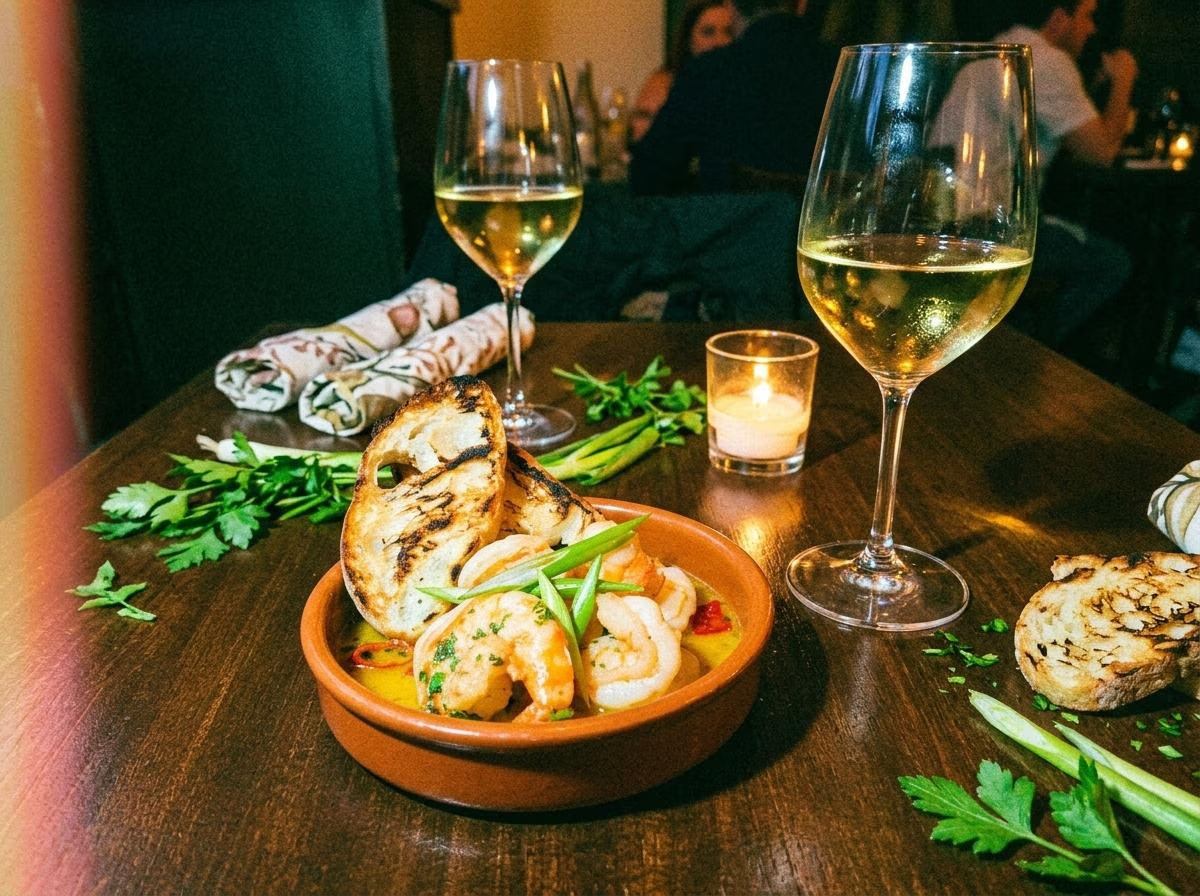
Nia’s current menu includes salmon, shrimp paella, and gambas al ajillo, but those dishes should not automatically be labeled mezze. The gambas and paella have especially clear Spanish identities, while salmon with pipérade belongs to Nia’s broader Mediterranean-inspired shared-plate format.
Meat in Mezze
Small portions of grilled or cooked meat can also appear within mezze-style dining.
Depending on region, this might include:
- kebabs;
- sausages;
- meatballs;
- lamb;
- chicken;
- or other preparations.
But this page should avoid suggesting that Nia’s albóndigas or pintxos are therefore mezze.
Those dishes have a stronger Spanish context on Nia’s current menu.
The correct editorial distinction is:
Some mezze traditions include small meat dishes. Nia also serves small meat dishes, but its Spanish-rooted meat plates should be described according to their own culinary tradition rather than relabeled as mezze.
Bread Is Often Functional
Bread does more than occupy space on a mezze table.
It can be used to:
- scoop dips;
- carry spreads;
- pick up oil or sauce;
- pair with cheese;
- or move between several dishes.
This is why bread frequently acts as a connective element.
Different regions use different breads.
Pita may be familiar internationally, but it is not the only bread associated with shared dining.
A complete guide should avoid implying that mezze means “pita plus dips.”
How Do You Build a Mezze Meal?
A first-time diner does not need a strict formula.
It helps to think in contrasts.
Start with one or two cool dishes.
Add something vegetable-based.
Choose one warm or crisp plate.
Add seafood or meat only if the table wants it.
Include bread where useful.
Then add another dish only if the table is still hungry.
For example, a theoretical spread for four might include:
- hummus;
- an eggplant dish;
- olives;
- a tomato-and-herb salad;
- a grilled vegetable plate;
- one hot seafood dish;
- one grilled protein;
- and bread.
Another table could build a completely vegetarian meal.
The flexibility is part of the appeal.
How Many Mezze Dishes Should You Order?
There is no universal number.
Portions vary.
A small bowl of olives does not feed people the same way as a platter of grilled vegetables.
A dip and bread are different from a plate containing seafood or meat.
Restaurant portion sizes also vary significantly.
The strongest advice is:
Start smaller than you think, then add more.
That approach works particularly well when a restaurant allows dishes to arrive progressively.
It reduces waste and prevents the table from becoming crowded immediately.
Should Mezze Arrive All at Once?
It depends on the restaurant and tradition.
A large spread can be dramatic and communal.
A more progressive service allows diners to concentrate on several dishes at a time.
Neither is universally correct.
For a modern restaurant, good pacing should prevent:
- hot food from becoming cold;
- cold food from sitting too long;
- the table from becoming physically overcrowded;
- or diners from feeling they need to rush.
If pacing matters, tell the server you prefer the dishes in stages.
Do You Need a Main Course After Mezze?
No.
Mezze can become the meal.
That is one of the most important misconceptions to correct.
A few small dishes may function as appetizers before something larger.
But a sufficiently varied spread can provide:
- vegetables;
- legumes;
- bread;
- dairy;
- seafood;
- and protein
without requiring another entrée afterward.
The answer depends entirely on appetite and format.
Is Mezze Always Vegetarian?
No.
But it can be highly vegetarian-friendly.
Many well-known mezze dishes are built around:
- chickpeas;
- eggplant;
- yogurt;
- cheese;
- tomato;
- cucumber;
- herbs;
- olives;
- beans;
- and grains.
Other mezze dishes contain:
- meat;
- fish;
- shellfish;
- or animal-based ingredients.
Do not assume an entire mezze menu is vegetarian because several dips are plant-based.
Can Mezze Be Vegan?
Yes, a mezze-style meal can often be built with vegan dishes.
Possible components might include:
- hummus;
- eggplant dips made without dairy;
- olives;
- vegetable salads;
- falafel;
- beans;
- lentils;
- roasted vegetables;
- stuffed grape leaves without meat;
- bread;
- and tahini-based sauces.
But ingredients vary.
Yogurt, cheese, egg, honey, butter, or meat stock may appear unexpectedly.
Ask the restaurant if the dietary requirement is strict.
Is Mezze Gluten-Free?
Some dishes may be naturally free from gluten.
Others are not.
Bread is an obvious source.
Falafel recipes can vary.
Fried food may use flour or shared fryers.
Sauces, grains, or cross-contact can also matter.
Someone with celiac disease or a medical gluten restriction should never assume that a mezze spread is safe simply because many dishes are vegetable-based.
Direct restaurant confirmation is the appropriate approach.
Mezze and Food Allergies
Shared dining can create additional allergy considerations.
Even when one dish does not contain an allergen, shared utensils or close placement can create cross-contact at the table.
Common potential allergens in mezze-style foods may include:
- sesame;
- milk;
- tree nuts;
- wheat;
- fish;
- shellfish;
- and other ingredients.
Tahini, for example, contains sesame.
Dips may contain dairy.
Bread contains wheat unless prepared otherwise.
Someone with a serious food allergy should communicate with the restaurant before ordering and should not rely solely on a general blog description.
Nia’s current menu explicitly asks guests to communicate food allergies directly to restaurant staff.
Does Mezze Mean “Healthy”?
Not automatically.
This is another important boundary.
Mezze can include vegetables, legumes, olive oil, herbs, nuts, and other foods also found within Mediterranean-style dietary patterns.
It can also include:
- fried food;
- cheese;
- rich dips;
- processed meats;
- large amounts of bread;
- or other calorie-dense dishes.
Cuisine format does not determine the nutritional profile of the meal.
A platter of vegetables, hummus, beans, and herbs is nutritionally different from a table dominated by fried cheese, cured meat, and pastries.
Nia already has a separate evidence-led Mediterranean Diet Health Guide.
That page should own nutrition and health research.
This page should own mezze.
Why Variety Is Central to Mezze
Variety matters because each dish can perform a different role.
One brings acidity.
Another brings creaminess.
Another is smoky.
Another is crisp.
Another is fresh.
Another is salty.
Another is warm and substantial.
The meal remains interesting because the table changes from bite to bite.
That is a culinary advantage, not simply a claim that shared dining automatically creates better social relationships.
Sharing Does Not Automatically Create “Better Conversations”
Shared food can create more interaction with the food because diners need to:
- pass dishes;
- choose together;
- ask what others want;
- compare flavors;
- and decide whether to order another round.
That is a reasonable observation.
The better editorial wording is:
Mezze creates a participatory table format because several dishes are shared and discussed throughout the meal.
Mezze for Two
Two diners can enjoy mezze without ordering a huge spread.
Start with:
- one dip;
- one vegetable dish;
- one hot plate;
- and perhaps one seafood or protein dish.
Then add something else if needed.
The advantage is flexibility.
Two people can taste more than they would if each ordered only one large entrée.
Mezze for Four or More
Larger tables can explore more variety.
But sharing introduces one practical issue:
one small plate may not meaningfully serve six or eight people.
Restaurants may recommend ordering multiple portions of certain dishes.
For a group, try combining:
- several cool dishes;
- two or three vegetable plates;
- a hot or fried option;
- one or two seafood or meat preparations;
- bread;
- and additional plates depending on appetite.
Ask the restaurant which dishes should be doubled rather than assuming every plate is large enough for everyone.
Does Mezze Have to Be Served With Alcohol?
No.
Mezze can be enjoyed with:
- water;
- tea;
- coffee;
- fruit-based drinks;
- yogurt drinks;
- wine;
- beer;
- spirits;
- or modern non-alcoholic beverages,
depending on culture, restaurant, and preference.
Alcohol is not required.
Nia has a separate Mediterranean Wine Pairing Hub for readers specifically interested in wine.
Keep detailed pairing there.
If You Do Want Wine With Mezze
Because several flavors may share the table, highly versatile wines can be easier than trying to create a separate pairing for each dish.
Acidic whites, sparkling wines, dry rosé, and lighter reds can sometimes bridge several plates.
But hummus, seafood, spicy food, grilled meat, cheese, and tomato do not all demand the same wine.
The exact pairing depends on the spread.
That is enough explanation for this page.
Deep wine advice belongs elsewhere.
Mezze at Home
Mezze is particularly easy to adapt for home entertaining because not every dish needs to be complicated.
A simple home spread might combine:
- hummus;
- olives;
- a chopped tomato-cucumber salad;
- roasted vegetables;
- a yogurt dip;
- warm bread;
- and one cooked plate.
Some components can be purchased.
Others can be homemade.
The table does not become less legitimate because everything was not cooked from scratch.
The goal is variety and a meal structure that works for the people eating it.
A Beginner Mezze Spread
For someone completely new to the format, a five-part spread is enough.
1. Something Creamy
Hummus or a yogurt-based dip.
2. Something Fresh
Tomato, cucumber, herbs, greens, or another salad.
3. Something Briny or Acidic
Olives, pickled vegetables, or something dressed with lemon or vinegar.
4. Something Hot
Falafel, grilled vegetables, seafood, or another cooked dish.
5. Bread
Use the bread that makes sense for the regional direction of the meal.
This is a framework, not a traditional rule.
It helps a beginner build contrast.
A Vegetarian Mezze Spread
A vegetarian spread might include:
- hummus;
- eggplant dip;
- olives;
- tomato-cucumber salad;
- roasted peppers;
- falafel;
- grilled halloumi or another cheese if desired;
- stuffed grape leaves;
- and bread.
This can form a full meal.
No meat substitute is required simply because no meat appears.
A More Substantial Mezze Spread
For diners wanting a larger evening meal, add:
- grilled fish;
- shrimp;
- chicken;
- lamb;
- or another regional protein
alongside the vegetables, dips, bread, and salads.
The meal still works as a spread rather than needing one giant central entrée.
Do Mezze Dishes Come in Courses?
Sometimes.
Sometimes not.
The exact rhythm depends on restaurant and culture.
Some spreads arrive nearly simultaneously.
Others develop over time.
Modern restaurants may use kitchen pacing rather than one culturally fixed sequence.
Mezze can be the beginning.
It can also be the entire event.
Does Mezze Have an Exact Historical Origin?
It is safer not to invent one.
Food traditions evolve through:
- trade;
- migration;
- empire;
- religion;
- agriculture;
- household practice;
- hospitality;
- restaurants;
- and regional exchange.
The word and custom have circulated through several languages and cultural regions.
A responsible Nia article does not need to identify one mythical moment when mezze was invented.
Mezze developed across interconnected food cultures of the Eastern Mediterranean, Middle East, Balkans, and neighboring regions, with local forms evolving over long periods of cultural exchange.
Is Mezze a “Mediterranean Philosophy”?
Not universally.
Hospitality and shared food are undeniably important in many of these cultures.
A better formulation is:
In many cultures where mezze is served, shared dishes are connected with hospitality and communal eating. The exact customs differ by place, household, and occasion.
Specificity is better than turning dozens of cultures into one lifestyle slogan.
How Nia Fits Into the Mezze Conversation
Nia should appear here as a modern shared-dining example, not the definition of mezze.
Nia’s homepage currently describes the restaurant as Mediterranean-inspired with Spanish roots and dining designed for sharing.
Its dinner menu currently includes:
- marinated Mediterranean olives;
- pan-seared salmon;
- croquetas;
- shrimp paella;
- chicken pintxos;
- beef pintxos;
- Nia salad;
- crisp cauliflower with rosemary hummus;
- patatas bravas;
- albóndigas;
- gambas al ajillo;
- veggie croquettes;
- and artisan pizzas.
The menu therefore supports shared Mediterranean dining.
But those dishes represent several different culinary influences.
Nia Dishes That Relate Most Naturally to the Mezze Conversation
Marinated Mediterranean olives fit comfortably within the idea of a mezze-style shared table.
Rosemary hummus with crisp cauliflower uses one of the dishes most familiar from Eastern Mediterranean and Levantine shared dining, although Nia’s preparation is a modern restaurant interpretation.
Nia salad can function as one fresh shared component within a larger table.
Nia Dishes That Should Be Described as Spanish, Not Mezze
Patatas bravas
Croquetas
Chicken and beef pintxos
Albóndigas
Gambas al ajillo
Shrimp paella
These dishes are better connected to Nia’s Spanish-rooted identity and the separate tapas/paella cluster.
That distinction is essential.
A restaurant can combine several Mediterranean influences without erasing where individual dishes come from.
A Nia Shared Dinner Is Broader Than Mezze
A guest at Nia today could create a shared meal that moves across several influences.
For example:
- start with olives;
- add crisp cauliflower with rosemary hummus;
- choose patatas bravas;
- share gambas al ajillo;
- add salmon or shrimp paella;
- and finish with churros or burnt Basque cheesecake.
That is clearly shared dining.
It is also clearly not one traditional mezze spread.
It moves from Mediterranean ingredients into Spanish dishes and broader restaurant interpretations.
The strongest copy should celebrate that hybridity rather than trying to force every dish under the mezze keyword.
Mezze Is About the Table, but Cultural Names Still Matter
There is a useful balance to strike.
Food traditions influence one another.
People migrate.
Recipes evolve.
Restaurants reinterpret dishes.
No cuisine exists in a sealed box.
At the same time, calling everything a generic Mediterranean small plate erases useful distinctions.
The better approach is to recognize both truths.
A hummus plate can sit next to Spanish croquetas.
They can be shared at the same table.
They do not become the same cuisine because they are served together.
That principle should guide the entire Nia content cluster.
Frequently Asked Questions About Mezze
What does mezze mean?
Mezze refers broadly to a collection of small dishes served for sharing across several Eastern Mediterranean, Middle Eastern, Greek, Turkish, Balkan, and neighboring food traditions.
The exact dishes and customs vary by region.
Is it mezze or meze?
Both spellings are commonly used in English.
Different transliterations reflect different languages and regions.
Is mezze Mediterranean?
Yes, mezze is associated with several Mediterranean and neighboring food cultures, particularly around the Eastern Mediterranean, while also extending into Middle Eastern and Balkan traditions.
It should not be treated as the universal small-plate format of every Mediterranean country.
Is mezze Greek?
Mezze exists in Greek food culture, but it is not exclusively Greek.
Similar shared-dish traditions appear across Turkey, Cyprus, the Levant, the Balkans, and other neighboring regions.
Is mezze Lebanese?
Mezze is an important part of Lebanese dining, but it is not exclusively Lebanese.
Lebanese cuisine has its own distinct dishes and mezze traditions within a much broader regional family.
What foods are usually served as mezze?
Depending on region, a mezze spread may include hummus, eggplant dips, yogurt-based dips, olives, salads, stuffed grape leaves, falafel, cheese, grilled vegetables, beans, seafood, bread, and small meat dishes.
There is no universal required list.
Is hummus mezze?
Hummus is commonly served as part of mezze spreads in several Eastern Mediterranean and Middle Eastern traditions.
It can also appear in sandwiches, bowls, individual plates, and other meal formats.
Is falafel mezze?
Falafel can be served as part of a mezze spread, but it can also be served in sandwiches or larger meals.
Its presence does not automatically make the entire meal mezze.
Is tzatziki mezze?
Tzatziki can be served as a Greek mezze component, often alongside bread, vegetables, grilled food, or other shared dishes.
Are olives mezze?
Olives are commonly included in many mezze-style spreads, though their preparation and importance vary by region.
Is mezze the same as tapas?
No.
Tapas belongs to Spanish culinary culture.
Mezze belongs to a different family of Eastern Mediterranean, Middle Eastern, Greek, Turkish, Balkan, and neighboring shared-dish traditions.
Both can involve small shared plates, which is why they are often compared.
Is paella mezze?
No.
Paella is a Spanish rice tradition with Valencian origins.
It may be shared at the table, but sharing alone does not make a dish mezze.
Are patatas bravas mezze?
No.
Patatas bravas is a Spanish tapa.
Are croquetas mezze?
Spanish croquetas are best described within tapas or Spanish small-plate culture rather than mezze.
Is mezze the same as appetizers?
Not exactly.
Some mezze dishes can function as appetizers.
But a large mezze spread can also form the entire meal.
Calling mezze “appetizers” therefore does not capture its full role.
Is mezze the same as small plates?
Mezze is one culturally specific shared-dish tradition that can be presented as small plates.
Small plates is a much broader restaurant term that applies to many cuisines.
Can mezze be the whole dinner?
Yes.
A substantial spread containing vegetables, dips, bread, legumes, cheese, seafood, or protein can function as the entire meal.
How many mezze dishes should I order?
There is no universal number because portion sizes vary.
Start with several contrasting dishes, then add more according to appetite.
Ask the restaurant how its portions are intended to be shared.
Is mezze vegetarian?
It can be highly vegetarian-friendly, but mezze can also include seafood and meat.
Check individual dishes.
Is mezze vegan?
A vegan mezze spread is possible using dishes such as hummus, vegetable salads, olives, roasted vegetables, falafel, beans, tahini-based sauces, and suitable breads.
Ingredients vary, so verify strict dietary requirements.
Is mezze gluten-free?
Some dishes may be gluten-free, while bread, flour, grains, fried foods, or cross-contact may create issues.
People with medical gluten restrictions should check directly with the restaurant.
Is mezze considered healthy?
Not automatically.
The nutritional profile depends on the actual dishes, preparation, portions, and the overall meal.
For evidence about Mediterranean-style dietary patterns, use Nia’s dedicated Mediterranean Diet Health Guide.
What drinks go with mezze?
There is no required beverage.
Water, tea, coffee, wine, beer, spirits, and non-alcoholic beverages can all appear depending on culture and setting.
If the reader specifically wants wine guidance, Nia’s Mediterranean Wine Pairing Hub should handle that intent.
Does Nia serve mezze?
Nia currently serves Mediterranean shared plates, including marinated olives and crisp cauliflower with rosemary hummus, but its live dinner menu does not identify the entire meal as a traditional mezze menu. The restaurant describes itself as Mediterranean-inspired with Spanish roots, and many of its other current small plates are clearly Spanish-rooted tapas-style dishes.
The most accurate wording is:
Nia offers Mediterranean shared dining with some mezze-adjacent dishes alongside Spanish tapas-style plates and other Mediterranean-inspired food.
What Nia dishes are closest to mezze-style dining?
Current examples include marinated Mediterranean olives and crisp cauliflower with rosemary hummus. Nia’s salad can also work as a fresh shared component of the table.
Are Nia’s patatas bravas and gambas al ajillo mezze?
They are better described as Spanish tapas-style dishes rather than mezze.
That distinction helps preserve both culinary accuracy and Nia’s Spanish-rooted identity.