How to Plan a Corporate Dinner in Chicago: The Complete Organizer’s Checklist
A corporate dinner can look simple from the outside. Choose a restaurant. Invite people. Order dinner. Pay the bill. For an organizer, the real process is much longer. Someone has to decide: why the event is happening; who should attend; how much the company can spend; which date works; which restaurant can accommodate the group; whether the group needs privacy; what menu format makes sense; how drinks will be handled; which guests have dietary or accessibility requirements; where people will sit; whether anyone is giving a speech; when the restaurant needs final headcount; who can approve additional costs; and how guests will get home. The current Nia corporate-dinner guide already covers many of these elements, including objective setting, budget, restaurant selection, menu format, beverages, dietary requirements, run of show, seating, invitations, contracts and final confirmation. That is exactly the right intent for this page. The goal of the rewrite is not to turn it into another corporate sales article. It is to make it the single practical planning framework that Nia’s other corporate pages can link to. If an executive assistant, office manager, marketing coordinator, event planner, HR professional, sales leader or operations manager has been told: “Please organize dinner for 35 people in Chicago.” this page should tell them what to do next.
Quick Answer: How Do You Plan a Corporate Dinner?
Plan the dinner in this order:
- Define the purpose.
- Set an estimated guest range.
- Establish the complete approved budget.
- Choose a preferred date and alternatives.
- Create a venue brief before contacting restaurants.
- Compare the appropriate restaurant and event format.
- Review the menu and beverage structure.
- Collect dietary and accessibility requirements.
- Select the venue and put all important terms in writing.
- Send invitations and track RSVPs.
- Build the seating plan and run of show.
- Submit the guaranteed final headcount.
- Conduct one final confirmation with the restaurant.
- Arrive before guests.
- Reconcile the invoice and complete follow-up after the event.
To plan a corporate dinner, define the purpose, estimate attendance, approve the total budget, choose a date and restaurant format, confirm the menu and drinks, collect dietary and accessibility requirements, put pricing and event terms in writing, send invitations, track RSVPs, create the seating plan and run of show, submit the final headcount, and complete one final venue confirmation before the event.
The biggest planning mistake is doing these steps out of order. Choosing a restaurant before understanding the budget, guest count and purpose can create unnecessary work later.
Before Contacting a Restaurant, Create a One-Paragraph Event Brief
Restaurants can give a better recommendation when the organizer gives them a useful request. Do not begin with: “How much is a corporate event?” Instead provide: the purpose; estimated guest count; preferred date; alternative date; desired time; approximate budget; desired privacy level; food format; beverage expectation; and any presentation requirements. For example:
We are planning a Chicago dinner for approximately 30 employees and clients after an industry conference. We would like a polished but relaxed dinner with shared food, vegetarian options, a hosted beer-and-wine component and a brief 10-minute welcome. Our target event time is 6:30–9:00 PM, and we would prefer either private or meaningfully separated space.
That single brief gives the venue much more useful information than: “Do you have space for 30?”
Step 1: Define the Purpose of the Corporate Dinner
Every later decision should connect back to the purpose. A dinner for ten executives is different from a dinner for 60 employees. A client-appreciation dinner is different from a recruiting dinner. A conference networking event is different from an internal celebration. Common corporate-dinner purposes include: team celebration; employee recognition; executive dinner; client appreciation; prospective-client hosting; conference gathering; industry networking; leadership dinner; partner or vendor dinner; investor dinner; recruiting event; holiday dinner; project-completion celebration; or pre-/post-event hospitality. Do not simply label the event: Corporate Dinner. Write the real objective. For example: Celebrate the team after a product launch while allowing people from three departments to meet outside work. Or: Host 12 clients after a Chicago conference and give our senior team time for relaxed conversation without a formal presentation. Or: Welcome visiting executives and provide a short update before dinner. That objective determines almost everything else.
Step 2: Decide What Success Actually Looks Like
Avoid vague success metrics such as: Everyone had a memorable evening. Ask what needs to happen operationally. Examples: All invited clients attend. The program ends by 9:00 PM because guests have early meetings. Vegetarian guests receive equivalent meals rather than improvised side dishes. A five-minute recognition speech occurs between courses. Finance receives one complete invoice. Nobody needs to pay individually. Transportation is clearly communicated. No confidential discussion occurs in an inappropriate public setting. For some dinners, success is simply: Everyone eats well, understands why they were invited and leaves on time. That is enough.
Step 3: Build a Realistic Guest Range
You usually do not know the final number at the beginning. But the difference between: 12 guests; 30 guests; 60 guests; and 90 guests changes the type of event you can book. Start with three categories: Required attendees Likely attendees Optional attendees / plus-ones Then establish an estimated range. For example: Expected: 32 Planning range: 28–38 This is more useful to a restaurant than pretending 32 is already guaranteed. Ask internally: Who must attend? Are partners invited? Are clients attending? Are vendors attending? Are senior executives joining only for part of the event? Are there guests coming from another city? Are international guests attending? Are plus-ones allowed? Does everyone need a seat? Could the format be reception-style instead? Who approves additions to the list?
Do Not Confuse “Invited” With “Guaranteed”
If you invite 50 people, you may not have 50 final guests. Restaurants may eventually require a guaranteed headcount that becomes the billing basis. Nia’s current corporate planning content recommends giving venues an initial estimated range and asking when the guaranteed count becomes due. That is the correct approach. Do not over-guarantee because: “someone might show up.” Do not under-guarantee because: “we can squeeze in a few.” Ask the restaurant how late additions are handled.
Step 4: Establish the Complete Event Budget
The budget should exist before serious venue selection. Do not approve: $100 per person for dinner without clarifying what the $100 is supposed to include. The full restaurant budget may include: food; alcoholic beverages; non-alcoholic beverages; room or buyout fees; food-and-beverage minimums; taxes; service charges; gratuity; deposit; additional time; presentation equipment; printed menus; decorations; signage; staffing; outside-vendor fees; and other approved extras. Nia’s current planning article correctly distinguishes the menu price from the total event cost and advises organizers to request an estimated final total. The detailed financial mechanics belong on the separate Corporate Dinner Cost Guide. This page only needs the organizer’s rule: Do not choose a venue until you understand the likely total—not just the starting menu price.
Build a Budget Range, Not One Perfect Number
For example: Preferred total: $6,500 Comfortable range: $6,000–$7,500 Absolute approval ceiling: $8,000 That gives the organizer room to compare formats intelligently. A venue at $7,000 that includes most requirements may be better than a venue advertised at $5,000 that becomes $8,200 after necessary additions.
Step 5: Choose the Date and One or Two Alternatives
Avoid contacting a venue with: “Any Thursday in December.” Provide: preferred date; one or two alternatives; preferred start time; and approximate end time. Also consider: company calendars; quarter-end periods; religious holidays; school holidays where relevant; Chicago conventions; trade shows; major concerts; professional sports; transportation; hotel availability; weather-sensitive plans; and executives’ travel schedules. If the event is connected with a conference, start with the conference calendar. Do not assume the restaurant will have strong availability during major citywide events simply because the dinner is still several weeks away.
How Far in Advance Should You Plan?
There is no universal rule. Nia’s current planning guide uses the following practical framework: 8–12 weeks or earlier: objective, preliminary headcount, budget and venue outreach. 4–8 weeks: venue selection, agreement, menu and invitations. 2–4 weeks: RSVP tracking, dietary collection, seating and remarks. Final week: event details and billing instructions. Venue deadline: guaranteed headcount. Event day: final onsite review. That is a useful planning framework, not a booking guarantee. A flexible dinner for 12 may need less lead time. A Friday buyout for 80 during a major Chicago convention may need considerably more.
Step 6: Create a Venue Scorecard Before You Search
Without a scorecard, restaurant selection can become: Which website looks nicest? Build criteria before reviewing venues. A useful scorecard might include:
CriterionImportanceCapacityRequiredTotal estimated costRequiredLocationHighPrivacyDepends on purposeNoise levelHigh for conversation-led dinnersMenu flexibilityHighDietary accommodationHighBeverage optionsMedium/HighAccessibilityRequired where relevantPresentation capabilityOnly if neededService formatHighEvent durationHighCancellation termsHighTransportation convenienceMediumOutdoor spaceOptionalAtmosphereEvent-dependent
This creates a defensible decision.
Step 7: Choose the Right Restaurant Format
Not every corporate dinner requires a private dining room.
Standard Group Reservation
Useful for: smaller team dinners; informal celebrations; or casual client groups. Advantages: lower complexity; ordinary restaurant atmosphere; potentially lower financial commitment. Tradeoff: other diners remain nearby.
Semi-Private Space
Useful when: the group wants some visual separation; the conversation is not highly confidential; or the group is too large for one ordinary table. Important: semi-private does not necessarily mean acoustically private.
Private Dining Room
Useful for: leadership dinners; client dinners; speeches; presentations; or events needing controlled access. Confirm: doors; sound separation; maximum comfortable seated count; service access; presentation visibility; and whether other restaurant guests pass through the room.
Full Restaurant Buyout
Useful when the company needs: exclusive use; larger-scale branding; greater control over guest movement; or a larger private gathering. Buyouts usually create a higher spending commitment. Nia’s current buyout guide says the main dining room is currently available for buyouts and lists separate sample minimum structures by day and event period. Detailed selection between these formats belongs on the Restaurant Buyout vs Private Dining Room page. This planning guide should simply tell organizers when they need to ask the question.
Step 8: Evaluate Location From the Guests’ Perspective
A restaurant can be excellent and still be wrong for the event because of location. Ask: Where will guests be immediately beforehand? Are they leaving an office? Conference? Hotel? Airport? United Center event? theMART? McCormick Place? Another restaurant? Do they know Chicago? Will the company provide transportation? Could half the guests arrive 30 minutes late because the route is inconvenient? For visitors, provide: restaurant name; complete address; arrival time; transportation instructions; and organizer contact. Do not write vague marketing claims that a restaurant is “easy for everyone.” Convenience depends on the guest’s actual starting point.
Step 9: Check Privacy and Noise Before Signing
A restaurant’s event photographs can make a space appear more private than it is. Ask: Does the room have doors? Can public guests see inside? Can public guests walk through it? Can another event be heard? Does music remain audible? Can a speaker be heard without amplification? Will normal dinner service continue directly beside the group? Is there a minimum or maximum sound level for microphones? If the company will discuss genuinely confidential information, a restaurant may not be the appropriate environment regardless of how attractive the room looks.
Step 10: Choose a Menu Format Based on the Event
The menu should support the schedule. It should not become a planning problem itself.
Shared / Family-Style Dinner
Useful for: team dinners; larger social groups; and events where several dishes can be placed around the table. Operational benefits can include: reduced ordering time; predictable courses; and variety. Do not claim shared food automatically: builds trust; improves business relationships; or produces better networking. It simply provides a particular service format. Nia’s current Large Group Menu uses a six-course shared tasting structure and publishes a vegetarian alternative.
Plated Dinner
Useful when: the event is formal; the schedule is structured; or the organizer wants predictable course presentation. Potential requirements: advance entrée choices; dietary substitutions; more detailed seating information.
Reception / Cocktail Format
Useful for: networking; standing conversation; open arrival windows; or groups that do not need one continuous seated discussion. Confirm whether food volume is intended as: light bites; heavy hors d’oeuvres; or an actual dinner replacement.
Limited À La Carte
Useful for smaller groups. Less useful as guest numbers increase because it can create: long ordering periods; uneven pacing; and budget uncertainty.
Step 11: Ask the Right Menu Questions
Before approving a menu, ask: How many courses? How is each course served? Are portions designed for this guest count? Is dessert included? Are coffee and tea included? Are non-alcoholic beverages included? What vegetarian option exists? What vegan option exists? Can gluten-sensitive requirements be accommodated? How are severe food allergies handled? Are religious dietary requirements possible? When must substitutions be finalized? Does every guest receive the same menu? Can dishes change seasonally? Could the restaurant substitute an unavailable ingredient? What happens if final headcount changes? What exactly is included in the published per-person rate?
Step 12: Decide How Drinks Will Be Handled
Do this before the event. Common models include: fully hosted bar; beer and wine only; selected cocktails; fixed bar package; consumption-based billing; drink tickets; cash/guest-paid bar; or completely alcohol-free service. A good beverage plan defines: what the company will pay for; what it will not pay for; when hosted service starts; when it ends; whether shots are excluded; whether bottles require approval; whether premium spirits are excluded; who can authorize additional spending; and what non-alcoholic alternatives are available. Nia’s current private-event material publishes separate premium-bar and beer-and-wine structures, although the live page should remain the authority for current package terms.
Do Not Treat Alcohol as a Corporate-Hospitality Requirement
A company can host a professional dinner without serving alcohol. If alcohol is offered, guests should be able to choose: wine; cocktails; beer; or no alcohol without explaining themselves. An alcohol-free dinner may also simplify: company policy; transportation; expense approval; and cost predictability.
Step 13: Collect Dietary Requirements During RSVP
Do not send: “Let us know if you have any dietary needs.” and then ignore the answers until the event day. Create a structured RSVP process. Ask privately: Please share any food allergies, dietary requirements or accessibility needs that the organizer and restaurant should know about. Then create a confidential internal tracker. Example:
GuestRequirementRestaurant Confirmed?Seating/Service NoteGuest AShellfish allergyYesAvoid shared shellfish platesGuest BVegetarianYesVegetarian group menuGuest CMobility requirementYesAccessible seat near entry
Do not publicly label guests at the table. Nia’s live group content says dietary restrictions can be accommodated, while its broader event materials also reference customized group service. For serious allergies, confirm the restaurant’s actual capability rather than relying only on a marketing sentence.
Step 14: Collect Accessibility Requirements at the Same Time
Accessibility should not become a day-of-event surprise. Possible needs include: step-free entry; accessible restrooms; space for mobility devices; specific chair requirements; a route that avoids stairs; closer seating to exits; hearing-related needs; or accommodation for a service animal. Do not make unverified accessibility promises on the event page. Ask the venue to confirm the actual setup for the specific space.
Step 15: Send Invitations Only After the Important Logistics Are Real
Before invitations go out, the organizer should ideally know: date; time; restaurant; address; approximate end time; guest policy; basic event format; RSVP deadline; and organizer contact. The invitation should not require a second email just to explain: where; when; or who is invited. A corporate dinner invitation can include: event name or purpose; date; arrival time; dinner time; restaurant; complete address; dress guidance if needed; RSVP deadline; plus-one policy; dietary/accessibility request; transportation instructions; and planned end time. Nia’s current planning page already includes these elements in its invitation checklist.
Step 16: Send a Calendar Invitation
Once a guest confirms: send the calendar invitation. Include: full venue name; address; arrival time; expected end time; organizer phone number; and any transport instructions. If the event is connected with: ASCO; NeoCon; a conference; trade show; or another named Chicago event, make it clear whether attendees are traveling: individually; by organized transport; or directly from a conference venue. Conference-specific pages should own those event logistics. This evergreen corporate guide should own the general planning rule.
Step 17: Keep One Source of Truth for RSVPs
Do not manage the event through: an email thread; a spreadsheet; Slack; text messages; and three separate calendar lists without reconciling them. Choose one primary attendance tracker. Track: invited; accepted; declined; no response; plus-one; dietary needs; accessibility needs; VIP status; arrival issue; and final guarantee status. Before the restaurant’s headcount deadline, reconcile every list.
Step 18: Decide Whether You Need Assigned Seating
Assigned seating is not necessary for every dinner. Use it when: clients need to sit near specific relationship owners; departments should be mixed; executives need strategic placement; guests do not know one another; speakers need visibility; dietary service requires specific seats; or the group is large enough that self-seating could create awkward clusters. For an informal team dinner, assigned seats may be unnecessary. The separate Client Dinner Guide should own detailed business-dinner seating etiquette. This page only needs the organizer’s question: Will assigned seating help this event achieve its purpose?
Step 19: Build a Run of Show
Even a relaxed dinner benefits from an internal schedule. Guests do not need to see the full run sheet. The restaurant and lead organizer should. A sample:
TimeActivity5:45 PMOrganizer arrives6:00 PMGuest arrival / drinks6:25 PMSeating6:30 PMBrief welcome6:40 PMFirst course7:30 PMRecognition / remarks7:40 PMMain service continues8:20 PMDessert8:40 PMClosing comments9:00 PMPlanned end
This is not a universal corporate-dinner timetable. It is a coordination tool. Nia’s current guide similarly gives organizers an example schedule and notes that client dinners, celebrations and other formats should be adjusted differently.
Keep Speeches Short Unless the Event Is Actually a Program
The easiest way to damage a social dinner is to turn it into a three-hour company meeting. If there are remarks: define the speaker; start time; duration; and whether food service should pause. Tell the restaurant beforehand. A server clearing twenty plates during a CEO’s speech can distract both speaker and audience. Likewise, holding dinner service for 40 minutes because speeches ran long can affect food quality and event timing.
Step 20: Confirm AV Only If You Actually Need It
Many corporate dinners do not need: projector; screen; microphone; podium; or presentation. Do not add equipment because it makes the event sound more professional. Use it when it serves a real function. If you need AV, ask: What equipment exists? Is it included? What does it cost? Who operates it? Which cable/input is required? Can you test it before guests arrive? Is Wi-Fi available? Does the room need amplification? Where is the screen positioned? Can all guests see it? Does setup reduce seating capacity? Nia’s current Private Events page lists projector and screen availability, but the public page does not establish that those items are universally free or included in every package. Confirm the actual terms.
Step 21: Review the Agreement Carefully
This is where planning becomes contractual. Before paying a deposit, verify: event date; start and end time; access/setup time; selected space; private vs semi-private status; estimated guest count; maximum capacity; menu; per-person rate; food-and-beverage minimum; room fee if applicable; bar plan; tax; service charge; gratuity policy; deposit; final-payment timing; cancellation; rescheduling; guaranteed headcount deadline; no-show treatment; additional guests; overtime; AV; outside vendors; signage; decorations; accessibility arrangements; and billing contact. Nia’s existing organizer guide already includes a strong written-agreement checklist covering these items. Preserve that section. It is one of the page’s most valuable features.
If a Verbal Promise Matters, Put It in Writing
Examples: “We can extend until 10 PM.” “You can bring your own signage.” “The projector is included.” “We can seat 85 comfortably.” “We can serve the executive table first.” “We can accommodate that allergy.” “The patio will be exclusive.” If it matters: add it to the written event record. Do not rely on: Someone told me on the phone.
Step 22: Understand the Deposit
A deposit often holds the date. It is not always an extra cost if it is credited toward the final invoice. Nia’s current buyout information states that a $1,000 deposit holds the date and applies toward the final bill for the published buyout framework. But this article should not imply the exact same deposit applies to every possible Nia group format. Use the signed agreement as the authority. Detailed deposit/budget explanations belong on the Corporate Dinner Cost Guide.
Step 23: Confirm the Guaranteed Headcount Deadline
Nia’s current buyout guidance states that final headcount is typically due 72 hours before the event. But again: the signed agreement controls. Organizers should record the deadline in the project calendar. Do not depend on memory. Set an internal RSVP cutoff before the venue deadline so there is time to chase missing responses. For example: Venue guarantee due Thursday. Internal guest deadline Tuesday. Wednesday used for final follow-up and reconciliation.
Step 24: Conduct One Organized Final Confirmation
In the last week, do not send the venue eight different emails from four employees. Send one consolidated confirmation. Include: final guaranteed count; final guest list if required; all named dietary requirements; accessibility notes; room/layout; seating plan; menu; beverage plan; bar limits; event timeline; remarks; AV; signage; billing contact; payment method; transport arrangements; organizer arrival time; and emergency contact. Nia’s existing page already recommends one organized final confirmation rather than fragmented instructions. Keep that discipline.
Step 25: Assign One Company Decision-Maker
The restaurant should know who can say: yes, add another bottle; yes, extend 30 minutes; yes, approve the extra equipment; yes, add two guests; no, do not increase the bar package. Without one decision-maker, different employees may give conflicting instructions. Assign: Lead organizer and optionally: Backup organizer Everyone else should route changes through them.
Step 26: Create a Small Internal Event Sheet
The organizer should be able to see the whole dinner on one page. Include: event name; date; restaurant; address; venue contact; company contact; guest count; event time; menu; beverage plan; dietary count; seating; speakers; transportation; billing; and emergency numbers. This is more useful on event day than searching through a 40-message email chain.
Step 27: Arrive Before Guests
The lead organizer should arrive early enough to inspect what guests will experience. Check: correct room; table layout; place cards; signage; menu copies; lighting if relevant; presentation setup; dietary plan; bar instructions; coat/storage information; restroom location; payment instructions; and any last-minute venue changes. You are looking for problems while there is still time to fix them.
Step 28: Reconfirm Dietary Service With the Restaurant
Do not merely say: “You have the allergy list, right?” Confirm the actual service plan. For example: Guest 14: shellfish allergy. Guest 22: vegetarian. Guest 31: gluten-related requirement. Then verify: where they are seated; which courses change; whether a shared plate creates a cross-contact issue; and how servers will identify the correct guest discreetly.
Step 29: Protect the Guest Arrival Experience
Guests should not walk in and encounter five organizers staring at a spreadsheet. Have one or two people greeting. Know: where coats go; where drinks begin; whether guests are seated immediately; whether name cards exist; and whether anyone is arriving late. For larger events, consider a simple arrival list. Do not over-engineer a 20-person dinner into a conference registration desk.
Step 30: Let the Restaurant Run Restaurant Service
Once guests arrive, the organizer should not micromanage every plate. Planning should have solved most operational questions beforehand. During dinner, monitor only: schedule; major dietary issues; speech timing; guest concerns; and budget/authorization decisions. Constantly instructing servers in front of guests makes the event feel less organized, not more.
Step 31: Handle Last-Minute Changes Through One Person
Typical event-day issues include: two guests cancel; one guest brings another person; a speaker arrives late; a dietary need was not disclosed; transportation is delayed; or an executive wants to extend the event. The venue should receive decisions from the designated company contact. Do not let: four executives; three assistants; and one client all change the plan independently.
Step 32: Do Not Forget Transportation Home
If the company hosts alcohol, consider whether it should also provide: rideshare guidance; car service; shuttle; or another safe transportation option. Do not assume every guest will drive. Do not assume every guest is staying nearby. For visiting guests, send return instructions before the event if needed.
Step 33: Close the Event Deliberately
A corporate dinner does not need a formal ending announcement. But the organizer should know when it is over. If remarks are appropriate: thank attendees; recognize the relevant people; communicate transportation; and avoid reopening a long discussion. If it is simply a team dinner, the ending can be natural. The key operational point is that guests should understand whether: the hosted bar has ended; transport is waiting; or another part of the program follows.
Step 34: Reconcile the Invoice
After the event, verify the invoice against the agreement. Review: guaranteed headcount; actual eligible spending; minimum spend; approved additional items; beverages; overtime; tax; service charge; gratuity; deposit credit; equipment; and any unexpected charges. If something does not match: ask. Do not wait until the expense-report deadline. The Corporate Dinner Cost Guide should own the detailed explanation of these financial elements.
Step 35: Record What You Learned
If your company regularly hosts dinners, create internal institutional knowledge. Record: actual attendance vs RSVPs; venue responsiveness; food quality; dietary execution; noise; service timing; transport issues; final cost; what guests liked; what the organizer would change; and whether the venue should be used again. That makes the next corporate dinner easier.
Corporate Dinner Planning Timeline
8–12 Weeks or Earlier
Define purpose. Estimate guest count. Approve budget. Choose dates. Build venue brief. Contact restaurants. Larger buyouts, peak Friday/Saturday dates, major conference weeks, holiday events or highly customized dinners may need earlier outreach.
4–8 Weeks
Compare proposals. Select venue. Review contract. Pay deposit where required. Choose menu. Choose beverage structure. Send invitations.
2–4 Weeks
Track RSVPs. Collect dietary needs. Collect accessibility needs. Plan seating. Finalize speakers. Confirm transportation. Confirm AV.
1 Week
Review estimated count. Review menu. Review drinks. Review timing. Review billing. Send guest reminder. Prepare final confirmation.
Venue Guarantee Deadline
Submit final headcount. Submit dietary information. Submit seating if required. Confirm final event sheet.
Event Day
Arrive early. Inspect setup. Confirm dietary execution. Confirm bar and billing instructions. Welcome guests. Run event.
After Event
Review invoice. Complete expense documentation. Send relevant follow-up. Record lessons for future events.
Corporate Dinner Planning Checklist
Event Foundation
- Purpose is defined.
- Desired outcome is clear.
- Internal event owner is assigned.
- Backup organizer is assigned if needed.
- Estimated guest range is approved.
- Preferred date is selected.
- Alternative date is selected.
- Total budget range is approved.
Venue Brief
- Guest count supplied.
- Event purpose supplied.
- Preferred timing supplied.
- Privacy requirement supplied.
- Budget supplied.
- Menu preference supplied.
- Beverage preference supplied.
- AV requirements supplied.
- Accessibility requirements identified.
Venue Evaluation
- Capacity fits.
- Location works.
- Noise level is appropriate.
- Privacy is appropriate.
- Accessibility is confirmed.
- Menu format works.
- Dietary process works.
- Beverage options work.
- Event duration works.
- Pricing is understandable.
- Cancellation terms are understandable.
Contract / Agreement
- Exact date confirmed.
- Exact space confirmed.
- Private/semi-private status documented.
- Start/end time documented.
- Menu documented.
- Beverage plan documented.
- Minimum spend documented.
- Room fee documented if applicable.
- Deposit documented.
- Tax treatment documented.
- Service charge documented.
- Gratuity policy documented.
- Cancellation policy documented.
- Final headcount deadline documented.
- Additional guest rules documented.
- Overtime cost documented.
- AV documented.
- Vendor rules documented.
- Accessibility arrangements documented.
- Billing contact documented.
Guest Management
- Invitation sent.
- RSVP deadline included.
- Calendar invite sent.
- Plus-one rule defined.
- Dietary information collected.
- Allergy information collected.
- Accessibility information collected.
- Travel needs identified.
- Transportation information supplied.
- Reminder sent.
Event Design
- Menu finalized.
- Beverage service finalized.
- Alcohol-free choices confirmed.
- Seating plan created if needed.
- Place cards prepared if needed.
- Run of show prepared.
- Speakers confirmed.
- Speech duration confirmed.
- AV tested/planned.
- Signage approved.
Final Confirmation
- Guaranteed headcount submitted.
- Final dietary list submitted.
- Accessibility requirements reconfirmed.
- Seating plan submitted if needed.
- Menu reconfirmed.
- Beverage limit reconfirmed.
- Event timing reconfirmed.
- Venue contact reconfirmed.
- Company decision-maker confirmed.
- Payment method confirmed.
- Transportation reconfirmed.
- Organizer arrival time confirmed.
Event Day
- Organizer arrives early.
- Room inspected.
- Seating inspected.
- Place cards checked.
- Dietary plan checked.
- AV checked.
- Bar instructions checked.
- Billing instructions checked.
- Guest arrival process ready.
- Restaurant knows who can approve changes.
After Event
- Invoice checked.
- Deposit credit checked.
- Expenses submitted.
- Outstanding venue issue resolved.
- Client/team follow-up completed.
- Event notes saved internally.
Common Corporate Dinner Planning Mistakes
Choosing the Restaurant Before the Budget
This often produces proposals the company cannot approve. Set the spending framework first.
Contacting Venues Without a Useful Brief
“Need dinner for 40. Please send pricing.” creates unnecessary back-and-forth. Provide enough information to get a meaningful response.
Confusing Capacity With Comfort
A room that technically holds 80 may not be ideal for: 80 seated guests; presentation equipment; buffet stations; or networking. Ask for the recommended capacity for your format.
Assuming “Private” Means Completely Private
Confirm visual and acoustic separation.
Collecting Allergies at the Last Minute
This creates unnecessary risk and can limit what the restaurant can safely offer.
Forgetting Accessibility Until Event Day
Accessibility should be part of planning, not an emergency accommodation.
Choosing Too Many Menu Options
More choice can create: slower ordering; more substitutions; higher complexity; and less predictable service.
Planning Too Many Speeches
Dinner is still dinner.
Letting Everyone Authorize Spending
Assign one decision-maker.
Comparing Only Per-Person Prices
Compare the estimated final total.
Forgetting the Final Headcount Deadline
This can create billing or service problems.
Relying on Verbal Promises
Put meaningful commitments in writing.
Forgetting the Event End Time
Venues, guests and transportation all need to know when the event concludes.
Planning a Corporate Dinner at Nia in Chicago’s West Loop
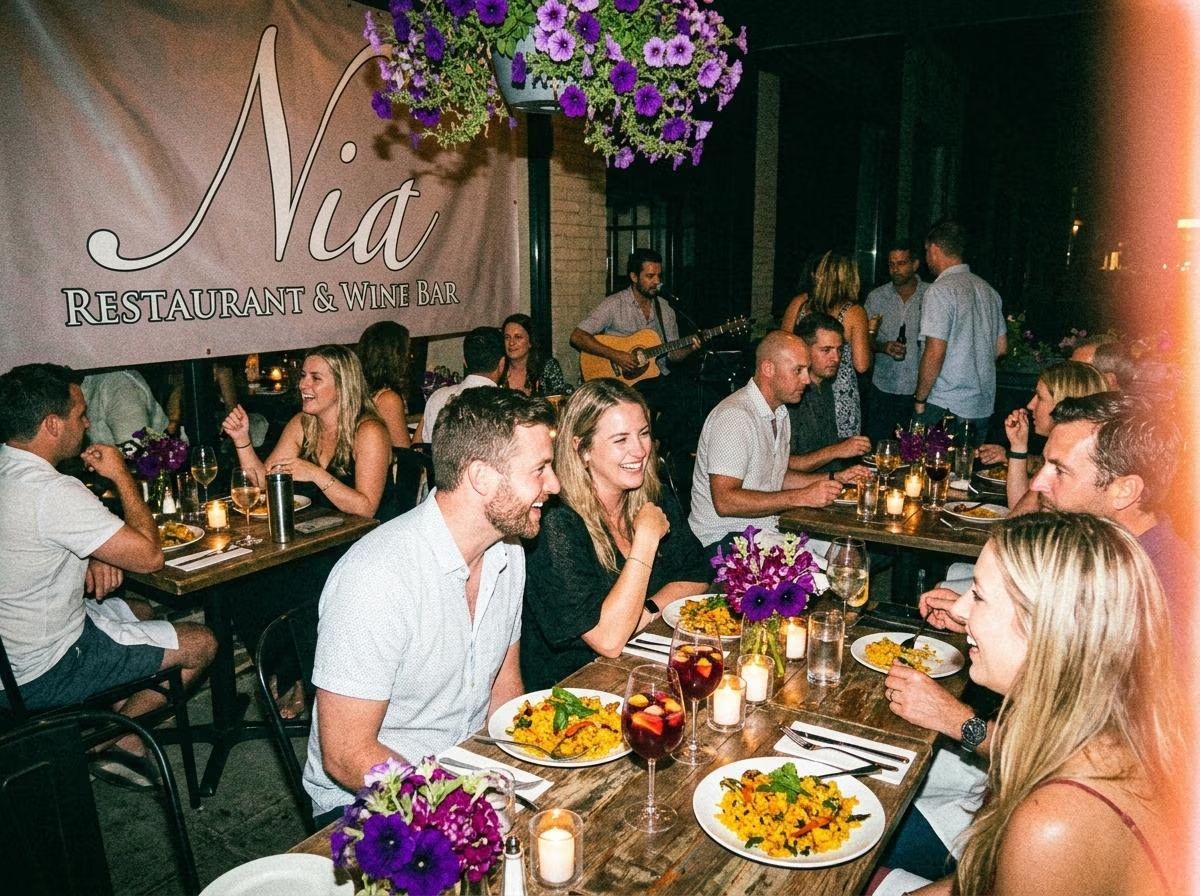
Nia Restaurant & Wine Bar is located at 803 W. Randolph Street in Chicago’s West Loop and currently maintains group-dining, private-event and corporate-event offerings. Its Group Menu currently presents a family-style six-course format, while the Corporate Events and Private Events pages describe larger event options. For an organizer considering Nia, the correct process is the same as with any serious venue: send: preferred date; alternative date; estimated guest count; event objective; budget range; privacy requirement; menu preference; beverage expectation; dietary needs; accessibility needs; event timing; and presentation requirements. Then request: the recommended event format; current written menu; current pricing; current capacity; minimum spend if applicable; deposit; service-charge/gratuity policy; guaranteed headcount deadline; and complete estimated total. Do not rely on old blog copy for an event contract. Nia’s public pages currently contain differences in how event capacities are described. The Corporate Events page references up to 80 seated guests, while the Large Group Menu refers to private/group configurations reaching 100 guests, and the Private Events page also references configurations up to 100. Those numbers may represent different rooms or setups. Before publishing one universal capacity across the corporate cluster, Nia should create one operational capacity matrix covering: main dining room seated; main dining room reception; private room seated; private room reception; patio; buyout; and any future event space. Until then, the planning guide should say: Capacity depends on the confirmed space and setup; request the appropriate number for your event format.
Do Not Say Shared Food Automatically Improves Business Relationships
The current page says shared dining can work well because interaction develops naturally around the table. That should be narrowed. A shared format can: simplify ordering; provide several dishes; create a common service rhythm; and work well for groups. It cannot guarantee: better networking; stronger client trust; deeper relationships; or better business outcomes. Use operational benefits. Leave emotional and business outcomes to the people attending.
Frequently Asked Questions
How far in advance should I plan a corporate dinner?
A practical starting framework is roughly 8–12 weeks for a meaningful group event, with more lead time for large groups, restaurant buyouts, holiday parties, conference weeks or heavily customized events. Smaller flexible dinners may require less time. Nia’s current organizer guide uses this same broad framework.
What information should I have before contacting restaurants?
Prepare: preferred date; alternative date; estimated guest count; event purpose; budget range; desired level of privacy; menu/service preference; beverage expectation; event duration; dietary needs; and any presentation requirements.
How much does a corporate dinner cost in Chicago?
There is no universal figure. Cost depends on: guest count; menu; beverages; privacy; space; date; minimum spend; taxes; service charges; equipment; and duration. Use Nia’s dedicated Corporate Dinner Cost Guide for detailed budgeting.
Do I need a private dining room?
Not necessarily. Smaller informal groups may work in a standard reservation. Private space becomes more relevant for: larger groups; presentations; speeches; controlled access; or sensitive conversation.
Is a restaurant buyout better than a private room?
Neither is universally better. A private room may provide sufficient control at a lower commitment. A buyout can provide broader exclusivity and flexibility. Use the dedicated Buyout vs Private Dining Room Guide for the detailed decision.
What is the best menu format for a corporate dinner?
It depends on purpose. Shared menus can simplify group service. Plated dinners provide structure. Reception formats support movement and networking. Limited à la carte can work for smaller groups. Choose the format that fits the event rather than assuming one style is always best.
Should alcohol be included?
Only if appropriate. Corporate dinners can use: fully hosted drinks; beer and wine; selected cocktails; drink tickets; consumption-based service; or no alcohol at all. Make non-alcoholic options easy to order.
When should dietary requirements be collected?
During RSVP. Do not wait until the event. Ask the restaurant to confirm what it can safely accommodate.
What should be included in a corporate dinner invitation?
Include: date; arrival time; restaurant name; complete address; RSVP deadline; guest policy; dietary/accessibility question; transport information; organizer contact; and expected end time.
Do I need assigned seating?
Not always. Assigned seating is useful when: clients need strategic host placement; executives need distribution; guests do not know one another; the group is large; or dietary/service needs require seat-specific information.
How long should a corporate dinner last?
A straightforward dinner can often be designed around roughly two to two-and-a-half hours, but the right duration depends on: menu; group size; speeches; networking; and event purpose. Do not treat that as a universal rule.
Should speeches happen before or after dinner?
There is no single correct point. Coordinate speeches with the restaurant so important remarks do not compete with active food service. Keep remarks concise unless the event is intentionally program-heavy.
What should be in the restaurant agreement?
At minimum: date; times; space; privacy level; capacity; menu; beverages; pricing; minimum spend; deposit; tax; service charge; gratuity policy; cancellation; final headcount; overtime; AV; vendor rules; and payment terms.
Who should communicate with the restaurant?
Assign one lead company organizer. Other stakeholders should route changes through that person.
Who approves additional spending during the dinner?
Designate the person in advance. The restaurant should know who has authority to approve: additional drinks; extra time; unexpected guests; or other added costs.
When should the final guest count be sent?
By the deadline stated in the agreement. Nia’s current buyout guidance says final headcount is typically due 72 hours beforehand, but the specific signed agreement should control.
Does Nia offer group menus?
Yes. Nia currently publishes a family-style six-course Large Group Menu and a vegetarian version, though current menu details and pricing should always be verified before booking.
How many corporate guests can Nia host?
Nia’s current public pages display different capacity figures depending on the page and likely configuration. The Corporate Events page references up to 80 seated guests, while Group Menu and Private Events materials mention configurations reaching 100. Therefore the safest answer is: Ask Nia’s events team to confirm the comfortable maximum for the specific space, layout and service format being considered.
A Successful Corporate Dinner Is Mostly the Result of Decisions Made Before Anyone Arrives
The event should feel easy to the guests. That does not mean it was easy to organize. Behind a smooth dinner is usually: a clear objective; approved budget; accurate headcount; appropriate venue; confirmed menu; dietary planning; clear invitation; intentional seating; a realistic schedule; one decision-maker; written terms; and one final confirmation. That is the role of this page. It should not promise that the right restaurant creates: stronger relationships; better teams; more loyal clients; or measurable business success. The organizer cannot control those outcomes. What the organizer can control is whether the dinner is professionally planned.
Ready to request a corporate-dinner proposal from Nia? Send the events team your preferred date, alternative date, estimated guest range, event purpose, budget, privacy requirement, menu preference, beverage plan and any presentation or accessibility needs.