How to Plan a Client Dinner: Restaurant, Seating, Menu and Etiquette
A client dinner sits somewhere between hospitality and business.
It is not simply a meeting moved from a conference room to a restaurant.
It is also not an ordinary social dinner where nobody needs to think about the purpose of the evening.
The host still needs to manage:
- who attends;
- which restaurant is chosen;
- where people sit;
- what type of menu works;
- dietary requirements;
- when business conversation begins;
- alcohol;
- the check;
- and what happens after everyone leaves.
The strongest client dinners make those details feel almost invisible.
The guest does not need to solve the reservation.
Nobody wonders who is paying.
A vegetarian client does not discover halfway through dinner that there is almost nothing appropriate to eat.
The table does not resemble two negotiating teams facing one another.
The most senior executive does not dominate every conversation.
And the host does not wait until the bill arrives to discover the company’s expense policy.
Business-meal etiquette guidance from the Emily Post Institute emphasizes that the host should guide the business conversation and that the host is ordinarily responsible for paying when hosting the meal. It also treats a business dinner as a professional situation in which conduct, table manners, and conversation all contribute to the impression a guest receives.
That gives us the right framework:
A client dinner should feel comfortable to the guest while remaining professionally organized by the host.
Quick Answer: How Do You Plan a Successful Client Dinner?
Start by defining the purpose of the dinner and choosing only the people who genuinely need to attend.
Select a restaurant based on the client’s convenience, menu needs, noise level, privacy requirements, and service format rather than prestige alone.
Send a clear invitation.
Ask privately about allergies, dietary restrictions, and accessibility needs.
Decide the seating arrangement before guests arrive.
Know whether you are ordering à la carte, sharing dishes, using a tasting menu, or working from a fixed group menu.
The primary host should arrive before the client and confirm the table, special requirements, and payment arrangements.
Begin with normal conversation rather than an immediate sales pitch.
Transition naturally into business once everyone has settled.
Do not pressure anyone to drink alcohol.
Keep phones away.
Handle the check discreetly.
Close the evening with clear next steps.
Then follow up promptly on anything you promised.
First Decide Why You Are Hosting the Dinner
The purpose of the dinner should be written in one sentence before you choose the restaurant.
For example:
Introduce our new account lead and understand the client’s priorities for next year.
Thank the client for completing a major project and discuss what support they may need next.
Continue a conversation that began at a Chicago conference without scheduling another formal meeting.
Those are useful objectives.
Compare them with:
Take the client somewhere impressive.
That is not a useful planning objective.
The purpose affects:
- guest list;
- restaurant formality;
- privacy;
- seating;
- conversation;
- menu structure;
- duration;
- and follow-up.
A client-appreciation dinner should not unexpectedly become an aggressive sales presentation.
A dinner intended to discuss sensitive strategy may require more privacy than a casual thank-you meal.
A visiting executive dinner may need more structured hosting than an informal meal with a long-standing local client.
Define the purpose first.
Decide Whether Dinner Is Even the Right Format
Dinner is useful when the group benefits from more time than a short coffee or lunch allows.
Emily Post’s business-meal guidance notes that breakfast or lunch may suit more time-constrained meetings, while dinner generally allows a more leisurely pace and can be appropriate for relationship-oriented business occasions.
Choose dinner when:
- the guest is visiting from out of town;
- you want enough time for both social and business conversation;
- the relationship already justifies an evening commitment;
- several people need to be introduced;
- or the occasion itself deserves a more deliberate meal.
Choose another format when:
- the issue can be resolved efficiently in a 30-minute meeting;
- the client clearly has limited evening availability;
- the conversation requires extensive documents or screens;
- or company policy makes client entertainment unnecessarily complicated.
A restaurant should support the objective.
It should not replace one.
Keep the Guest List Deliberate
One of the easiest ways to make a client uncomfortable is to invite one client and surprise them with six members of your own company.
More attendees do not automatically create a better dinner.
Before inviting someone, ask:
- Why does this person need to be there?
- Do they already know the client?
- Will they contribute useful knowledge?
- Is their seniority helpful?
- Could their presence change the tone of the dinner?
- Does the client know they are attending?
For a small relationship-focused dinner, balance often matters more than hierarchy.
Two company representatives and two client representatives can be easier conversationally than five hosts surrounding one guest.
If senior executives are attending, tell the client beforehand.
Do not create the impression that the guest walked into an unexpected escalation meeting.
Nia’s current client-dinner article already recognizes this risk and recommends keeping attendance focused rather than maximizing headcount.
Choose the Restaurant for the Client, Not the Host
The best client-dinner restaurant is not automatically:
- the most expensive;
- the newest;
- the hardest reservation to get;
- or the host’s personal favorite.
Choose according to the guest.
Evaluate at least five things.
Location
Where will the client be before dinner?
Their office?
A hotel?
A conference?
A meeting downtown?
Another customer visit?
Do not require an unnecessary journey across Chicago purely because the restaurant is closer to your own office.
For an out-of-town guest, send:
- the restaurant name;
- full address;
- reservation time;
- host contact;
- and useful transportation information.
The client should not need to research basic logistics themselves.
Noise
A beautiful restaurant can still be a poor client-dinner venue if nobody can hear.
Ask yourself what the evening requires.
If the purpose is primarily appreciation and casual conversation, some energy in the room may be fine.
If detailed project discussion is expected, excessive noise becomes a serious problem.
Do not write blanket rules that a restaurant must be silent.
The sound level should match the purpose.
Privacy
A private room is not necessary for every client dinner.
For ordinary relationship-building, a regular restaurant table may work perfectly.
Greater separation may be appropriate if the conversation involves:
- financial information;
- contracts;
- personnel matters;
- non-public strategy;
- legal issues;
- or information covered by confidentiality obligations.
A public dining room is never a substitute for an appropriate secure meeting environment when the material is genuinely sensitive.
Menu
Review the menu before sending the invitation.
Do not choose an extremely narrow restaurant and only later discover that the client’s dietary needs cannot be accommodated.
Look for enough flexibility to serve the people actually attending.
Service Format
Does the restaurant understand group dining?
Can it pace shared dishes?
Can dietary substitutions be coordinated?
Can payment be arranged discreetly?
Can the restaurant explain how long a tasting or fixed menu typically takes?
Good client-dinner hosting involves removing these unknowns before the guest arrives.
Do Not Choose a Restaurant Solely for “Prestige”
Restaurant reputation can matter.
It should not override basic usability.
A fashionable dining room where the group cannot hear one another is not automatically better than a less famous restaurant where the conversation works.
A highly formal tasting menu may be impressive but inconvenient if the client has only 90 minutes.
A steak-focused menu may be inappropriate if several guests do not eat meat.
A large private space may look impressive but feel awkward for four people.
The right restaurant is the one that supports the evening without becoming the evening’s biggest complication.
Standard Table, Semi-Private Space, or Private Room?
| Format | Useful For | Main Limitation |
|---|---|---|
| Standard restaurant reservation | Small relationship-focused dinners | Less control over surrounding noise and privacy |
| Large group reservation | Informal multi-person client dinners | Ordering and pacing need more coordination |
| Semi-private area | Groups wanting separation without full exclusivity | Visual separation may not provide sound privacy |
| Private dining room | Sensitive conversation, presentations, larger groups | May require fixed menus or minimum spending |
| Restaurant buyout | Large client events or exclusive hospitality | Higher financial commitment |
This page should stop there.
The detailed question:
Should I choose a restaurant buyout or private dining room?
belongs on Nia’s dedicated Restaurant Buyout vs Private Dining Room guide.
The detailed question:
How much will each option cost?
belongs on the Corporate Dinner Cost Guide.
This client-dinner page owns the behavioral question:
Which environment lets me host this particular client appropriately?
Send an Invitation That Answers the Practical Questions
A professional invitation does not need to sound formal or stiff.
It should simply be clear.
Include:
- why you would like to meet;
- date;
- time;
- restaurant;
- address;
- who will attend from your side;
- approximate duration;
- and a request for dietary or accessibility requirements.
For example:
We’d be delighted to host you for dinner while you’re in Chicago. It would be a good opportunity to introduce you to our new account lead and hear what your team is prioritizing for the coming year. We are proposing dinner at Nia Restaurant & Wine Bar in the West Loop at 6:30 PM on Thursday. Priya Shah and Daniel Lee will join me. Please let me know if the timing works and whether there are any dietary or accessibility needs we should arrange.
The important thing is not the exact wording.
It is that the guest knows:
- why they are being invited;
- where they are going;
- and who they are meeting.
Once confirmed, send a calendar invitation.
Ask About Dietary Requirements Privately
Do not wait until everyone is sitting at the table.
Ask before the dinner.
A simple question is enough:
Please let me know about any food allergies, dietary requirements, or accessibility needs we should coordinate with the restaurant.
You do not need the client’s medical history.
You need the information required to arrange the dinner appropriately.
If the client says they have a severe allergy, do not promise that the restaurant can accommodate it until the restaurant confirms.
Nia’s current dinner menu specifically instructs diners to communicate food allergies to restaurant staff, reinforcing the importance of direct kitchen/service confirmation rather than assumptions based on menu descriptions.
For a larger client dinner, maintain a clear attendee list with the relevant requirements beside each guest.
Do not rely on memory.
Seating Matters More Than Formal Table Protocol
For most modern client dinners, seating should be designed around:
- conversation;
- roles;
- relationships;
- accessibility;
- and comfort.
Do not use outdated gender rules as the basis of the arrangement.
For a Dinner of Four
Imagine:
- two company hosts;
- two client representatives.
Avoid automatically placing both company employees on one side and both clients opposite them.
That can make the table resemble a negotiation.
Instead, arrange the group so conversation can move across the whole table.
The primary relationship owner should be able to speak comfortably with the principal client.
For Six to Eight Guests
Distribute company hosts among the clients.
Do not create one “company end” and one “client end.”
Place specialists near the clients most likely to benefit from speaking with them.
If one employee already knows another employee extremely well, separating them may help prevent internal conversation from taking over.
For a Larger Table
Consider place cards.
Seat clients so each has an obvious company contact nearby.
Keep senior hosts positioned where they can interact broadly rather than clustering together.
Consider:
- hearing;
- mobility;
- wheelchair access;
- service paths;
- and whether anyone needs to view a presentation.
The existing Nia article already uses this relationship-based approach and correctly advises against gender-based seating assumptions.
What About Traditional “Guest of Honor” Seating?
Formal diplomatic, government, ceremonial, or protocol-driven dinners may use much more structured seating rules.
That is a different problem.
A normal commercial client dinner should not imitate state-dinner protocol unless there is a real reason to do so.
For ordinary business hosting, prioritize:
- who needs to speak;
- who already knows whom;
- and whether the table feels balanced.
Choose a Menu Format That Reduces Friction
The menu is not only about food preference.
It affects:
- ordering time;
- pricing clarity;
- course pacing;
- dietary accommodation;
- and conversation.
À La Carte Ordering
À la carte can work well for:
- two people;
- four people;
- or another small dinner where guests should have maximum choice.
The problem is price uncertainty.
A client may hesitate because they do not know what the host considers appropriate.
The host can reduce that discomfort naturally.
Instead of saying:
Order anything.
try guiding the meal through normal conversation:
The salmon and paella both look good, and I was thinking we could start with a couple of shared plates.
That communicates the expected scale without announcing an expense limit.
The host should not intentionally order the cheapest item and then expect the client to feel comfortable choosing something much more expensive.
Shared or Family-Style Menu
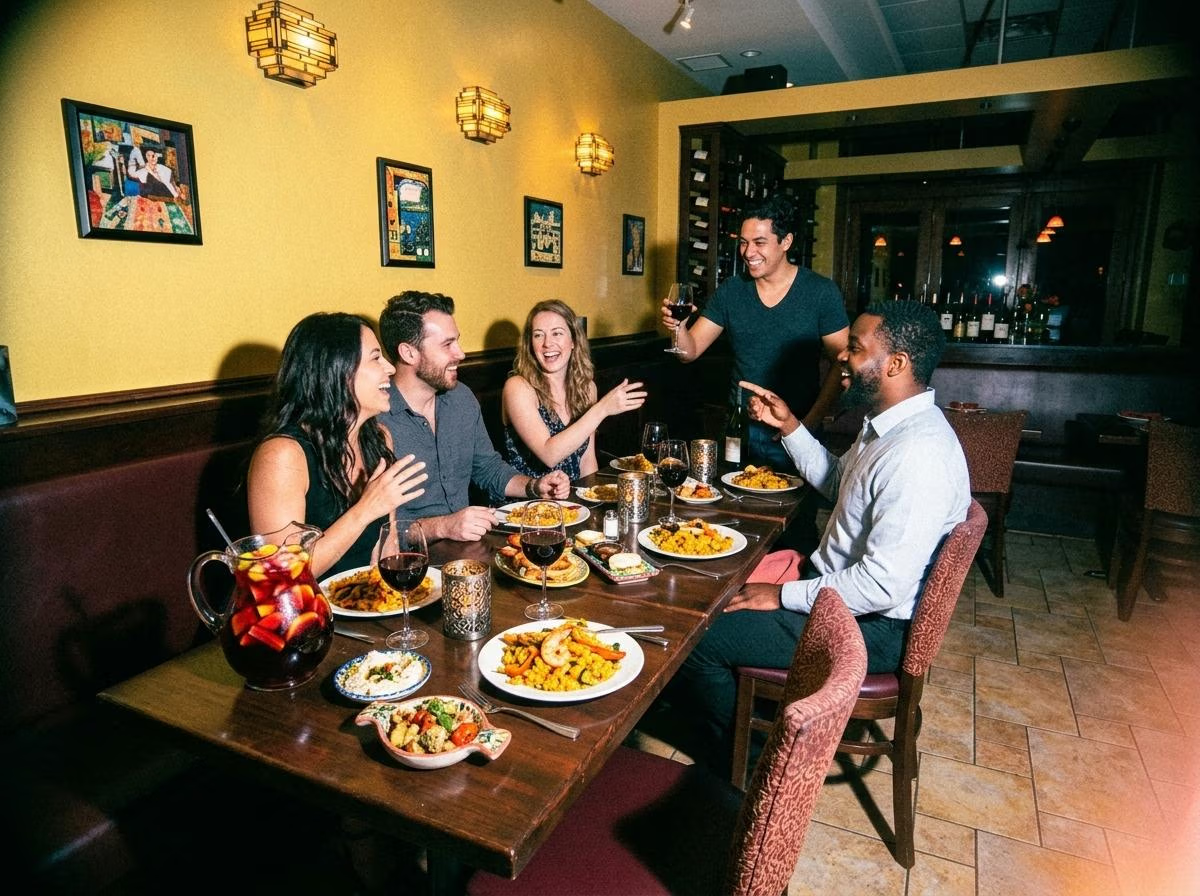
Shared food can work well for client dinners because several guests can try different dishes.
But avoid making the unsupported claim that shared plates automatically:
- build trust;
- create better relationships;
- or improve business outcomes.
The actual benefits are operational.
Shared dining can:
- reduce individual ordering decisions;
- provide variety;
- allow dishes to arrive progressively;
- and give a larger table a common menu structure.
It also creates responsibilities.
The host needs to confirm:
- portion sizes;
- allergens;
- vegetarian availability;
- and whether every person will have enough food appropriate to them.
Nia’s current Group Menu offers a six-course shared tasting format served family-style, including a vegetarian version, and currently states that dietary restrictions can be accommodated.
Those features make it a relevant current example of a structured shared format.
But the live Group Menu should remain the authority for current courses, pricing, and availability.
Plated Menu
A plated menu gives the evening more structure.
It may work well when:
- the dinner is formal;
- there is a short speech;
- the guest count is larger;
- or the host wants predictable course timing.
Possible disadvantages include:
- collecting entrée selections;
- managing substitutions;
- and reducing spontaneity.
Tasting Menu
A tasting menu can remove ordering delays.
Before choosing one, confirm:
- number of courses;
- expected duration;
- dietary substitutions;
- whether everyone receives the same dishes;
- and whether the timing matches the client’s schedule.
Do not select a long tasting menu for a client who needs to leave in 90 minutes.
Should the Host Order for the Table?
Sometimes.
Not automatically.
For a shared restaurant, the host may help establish an initial set of dishes after asking guests what they prefer.
A useful approach is:
Would everyone be comfortable if we start with the cauliflower, croquetas and salad, then choose a couple of more substantial plates?
That invites participation.
Avoid taking control so aggressively that the client never sees the menu.
For an à la carte dinner, each guest should normally choose their own meal unless the event has a prearranged menu.
What Should the Host Order?
Choose something that allows you to continue hosting.
Indeed’s current business-dinner guidance similarly recommends considering how easy a dish will be to eat during a professional conversation.
That does not mean pasta, sandwiches, shellfish, or other foods are forbidden.
The better rule is:
Do not order something you personally find difficult to manage when you are responsible for leading the table.
The client can order whatever they prefer.
Never comment on:
- how much they ordered;
- how little they ate;
- whether they skipped dessert;
- or what their food “says” about them.
Drinks: Make Alcohol Optional
A client should never need to justify not drinking.
Possible reasons include:
- personal preference;
- driving;
- religion;
- pregnancy;
- medication;
- health;
- recovery;
- or simply not wanting alcohol.
None requires explanation.
A host can say:
Would anyone like wine, a cocktail, or something non-alcoholic?
Then move on.
The existing Nia client-dinner article correctly says alcohol should never be pressured and that company expense/alcohol policies should be understood in advance.
Alcohol is a beverage.
It is not a relationship-building tool.
If the Host Does Not Drink
There is no etiquette rule requiring the host to order alcohol.
Choose:
- water;
- sparkling water;
- zero-proof cocktails;
- tea;
- coffee;
- or another beverage.
The guest should not be made to feel they need to match the host either.
If the Client Orders an Expensive Bottle
This is where advance planning matters.
If company policy has a firm beverage limit, do not discover that limit publicly after the bottle is ordered.
For a higher-value client dinner, consider coordinating beforehand with the restaurant:
- approved bottle range;
- whether specific bottles require host approval;
- or whether wine should come from a selected list.
This turns an awkward etiquette problem into a logistics problem solved before the guest arrives.
How Much Business Should You Discuss?
A client dinner should have direction.
It should not feel scripted.
Emily Post’s business-meal guidance places responsibility on the host to initiate business conversation.
That does not mean the host should begin with:
Let’s discuss the renewal.
while everyone is still taking off their coats.
Allow people to settle.
Talk naturally.
If the client is visiting Chicago, ask how their trip has been.
If you recently completed a project, mention a relevant development.
If the dinner follows a conference, ask what has been most useful.
Then transition.
For example:
I’m glad we have some time away from the conference. Once we’re settled, I’d really like to hear what your team is prioritizing for next year.
That communicates purpose without making the meal feel like a trap.
Prepare Questions, Not a Script
Useful questions might include:
- What priorities are changing for your team?
- What has been working particularly well?
- Where are you encountering friction?
- What are you planning for the next quarter or year?
- Who else should our team be coordinating with?
- What would make working with us easier?
- Is there anything we should be doing differently?
- What should we follow up on after tonight?
Those questions are more useful than memorized talking points.
Listen to the answers.
A client dinner where the host speaks for 80% of the evening is rarely an impressive demonstration of relationship management.
Do Not Turn the Dinner Into a Presentation
If you need:
- 25 slides;
- detailed spreadsheets;
- a contract redline;
- technical diagrams;
- or financial modeling,
schedule a meeting.
A short document or tablet may occasionally be useful.
But the restaurant table should not become a miniature boardroom unless the dinner was explicitly planned that way.
The existing Nia page makes this distinction well and advises against turning the dinner into an extended sales presentation.
Be Careful With Confidential Information
This section should become stronger.
Restaurants are public or semi-public environments.
Nearby tables can hear.
Staff members move through the room.
Guests may take phone calls.
A visually enclosed space may still have poor sound isolation.
Do not discuss highly sensitive:
- personnel information;
- legal strategy;
- unreleased financial results;
- pricing negotiations;
- confidential product information;
- or regulated information
in an ordinary dining room simply because the dinner feels private.
Move sensitive conversation to a suitable environment.
If privacy is essential to the event itself, confirm what “private” actually means before booking.
Arrival Etiquette: The Host Should Be There First
The host should not arrive after the client and leave them wondering:
- whether the reservation exists;
- which name it is under;
- where everyone is;
- or whether they should order.
Indeed’s current business-dinner guidance recommends arriving slightly before the reservation time, while the existing Nia guide suggests the primary host arrive around 10–15 minutes early to confirm arrangements.
For an important client dinner, that buffer is sensible.
Use it to confirm:
- table location;
- guest count;
- dietary arrangements;
- payment instructions;
- and any last-minute restaurant changes.
Then be ready to welcome the client.
Welcome Everyone, Not Only the Most Senior Person
Business hospitality becomes awkward when junior client team members are treated like invisible accessories to the executive.
Greet everyone.
Make introductions.
Explain unfamiliar relationships.
For example:
Priya, this is Marcus, who leads implementation on your account. Marcus, Priya oversees operations for the client team.
That gives people a reason to speak to one another.
Put the Phone Away
Silence it.
Ideally keep it off the table.
Indeed’s business-dinner guidance similarly recommends keeping phone use from distracting from the meal.
If you genuinely need to monitor something urgent, explain it once:
I apologize in advance—I may need to check for one message from our flight team. Otherwise I’m putting this away.
That is better than glancing at your screen every three minutes.
Treat Restaurant Staff Professionally
Clients notice how hosts behave when something goes wrong.
Do not:
- snap at the server;
- publicly embarrass staff;
- argue aggressively about a mistake;
- or turn a minor delay into a performance.
If something requires attention, handle it quietly.
The existing Nia guide correctly identifies respectful treatment of restaurant staff as part of professional client-dinner conduct.
Who Pays for a Client Dinner?
As a general business-etiquette rule, the party issuing the invitation should expect to pay unless a different arrangement has been explicitly agreed.
Emily Post’s business-etiquette guidance is direct on this point: the host pays for a business meal.
For a company-hosted client dinner:
- arrange payment before the guest arrives;
- do not let the check create uncertainty in the middle of the table;
- confirm which card will be used;
- any spending limits;
- service-charge policy;
- gratuity policy;
- whether a signature is required;
- and where the bill should be presented.
Handle the Check Away From the Main Conversation
The client’s final memory of the dinner should not be:
- the host arguing about a service charge;
- two employees deciding whose corporate card works;
- or everyone watching the host inspect each bottle price.
Where practical, arrange for the restaurant to present the bill discreetly.
For larger events, the organizer should understand the cost structure before the evening.
That is where Nia’s separate Corporate Dinner Cost Guide becomes the correct next resource.
Current Nia Payment Policies Should Be Considered
Nia’s current dinner menu states that:
- service is added to checks;
- a maximum of two credit cards is accepted per table;
- and credit-card service fees apply, with cash treatment described separately.
These policies may change.
Therefore the client-dinner article should not reproduce them as permanent universal rules.
Instead, when using Nia for a business dinner:
review the current live menu/payment policy and confirm any company-specific billing arrangement before the client arrives.
For a private event, use the signed event agreement.
Should the Client Ever Pay?
If you invited them as your guest, the normal expectation should be that your company pays.
If the meeting was mutually arranged and each organization intends to cover its own costs, establish that before dinner.
Do not begin negotiating the arrangement when the check arrives.
Dress for the Restaurant and the Relationship
There is no single client-dinner uniform.
Dress according to:
- company culture;
- restaurant formality;
- client expectations;
- and the purpose of the evening.
Indeed’s current guidance recommends matching attire to the context and checking the restaurant’s own dress requirements where relevant.
Avoid trying to impress through unnecessary formality.
The goal is to appear appropriate and professional.
What Should You Talk About Before Business?
Safe opening topics depend on the relationship.
Useful possibilities include:
- the client’s trip;
- Chicago;
- the conference or event they attended;
- recent company news that is already public;
- travel;
- restaurants;
- industry developments;
- or mutual professional contacts.
Avoid assuming everyone wants to discuss:
- politics;
- religion;
- personal finances;
- family questions;
- health;
- or other potentially sensitive personal subjects.
Indeed’s business-dinner guidance likewise recommends beginning with lighter conversation appropriate to the people at the table.
The deeper principle is:
be interested without becoming intrusive.
Should You Take Notes at the Table?
Usually not continuously.
A client may feel as though everything they say is being documented formally.
If a specific technical point needs recording, ask:
Would you mind if I note that down so I don’t lose it?
Otherwise, remember the important items and write them after dinner.
If extensive notes are necessary, the conversation may belong in a meeting.
How Long Should a Client Dinner Last?
There is no universal two-hour rule.
A straightforward dinner may fit comfortably within approximately 90 minutes to two hours.
A tasting menu can take longer.
A long-standing client dinner may naturally extend.
A client catching a flight or preparing for an early conference session may need a strict end time.
Tell guests the likely duration in advance when schedule constraints matter.
The existing Nia page currently provides a sample two-hour client-dinner timeline.
That can remain as an example, but it should not be presented as the correct timetable for every dinner.
Example Two-Hour Client Dinner Timeline
6:15 PM — Host arrives
Confirm table, payment, special requirements, and menu arrangement.
6:30 PM — Client arrives
Welcome guests and make introductions.
6:35 PM — Drinks and opening conversation
Do not immediately begin the business agenda.
6:45–6:55 PM — Order or begin planned menu
Allow the meal to establish its rhythm.
7:00 PM onward — Business discussion develops naturally
Move into relevant topics without turning the dinner into a formal presentation.
Around 8:00 PM — Dessert or coffee if desired
Begin clarifying next steps.
Around 8:20 PM — Host handles payment
Do this discreetly.
Around 8:30 PM — Close
Thank the guests, confirm follow-up, and make sure visitors understand their transportation plan.
This is an example.
The restaurant, menu, guests, and objective should determine the real schedule.
How to End the Dinner
Do not let the evening fade into an ambiguous:
Well… I guess we’ll be in touch.
If the conversation produced real next steps, summarize them briefly.
For example:
This was useful. We’ll send the revised implementation timeline by Tuesday, and I’ll introduce you to our product lead tomorrow.
Do not restart the entire discussion.
Close clearly.
Thank the client for their time.
If they are visiting Chicago, make sure they know how they are getting back to:
- their hotel;
- airport transport;
- or next destination.
Follow Up the Next Business Day
Emily Post’s broader business-etiquette guidance emphasizes thanking people and following up after professional interactions.
For a client dinner, the follow-up should be useful rather than ceremonial.
Include:
- thanks;
- one relevant reference to the conversation;
- the next agreed action;
- who owns it;
- and timing.
For example:
Thank you again for dinner yesterday. Your point about the onboarding timeline was particularly helpful. I will send the revised schedule by Tuesday afternoon, and Priya will introduce you to our implementation lead tomorrow.
That is more valuable than:
It was lovely seeing you. Let’s keep in touch.
If you promised something at dinner, completing it is more important than writing an elaborate thank-you message.
Common Client-Dinner Mistakes
Inviting Too Many Company Employees
The guest can feel outnumbered.
Keep the table purposeful.
Choosing the Restaurant for the Host’s Convenience
The client is the guest.
Their location and schedule should carry significant weight.
Choosing a Restaurant Only Because It Is Famous
Reputation does not fix:
- noise;
- poor menu fit;
- or inconvenient timing.
Surprising the Client With Executives
Tell them who is attending.
Ignoring Dietary Requirements
Ask before the dinner.
Treating Shared Food as Automatically Better
Shared food is one format.
Use it when it suits the guests.
Pressuring Guests to Drink
Never necessary.
Beginning With a Sales Pitch
Let people settle.
Putting Phones on the Table
Keep attention on the guests.
Discussing Confidential Information in Public
Move truly sensitive topics elsewhere.
Turning the Restaurant Staff Into Part of the Performance
Handle problems quietly and respectfully.
Debating the Bill at the Table
Arrange payment beforehand.
Forgetting What You Promised
The follow-up is part of the dinner.
A Client Dinner Is Not the Same as a Large Corporate Event
This distinction is central to preventing cannibalization.
A client dinner may involve:
- two people;
- four people;
- six people;
- or another small group.
The primary challenge is hosting well.
A large corporate event may require:
- contracts;
- menus for dozens of guests;
- space layouts;
- food-and-beverage minimums;
- AV;
- event timelines;
- buyouts;
- and formal event management.
Those questions belong elsewhere.
Planning a Client Dinner at Nia in Chicago’s West Loop
Nia Restaurant & Wine Bar is located at 803 W. Randolph Street in Chicago’s West Loop. Its current menu is Mediterranean-inspired with Spanish roots and includes a substantial shared-plate format.
For a smaller client dinner, a normal reservation may be sufficient depending on the desired privacy and current availability.
Current dinner examples include:
- salmon with pipérade;
- shrimp paella;
- croquetas;
- chicken and beef pintxos;
- Nia salad;
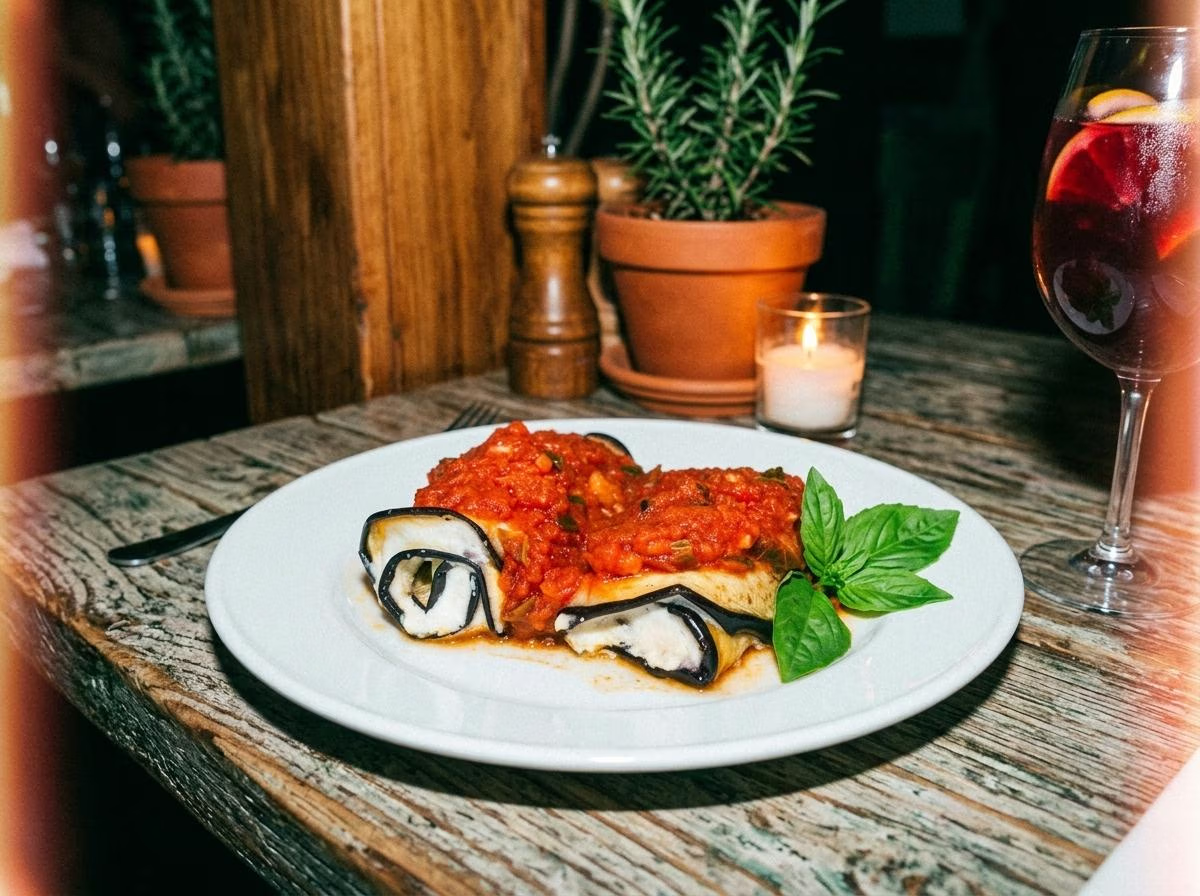
- crisp cauliflower with rosemary hummus;
- patatas bravas;
- albóndigas;
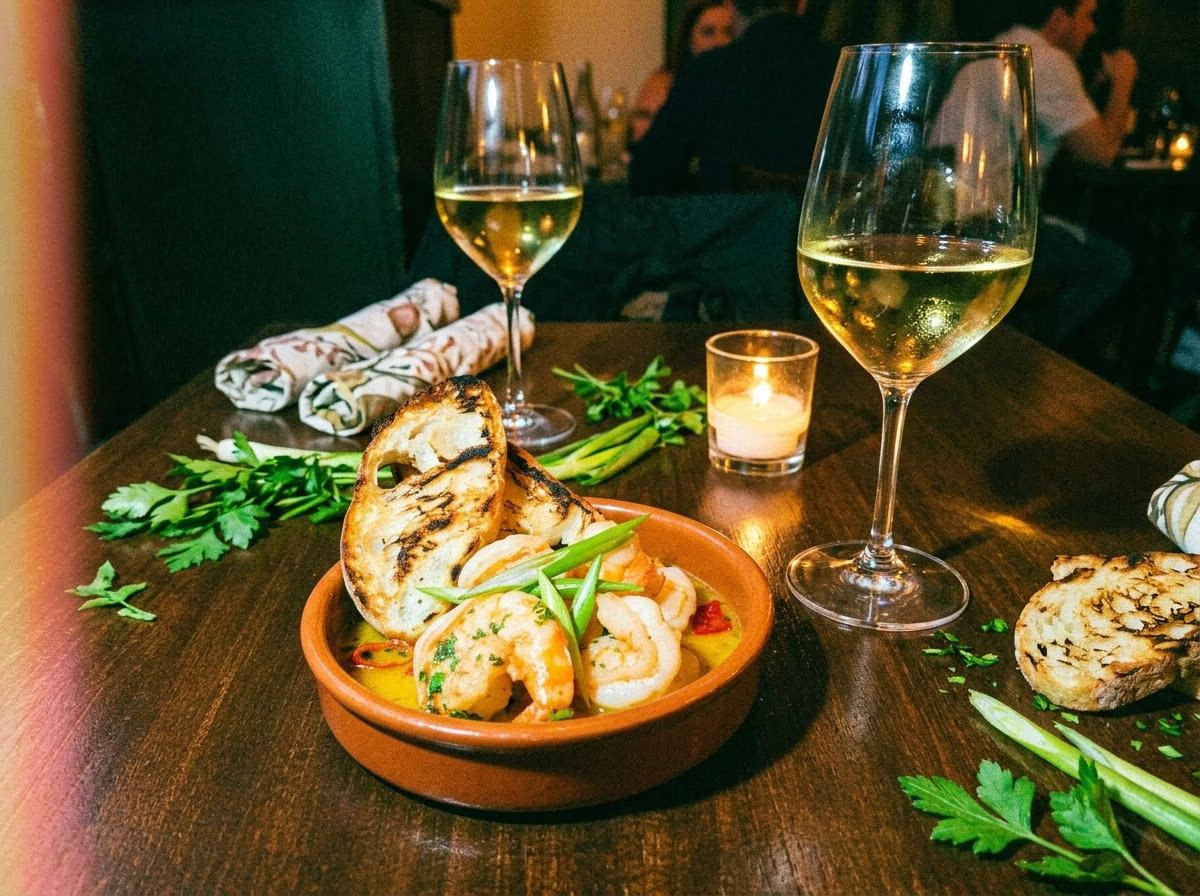
- gambas al ajillo;
- vegetable croquettes;
- and artisan pizzas.
A client table does not need to order all of them.
The relevant value is flexibility.
A table can choose:
- vegetables;
- seafood;
- meat;
- rice;
- pizza;
- and dessert
according to guest preference.
For larger client groups, Nia’s current Group Menu provides a six-course family-style format and a vegetarian variation. The current page lists the group menu at $45 per person and states that dietary restrictions can be accommodated, but menu details and pricing should always be reconfirmed before a future event.
Nia Should Not Claim Shared Plates Automatically Build Client Trust
This needs to be corrected across the client/corporate content cluster.
Nia can credibly say:
- shared dining lets a group try several dishes;
- a fixed group menu reduces ordering complexity;
- and progressive service can support a longer meal.
It should not say:
- shared plates build trust;
- wine increases openness;
- Mediterranean food strengthens business relationships;
- or a dinner naturally produces future business.
Those are outcomes Nia cannot guarantee.
The restaurant provides the environment and service.
The people at the table determine the business relationship.
Frequently Asked Questions About Client Dinners
Who should choose the restaurant for a client dinner?
The organization issuing the invitation should normally coordinate the restaurant while giving strong consideration to the client’s location, schedule, dietary requirements, accessibility needs, and preferences.
Who pays for a client dinner?
When one company invites a client as its guest, the host should ordinarily expect to pay unless another arrangement was agreed in advance. Emily Post’s business-etiquette guidance identifies the host as responsible for paying for the business meal.
How early should the host arrive?
Arriving before the guest is good practice.
For an important client dinner, roughly 10–15 minutes can provide enough time to confirm the table, payment instructions, and special arrangements. The exact buffer depends on the restaurant and event.
How many employees should attend a client dinner?
There is no ideal number.
Invite only people who genuinely contribute to the purpose or relationship.
Avoid surrounding one or two clients with an unnecessarily large company delegation.
Where should the most important client sit?
Seat the principal client where they can comfortably speak with the primary relationship owner or host.
For larger dinners, distribute hosts and clients rather than creating two opposing sides.
Should the client sit opposite the host?
They can, but there is no universal rule requiring it.
Conversation, table shape, accessibility, and group size should guide the arrangement.
Should hosts and clients alternate seats?
Alternating or mixing representatives can work well for larger tables because it avoids creating “our side” and “their side.”
It is a useful strategy rather than a formal etiquette requirement.
Should business be discussed immediately?
Usually not.
Welcome the guests and allow everyone to settle.
The host can then introduce the purpose naturally once the table is comfortable. Emily Post places responsibility for initiating the business discussion with the host.
Is a client dinner supposed to be mostly business conversation?
Not necessarily.
The balance depends on the purpose and existing relationship.
A project dinner may include more business discussion than a client-appreciation meal.
Should alcohol be served?
It may be offered when appropriate, but it is never required.
Provide equally comfortable non-alcoholic options and do not ask a client to explain why they are not drinking.
Should the host order first?
The host can help establish the menu’s expected range and format, but the exact ordering sequence depends on the restaurant.
The more important responsibility is making sure guests feel comfortable choosing.
Is family-style food good for a client dinner?
It can be.
Shared menus can reduce ordering complexity and provide variety.
They require careful handling of allergies, dietary requirements, and portion sizes.
Is a tasting menu good for a business dinner?
Yes, if the duration, dietary flexibility, and formality match the client’s schedule and the dinner’s purpose.
A very long tasting menu may be unsuitable for a time-constrained guest.
Is a private room necessary?
No.
A normal restaurant table may be appropriate for many client dinners.
Private space becomes more important for larger groups, presentations, or sensitive conversation.
Can confidential business be discussed in a restaurant?
Use caution.
An ordinary dining room should not be treated as a secure environment for highly sensitive financial, legal, personnel, commercial, or strategic information.
Should the host take notes?
Only when necessary.
For detailed note-taking, ask permission or wait until after the meal.
How long should a client dinner last?
A straightforward client dinner may take roughly 90 minutes to two hours, but menu format, purpose, guest schedules, and restaurant pacing can make it shorter or longer.
Should I send a thank-you after a client dinner?
Yes.
A short, personalized follow-up that confirms any agreed next actions is more useful than a generic thank-you message.
Is Nia suitable for client dinners?
Nia can be considered by clients looking for a West Loop restaurant with Mediterranean-inspired shared dining, wine, cocktails, non-alcoholic choices, group menus, and private-event options. The appropriate booking format depends on party size and privacy requirements.
The Client Should Remember the Conversation, Not the Logistics
That is the simplest standard for a well-planned client dinner.
The client should not leave thinking:
- the restaurant was impossible to find;
- the host was late;
- nobody knew where to sit;
- there was nothing appropriate for them to eat;
- they were pressured into wine;
- the host checked email constantly;
- the conversation became a two-hour sales presentation;
- or the check created an argument.
Those are preventable failures.
A good client dinner does not require obscure etiquette rules.
It requires preparation.
Know why you are meeting.
Invite the right people.
Choose the restaurant around the guest.
Plan the seating.
Understand the menu.
Respect dietary needs.
Arrive first.
Listen more than you pitch.
Keep alcohol optional.
Handle payment privately.
Then do what you said you would do after dinner.
That is what makes client-dinner hosting professional.