Espresso Martini in West Loop Chicago: Patio Cocktails & Shared Plates Trend Guide
The espresso martini has become one of those cocktails that can tell you something about the kind of evening a restaurant is trying to create.
It is visually recognizable.
It can function as a pre-dinner cocktail, after-dinner drink, or simply the drink someone specifically came looking for.
It also sits at the intersection of two things that continue to matter in Chicago dining: cocktails with a clear identity and restaurant experiences that can shift easily between drinks, shared food, dinner, and a longer night.
Add patio seating and a menu built around shareable food, and the appeal becomes easier to understand.
People do not always want to decide in advance whether they are going out for cocktails, dinner, happy hour, or a full evening.
Sometimes the plan is:
Meet for one drink.
Order a couple of small plates.
Stay because the table is comfortable.
Add dinner.
Finish with an espresso martini.
That flexibility is the useful trend behind this page.
Nia Restaurant & Wine Bar currently serves an Espresso Martini made with fresh espresso, Mile High vodka, and salted caramel. Its broader cocktail menu also includes drinks such as an Espresso Old Fashioned, Aperol Spritz, French 75, Negroni, Paper Plane, Sidecar, Margarita, and other cocktails. Nia also continues to promote patio seating at its 803 W. Randolph Street location in Chicago’s West Loop.
But this page should not simply announce that Nia serves an espresso martini.
Its stronger role is to answer:
Why has the espresso martini remained relevant, how does it fit into a West Loop patio-and-dinner experience, what food works around it, and when should you choose it instead of wine, an aperitif, or a non-alcoholic drink?
That gives this URL a distinct purpose without turning it into another generic date-night, tapas, happy-hour, or cocktail-menu page.
Nia Restaurant & Wine Bar currently serves an Espresso Martini in Chicago’s West Loop made with fresh espresso, Mile High vodka, and salted caramel. The restaurant also offers patio seating and a shared Mediterranean menu, making the cocktail easy to pair with a drinks-first evening that can continue into dinner.
Why the Espresso Martini Is Still Relevant
The espresso martini is not a new cocktail.
What is more interesting is how successfully it has remained part of modern restaurant culture after returning to prominence.
A 2026 hospitality analytics report from Ground Signal found that social mentions of espresso martinis strongly over-indexed around occasions such as happy hour, brunch, and date night, and around hospitality environments including speakeasies, fine dining restaurants, and rooftops. That type of analysis should not be treated as universal consumer research, but it does help explain why the drink continues appearing in visually driven, social dining environments.
The appeal is easy to understand even without turning the drink into a cultural theory.
It has a strong flavor identity.
Coffee gives it bitterness and roasted aroma.
Sweetness softens that bitterness.
Vodka creates alcoholic structure without adding the strong botanical profile of gin or the oak-driven flavor of whiskey.
A well-shaken preparation creates the foam that has become part of the drink’s visual identity.
That combination makes the cocktail recognizable before someone even tastes it.
For restaurants, recognizability matters.
A drink does not need several minutes of explanation.
A guest who likes espresso martinis usually knows immediately what they are looking for.
What Is in Nia’s Current Espresso Martini?
Nia’s current Craft Cocktails menu lists its Espresso Martini with:
fresh espresso;
Mile High vodka;
and salted caramel.
The current published price is $18. Because cocktail recipes and pricing can change, the Craft Cocktails page should remain the authority for the live version rather than hard-coding that price permanently throughout evergreen blog content.
The salted-caramel element makes Nia’s version different from a very dry coffee-and-vodka interpretation.
That matters when deciding when to order it.
A richer or slightly sweeter espresso martini often works more naturally as:
an after-dinner drink;
a dessert-adjacent cocktail;
or a final cocktail after shared plates
than as the ideal companion for every savory dish on the menu.
That does not mean it cannot be ordered before dinner.
It simply means the drink has enough character that food choices should be made intentionally.
An Espresso Martini Is Not Actually a Traditional Martini
The name can be confusing.
A classic martini is based on gin or vodka with vermouth.
An espresso martini belongs to a different cocktail family in practice, even though it is commonly served in martini-style glassware and uses the martini name.
Its identity comes primarily from:
coffee or espresso;
spirit;
sweetening component;
shaking;
and its characteristic foamy texture.
That distinction matters because someone who likes a dry gin martini may not automatically like an espresso martini.
The flavor experience is completely different.
One is generally dry, botanical, and spirit-forward.
The other is coffee-driven and typically sweeter.
Why Coffee Flavor Works So Well in Cocktails
Coffee offers several flavors at once.
It can be bitter.
Roasted.
Chocolate-like.
Nutty.
Caramel-like.
Fruity in some preparations.
Those flavors can interact easily with spirits and liqueurs.
That flexibility also explains why Nia currently serves both an Espresso Martini and an Espresso Old Fashioned. The latter uses espresso-infused bourbon, bitters, and cherry, creating a darker whiskey-driven interpretation of the coffee-cocktail idea.
Those drinks should remain distinct.
The Espresso Martini provides the cleaner vodka-and-espresso profile with salted caramel.
The Espresso Old Fashioned provides whiskey, bitters, espresso character, and cherry.
A useful cocktail page explains the difference instead of treating every coffee drink as interchangeable.
The Espresso Martini Is Best Understood as a Flavor Choice, Not an Energy Strategy
This is an important correction to the current live article.
The existing page repeatedly describes espresso martinis as providing a “second wind,” keeping tired conference attendees energized, and helping the night continue after a long day.
That language should be removed.
An espresso martini combines alcohol with caffeine.
Caffeine may make someone feel more alert, but it does not reduce alcohol’s effects on the body or reverse impairment. The CDC specifically warns that caffeine used with alcohol does not make someone less impaired and may make a person feel more energetic or less affected than they actually are.
Therefore, this page should never market the cocktail as:
a way to sober up;
a way to counteract alcohol;
a way to safely stay out longer;
or a substitute for rest.
The responsible framing is much simpler:
Order an espresso martini because you enjoy coffee-forward cocktails—not because you expect caffeine to neutralize alcohol.
Why the Patio Changes the Cocktail Experience
The patio and the espresso martini are separate products.
They become interesting together because outdoor dining changes how an evening feels.
Patio seating can make dinner less formal.
It gives guests more connection to the surrounding neighborhood.
It can make the transition between happy hour and dinner feel less structured.
And during comfortable Chicago weather, sitting outside is often part of the reason people choose one restaurant over another.
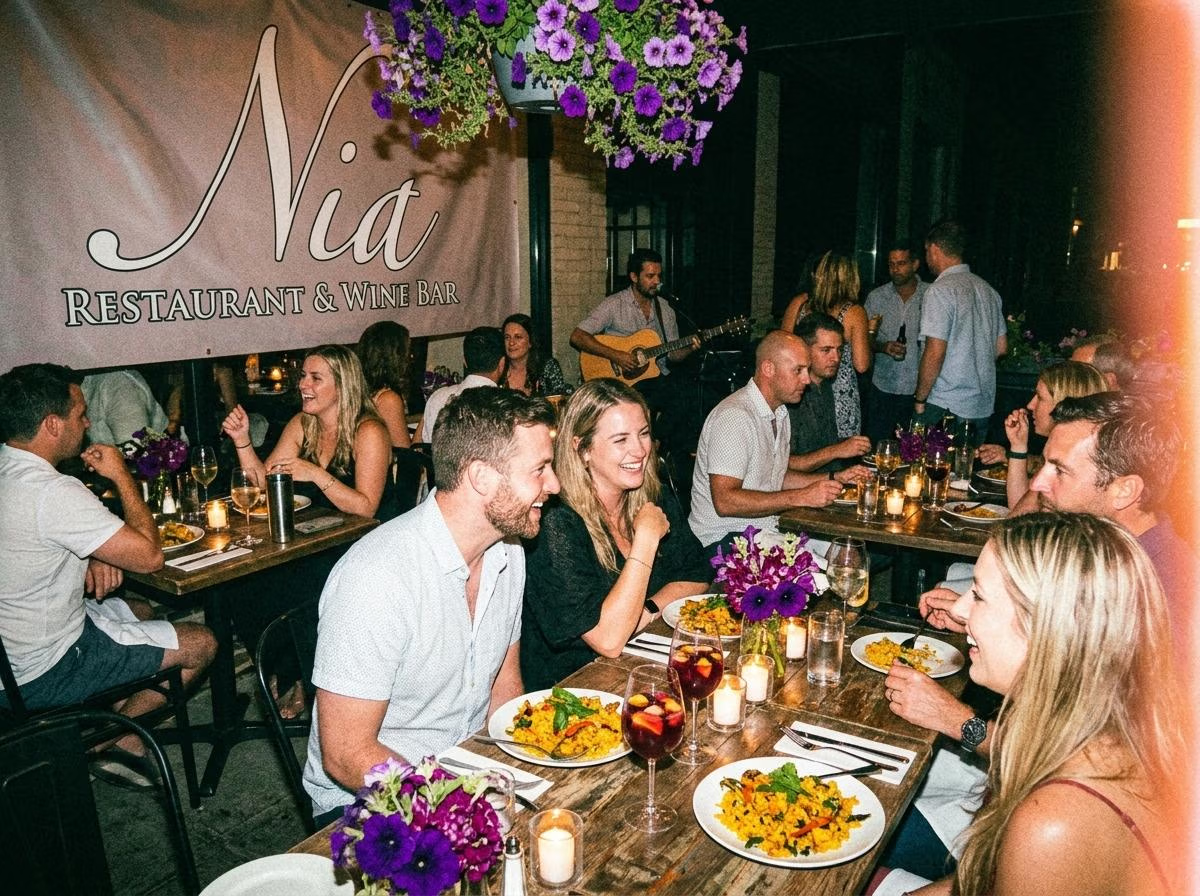
Nia’s current site continues to promote its patio for dining and special occasions, and its current happy-hour page specifically states that happy hour is available in the bar area or patio.
That makes the patio operationally relevant rather than merely decorative.
However, patio availability always depends on factors such as:
weather;
capacity;
reservation load;
staffing;
and restaurant operations.
If outdoor seating is important, request it when booking.
Do not assume a patio table will automatically be available simply because the restaurant has one.
Chicago Patio Season Is Seasonal by Definition
An evergreen patio article should avoid pretending outdoor dining is equally useful throughout the year.
The appeal is seasonal.
Late spring, summer, and portions of fall naturally create more demand for outdoor dining.
Cold weather, rain, wind, extreme heat, or other conditions can change the experience quickly.
This means the blog should not make permanent promises about:
patio availability;
heaters;
covered seating;
weather protection;
or year-round service
unless Nia has confirmed those exact facilities.
Nia currently promotes patio dining, with availability dependent on weather and capacity.
What Does an Espresso Martini Pair With?
Food pairing with cocktails is different from wine pairing.
With wine, diners frequently think about acidity, tannin, sweetness, body, and how those structural characteristics interact with food.
With an espresso martini, coffee bitterness, sweetness, alcohol, and roasted flavor are more dominant.
That means the cocktail does not necessarily work equally well across an entire Mediterranean menu.
A delicate seafood dish may be easier with a crisp white wine.
A tomato-heavy plate may create an awkward contrast with sweet coffee.
A very spicy dish can make a rich alcoholic cocktail feel heavier.
The espresso martini often becomes most intuitive:
before the meal;
after the savory dishes;
alongside dessert;
or as a standalone cocktail.
That is not a rule.
It is simply a useful starting point.
Espresso Martini and Churros
Nia currently serves churros tossed with cinnamon sugar and accompanied by semi-sweet chocolate.
That creates one of the easier cocktail-and-food combinations on the menu.
Coffee and chocolate already share familiar roasted and bitter-sweet flavor relationships.
Cinnamon can sit naturally beside coffee aromatics.
And the cocktail’s salted-caramel character can connect with the sweetness of the dessert.
For diners who like dessert cocktails, this pairing makes more intuitive sense than forcing an espresso martini alongside a delicate seafood plate.
Espresso Martini and Burnt Basque Cheesecake
Nia’s current Burnt Basque Cheesecake is served with honey, clementine, and nuts.
This is another reasonable place for an espresso martini to appear.
The cheesecake brings richness.
Honey brings sweetness.
The burnt surface provides deeper caramelized notes.
Nuts add roasted flavor.
The cocktail’s coffee and salted-caramel elements can echo those darker dessert characteristics.
The clementine adds acidity and citrus aroma, preventing the entire combination from becoming monotonously sweet.
Again, this is culinary suggestion rather than a claim that one drink is objectively the perfect pairing.
Personal preference still decides whether the combination works for you.
Espresso Martini With Fried or Crisp Small Plates
A more complicated but interesting option is to drink the cocktail around crisp or fried food.
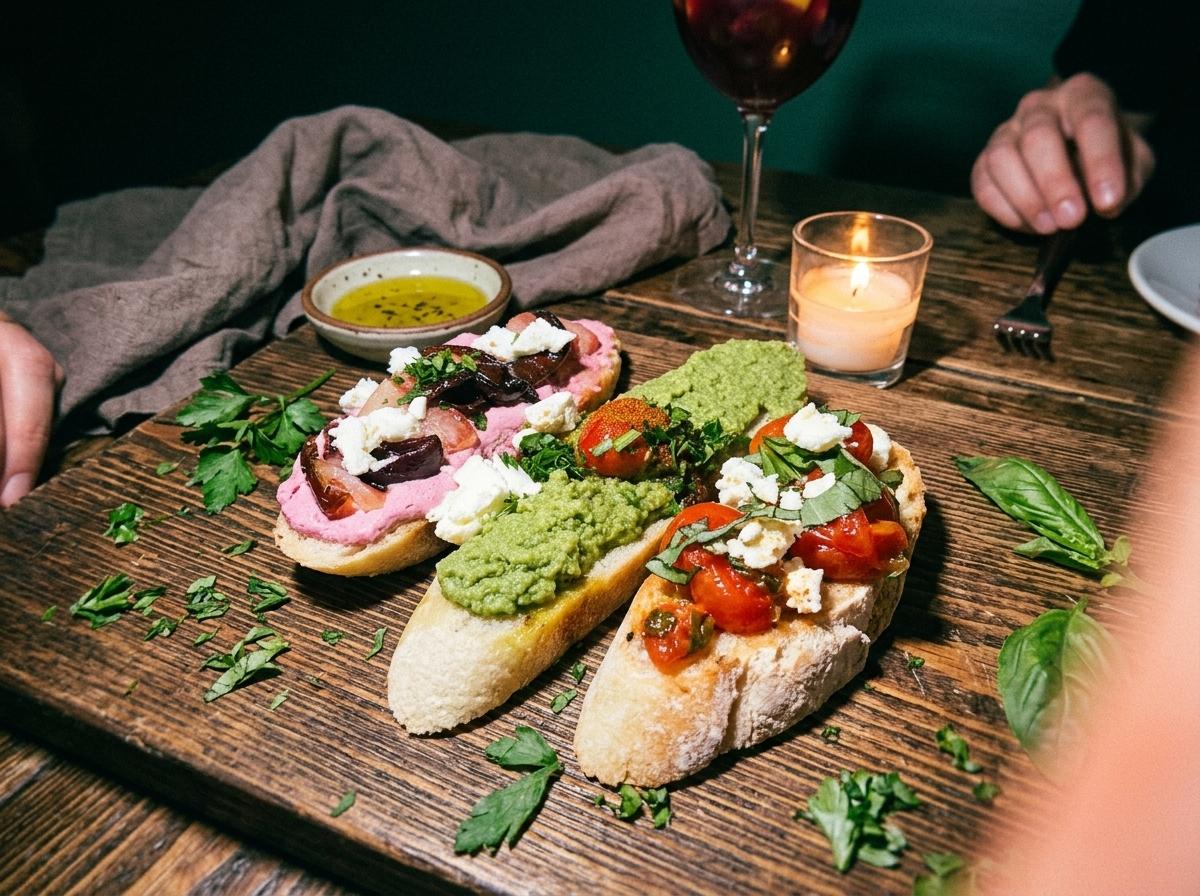
Nia’s current menu includes patatas bravas, croquetas, veggie croquettes, and crisp cauliflower.
The contrast can work for some diners because:
salt cuts through sweetness;
crisp texture contrasts with the cocktail’s smooth body;
and browned fried flavors can connect with coffee’s roasted notes.
However, sauces matter.
Spicy tomato sauce, saffron aioli, pesto aioli, chili oil, and other condiments can change the interaction completely.
This is why the page should avoid publishing simplistic rules such as:
Espresso martinis pair perfectly with tapas.
Tapas is too broad a category for that claim.
Some dishes make much more sense than others.
Espresso Martini With Seafood
Seafood is where restraint becomes important.
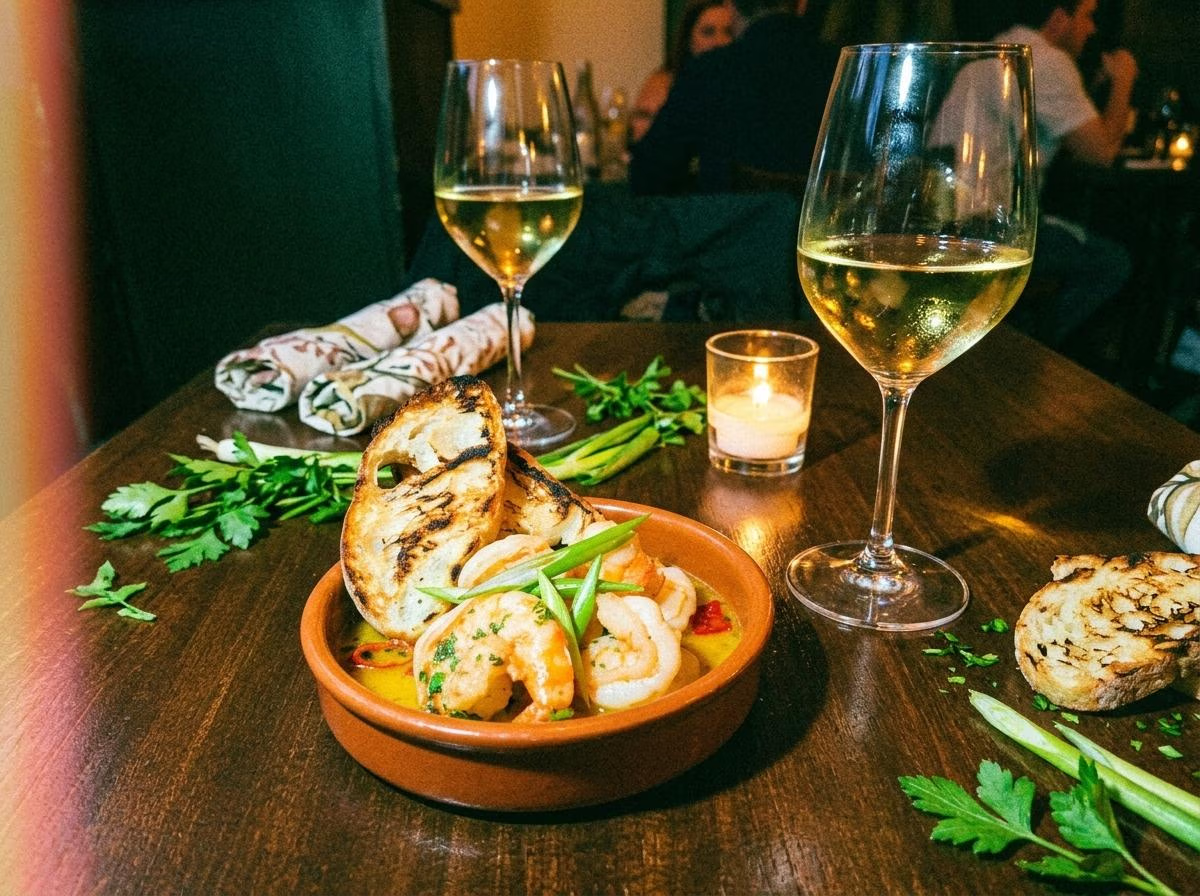
Nia currently serves salmon, shrimp paella, and gambas al ajillo.
Those dishes involve:
tomato and peppers;
saffron, lemon, and olive oil;
or garlic, chili, white wine, and shrimp.
A coffee-and-salted-caramel cocktail would not be the obvious first pairing for those flavors.
Wine, sparkling wine, or another more acidic cocktail may integrate more naturally.
That does not mean someone cannot enjoy an espresso martini beside shrimp.
It means the cocktail should not be marketed as universally ideal simply because both items are currently available at Nia.
For detailed seafood-and-wine recommendations, the separate Mediterranean Wine Pairing guide should remain the deeper resource.
Espresso Martini With Meat Dishes
Coffee flavors can sometimes feel more compatible with grilled, browned, or richer meat preparations than with delicate seafood.
Nia currently serves beef pintxos, chicken pintxos, albóndigas, and meatball pizza among its savory options.
However, sauce again matters.
Spicy remoulade, basil pesto, española sauce, tomato, herbs, and cheese all create different combinations.
A cocktail article does not need to invent formal pairing rules for every dish.
The more useful advice is:
If the espresso martini is the drink you really want, consider ordering it after the most delicate savory dishes rather than trying to make it carry the entire meal.
Why Shared Plates and Cocktails Fit the Same Type of Evening
The existing article has one strong underlying idea that should remain: a flexible shared-food format works naturally with cocktails.
But the current version overstates this by repeatedly calling everything “Mediterranean tapas” and connecting it to conference networking.
A better explanation is culinary.
Shared plates let a table order gradually.
People can begin with drinks.
Add a few dishes.
Order another round if they want.
Move into more substantial food only when needed.
That format works especially well when the purpose of the evening has not been completely decided in advance.
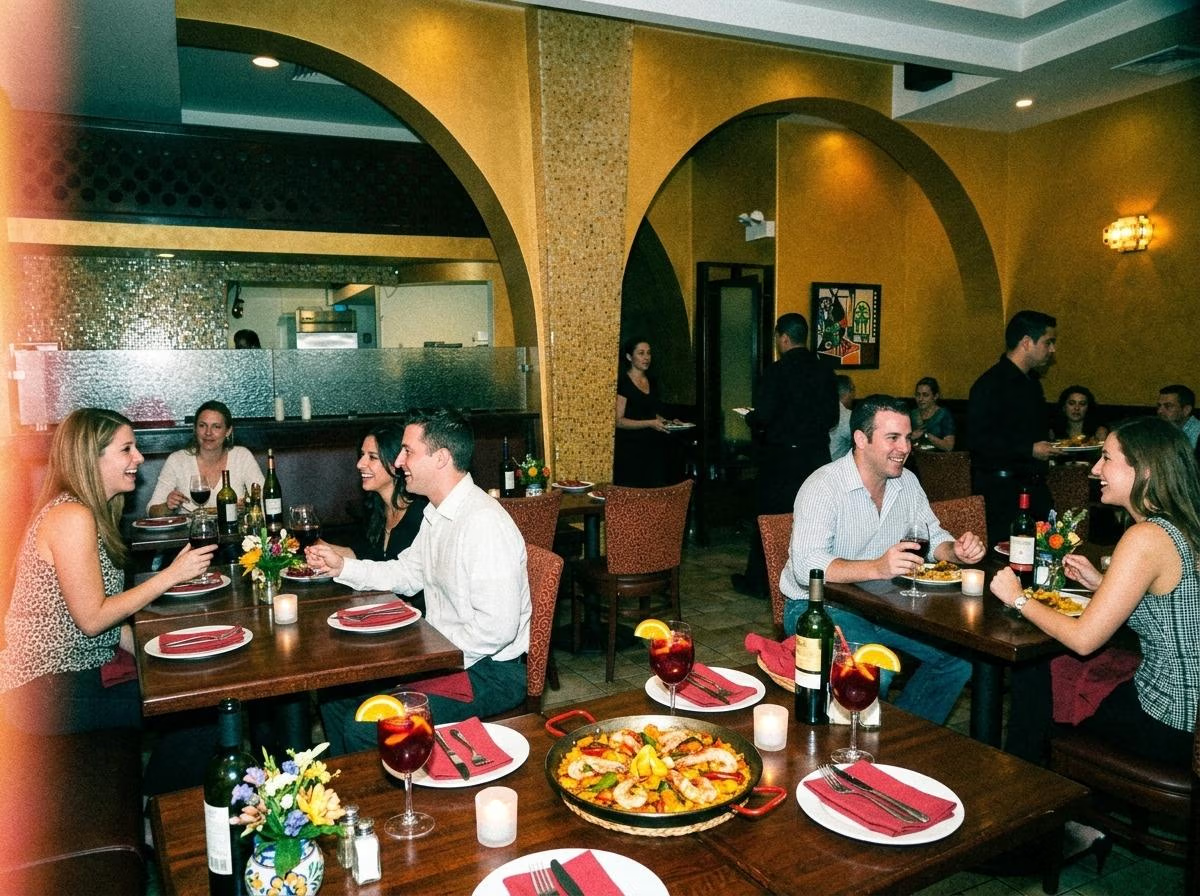
Nia’s current dinner menu includes Spanish-rooted tapas-style dishes such as patatas bravas, croquetas, pintxos, albóndigas, and gambas al ajillo alongside broader Mediterranean dishes including hummus, salmon, salad, pizza, and other shared plates.
This is why the phrase shared plates is often more accurate than calling the entire menu tapas.
Tapas and Shared Plates Are Not Interchangeable Terms
This distinction matters because Nia now has a dedicated Best Tapas in Chicago content owner.
Spanish dishes such as:
patatas bravas;
croquetas;
gambas al ajillo;
pintxos;
and albóndigas
fit naturally into a tapas discussion.
But Nia also serves hummus, salmon, pizza, salad, and other dishes that belong to a broader Mediterranean or restaurant small-plate framework.
This espresso-martini page therefore should not attempt to educate readers deeply about the history of tapas.
Its role is simpler:
Cocktails plus flexible shared food can create an evening that moves easily from drinks into dinner.
Readers asking what tapas actually are should go to the dedicated Chicago tapas guide.
Is the Espresso Martini Part of Nia’s Happy Hour?
This is one of the most important factual corrections to the current article.
Nia’s current published happy-hour page says happy hour runs:
Tuesday through Friday
5:00 PM–6:00 PM
in the bar area or patio.
It currently advertises selected tapas, pizza, sangria, beer, wine, and rotating cocktails. The published happy-hour cocktails currently listed are Mediterranean Coconut and El Diablo, and the page states that selections periodically change.
The regular Craft Cocktails page separately lists the Espresso Martini.
Therefore:
Do not advertise the Espresso Martini as a happy-hour-priced cocktail unless it is actually added to the current rotating happy-hour selection.
The existing trend article incorrectly states that Nia’s happy hour runs until 6:30 PM. The current official Happy Hour page says 5:00 PM–6:00 PM.
That outdated time should be removed immediately.
Why Happy Hour and Espresso Martini Intent Should Stay Separate
This page can mention happy hour because patio cocktails and after-work dining are relevant.
But Nia’s Happy Hour page should remain the authority for:
current times;
current prices;
participating days;
bar versus patio rules;
current discounted cocktails;
current discounted food;
and restrictions.
This blog should not duplicate every current special permanently.
Happy-hour offers change faster than evergreen editorial content.
The correct internal relationship is:
Trend article: Why cocktails, patios, and shared plates work together.
Happy Hour page: What Nia is actually offering right now.
That reduces the chance of another outdated 6:30 PM claim.
Espresso Martini Before Dinner or After Dinner?
Both can work.
They create different experiences.
Before Dinner
Ordering the cocktail first makes sense when the espresso martini itself is part of why you chose the restaurant.
You can have the cocktail while looking at the menu, then move into another beverage when the savory food begins.
This is particularly useful if the meal will include seafood or lighter Mediterranean dishes that may pair more naturally with wine, sparkling wine, or another cocktail.
After Dinner
For many diners, this is the more intuitive placement.
Coffee flavors naturally suggest the end of the meal.
Salted caramel pushes Nia’s version toward dessert territory.
And an after-dinner espresso martini avoids forcing coffee sweetness against several different savory dishes.
Instead of Dessert
Some diners may prefer the cocktail instead of a sweet course.
Others may deliberately pair it with churros or cheesecake.
Neither is inherently more correct.
The best choice depends on how sweet you want the end of dinner to become.
Does an Espresso Martini Replace Coffee?
Not necessarily.
It contains espresso, but it is still an alcoholic cocktail.
Someone wanting coffee without alcohol should order coffee if available rather than treating an espresso martini as an equivalent beverage.
Likewise, someone avoiding caffeine late in the evening should consider whether an espresso-based cocktail fits their plans.
The same general rule applies throughout this article:
the drink should be selected because its ingredients and flavor appeal to you.
Caffeine Does Not Make It Safer to Drive
This needs to be stated clearly because coffee cocktails create an easy misconception.
Caffeine does not reverse alcohol impairment.
Someone may feel more alert after caffeine while remaining impaired by alcohol.
The CDC explicitly warns that caffeine does not reduce alcohol’s effects on the body.
Therefore:
Do not judge driving ability by whether the espresso makes you feel awake.
If driving, the safest approach is not to drink alcohol.
What If One Person Does Not Drink Alcohol?
A cocktail-centered evening should still work for mixed groups.
Nia currently publishes a separate non-alcoholic beverage menu with options including Strawberry Lime Refresca, Black Cherry Lemon Elixir, Blueberry Lemon Spritz, and a Zero-Proof Margarita.
That matters for:
designated drivers;
people avoiding alcohol;
pregnant guests;
people taking medications;
people in recovery;
or anyone who simply does not want a cocktail.
The patio-and-shared-plates experience does not need to depend on everyone drinking.
This is another reason the page should focus on the restaurant format, not alcohol as the source of the social experience.
Espresso Martini for Date Night
The drink has obvious date-night appeal because it feels more intentional than ordering a generic mixed drink and because the visual presentation is part of the experience.
Recent hospitality analytics also associate espresso-martini conversations strongly with date-night occasions.
But this page should not become another West Loop date-night guide.
Its contribution should be limited to the cocktail decision.
An espresso martini can work well when a couple wants:
a cocktail-focused start;
an after-dinner drink;
dessert and drinks;
or a patio evening that may turn into dinner.
Questions about:
what to do before dinner;
where to walk;
first dates;
anniversaries;
activities;
or complete itineraries
belong on Nia’s primary West Loop date-night hub.
Espresso Martini for Groups
Cocktail-centered group plans work best when the restaurant gives people flexibility.
Some guests may order cocktails.
Others may want wine.
Someone may prefer a non-alcoholic drink.
Some may want only a few small plates.
Others may want dinner.
Nia currently combines craft cocktails, wine, non-alcoholic beverages, and a shared-food menu, giving mixed groups several ways to use the same table.
That does not mean the page should become a corporate-event article.
For a normal group, the insight is simply that menu variety helps.
Large corporate or private groups should move to the dedicated event pages.
Espresso Martini for Client Drinks
The original article devotes a large portion of its content to Salesforce Connections attendees, client hosting, agencies, partner meetups, and corporate networking.
That makes the page far too dependent on one past event.
The more durable version is broader.
An espresso-martini-and-shared-plates setting can work for client drinks when the host wants something less structured than a formal dinner.
But whether Nia fits a specific corporate gathering depends on:
party size;
required privacy;
timing;
business expectations;
noise level;
and whether the group needs dedicated event space.
Those deeper questions belong on Nia’s corporate-events pages.
This page only needs to recognize client drinks as one possible use case.
The Patio-to-Dinner Flow
One of the strongest ideas from the existing article deserves to stay because it genuinely differentiates the page.
A patio visit does not need to begin as a full dinner reservation in the guest’s mind.
The evening may develop in stages.
A drink arrives.
Then a small plate.
Then another dish.
Someone decides the table should stay.
Dinner begins almost accidentally.
That progression works because the restaurant can support both beverages and food without requiring a change of venue.
For Nia, the current cocktail menu, shared dinner menu, patio promotion, and weekday patio/bar happy hour all support that type of progression.
This is a genuinely useful part of the trend.
It does not need Salesforce Connections to explain it.
The Dinner-to-Cocktail Flow
The reverse also works.
Guests may arrive primarily for dinner.
Share patatas bravas, seafood, pintxos, pizza, or paella.
Have wine with the meal.
Then decide they want one final cocktail without moving to another bar.
That is where an espresso martini can become relevant.
The important distinction from the original article is language.
Do not say it gives diners a “second wind.”
The espresso martini offers a coffee-forward after-dinner option for guests who want to continue the evening at the same restaurant.
Why Visual Appeal Matters Without Making the Article About Instagram
The espresso martini photographs well.
Foam provides texture.
The glass shape is distinctive.
Coffee beans or other garnish may create immediate recognition depending on preparation.
Patio tables also photograph differently from indoor dining.
Natural evening light, street activity, drinks, and shared dishes can create a strong sense of place.
The existing article spends too much time discussing whether a restaurant is “Instagram-friendly” and “LinkedIn-friendly.”
Those sections should be removed.
Visual appeal is relevant.
Platform-specific marketing theory is not necessary for a consumer-facing restaurant article.
A cocktail may attract attention visually, but the restaurant still has to deliver on flavor, comfort, service, and food once the photo is taken.
A Trend Should Not Become a Gimmick
Restaurants can react badly to popular drinks.
When something trends, dozens of variations appear.
Some add unnecessary syrups.
Some become extremely sweet.
Some prioritize presentation over balance.
Others add elaborate garnishes that make the drink harder to consume.
The goal should not be to make an espresso martini as complicated as possible.
A useful version should still balance:
coffee bitterness;
sweetness;
alcohol;
temperature;
and texture.
Nia’s current version adds salted caramel, giving the cocktail a clearly richer house direction while still keeping espresso central to the menu description.
That specificity is more useful than simply calling it “the best espresso martini in Chicago.”
Should a Restaurant Call Its Espresso Martini “The Best”?
Not without evidence.
This page should not target the keyword by repeatedly declaring:
best espresso martini West Loop;
best espresso martini Chicago;
or Chicago’s number-one espresso martini.
Those statements are subjective and difficult to substantiate.
A more credible approach is:
Nia serves a current espresso martini.
Here is what is in it.
Here is the environment around it.
Here is when it may work within a meal.
Here are alternatives when it does not.
That creates stronger E-E-A-T than unsupported superlatives.
Espresso Martini vs Aperol Spritz on the Patio
These cocktails create almost opposite experiences.
Nia’s current Aperol Spritz combines Aperol, sparkling wine, soda, and orange, while its Espresso Martini combines fresh espresso, vodka, and salted caramel.
The Spritz is lighter, bubbly, citrus-accented, and more naturally associated with earlier patio drinking.
The Espresso Martini is richer, darker, coffee-driven, and easier to imagine later in the meal.
This makes the comparison useful.
Choose the Spritz when you want something lighter and more refreshing.
Choose the Espresso Martini when you want coffee bitterness and richer sweetness.
Neither is inherently more sophisticated.
They solve different flavor preferences.
Espresso Martini vs Wine With Dinner
Wine usually has an advantage when the goal is pairing across multiple savory dishes.
Its range of acidity, tannin, sweetness, and body makes it easier to match seafood, vegetables, tomato, meat, cheese, and shared plates.
An espresso martini is a more specific flavor experience.
That specificity can make it more memorable but less versatile across dinner.
A useful strategy can be:
cocktail before dinner;
wine with savory dishes;
espresso martini after dinner.
But there is no requirement to order all three.
The goal is not maximum beverage consumption.
It is selecting the drink that fits the moment.
Espresso Martini vs Dessert Martini
Nia separately maintains a Dessert Martinis category in its menu structure, while the Espresso Martini currently appears on the Craft Cocktails menu.
That means the espresso martini can reasonably operate between categories.
It has dessert-like qualities.
But it is still part of the general cocktail program.
This is useful for diners who want something richer without necessarily committing to a drink marketed strictly as dessert.
Espresso Martini vs Espresso Old Fashioned
Nia’s current menu provides a particularly easy side-by-side comparison.
Espresso Martini: fresh espresso, Mile High vodka, salted caramel.
Espresso Old Fashioned: espresso-infused bourbon, bitters, cherry.
Choose the Espresso Martini when you prefer:
a smoother vodka base;
greater sweetness;
the traditional shaken coffee-cocktail format.
Choose the Espresso Old Fashioned when you prefer:
bourbon;
bitters;
a more spirit-forward style;
and darker whiskey flavors.
This comparison is more useful than publishing generic claims that everyone should order the espresso martini.
Can an Espresso Martini Be Too Sweet?
Yes, depending on personal taste and recipe.
Espresso naturally provides bitterness.
Sweetener needs to balance it without turning the drink into liquid dessert unless that is the intentional style.
Salted caramel will naturally move the flavor in a sweeter, richer direction.
Diners who prefer very dry cocktails may therefore want to ask about the current preparation or choose another option.
Someone who enjoys coffee desserts may like exactly that characteristic.
Cocktail quality is partly about balance and partly about matching the drink to the person ordering it.
Does the Espresso Need to Be Fresh?
Coffee quality affects the cocktail.
Fresh espresso provides aroma, bitterness, and the coffee character the drink is supposed to deliver.
Nia’s current menu explicitly describes its version as using fresh espresso.
That is a useful concrete detail.
It tells the reader more than vague phrases such as:
luxurious;
iconic;
Instagrammable;
or unforgettable.
Specific ingredients build more confidence than marketing adjectives.
Does an Espresso Martini Contain Caffeine?
If made with caffeinated espresso, yes.
Nia’s current version is described as using fresh espresso.
The exact caffeine content should not be guessed because:
espresso serving size varies;
coffee beans vary;
extraction varies;
and cocktail recipes vary.
Anyone who needs to limit caffeine should ask the restaurant rather than relying on a generalized internet estimate.
Can I Order an Espresso Martini Late at Night?
Nia currently lists regular hours of:
Tuesday–Thursday: 5:00 PM–10:00 PM
Friday–Saturday: 5:00 PM–11:00 PM
with Sunday and Monday closed.
Actual last-call and kitchen timing should not be inferred from closing time.
If arriving specifically for a late cocktail, check the current reservation and service situation.
This is especially relevant on busy Friday and Saturday nights.
Do I Need a Reservation for Patio Cocktails?
If a specific patio table matters, reserving is the safer plan.
Outdoor capacity is limited compared with the entire restaurant.
Weather can move guests indoors.
Peak Friday and Saturday evenings can create additional demand.
Small groups may sometimes prefer spontaneity, but a blog should not promise walk-in patio availability.
The practical advice is:
Request patio seating when booking if the patio is an important part of the plan.
Can You Go to Nia Just for Cocktails?
Nia operates as a restaurant and wine bar and publishes a dedicated craft-cocktail menu.
However, seating policies can depend on time, area, reservation volume, and current operations.
The blog should not guarantee drinks-only seating in every section of the restaurant at every time.
Guests specifically planning a drinks-only visit should check current availability.
This is especially sensible when requesting a patio table during high-demand periods.
What Should Non-Drinkers Order on the Patio?
Nia’s current non-alcoholic menu includes:
Strawberry Lime Refresca;
Black Cherry Lemon Elixir;
Blueberry Lemon Spritz;
and Zero-Proof Margarita.
These should remain current-menu examples rather than permanent promises.
The more important point is that a cocktail-oriented evening can still work for someone avoiding alcohol.
This makes the page more inclusive and prevents the entire patio experience from being defined by one alcoholic drink.
Frequently Asked Questions About Espresso Martinis and Patio Dining in the West Loop
Where can I get an espresso martini in Chicago’s West Loop?
Nia Restaurant & Wine Bar currently serves an Espresso Martini at 803 W. Randolph Street in the West Loop. Its current version contains fresh espresso, Mile High vodka, and salted caramel.
The broader West Loop contains many cocktail-focused restaurants, so diners seeking a citywide comparison should evaluate current menus and locations rather than assuming one venue is objectively best.
Does Nia currently have an espresso martini?
Yes.
Nia’s current Craft Cocktails menu lists an Espresso Martini made with fresh espresso, Mile High vodka, and salted caramel.
How much is Nia’s espresso martini?
The current published Craft Cocktails menu lists it at $18. Prices can change, so the live cocktail menu should remain the authority.
Is Nia’s espresso martini part of happy hour?
Not according to the current published happy-hour list.
Nia’s happy hour currently offers rotating cocktails and presently lists Mediterranean Coconut and El Diablo among the discounted cocktail selections. The Espresso Martini appears separately on the standard Craft Cocktails menu.
Because Nia says happy-hour selections periodically change, check the current Happy Hour page before visiting.
What time is Nia happy hour?
Nia’s current official Happy Hour page lists:
Tuesday–Friday, 5:00 PM–6:00 PM
in the bar area or patio.
Older Nia articles that say happy hour ends at 6:30 PM should be updated.
Does Nia have patio happy hour?
Yes.
The current Happy Hour page says the offer is available in the bar area or patio.
Patio seating remains dependent on weather and availability.
What food goes with an espresso martini?
There is no universal best pairing.
Coffee-forward cocktails often work more naturally with dessert, chocolate, caramelized flavors, nuts, cinnamon, or some salty fried dishes than with delicate seafood.
At Nia, current desserts include churros with cinnamon sugar and semi-sweet chocolate and Burnt Basque Cheesecake with honey, clementine, and nuts.
Is an espresso martini good with tapas?
It depends on the tapa.
Crisp, salty dishes may provide interesting contrast.
Delicate seafood, highly acidic tomato dishes, or strongly spicy sauces may be more difficult.
The word “tapas” covers too many different flavors for one universal cocktail pairing.
Is an espresso martini good for date night?
It can be if both diners enjoy coffee-forward cocktails.
The drink is popular in social and date-night contexts, but the success of a date depends far more on the restaurant atmosphere, comfort, food, and people involved than on one cocktail. A 2026 hospitality analytics report found espresso-martini social mentions strongly associated with date-night occasions.
Does caffeine in an espresso martini sober you up?
No.
The CDC states that caffeine does not reduce alcohol’s effects on the body and does not make someone less impaired.
Can an espresso martini make you feel more awake?
Caffeine may make someone feel more alert, but that does not mean alcohol impairment has disappeared.
This is why the cocktail should not be promoted as a “second wind” or a way to safely continue drinking.
Does Nia have other coffee cocktails?
Yes.
The current menu also lists an Espresso Old Fashioned made with espresso-infused bourbon, bitters, and cherry.
Does Nia have non-alcoholic drinks?
Yes.
Nia currently lists several dedicated non-alcoholic drinks including Strawberry Lime Refresca, Black Cherry Lemon Elixir, Blueberry Lemon Spritz, and a Zero-Proof Margarita.
Does Nia serve tapas with cocktails?
Nia’s current menu contains several Spanish tapas-style dishes including patatas bravas, croquetas, pintxos, albóndigas, and gambas al ajillo, alongside broader Mediterranean shared plates.
For detailed tapas education and Chicago tapas comparisons, use the dedicated Best Tapas in Chicago guide.
Does Nia have outdoor seating?
Nia currently promotes patio dining, and its Happy Hour page specifically identifies the patio as one of the areas where happy hour is offered.
Outdoor availability depends on current weather and capacity.
Is the patio open all year?
Do not assume so.
The current site promotes a patio but does not establish a permanent guarantee of year-round outdoor service.
Check current availability when reserving.
What is better on the patio: espresso martini or Aperol Spritz?
That depends on flavor and timing.
Nia’s Aperol Spritz is sparkling, citrus-accented, and lighter, while its Espresso Martini is coffee-driven and richer.
The Spritz may feel more natural earlier in a warm-weather patio evening.
The Espresso Martini may fit more naturally later or after dinner.
Can I have drinks first and decide about dinner afterward?
A restaurant combining cocktails with a full shared-food menu gives diners that flexibility.
Nia currently offers both craft cocktails and a substantial dinner menu of small plates, pizza, seafood, meat, vegetables, and desserts.
Specific table policies should still be checked when making the reservation.