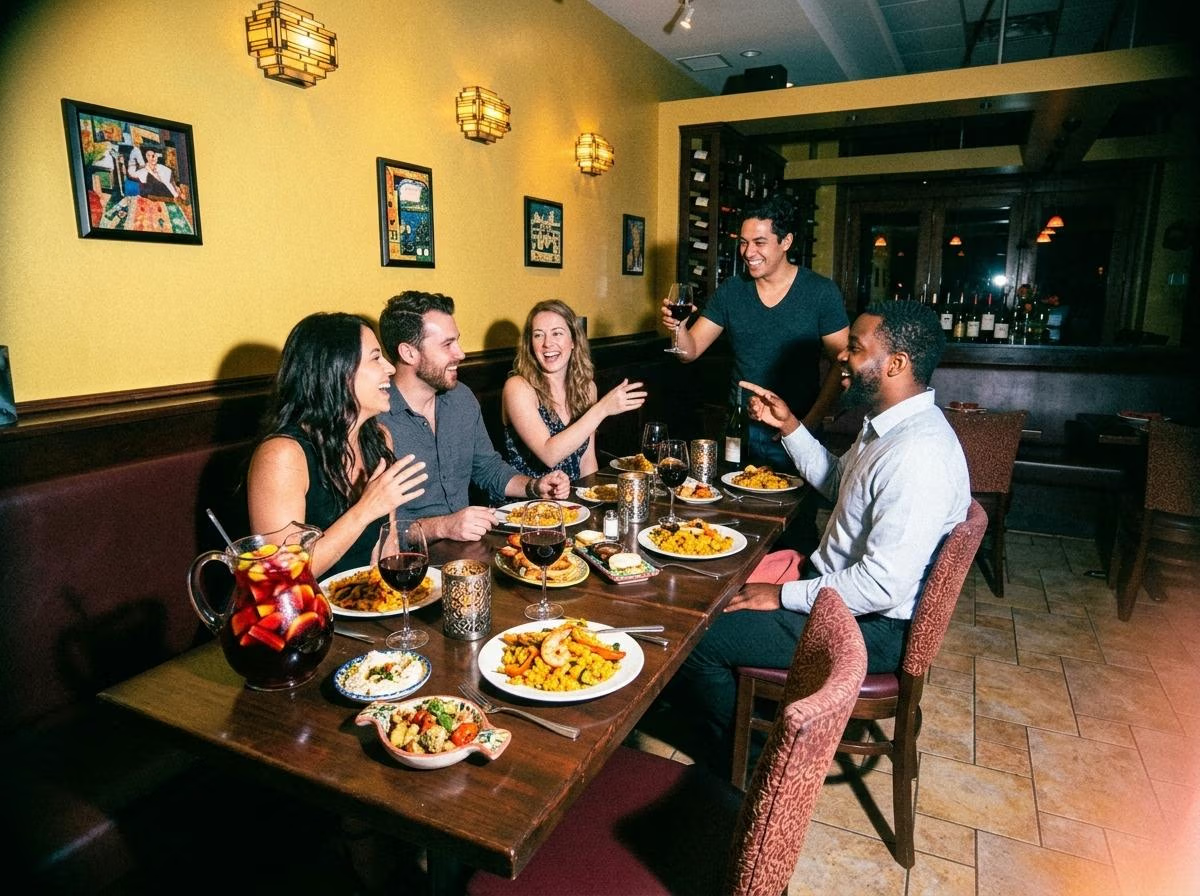
Choosing the Best Tapas in Chicago Means Choosing the Right Style
Finding the best tapas in Chicago is not simply a matter of finding the restaurant with the largest small-plates menu.
Tapas has a specifically Spanish identity.
A restaurant may serve small portions intended for sharing without necessarily being a tapas restaurant. Mediterranean mezze can also involve several dishes shared around a table, but mezze and tapas come from different culinary traditions. Even within Spain, tapas can look different from one city or region to another, while pintxos—particularly associated with northern Spain—create another related but distinct style of eating.
That distinction matters in Chicago because the city's small-plates restaurants cover a wide spectrum.
Some restaurants build their identity almost entirely around Spanish tapas, cured meats, croquetas, tortilla Española, paella, and sangria.
Others combine Spanish dishes with a broader Mediterranean menu.
Some are lively large-format restaurants designed for groups, while others offer a smaller neighborhood setting.
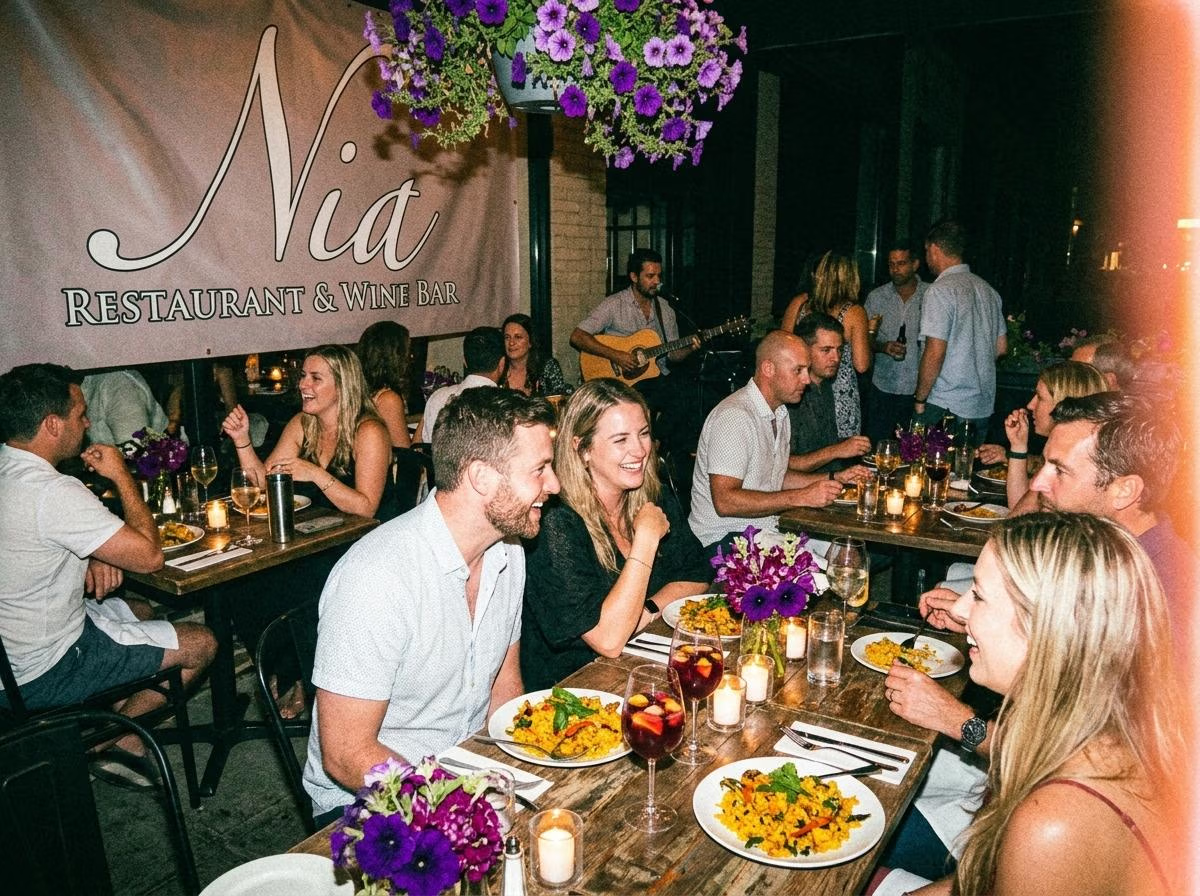
Nia Restaurant & Wine Bar falls into the second category. Its current menu includes recognizable Spanish dishes such as pan con tomate, croquetas, patatas bravas, albóndigas, gambas al ajillo, pintxos, and shrimp paella, but Nia describes its broader concept as Mediterranean-inspired rather than exclusively Spanish.
That makes the most useful question:
What type of tapas experience are you looking for, and which Chicago restaurant fits it best?
This guide explains what tapas actually means, how tapas differs from mezze and generic small plates, how to build a satisfying shared meal, which dishes are useful reference points, and where several current Chicago tapas restaurants fit within that landscape.
What Are Tapas?
Tapas are small portions of food associated with Spanish bar and dining culture.
Spain's official tourism website describes tapas as small bites or portions traditionally enjoyed alongside drinks in bars, with the food varying significantly across the country.
That broad definition is important.
There is no single master list of dishes that every Spanish tapas restaurant must serve.
One bar may emphasize olives, anchovies, tortilla, croquetas, and cured meats.
Another may focus more heavily on seafood.
A modern restaurant may take familiar Spanish flavors and reinterpret them.
Tapas can be served hot or cold.
Some consist of only a few ingredients.
Others involve considerable preparation.
And several tapas ordered together can become a complete meal rather than simply functioning as appetizers before an entrée.
This is why translating tapas as "Spanish appetizers" is not completely wrong, but it is incomplete.
The format can structure the entire dinner.
Tapas Is a Style of Eating as Much as a Portion Size
The defining feature of tapas is not simply that the plate is small.
The format encourages variety.
Instead of everyone choosing one entrée and staying with it for the entire meal, a table may order several dishes and taste across vegetables, seafood, meat, cheese, bread, potatoes, and other preparations.
That changes how the meal develops.
A plate can arrive, be shared, and disappear before another dish appears.
The table can decide what it liked and order more.
The meal becomes adjustable.
This flexibility is one reason tapas works especially well for couples and small groups.
But sharing does not automatically make food tapas.
That is where the distinction between tapas, generic small plates, and mezze becomes important.
Tapas vs Small Plates: They Are Not Exactly the Same
Small plates is a broad restaurant-format term.
A small plate can come from almost any cuisine.
A restaurant might serve Korean small plates, Italian small plates, modern American small plates, Mediterranean small plates, or chef-driven tasting portions.
Tapas belongs specifically to Spanish culinary culture.
The overlap is obvious: both formats involve smaller portions and can encourage sharing.
But calling every small plate "tapas" strips away the cultural meaning of the word.
A plate of patatas bravas is recognizably Spanish tapas.
A bowl of rosemary hummus may be a Mediterranean small plate, but describing hummus as traditional Spanish tapas would be misleading.
This distinction matters particularly for Nia because its menu contains both Spanish-influenced dishes and broader Mediterranean preparations.
The best editorial approach is to describe the specific Spanish dishes accurately without forcing the entire menu into one national category.
Tapas vs Mezze: The Difference Nia's Site Needs to Keep Clear
This is the most important cannibalization distinction for Nia's content strategy.
Tapas comes from Spain.
Mezze is associated with a much broader eastern Mediterranean, Middle Eastern, and surrounding regional dining tradition.
Nia's separate mezze guide currently describes mezze through dishes such as dips, salads, vegetables, seafood, cheese, bread, grilled proteins, hummus, and other shared dishes across countries including Greece, Lebanon, Turkey, Cyprus, Egypt, Syria, and neighboring regions.
The dining formats can feel similar because both may involve several dishes shared around a table.
But they should not be collapsed into one keyword topic.
A simple way to understand the difference is this:
Tapas: Spanish small-plate tradition.
Mezze: Eastern Mediterranean and Middle Eastern shared-dish tradition.
Small plates: broad modern restaurant category that can describe either—or neither.
Nia can legitimately serve Spanish tapas-style dishes alongside Mediterranean dishes that are closer to mezze or modern shared plates.
That diversity should be explained rather than hidden.
Why This Difference Matters for Diners
Someone searching best tapas in Chicago is likely looking specifically for Spanish food.
They may expect dishes such as patatas bravas, croquetas, tortilla Española, pan con tomate, gambas al ajillo, jamón, pintxos, or paella.
Someone searching what is mezze is usually asking a broader cultural and educational question involving hummus, baba ganoush, olives, breads, grilled vegetables, yogurt, stuffed grape leaves, and eastern Mediterranean dishes.
Both readers may enjoy shared dining.
They do not have identical search intent.
This page should therefore own Chicago tapas.
The mezze article should own Mediterranean small-plates education.
Tapas vs Pintxos
Pintxos are particularly associated with northern Spain and the Basque Country.
They are often smaller than what a modern restaurant may label tapas and historically may be served as individual bites, frequently involving bread, skewers, seafood, meat, cheese, peppers, or other toppings.
Not every pintxo is literally served on a toothpick, however.
The distinction is regional and culinary rather than simply visual.
Chicago restaurants sometimes place both terms on the same menu.
Cafe Ba-Ba-Reeba, for example, explicitly describes its pintxos as bite-sized tapas popular in northern Spain and lists them separately from its broader tapas selection.
Nia's current menu also lists both chicken pintxos and beef pintxos among its small plates.
For diners, the easiest practical interpretation is:
Tapas describes the broader Spanish small-plate category.
Pintxos often describe smaller northern-Spanish-style bites.
What Dishes Should You Know Before Going Out for Tapas?
You do not need to memorize Spanish food vocabulary before dinner.
But a few dishes provide useful reference points because they appear frequently across tapas menus.
Patatas Bravas
Patatas bravas is one of the most recognizable tapas dishes.
The basic idea is fried or crisp potatoes paired with a bold sauce, commonly involving salsa brava and often aioli or another creamy element depending on the restaurant.
The dish works because of texture and contrast.
The potatoes should provide enough crispness to stand up to sauce.
The sauce should contribute more than moisture.
Nia's current patatas bravas uses crisp potatoes, spicy tomato sauce, and saffron aioli.
Boqueria's current version uses crispy potatoes with salsa brava, pimentón, and garlic allioli.
Different kitchens therefore arrive at recognizable patatas bravas through slightly different details.
Croquetas
Croquetas use a creamy interior enclosed in a crisp fried shell.
Fillings vary.
Jamón is a classic option, while mushrooms, cheese, chicken, seafood, and contemporary combinations can also appear.
The contrast between the shell and soft interior is central to the appeal.
Nia currently serves ham-and-cheese croquetas with aioli as well as vegetable croquettes with roasted red pepper, pesto aioli, and scallions.
Cafe Ba-Ba-Reeba currently offers Ibérico ham croquetas among its Spanish tapas offerings.
Boqueria currently lists both jamón and mushroom croquetas.
This is a good example of a dish that provides continuity across Spanish tapas restaurants while still giving each kitchen room for variation.
Pan con Tomate
Pan con tomate is proof that tapas does not need to be complicated to be satisfying.
Bread, tomato, olive oil, garlic, and salt can create a remarkably complete flavor combination when the ingredients are good.
Boqueria's current Chicago menu describes its Catalan-style pan con tomate as toasted bread rubbed with tomato, garlic, and olive oil.
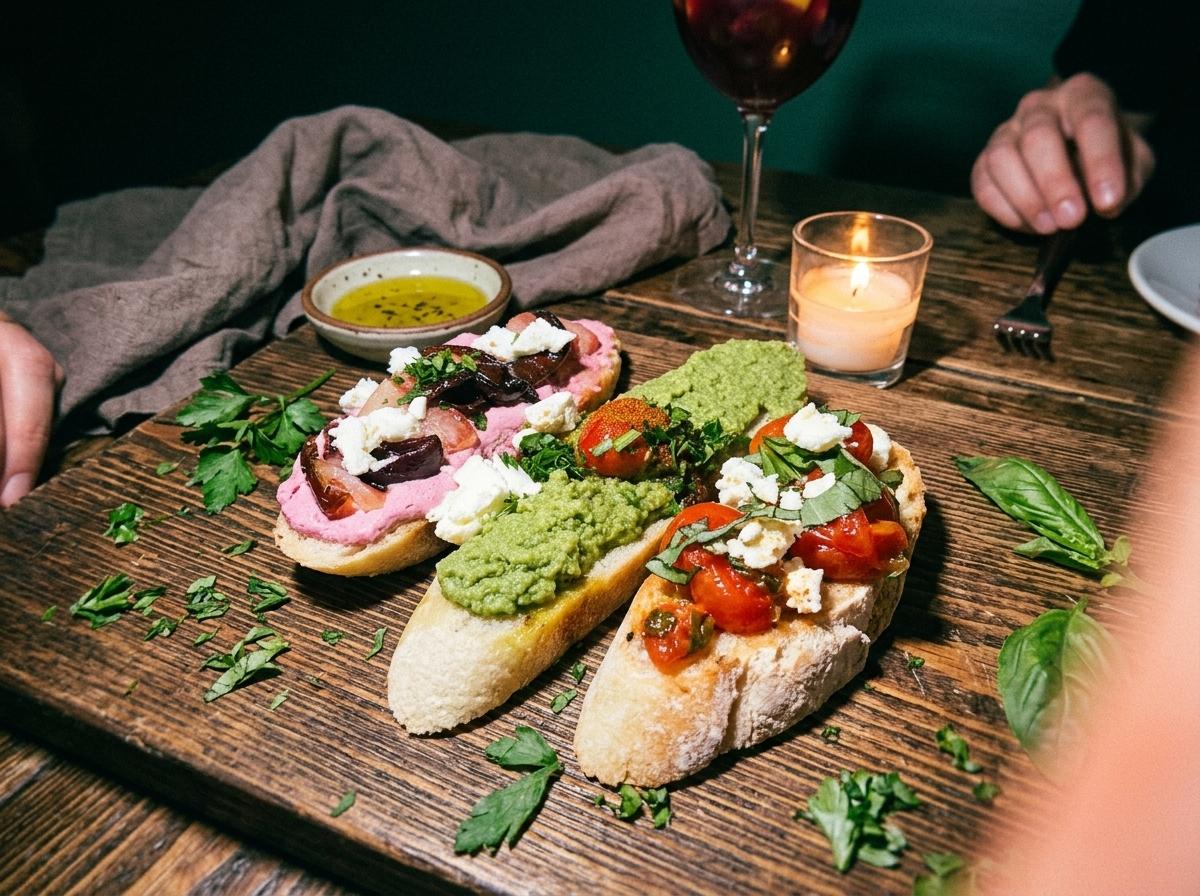
Nia currently offers a looser interpretation using tomato jam, basil, and feta on house-made sourdough crostini.
Those two dishes should not be presented as identical.
One is closer to a recognizable Catalan preparation.
The other is a Mediterranean-Spanish-inspired restaurant variation.
That difference is exactly the kind of detail a useful Chicago tapas guide should explain.
Gambas al Ajillo
Gambas al ajillo centers shrimp around garlic and olive oil.
The dish can look straightforward, which means execution matters.
Shrimp should remain properly cooked.
Garlic should contribute intensity without becoming harsh.
Oil and seasoning need enough flavor that the bread served alongside the dish becomes useful rather than decorative.
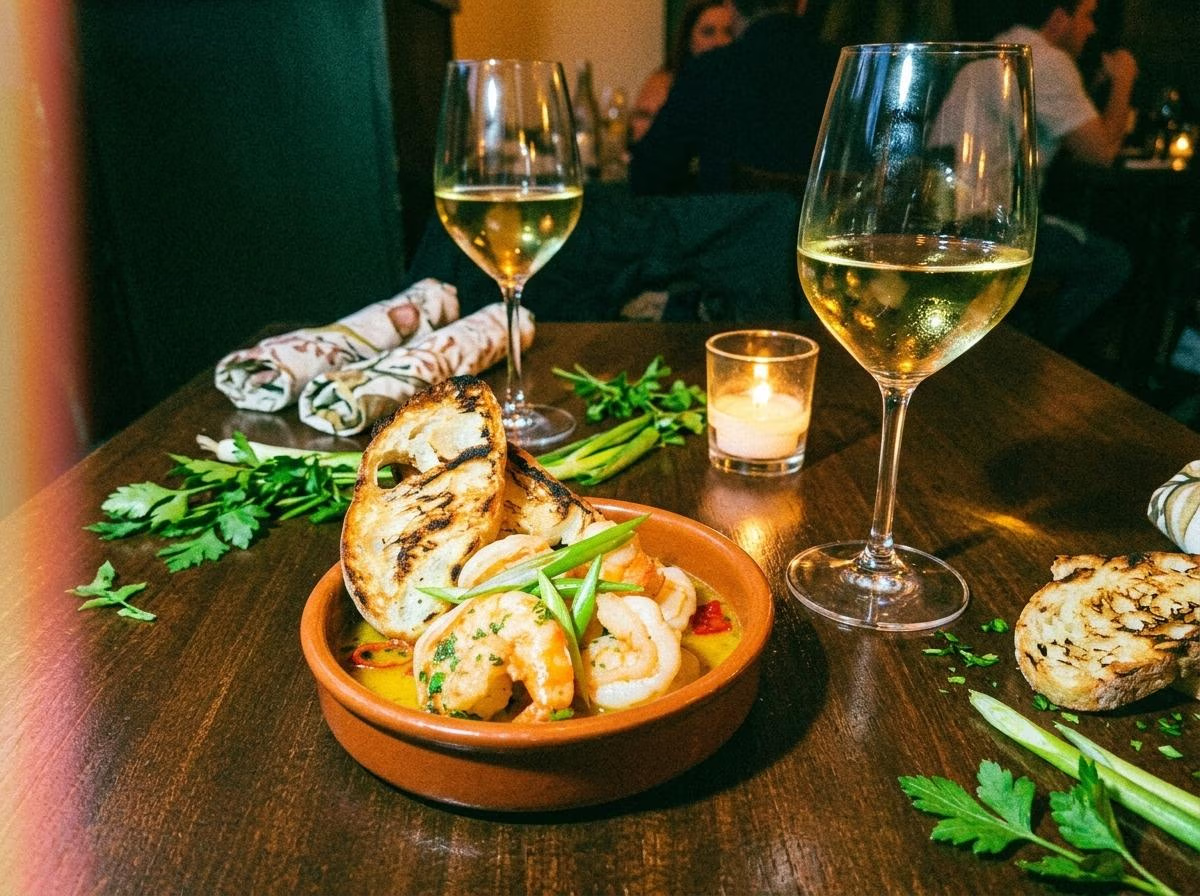
Nia's current version features shrimp sautéed in garlic-infused olive oil with Spanish chili and white wine, served with crusty bread.
Boqueria's current preparation uses shrimp, garlic, brandy, lobster reduction, Guindilla pepper, and olive oil.
The essential Spanish idea is still visible even though the restaurant executions differ.
Albóndigas
Albóndigas are meatballs, but the useful comparison is in the sauce and seasoning rather than the English translation.
Spanish-style meatballs can be served with tomato-based sauces, wine sauces, rich meat sauces, herbs, or other regional influences.
Nia currently serves Spanish-style meatballs in an española sauce.
Boqueria currently serves beef-and-pork meatballs with tomato sauce and sheep's-milk cheese.
Again, tapas gives diners a familiar category without demanding one single recipe.
Tortilla Española
Tortilla Española is a Spanish potato-and-egg preparation sometimes translated as Spanish tortilla or Spanish omelet.
Despite the name, it is unrelated to the thin wheat or corn tortillas associated with Mexican cuisine.
The classic combination involves eggs, potatoes, onions in many versions, olive oil, and seasoning.
Boqueria currently lists tortilla Española with eggs, confit potatoes, onions, and garlic allioli.
Cafe Ba-Ba-Reeba likewise includes tortilla Española within its tapas program.
If a diner wants a more explicitly traditional Spanish tapas experience, dishes like tortilla Española can be useful signals when reviewing menus.
Pimientos de Padrón
These blistered green peppers provide a simpler vegetable tapa.
They may be served with salt and little else.
Their value comes from fresh pepper flavor, char, and occasional heat.
Boqueria currently includes pimientos de Padrón on its Chicago tapas menu.
Not every good tapas restaurant needs them, but they demonstrate an important point:
Tapas does not need to rely entirely on fried food, meat, or cheese.
Vegetable dishes are part of a balanced shared table.
Jamón and Spanish Charcuterie
Cured ham plays an important role in Spanish cuisine.
Jamón Serrano and Jamón Ibérico offer different levels of richness, texture, aging, and price.
A dedicated Spanish tapas restaurant may place much greater emphasis on charcuterie than a broader Mediterranean restaurant.
Boqueria currently offers multiple Spanish cheeses and cured meats, including Jamón Serrano and Jamón Ibérico de Bellota.
That makes the restaurant useful for diners who want charcuterie to become a meaningful part of the tapas experience.
Nia currently includes jamón in a Basque-inspired pizza but does not position cured meats as the center of its present dinner menu.
That difference helps define the two restaurant formats.
How to Order Tapas Without Ordering Too Much
Tapas menus create a particular problem.
Everything sounds small.
That makes it easy to order far more food than expected.
There is no universal number of dishes that works at every restaurant because portion sizes vary dramatically.
At Boqueria Chicago, the current menu explicitly recommends roughly two to three tapas per person.
That can be a useful reference point for that restaurant.
It should not be converted into a universal rule for all Chicago tapas dining.
A better strategy is to order progressively.
For two diners, start with a few dishes that provide contrast.
Choose something vegetable-driven or fresh.
Add one fried or crisp dish.
Include seafood or another protein if desired.
Then decide whether you need another round.
If the table is also ordering paella or another larger dish, reduce the number of tapas accordingly.
Shared dining is flexible.
Use that flexibility.
How to Build a Balanced Tapas Meal
A good tapas dinner should feel varied rather than repetitive.
Ordering croquetas, fried potatoes, fried calamari, and four more fried dishes may provide consistency, but not much contrast.
Try thinking in categories.
Start With Something Bright or Simple
Olives, pan con tomate, peppers, salad, or another lighter plate can start the meal without overwhelming the palate.
Nia currently offers marinated Mediterranean olives and pan con tomate among its opening options.
Boqueria offers pan con tomate, salads, peppers, and vegetable tapas that can perform a similar role within a more Spanish-focused menu.
Add Something Crisp
Croquetas or patatas bravas create texture.
One crisp or fried dish can provide enough richness without allowing every plate to taste similar.
Add Seafood
Gambas al ajillo, octopus, anchovies, calamari, cod, or another seafood preparation can provide a completely different flavor direction.
Nia's gambas al ajillo gives the table garlic, chili, olive oil, white wine, shrimp, and bread in one plate.
Boqueria's current seafood section includes gambas, anchovies, calamari, black cod, octopus, and tuna.
Add Meat if the Table Wants More Weight
Meatballs, skewers, jamón, lamb, pork, or other meat tapas can add depth later in the meal.
Nia currently lists both chicken and beef pintxos as well as albóndigas.
Finish With a Larger Shared Dish Only if You Need One
Paella can become the centerpiece after tapas.
At a restaurant with a large paella program, this may be the natural meal structure.
Cafe Ba-Ba-Reeba specifically encourages diners to create a meal from tapas or use tapas as appetizers before paella.
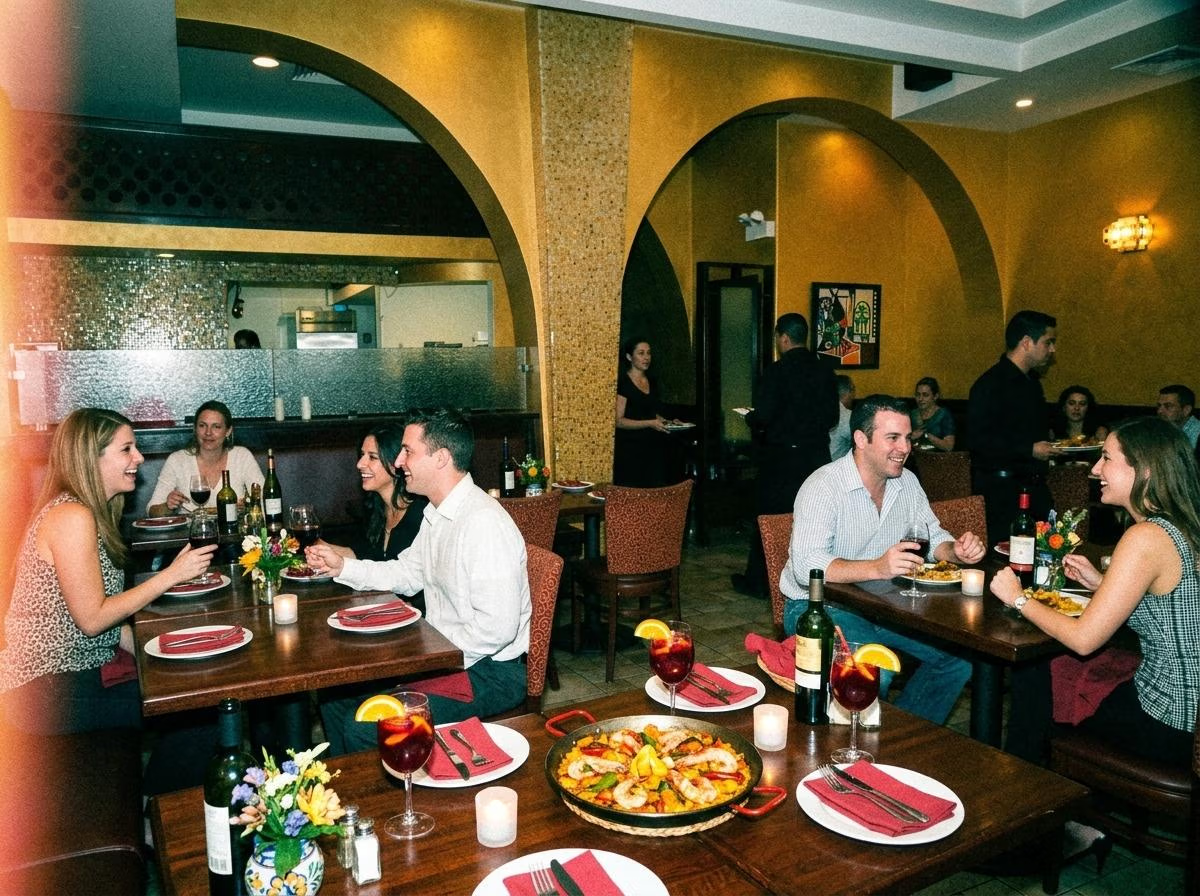
Nia works differently because its shrimp paella is itself listed among the restaurant's smaller shared plates.
Understanding the restaurant's portion format prevents ordering mistakes.
Tapas for Two
Tapas is particularly convenient for two diners because several dishes can be shared without requiring a large group.
A simple approach might include one vegetable or fresh dish, one crisp dish, one seafood plate, and one meat or rice plate.
The exact order does not matter.
Contrast does.
Two people can also order progressively.
Start with three dishes.
If both are still hungry, add another.
This is often more enjoyable than placing a huge order immediately and discovering that every plate arrives before there is room on the table.
Tapas for Groups
Tapas works naturally for groups because everyone can try several dishes.
It also makes dietary preferences easier to accommodate in some situations.
One section of the table can enjoy seafood.
Another can share meat.
Vegetarians may have separate vegetable dishes.
The challenge is logistics.
Larger groups should avoid ordering only one portion of everything and expecting ten people to receive meaningful tastes.
Ask the restaurant whether dishes should be doubled or tripled.
For very large groups, a preset shared menu may make more sense than individual à la carte ordering.
That is where group-dining or private-event pages become relevant.
This article should explain the tapas experience rather than reproduce Nia's event packages.
Are Tapas Only Appetizers?
No.
Tapas can function as appetizers, but they can also make up an entire meal.
A table may order three or four dishes for a lighter dinner or continue ordering several rounds.
Another table may begin with tapas and follow with paella.
That flexibility is one of the format's strengths.
The useful question is not whether tapas is an appetizer.
It is whether the portions and number of dishes create enough food for the table.
Are Tapas Always Shared?
Tapas is strongly associated with social and shared dining, but diners are not legally required to split every plate.
Some dishes are easy to divide.
Others are individual bites.
Pintxos can sometimes be ordered one per person.
A diner with an allergy or dietary restriction may reasonably keep a particular dish separate.
Sharing is part of the dining culture, not a rule that must override comfort or safety.
Are Tapas Always Spanish?
Traditional tapas is Spanish.
The word is sometimes used loosely in restaurant marketing to mean almost any small dish, but that broader usage can be misleading.
Italian appetizers are better described through terms such as antipasti.
Greek, Lebanese, Turkish, and other eastern Mediterranean shared dishes may fit within mezze traditions.
Japanese small plates have their own terminology.
Using culturally specific terms accurately makes food writing stronger.
For Nia, this means Spanish dishes such as patatas bravas, croquetas, pintxos, albóndigas, and gambas can reasonably appear in a tapas article.
Hummus does not need to be renamed tapas simply because it is served in a small bowl.
Where to Try Tapas in Chicago
Chicago offers several different tapas formats.
The restaurants below are not ranked from universally best to worst.
Each makes sense for a different kind of diner.
Nia Restaurant & Wine Bar — West Loop
Nia is located at 803 W. Randolph Street in Chicago's West Loop.
Its current menu combines Spanish-influenced small plates with broader Mediterranean food.
Current Spanish-oriented examples include pan con tomate, ham-and-cheese croquetas, shrimp paella, chicken pintxos, beef pintxos, patatas bravas, albóndigas, gambas al ajillo, and churros. The same menu also contains Mediterranean olives, salmon with pipérade, hummus, pizzas, salads, and other broader Mediterranean preparations.
That combination is the key to understanding where Nia fits.
Nia is not simply a conventional Spanish tapas bar.
It is a Mediterranean restaurant with meaningful Spanish roots and a substantial shared-plate component.
Who Nia Fits Best
Nia is especially relevant for diners who want tapas-style Spanish dishes within a broader Mediterranean dinner.
It can work when one person wants patatas bravas or gambas while another wants hummus, salmon, vegetables, or pizza.
The menu also creates an easy path into wine because Nia operates as both a restaurant and wine bar.
For a diner searching specifically for a highly traditional Spanish menu with extensive jamón, tortilla Española, several regional tapas categories, and multiple paellas, one of Chicago's dedicated Spanish restaurants may fit that intent better.
That honesty strengthens Nia's positioning.
Cafe Ba-Ba-Reeba! — Lincoln Park
Cafe Ba-Ba-Reeba in Lincoln Park is one of Chicago's most established Spanish tapas destinations.
Its current menu explicitly describes tapas as the small dishes of Spain, separates pintxos from tapas, and offers a wide Spanish menu alongside paella and sangria. The restaurant also states that it has received the Restaurants from Spain certification from Spain's Bureau of Tourism.
Current offerings span pan con tomate-style bread, baked goat cheese, croquetas, tortilla Española, garlic shrimp, meatballs, vegetables, skewers, pintxos, charcuterie, and multiple paellas.
Who Cafe Ba-Ba-Reeba Fits Best
Choose this style of restaurant when the goal is a broad, dedicated Spanish tapas experience rather than a wider Mediterranean menu.
It is particularly useful for groups because the menu allows diners to move across pintxos, tapas, paella, sangria, and other Spanish categories within one restaurant.
Boqueria Fulton Market — West Loop/Fulton Market
Boqueria gives diners another Spanish-focused tapas option near the West Loop.
Its current Fulton Market menu includes pan con tomate, tortilla Española, croquetas, patatas bravas, pimientos, gambas al ajillo, octopus, anchovies, Spanish charcuterie, meat tapas, and three paella styles. The menu currently recommends roughly two to three tapas per person.
The restaurant is located at 807 W. Fulton Market, making it geographically close to Nia while offering a notably different culinary structure.
Nia vs Boqueria: What Is the Actual Difference?
This comparison is useful because the restaurants are close but should not be described as interchangeable.
Boqueria currently presents itself as a Spanish tapas restaurant and organizes its menu explicitly around Spanish tapas, cheese, charcuterie, and paella.
Nia's menu combines Spanish dishes with Greek and broader Mediterranean influences.
Someone specifically wanting a Spanish tapas-bar experience may prefer Boqueria's narrower national focus.
Someone wanting a Mediterranean meal that includes recognizable Spanish tapas among a wider selection may find Nia better aligned with that preference.
The decision is about style, not declaring one restaurant objectively superior.
Tapas Valencia — South Loop
Tapas Valencia has served Spanish small plates in Chicago's South Loop since 2009.
Its current site describes the restaurant around Spanish tapas, paella, tortilla Española, sangria, and a lively dining environment.
Its South State Street location also makes it relevant for diners whose evening is centered closer to the Loop, South Loop, Museum Campus, or nearby destinations rather than the West Loop.
Who Tapas Valencia Fits Best
This is a logical option for diners looking for a traditional Spanish small-plates identity in the South Loop without needing to travel north or west across the city.
Location can be a completely legitimate factor in choosing tapas.
The best restaurant for dinner does not need to require an unnecessary cross-city trip.
Little Madrid Tapas-Café — Andersonville
Little Madrid in Andersonville provides a smaller neighborhood-style Spanish experience.
Current local coverage highlights dishes such as patatas bravas, croquetas, tortilla, octopus, gambas, and seafood paella, while the restaurant is categorized locally as a tapas bar.
Who Little Madrid Fits Best
Little Madrid is useful for diners who want a more intimate neighborhood setting rather than the scale and energy of some larger downtown or West Loop restaurants.
It also demonstrates that Chicago tapas is not limited to one dining district.
Strong Spanish-food options exist across several neighborhoods.
Which Chicago Tapas Restaurant Is Best for You?
"Best" becomes more useful when it is connected to a specific preference.
If You Want a Mediterranean-Spanish Mix in the West Loop
Nia is the most relevant format among the examples above.
The current menu allows a table to mix Spanish dishes such as patatas bravas and gambas with Mediterranean olives, hummus, salmon, and other items.
If You Want an Established, Broad Spanish Tapas Menu
Cafe Ba-Ba-Reeba is a strong fit.
Its menu is designed specifically around Spanish pintxos, tapas, paella, and associated drinks.
If You Want Spanish Tapas in Fulton Market
Boqueria offers the clearest dedicated Spanish tapas identity among the Fulton Market options in this comparison, with a deep tapas menu and several paellas.
If You Want Tapas in the South Loop
Tapas Valencia provides an established Spanish tapas option on South State Street.
If You Prefer a Smaller Neighborhood Spanish Restaurant
Little Madrid in Andersonville offers a different atmosphere from the larger tapas operations closer to downtown.
The point is not that every diner should choose the same restaurant.
The point is to identify what kind of tapas experience you actually want.
What Makes a Good Tapas Restaurant?
A good tapas restaurant does not need to offer every classic Spanish dish.
But several characteristics make the format work.
The Menu Should Offer Contrast
A table should be able to move across textures and flavors.
Vegetables.
Seafood.
Meat.
Something crisp.
Something fresh.
Something rich.
Perhaps bread or cheese.
A menu where every dish is fried and creamy may contain small plates without creating a particularly interesting shared meal.
Portions Should Make Sharing Practical
A dish can be small without being functional.
If a plate is intended for sharing, diners should have some idea how many people it reasonably serves.
Restaurants can help by training staff to guide ordering rather than leaving guests to discover portion sizes after the food arrives.
Dishes Should Arrive at a Useful Pace
One of the pleasures of tapas is that the meal can unfold.
If fourteen plates arrive simultaneously, the table becomes crowded and hot dishes cool while diners rush to taste everything.
If one tiny plate arrives every thirty minutes, the meal becomes frustrating.
Good pacing sits between those extremes.
Staff Should Be Able to Explain the Menu Without Making It Intimidating
Spanish terminology should create curiosity, not anxiety.
Someone who does not know what boquerones, pimientos, pintxos, or tortilla Española means should be able to ask without feeling inexperienced.
A good tapas restaurant translates the experience through hospitality.
Wine and Drinks Should Support Rather Than Control the Meal
Spanish wine, vermouth, sherry, beer, cocktails, and sangria can all fit naturally within tapas dining.
They are not mandatory.
A non-drinker should still be able to enjoy the shared-food format fully.
This page should therefore discuss beverages as part of the restaurant experience rather than implying alcohol is required for authentic social dining.
Tapas and Wine
Tapas creates an interesting wine challenge because one table may contain several flavors simultaneously.
Garlic shrimp may favor one style.
Tomato-based meatballs another.
Fried croquetas another.
A mixed table therefore often benefits from versatile wines rather than attempting one technically perfect pairing for every plate.
Sparkling wine can handle salt and fried food.
Crisp whites can work well with seafood.
Dry rosé can bridge vegetables, cheese, seafood, and lighter meat.
Spanish reds can work with richer meat tapas.
The detailed pairing logic belongs on Nia's dedicated Mediterranean wine-pairing page.
This article should remain focused on choosing and enjoying tapas in Chicago.
Tapas and Sangria
Sangria is closely associated with Spanish restaurant dining in the United States, and several Chicago tapas restaurants prominently serve it.
But a tapas restaurant should not be judged exclusively by whether it offers pitchers of sangria.
Spain's wine and beverage traditions are much broader.
Diners may also encounter cava, Rioja, Albariño, sherry, vermouth, cider, beer, and other beverages depending on the restaurant.
If Nia maintains or creates a dedicated sangria page, that page should own deep sangria-specific intent rather than allowing this tapas article to become a beverage guide.
Is Tapas Good for Date Night?
Yes, particularly for couples who enjoy sharing food.
The format creates several small decisions throughout the evening rather than one initial entrée choice.
You can compare dishes.
Order more when something works.
Stop when you are satisfied.
That interaction can suit date night well.
However, this page should not reproduce Nia's complete West Loop date-night strategy.
If the question is what to do before dinner, where to walk afterward, or how to plan a full romantic evening, that belongs on the dedicated date-night hub.
This page owns the food format.
Is Tapas Good for a First Date?
Tapas can work particularly well for a first date because the meal remains flexible.
Two people can begin with a few plates.
If the evening is going well, order more.
If both people only want a lighter meal, the restaurant does not necessarily require a full entrée structure.
But atmosphere, noise, seating, and personal preference still matter.
Tapas is not automatically romantic simply because food is shared.
Is Tapas Good for Groups?
Yes.
This is one of the strongest use cases for the format.
Groups can order a wide range of dishes and allow people to taste according to preference.
However, large groups need portion planning.
One order of patatas bravas may work for two or three diners but disappear immediately among twelve people.
Ask whether dishes should be doubled.
For large corporate or celebration groups, a preset family-style menu may be easier.
Detailed event planning belongs on Nia's private-event and corporate-event pages.
Is Tapas Expensive?
Tapas can appear inexpensive because each plate costs less than a large entrée.
The final bill depends on how many dishes the table orders.
Sixteen small plates plus drinks can easily cost more than four conventional entrées.
The correct way to budget is to look at the full likely meal, not the price of one plate.
If cost matters, order gradually.
There is no need to decide the entire meal before the first food arrives.
Are Tapas Portions Tiny?
Not necessarily.
The word does not define one fixed size.
Some tapas are individual bites.
Others are substantial enough for several people to share.
Modern restaurant portions vary even more.
This is why asking the server how many dishes are appropriate for the party is more useful than assuming every plate will contain two bites.
Are Pintxos the Same as Tapas?
They are related but not exactly identical.
Pintxos are particularly associated with northern Spanish bar culture and are frequently smaller bite-size preparations.
Tapas is the broader Spanish small-plate term.
Chicago restaurants may serve both within the same meal.
Is Paella a Tapa?
Traditional paella is a larger rice dish rather than a classic small tapa.
Many tapas restaurants serve paella alongside tapas because the formats work naturally together.
Diners can begin with several small plates and make paella the main shared centerpiece.
Nia is an unusual case because its current shrimp paella appears within the small-plates portion of the menu.
For deeper paella education and Chicago restaurant comparisons, use Nia's dedicated Best Paella in Chicago guide.
Is Mezze the Same as Tapas?
No.
Both can involve shared small dishes, but their cultural origins differ.
Tapas is Spanish.
Mezze belongs to the culinary traditions of parts of the eastern Mediterranean, Middle East, and nearby regions.
Nia's dedicated Mediterranean Small Plates Explained: A Complete Guide to Mezze Dining should remain the primary resource for that subject.
This page should remain the primary resource for Chicago tapas.
Does Nia Serve Tapas?
Nia currently serves several recognizable Spanish tapas-style dishes, including patatas bravas, croquetas, gambas al ajillo, albóndigas, pintxos, and pan con tomate-inspired crostini. Its menu also contains a broader selection of Mediterranean small plates and other dishes.
The most accurate description is therefore:
Nia is a Mediterranean-inspired restaurant with Spanish roots and a significant tapas-style shared-plates component.
That is more precise than describing every item at Nia as traditional Spanish tapas.
Frequently Asked Questions About Tapas in Chicago
What are tapas?
Tapas are small portions of food associated with Spanish bar and dining culture. They can be hot or cold and may be eaten as individual snacks, appetizers, or combined into an entire shared meal.
Spain's official tourism resource describes tapas as small bites and food portions traditionally accompanying drinks across Spanish bars.
What are common Spanish tapas?
Common examples include patatas bravas, croquetas, tortilla Española, pan con tomate, gambas al ajillo, olives, cured meats, cheeses, meatballs, peppers, anchovies, octopus, and numerous regional preparations.
No restaurant needs to serve every item to offer tapas.
Where can I get tapas in Chicago?
Current options include Nia in the West Loop, Cafe Ba-Ba-Reeba in Lincoln Park, Boqueria in Fulton Market, Tapas Valencia in the South Loop, and Little Madrid in Andersonville.
Each offers a different balance of traditional Spanish dishes, atmosphere, menu size, and broader dining format.
Where can I get tapas in the West Loop?
Nia at 803 W. Randolph Street serves a Mediterranean-Spanish shared menu with dishes such as patatas bravas, croquetas, gambas al ajillo, pintxos, and albóndigas.
Boqueria at 807 W. Fulton Market offers a more explicitly Spanish tapas menu with tortilla Española, pan con tomate, croquetas, patatas bravas, seafood, charcuterie, meat tapas, and paella.
The better choice depends on whether you want a broader Mediterranean-Spanish meal or a dedicated Spanish tapas format.
What tapas does Nia currently serve?
Current Nia examples include ham-and-cheese croquetas, patatas bravas, chicken pintxos, beef pintxos, albóndigas, gambas al ajillo, marinated olives, veggie croquettes, and a pan con tomate-inspired crostini, along with a shrimp paella small plate.
Because menus change, diners should check Nia's current Dinner Menu before visiting.
Is Nia a Spanish restaurant?
Nia is more accurately described as a Mediterranean-inspired restaurant with Spanish roots rather than an exclusively Spanish restaurant.
Its current menu combines recognizable Spanish dishes with Greek and broader Mediterranean ingredients and preparations.
What is the difference between tapas and mezze?
Tapas is Spanish.
Mezze refers to shared-dish traditions found across parts of the eastern Mediterranean, Middle East, and surrounding regions.
Both may involve sharing several small dishes, but the cuisine, dishes, history, and terminology differ.
What is the difference between tapas and pintxos?
Pintxos are associated especially with northern Spain and often consist of smaller individual bites.
Tapas is the broader Spanish small-plates category.
Some Chicago restaurants, including Cafe Ba-Ba-Reeba and Nia, use the term pintxos on their current menus.
How many tapas should two people order?
There is no universal number because portions vary.
Starting with three or four contrasting dishes and then adding more is often easier than ordering a large number immediately.
If you are also ordering paella or another substantial dish, reduce the number of tapas.
How many tapas should a group order?
Ask the restaurant because serving sizes vary.
For larger parties, several duplicate orders or a preset group menu may be necessary.
Do not assume one small plate will provide meaningful portions for eight or ten people.
Is tapas good for vegetarians?
It can be.
Spanish tapas menus frequently include potatoes, peppers, mushrooms, tomato bread, tortilla Española, salads, vegetables, cheese, and other meat-free dishes.
Availability varies by restaurant and preparation.
Guests with strict dietary requirements should review current menus and discuss cross-contact concerns directly with the restaurant.
Is tapas gluten-free?
Some tapas naturally may not contain gluten, while others use breading, flour, bread, sauces, or shared fryers.
Do not assume tapas is gluten-free simply because portions are small.
Restaurants should be consulted directly when celiac disease or a serious allergy is involved.
What drinks go with tapas?
Wine, sparkling wine, vermouth, sherry, sangria, beer, and non-alcoholic beverages can all work.
The correct choice depends on the dishes and personal preference.
Alcohol is not required for the tapas format.
Is tapas good for dinner or only happy hour?
Tapas can absolutely form a complete dinner.
Many Spanish restaurants build their entire evening menu around small plates, while others combine tapas with paella or larger dishes.
Is paella considered tapas?
Paella is generally a larger Spanish rice dish rather than a traditional small tapa, although restaurants often serve tapas before paella.
Nia currently lists its shrimp paella as a smaller shared plate, which is a restaurant-specific format rather than a universal rule.
Is tapas good for date night?
Yes, particularly when both diners enjoy sharing.
For complete date-night planning beyond the food itself, use the separate West Loop Date-Night Guide.
Is Nia good for tapas in Chicago?
Nia can be a strong fit for diners seeking recognizable Spanish shared dishes within a broader Mediterranean menu in the West Loop.
Diners who specifically want an exclusively Spanish tapas bar with extensive Spanish charcuterie, tortilla, regional tapas, and several paellas may prefer one of Chicago's more specialized Spanish restaurants.
That distinction is more useful than claiming one restaurant is universally best.
Chicago gives diners several ways to experience tapas.
You can choose an established Spanish restaurant with a wide tapas and paella program.
You can choose a busy Fulton Market Spanish tapas bar.
You can choose a smaller neighborhood Spanish restaurant.
Or you can choose a Mediterranean restaurant such as Nia where Spanish tapas-style dishes sit alongside a wider Mediterranean menu.
Those are different experiences.
They do not need to compete for exactly the same diner.
If your priority is a broad Spanish tapas menu, look for a restaurant whose identity and menu are centered specifically on Spain.
If you want Spanish dishes mixed into a larger Mediterranean shared dinner, Nia provides that alternative on Randolph Street.
If paella is the main reason for the meal, compare paella formats before choosing.
If wine is the priority, review the beverage program.
And if you are bringing a large group, make sure the menu and service structure can handle the number of people attending.
The word best becomes useful only after those priorities are clear.