Mediterranean Hospitality Explained: Food, Service & Welcoming Traditions
Hospitality is one of those restaurant words that is easy to use and difficult to define.
A restaurant can describe itself as warm, welcoming, intimate, generous, personal, or hospitable.
Those words sound appealing.
But what does hospitality actually look like once a guest walks through the door?
It can mean being acknowledged promptly.
Understanding how the menu works without feeling embarrassed for asking.
Receiving useful guidance rather than a sales pitch.
Having dishes paced so the table is not overwhelmed.
Feeling comfortable asking about allergies or dietary preferences.
Getting water before needing to request it.
Having empty plates removed at the right time.
Being allowed to finish a conversation without constant interruption.
And leaving with the sense that the restaurant paid attention to the people at the table rather than simply processing an order.
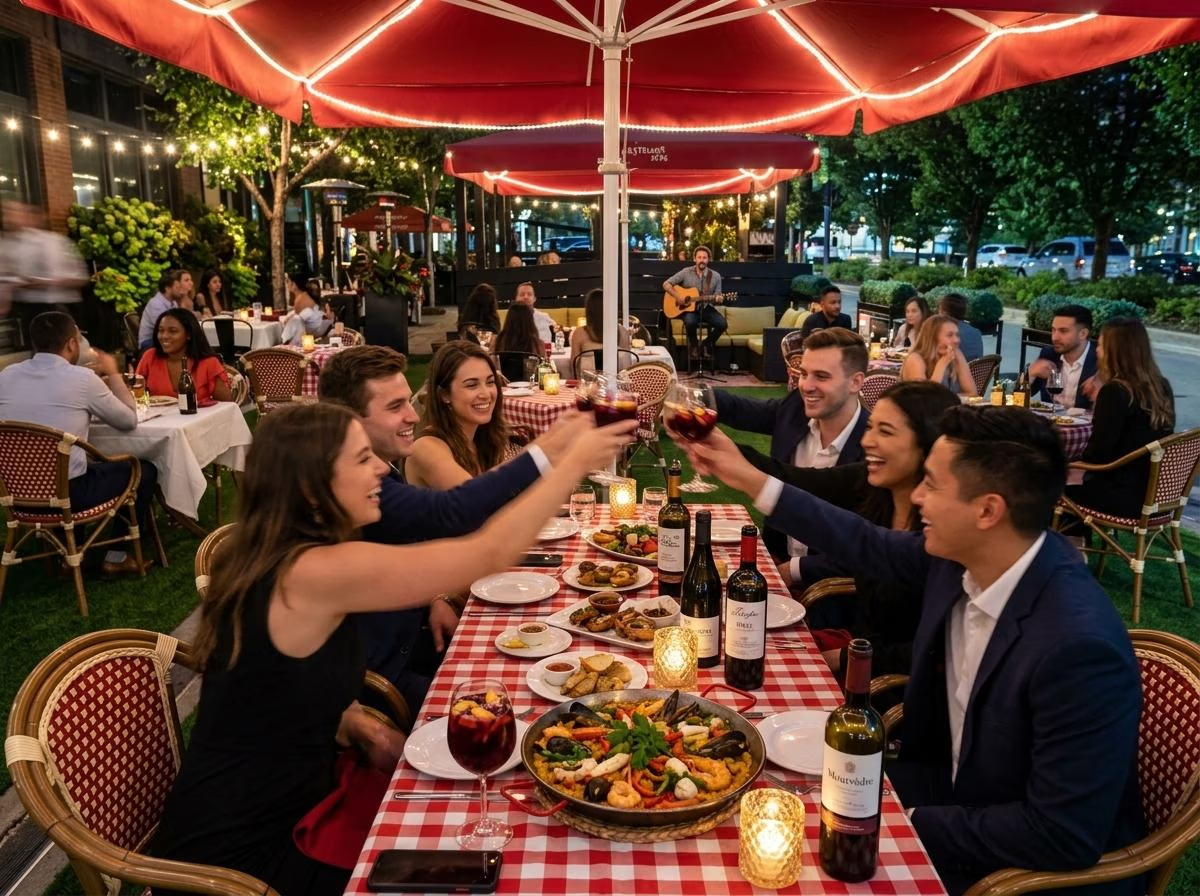
Within Mediterranean food cultures, hospitality also has important cultural associations with sharing food, receiving guests, generosity, and eating together.
UNESCO’s description of the Mediterranean diet as intangible cultural heritage explicitly goes beyond nutrition. It describes a collection of knowledge, rituals, traditions, food preparation, and especially the sharing and consumption of food, noting that eating together is an important form of social exchange and that hospitality, neighbourliness, intercultural dialogue, and respect for diversity are among the values associated with the tradition.
That provides a useful foundation.
But there is an equally important caution:
Mediterranean hospitality is not one standardized restaurant-service system.
Spain does not have exactly the same hospitality customs as Greece.
Greek traditions are not identical to Lebanese traditions.
Italian, Turkish, Cypriot, Croatian, Moroccan, Tunisian, and other Mediterranean cultures all have their own histories, expectations, rituals, meal structures, and forms of welcoming guests.
The phrase Mediterranean hospitality is therefore best used as an umbrella for recurring ideas around food, guests, generosity, and shared tables—not as a claim that hundreds of communities behave identically.
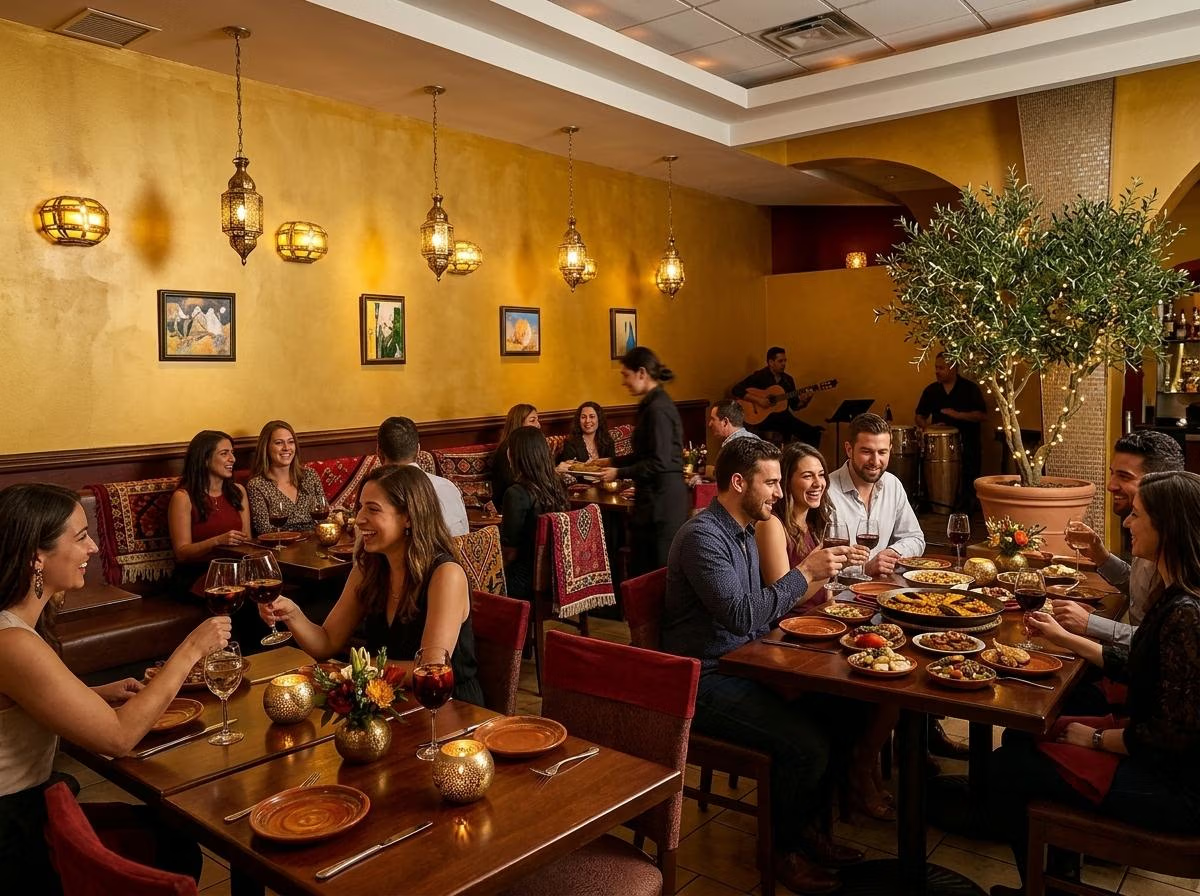
At Nia Restaurant & Wine Bar in Chicago’s West Loop, the concept is interpreted through a contemporary restaurant environment. Nia currently describes itself as Mediterranean-inspired with Spanish roots, with food designed for sharing, curated beverages, and a stated emphasis on warm hospitality.
That makes Nia a useful example.
It should not be presented as the universal definition of Mediterranean hospitality.
This guide explains what hospitality can mean in Mediterranean dining traditions, how those ideas translate into modern restaurant service, what guests should reasonably expect, and where Nia’s current experience fits.
What Does Mediterranean Hospitality Mean?
At its broadest, Mediterranean hospitality refers to traditions in which welcoming guests, offering food and drink, sharing the table, and creating space for social interaction carry cultural importance.
The emphasis is not merely:
Here is something to eat.
It is closer to:
You are a guest, and your comfort matters while you are here.
UNESCO’s documentation of Mediterranean food culture highlights eating together as a form of social exchange and identifies hospitality as one of the values connected with Mediterranean food traditions.
That does not mean every meal needs to be long.
It does not mean every table must order family-style food.
It does not mean servers should constantly offer more dishes.
And it certainly does not mean every Mediterranean restaurant provides the same style of service.
Hospitality is expressed differently according to:
- culture;
- occasion;
- restaurant type;
- household;
- region;
- meal;
- and guest expectations.
The useful common thread is attentiveness to the guest and the table.
Mediterranean hospitality broadly refers to traditions of welcoming guests, sharing food, generosity, and eating together found across many Mediterranean cultures. In restaurants, those values can translate into clear menu guidance, thoughtfully paced shared dishes, attentive service, respect for dietary needs, and making guests comfortable without being intrusive. Customs vary substantially by region, so there is no single universal Mediterranean service style.
Hospitality Is More Than Friendly Service
Friendly service is important.
Hospitality is broader.
A server can smile frequently and still provide poor hospitality if:
- the guest does not understand the menu;
- all the dishes arrive simultaneously and become cold;
- an allergy question is treated casually;
- the table feels rushed;
- the check arrives before anyone wants it;
- or the staff repeatedly interrupts conversations.
Likewise, excellent hospitality does not require exaggerated familiarity.
A server does not need to become the guest’s best friend.
Professional hospitality is often about judgment.
When should you approach?
When should you step away?
Does the table need another plate?
Do the diners understand how sharing works?
Has a course been delayed?
Does someone need a clean plate?
Would another dish create too much food?
Should a beverage recommendation be offered or left alone?
Those decisions often determine whether a meal feels comfortable.
Hospitality Begins Before the Food Arrives
A restaurant’s service experience begins before the first plate.
It may begin with:
- how easy it is to understand reservation information;
- whether operating hours are accurate;
- how clearly the address is displayed;
- whether guests are told about special seating conditions;
- how the host greets the table;
- and whether special requests have been communicated internally.
For Nia, the current website lists the restaurant at 803 W. Randolph Street in Chicago’s West Loop, with regular dinner hours of Tuesday through Thursday from 5:00 PM to 10:00 PM and Friday through Saturday from 5:00 PM to 11:00 PM; Sunday and Monday are currently listed as closed.
Accurate information is itself a form of hospitality.
A beautiful welcome cannot compensate for outdated hours or misleading event information.
The Welcome Should Reduce Uncertainty
First-time guests often experience a restaurant differently from regulars.
They may not know:
- whether dishes are intended for sharing;
- how many plates to order;
- whether food arrives in courses;
- whether pizza should be ordered with small plates or instead of them;
- how large the paella is;
- or whether the wine list is approachable for someone who does not know Mediterranean grapes.
A hospitable restaurant does not expect the guest to arrive already knowing the system.
It explains enough to make the menu comfortable.
That is particularly important at Nia because the current dinner menu combines:
- sourdough crostini;
- soup;
- small plates;
- Spanish-rooted dishes;
- seafood;
- salad;
- pizza;
- dessert;
- and several different culinary influences.
A first-time guest may reasonably need guidance.
Good hospitality turns that uncertainty into confidence without making the explanation feel like a lecture.
Sharing Food and Hospitality Are Closely Connected
UNESCO’s Mediterranean-food documentation places particular emphasis on eating together and sharing food.
In a restaurant, shared dining creates several opportunities for hospitality.
The server can help the table understand portion sizes.
Dishes can be sequenced so different flavors do not all arrive at once.
Clean plates can be provided between foods when useful.
The table can be warned if it is ordering far too much or too little.
Vegetarian or allergy-related dishes can be positioned carefully.
Larger plates can be placed where everyone can reach them.
This is where hospitality becomes operational.
Saying a menu is “designed for sharing” is only the beginning.
The restaurant still needs to make sharing practical.
Sharing Does Not Mean Every Guest Must Share Everything
This is an important distinction.
Shared dining should create flexibility, not pressure.
Some guests may have:
- food allergies;
- dietary restrictions;
- religious restrictions;
- different spice tolerances;
- different appetites;
- or simply a preference for keeping one dish to themselves.
A restaurant should not treat a person as difficult because they do not participate in every shared plate.
Good hospitality adapts the service format to the people at the table.
The table should serve the guests.
The guests should not have to serve the concept.
Generosity Is Not the Same as Overserving
Mediterranean hospitality is often described through generosity.
That idea can become exaggerated in restaurant copy.
Generosity does not mean convincing a table to buy more food than it needs.
It does not mean filling every empty space with another dish.
It does not mean alcohol should continuously be replenished.
In modern restaurant service, generosity can mean:
- giving useful information;
- being patient with questions;
- helping guests order appropriately;
- bringing extra plates when needed;
- making a dietary accommodation when genuinely possible;
- or allowing a meal to unfold comfortably.
Good hospitality respects appetite and boundaries.
Pacing Is One of the Most Important Forms of Hospitality
Shared menus create a pacing challenge.
Imagine ordering:
- olives;
- croquetas;
- salmon;
- shrimp paella;
- pintxos;
- patatas bravas;
- gambas al ajillo;
- and a pizza.
If every dish arrives within five minutes, the table becomes physically crowded.
Hot food cools.
Diners rush.
Flavor distinctions disappear.
If each dish arrives twenty minutes apart, the dinner becomes frustrating for a different reason.
Thoughtful pacing sits between those extremes.
Nia’s current menu is particularly suited to staged service because its small-plate section includes seafood, grilled meat, fried dishes, rice, vegetables, and salad alongside larger artisan pizzas.
The service team can help a table move from lighter or opening dishes toward more substantial plates instead of treating the order as one undifferentiated ticket.
Hospitality Should Make the Menu Easier, Not More Complicated
Restaurant language can become intimidating.
Pipérade.
Pintxos.
Gambas al ajillo.
Albóndigas.
Basque.
Saffron aioli.
Guests should not need to search every word on their phones before ordering.
At Nia today, the current menu includes all of those terms or regional references.
A hospitable explanation is simple.
Pipérade: a warm preparation of peppers, onions, and tomato.
Pintxos: here, skewered chicken or beef.
Gambas al ajillo: shrimp with garlic-infused olive oil, chili, and white wine.
Albóndigas: Spanish-style meatballs.
The objective is not to prove how knowledgeable the server is.
It is to help the guest understand what will arrive.
Good Hospitality Does Not Require Culinary Expertise From the Guest
A person who has never had paella should be able to order paella.
A guest who cannot name a Greek grape should still feel welcome ordering wine.
Someone unfamiliar with Mediterranean food should not be made to feel unsophisticated.
Hospitality creates permission to ask.
That principle should be especially important for an educational page like this because Nia has separate articles teaching readers about Mediterranean cuisine, tapas, mezze, paella, wine, and ingredients.
Those guides can build confidence before a visit.
But excellent service should still work when the guest has read none of them.
Hospitality and Wine Service
Wine service can either make hospitality stronger or make guests uncomfortable.
The wrong approach is:
- making the guest feel that choosing an inexpensive bottle is embarrassing;
- assuming everyone drinks alcohol;
- correcting pronunciation unnecessarily;
- or turning every recommendation into an upsell.
A better approach is to ask useful questions.
Do you usually prefer white or red?
Crisp or richer?
Are you ordering mostly seafood or meat?
Would you like a glass or a bottle?
Do you have a price range in mind?
Nia currently maintains separate wine-by-the-glass, bottle, tasting, cocktail, and non-alcoholic beverage sections on its site.
That creates several ways for a guest to participate in the beverage experience.
The hospitality principle should be:
guide without pressuring.
Detailed pairing education belongs on Nia’s wine pages.
This hospitality guide should focus on how recommendations are delivered.
Do Not Claim a Sommelier Unless the Role Is Verified
The current hospitality article says Nia’s sommeliers have handpicked selections and describes the staff as offering expert pairing guidance.
Nia’s broader current public site does not clearly identify a named active sommelier or provide credentials for that role.
Therefore, the safer wording is:
Nia maintains a curated wine program, and staff can help guests navigate the available options.
Do not use:
our sommelier;
our sommeliers;
or named credential language
unless the restaurant confirms who currently holds that role.
This protects E-E-A-T rather than weakening it.
Hospitality Does Not Require Alcohol
Mediterranean restaurant marketing often connects hospitality with wine.
That association can become too strong.
A guest who does not drink should not receive a reduced version of the experience.
Hospitality should work equally well for:
- designated drivers;
- people avoiding alcohol;
- people in recovery;
- pregnant guests;
- people taking medications;
- people who do not drink for religious reasons;
- and guests who simply prefer another beverage.
A beverage program is most hospitable when choice is genuine.
Wine can be part of the meal.
It should not define whether a person participates in the experience.
Food Allergies Are a Hospitality Issue, Not Just a Kitchen Issue
Nia’s current menu explicitly asks guests to communicate food allergies to an employee so the information can be passed to the person in charge or certified food-protection manager.
That operational language matters.
A guest with an allergy needs more than friendliness.
They need accuracy.
The server needs to understand the concern.
The kitchen needs to receive it.
Cross-contact limitations should be explained honestly.
If a modification is not safe or practical, the restaurant should say so rather than offer false reassurance.
One of the clearest tests of hospitality is how a restaurant responds when the guest needs something beyond the default service pattern.
Dietary Preferences Should Be Handled Without Judgment
Not every dietary request is a medical allergy.
Guests may ask for vegetarian dishes.
They may avoid pork.
They may not eat seafood.
They may prefer less spice.
They may not drink alcohol.
They may avoid particular ingredients for cultural, religious, or personal reasons.
Not every request can be accommodated.
But the conversation should still feel respectful.
Good hospitality distinguishes between:
We cannot safely do that
and
We do not want to do that.
When alternatives exist, staff should explain them clearly.
Hospitality and Table Comfort
Food does not exist independently of the physical environment.
A perfectly cooked dish is harder to enjoy when:
- the table is overcrowded;
- the music is too loud for the purpose of the dinner;
- the room is uncomfortably hot;
- the chair is unstable;
- or plates cannot be reached.
This does not mean the hospitality page should become another article about romantic restaurant design.
Nia already has separate content for what makes a restaurant romantic.
Here, the point is narrower:
Comfort affects service.
Hospitality includes noticing whether the dining environment is working for the people using it.
Atmosphere Is Not the Same as Hospitality
A restaurant can have:
- beautiful lighting;
- expensive furniture;
- candles;
- music;
- an attractive patio;
- and impressive décor
while still providing poor hospitality.
Atmosphere is environmental.
Hospitality is relational and operational.
Likewise, a very simple dining room can provide extraordinary hospitality when:
- guests are acknowledged;
- service is thoughtful;
- food is explained well;
- problems are handled gracefully;
- and the table feels cared for.
The two concepts can reinforce each other.
They should not be confused.
What Does “Warm Service” Actually Mean?
Warm service does not require constant conversation.
Different guests want different levels of interaction.
A business dinner may need discretion.
A first-time tourist may want recommendations.
A couple deep in conversation may want fewer interruptions.
A solo diner may enjoy more interaction—or none at all.
The best service adapts.
A useful definition is:
Warm service feels attentive without becoming intrusive.
That can include:
- a clear greeting;
- eye contact;
- confident menu guidance;
- appropriate check-ins;
- quick responses to problems;
- and a professional farewell.
Hospitality Is Often Most Visible When Something Goes Wrong
Every restaurant eventually experiences:
- a delayed dish;
- a misunderstood order;
- a sold-out menu item;
- a seating issue;
- a spilled drink;
- a temperature complaint;
- or another problem.
Hospitality is not the absence of mistakes.
It is how the restaurant responds.
Does the team acknowledge the issue?
Do they explain what happened without becoming defensive?
Do they offer a realistic solution?
Do staff members communicate with one another so the guest does not need to explain the same issue repeatedly?
A graceful recovery can matter more than a perfectly scripted greeting.
This is an important subject for a hospitality article because it moves beyond generic claims such as we treat every guest like family.
“Treat Guests Like Family” Can Be a Poor Service Standard
The phrase sounds warm.
But families have very different dynamics.
Professional hospitality needs clearer standards.
Treat guests with:
- respect;
- attention;
- accuracy;
- patience;
- and appropriate flexibility.
That is more meaningful than promising that every stranger will feel “like family.”
The current Nia hospitality article repeatedly describes the restaurant as making every guest feel at home.
That can remain as brand language in moderation.
It should not replace concrete explanations of service.
Do Staff Really Remember Every Guest’s Name and Favorite Dish?
The current article claims that Nia regulars experience staff remembering their names and favorite dishes.
That is the kind of statement that should be removed unless it reflects a documented loyalty or guest-profile system and can be supported.
Some staff may genuinely remember regular guests.
That can be a wonderful experience.
But an evergreen SEO article should not promise it to every diner.
Recognizing returning guests can strengthen hospitality when it occurs naturally, but a first-time guest should receive the same basic care and respect as a regular.
Hospitality and Shared Plates
Nia’s current dinner menu is especially relevant to hospitality because much of it is built around small plates.
Current examples include:
- marinated olives;
- salmon;
- croquetas;
- shrimp paella;
- chicken pintxos;
- beef pintxos;
- salad;
- cauliflower with rosemary hummus;
- patatas bravas;
- albóndigas;
- gambas al ajillo;
- and veggie croquettes.
Shared dining creates specific service responsibilities.
The server should help diners understand scale.
A plate with two skewers is not shared the same way as a salad.
Paella may be more filling than olives.
Pizza changes the amount of food the table needs.
Hospitality means guiding the whole order—not simply describing each dish independently.
Hospitality and Portion Guidance
One of the most useful things a server can say is:
That may be more food than you need.
Restaurants sometimes avoid this because it appears to reduce sales.
But helping guests order appropriately builds trust.
If two people have already ordered several small plates and a pizza, suggesting another substantial dish may not improve their experience.
Likewise, a group of six should not be left with one plate containing two skewers and no warning.
Good portion guidance can prevent both waste and disappointment.
Hospitality and Menu Pacing
A server can ask:
Would you like everything as it’s ready?
Would you prefer us to pace the plates?
Would you like the pizza later?
Would you like dessert after the table is cleared?
Those questions give control to the guest without forcing them to manage kitchen timing themselves.
The point is not to reproduce formal European service rituals.
It is to make the table work.
Hospitality and Bread
Bread often has an actual function in Mediterranean and Spanish-influenced food.
Nia’s current gambas al ajillo, for example, is served with crusty bread alongside shrimp, garlic-infused olive oil, chili, and white wine.
In that context, bread helps diners eat the sauce.
A hospitable server can explain that.
Food knowledge becomes useful when it improves how the guest experiences the dish.
It should not become trivia delivered without purpose.
Hospitality and the Last Course
Hospitality does not stop when savory dishes end.
Dessert service can feel rushed if:
- dessert menus are dropped while plates remain;
- the check arrives before dessert is discussed;
- coffee or another beverage is offered too late;
- or the table feels pressured to leave without communication.
Nia’s current dessert menu includes churros and burnt Basque cheesecake.
If a restaurant needs a table back because of a clearly disclosed reservation duration, that can be managed professionally.
Transparency is more hospitable than suddenly rushing guests at the end.
Hospitality and the Check
The bill is one of the most sensitive service moments.
Current Nia menu language says a service charge is added to checks, describes the purpose as supporting staff livelihood, limits checks to a maximum of two credit cards per table, and notes credit-card service fees.
Whatever a restaurant’s payment policy is, hospitality requires clarity.
Guests should understand:
- mandatory charges;
- optional gratuity;
- credit-card fees;
- split-payment limitations;
- and any other relevant policies
before confusion occurs.
Service can feel warm all evening and still end poorly if the bill contains an unexpected fee no one can explain.
Operational transparency is part of hospitality.

Hospitality and Private Dining Are Related but Different Topics
A private event requires hospitality.
But hospitality is not synonymous with private events.
The current Nia hospitality article shifts quickly into:
- birthdays;
- corporate gatherings;
- family reunions;
- private dining;
- custom menus;
- entertainment;
- and event hosting.
Those topics already have dedicated commercial pages.
Nia’s current corporate-events page describes event-manager assistance, preset and custom packages, private space, and group dining.
That is where event logistics should live.
This article should explain service traditions.
It may include one short link to private events when readers need event-specific help.
Nothing more.
Hospitality for a Date Is Still Hospitality
A couple may appreciate:
- good pacing;
- appropriate interruptions;
- comfortable seating;
- clear wine guidance;
- and enough time to finish the meal.
Those are hospitality factors.
But this page should not expand into:
- first-date advice;
- romantic restaurant selection;
- anniversary planning;
- proposal dinners;
- or complete West Loop itineraries.
Those intents already have dedicated pages.
The distinction is:
Hospitality Guide: How should the restaurant care for the guest?
Date-Night Guide: How should the couple plan the evening?
Hospitality for Business Dinners
Professional dinners may require a somewhat different service rhythm.
Guests may need:
- more discretion;
- less interruption;
- easy payment handling;
- clear pacing;
- and enough flexibility for conversation.
That does not mean Mediterranean hospitality uniquely improves business relationships.
The current site contains several articles suggesting shared food naturally strengthens client connections.
Those claims are too strong.
A restaurant can create conditions that make a business dinner comfortable.
It cannot promise a successful business relationship.
If the gathering becomes a formal corporate event, send the reader to the Corporate Events page.
Hospitality for Solo Diners
Hospitality should not assume every table contains a couple or group.
A solo diner may want:
- a seat where they feel comfortable;
- help understanding which dishes work for one person;
- a glass rather than a bottle of wine;
- a smaller ordering strategy;
- or simply uninterrupted time.
A shared-plate restaurant can accidentally make solo guests feel overlooked if every recommendation assumes a table of four.
Good service adapts portion and pacing advice to the actual diner.
Hospitality for Tourists and First-Time Chicago Visitors
Visitors may have questions regular Chicago diners do not.
How far is the restaurant from their hotel?
Is the address on Randolph Street or Fulton Market?
How late is dinner served?
Does the restaurant take reservations?
Is outdoor seating available?
Hospitality begins with making basic information easy to find.
Nia currently publishes its Randolph Street address and regular dinner hours clearly on the homepage and menu.
The website should keep those details consistent across all pages.
Hospitality and Cultural Accuracy
A hospitality article can easily fall into romantic stereotypes.
Phrases such as:
Mediterranean people treat everyone like family;
Mediterranean meals always last for hours;
Mediterranean cultures never rush dinner;
or every Mediterranean table is overflowing with food
sound warm but oversimplify many cultures.
A better approach is to acknowledge that values of shared eating and hospitality appear in Mediterranean cultural traditions while customs vary widely.
UNESCO’s documentation supports the importance of communal eating and hospitality without claiming that every community follows one identical service ritual.
That is the standard this page should follow.
Greek Xenia Is One Example, Not the Whole Mediterranean
Ancient Greek xenia is often translated as guest-friendship or ritualized hospitality and historically involved duties and reciprocity between host and guest.
It is an interesting historical example.
But this page should not use Greek xenia to explain all Mediterranean hospitality.
Spanish, Italian, Turkish, Levantine, North African, Balkan, and other traditions have their own historical contexts.
Use xenia as one illustration of how seriously hospitality could be understood within one Mediterranean culture—not as universal proof for the entire region.
Hospitality and the Host-Guest Relationship
A useful principle across many forms of hospitality is reciprocity.
The host has responsibilities.
So does the guest.
The restaurant should provide:
- clear service;
- safe food handling;
- reasonable attention;
- accurate information;
- and respectful treatment.
Guests also influence the experience by:
- communicating allergies clearly;
- arriving reasonably close to reservation time;
- treating staff respectfully;
- and understanding legitimate restaurant policies.
Hospitality does not mean the customer can demand anything.
It means both sides participate in a respectful service relationship.
Hospitality Should Be Inclusive
A welcoming restaurant should not make assumptions about:
- who is paying;
- who is ordering wine;
- who is celebrating;
- who is on a date;
- what gender roles diners occupy;
- whether a group shares a language;
- or whether everyone drinks alcohol.
Service should address the table appropriately.
Questions should be neutral.
Recommendations should respond to what the guests say they want.
Hospitality becomes stronger when it allows different people to feel comfortable without asking them to fit a restaurant’s stereotype of the ideal diner.
Hospitality and Accessibility
Physical accessibility is another dimension of hospitality.
Guests may need:
- step-free access;
- space for mobility devices;
- accessible restrooms;
- specific seating;
- clear pathways;
- or accommodations related to hearing or vision.
A hospitality article should not make specific accessibility promises unless they are verified.
Instead, the page should encourage guests with specific accessibility needs to contact the restaurant before visiting so the team can explain the current space accurately.
Accessibility information should ideally also be added to the primary restaurant FAQ once confirmed.
Hospitality and Children
Families may value different things from a date-night table.
They may need:
- quicker initial food;
- space for a stroller;
- clear guidance on mild dishes;
- or information about seating.
This page does not need a large family-dining section.
The broader principle is enough:
Hospitality means understanding that different tables have different needs.
Hospitality and Time
A common cliché says Mediterranean hospitality means meals must be slow.
That is too simplistic.
A leisurely dinner may be wonderful.
So may a 75-minute pre-concert meal.
The correct pace depends on the guest.
A table headed to the United Center may need efficiency.
A couple celebrating an anniversary may prefer more time.
A group before another reservation may need dishes to arrive promptly.
Hospitality is not about making everyone linger.
It is about helping the meal move at the pace the guests actually need, within the restaurant’s operational limits.
“Never Rushed” Is Also Too Strong a Promise
Restaurants sometimes say guests will never feel rushed.
That can be unrealistic during busy services, special events, or reservations with disclosed time limits.
A better promise is:
Service should make the expected pace clear and avoid unnecessary pressure.
Transparency is better than absolute marketing language.
Hospitality and Staff Knowledge
A knowledgeable server should understand:
- the general menu structure;
- major ingredients;
- preparation style;
- portion sizes;
- common allergens;
- current unavailable items;
- and where to get an answer when they do not know.
They do not need to pretend certainty about everything.
Saying:
Let me confirm that with the kitchen
is better hospitality than guessing.
Accuracy builds trust.
Hospitality and Recommendations
Recommendations work best when they begin with questions.
Instead of:
This is our best dish.
Ask:
Are you looking for seafood or meat?
Do you prefer something lighter or richer?
Do you want to try Spanish dishes specifically?
Are you sharing everything?
Do you plan to order pizza as well?
That allows recommendations to fit the guest.
Nia’s current menu ranges from olives and salad through seafood, meatballs, pintxos, paella, croquettes, cauliflower, and pizza.
One universal recommendation would not suit every table.
Hospitality and Upselling
Restaurants are businesses.
Suggestive selling is normal.
A server may offer:
- wine;
- another dish;
- dessert;
- or an after-dinner drink.
Hospitality and sales do not conflict automatically.
The problem begins when the guest feels pressured.
A useful standard is:
Offer once when relevant. Accept the answer.
A recommendation should improve the meal.
It should not feel like a quota.
Hospitality and Regular Guests
Returning guests can create meaningful relationships with restaurant teams.
Recognizing a familiar face, remembering a preferred table, or recalling a favorite bottle can make service feel personal.
But regulars should not receive basic courtesy at the expense of first-time visitors.
The best hospitality culture makes regular guests feel recognized while ensuring new guests still feel welcomed.
Hospitality and the West Loop
The West Loop is one of Chicago’s best-known dining districts, particularly around Randolph Street and Fulton Market.
For a restaurant operating in a neighborhood with many dining choices, hospitality becomes part of differentiation.
Food can bring someone in once.
Consistent service can influence whether they return.
But this article should not turn into another broad West Loop neighborhood guide.
Nia already has separate neighborhood content responsible for dining context, wine, and the restaurant scene.
Here, the location matters only because Nia is applying a Mediterranean-inspired hospitality concept within a contemporary Chicago restaurant district.
What Mediterranean Hospitality Looks Like at Nia Today
The strongest Nia section should rely on things that can actually be verified.
Nia currently describes itself as a Mediterranean-inspired restaurant with Spanish roots and dining designed for sharing. The homepage also explicitly uses warm hospitality as part of its brand language.
Its current dinner menu supports shared ordering through a substantial small-plates section.
Those facts create several practical hospitality opportunities.
1. Helping Guests Build a Shared Meal
Because dishes vary substantially in scale and richness, staff guidance can help tables avoid over- or under-ordering.
2. Explaining Spanish and Mediterranean Menu Terms
Pintxos, gambas, albóndigas, pipérade, and paella may require simple explanation for first-time guests.
3. Supporting Different Beverage Preferences
Nia offers wine, cocktails, and non-alcoholic beverages rather than requiring one beverage style.
4. Communicating Allergy Information
The current menu provides explicit allergy communication instructions.
5. Managing Shared-Plate Pacing
The menu’s structure makes thoughtful sequencing particularly important.
6. Being Transparent About Payment Policies
The current menu states service-charge and payment policies, which should be explained clearly when relevant.
These are real ways Nia can demonstrate hospitality.
They are more credible than unsupported promises that staff always remember every guest’s name.
What This Page Should Not Promise About Nia
Do not say:
Every guest is treated like family.
Staff always remember your favorite dish.
Every meal is personalized.
Our sommeliers guide every table.
Every menu can be customized.
Every special request is accommodated.
Every guest leaves feeling at home.
Service is never rushed.
Those claims are either subjective, impossible to guarantee, or operationally unsupported.
Instead, describe the hospitality principles the restaurant aims to express and the verified structures that support them.
Current Food Claims That Need Correction
The old hospitality article describes:
- skewered shrimp with tzatziki;
- Roman-style pizza with Calabrian chili or white anchovies;
- and branzino with ladolemono
as current Nia highlights.
Those dishes do not match the current September 2026 dinner menu.
Current live examples include:
- pan-seared salmon with pipérade;
- shrimp paella;
- chicken and beef pintxos;
- Nia salad;
- crisp cauliflower with rosemary hummus;
- patatas bravas;
- albóndigas;
- gambas al ajillo;
- croquetas;
- artisan pizzas;
- churros;
- and burnt Basque cheesecake.
Use the current menu as the authority.
Do not preserve outdated dishes because they sound more “Mediterranean.”
Frequently Asked Questions About Mediterranean Hospitality
What is Mediterranean hospitality?
Mediterranean hospitality broadly refers to traditions around welcoming guests, sharing food, generosity, and eating together across many Mediterranean cultures.
UNESCO’s documentation of Mediterranean food culture specifically identifies communal eating and hospitality as important cultural values, while customs vary significantly from region to region.
Is Mediterranean hospitality the same in every country?
No.
Spanish, Greek, Italian, Turkish, Cypriot, Levantine, Balkan, North African, and other Mediterranean cultures have different hospitality traditions.
It is more accurate to discuss recurring themes than one universal set of rules.
Why is sharing food connected to Mediterranean hospitality?
Eating together and sharing food can create a table where the meal becomes a collective activity rather than several completely separate experiences.
UNESCO specifically identifies shared consumption of food and social exchange as important dimensions of Mediterranean food heritage.
Does Mediterranean hospitality mean large portions?
Not necessarily.
Generosity can be expressed through variety, attention, sharing, or service rather than simply oversized portions.
Does Mediterranean hospitality mean meals are always slow?
No.
Some meals are leisurely.
Others are practical and fast.
The appropriate pace depends on the occasion, cultural context, and guest.
In restaurants, good hospitality means understanding the desired pace whenever possible.
Is mezze part of Mediterranean hospitality?
Mezze can be one expression of shared hospitality in Eastern Mediterranean, Middle Eastern, Greek, Turkish, Balkan, and related traditions.
It is not the universal dining format of every Mediterranean culture.
Nia’s dedicated Mezze Guide should own the deeper explanation.
Is tapas the same hospitality tradition as mezze?
No.
Tapas belongs to Spanish culinary culture, while mezze belongs to a different set of Eastern Mediterranean, Middle Eastern, Balkan, Greek, Turkish, and neighboring traditions.
Both may involve sharing, but their cultural origins differ.
Is wine required for Mediterranean hospitality?
No.
Hospitality should not depend on alcohol.
Wine can be part of some dining traditions, but water, tea, coffee, non-alcoholic drinks, and many other beverages can participate in a welcoming meal.
What makes restaurant service hospitable?
Useful restaurant hospitality usually combines a welcoming attitude with operational competence:
- clear communication;
- menu knowledge;
- good pacing;
- attention without excessive interruption;
- accurate allergy handling;
- appropriate recommendations;
- and transparent policies.
What is the difference between service and hospitality?
Service is the set of actions required to operate the meal:
- taking orders;
- bringing food;
- clearing plates;
- processing payment.
Hospitality describes how those actions make the guest feel and whether the restaurant responds thoughtfully to their needs.
The two should work together.
Does hospitality mean the customer is always right?
No.
Good hospitality includes respect and reasonable flexibility, but restaurants still need to follow food-safety rules, operating policies, legal requirements, and practical limitations.
Respect should work in both directions.
Does Nia describe itself as a hospitable restaurant?
Nia’s current homepage explicitly references warm hospitality alongside its Mediterranean-inspired, Spanish-rooted food and shared dining.
What type of service format does Nia use?
Nia’s current menu emphasizes small plates and shared dishes alongside artisan pizza and dessert, creating a format where diners can order several plates rather than relying only on individual entrées.
What dishes does Nia currently serve for sharing?
Current examples include marinated olives, salmon, croquetas, shrimp paella, chicken and beef pintxos, salad, crisp cauliflower with rosemary hummus, patatas bravas, albóndigas, gambas al ajillo, veggie croquettes, and artisan pizzas.
Does Nia currently serve branzino?
Branzino appears in the older hospitality article, but it is not on the current live dinner menu reviewed for this rewrite.
Do not present it as a current dish unless it returns.
Does Nia have sommeliers?
The current hospitality article uses the term sommeliers, but the current public site reviewed for this project does not clearly identify a named active sommelier or credentials.
Use wine program or staff guidance unless the restaurant verifies the sommelier role.
Does Nia remember every regular guest’s favorite dish?
That should not be promised.
The current article makes a strong claim about staff remembering guests’ names and favorite dishes.
Regular-guest recognition may happen naturally, but it should not be marketed as a guaranteed service feature.
Does Nia offer private dining?
Yes.
Nia currently maintains private-event and corporate-event offerings separate from ordinary restaurant service.
For capacities, packages, event management, and room details, use the dedicated event pages rather than this hospitality guide.
Is hospitality important for a date night?
Yes, but mainly through good service fundamentals such as comfortable pacing, appropriate attention, accurate recommendations, and respecting the table’s conversation.
Detailed date-night planning belongs on Nia’s separate date-night pages.
How can I tell whether a restaurant has good hospitality before visiting?
Look for practical signals:
- clear and current website information;
- transparent menus;
- accurate hours;
- helpful reservation policies;
- responses to common guest questions;
- dietary information;
- and reviews that consistently mention attentive, knowledgeable, or thoughtful service.
No website can guarantee what one individual service experience will be like.